How to Get Egg Off Car in 10 Simple Steps
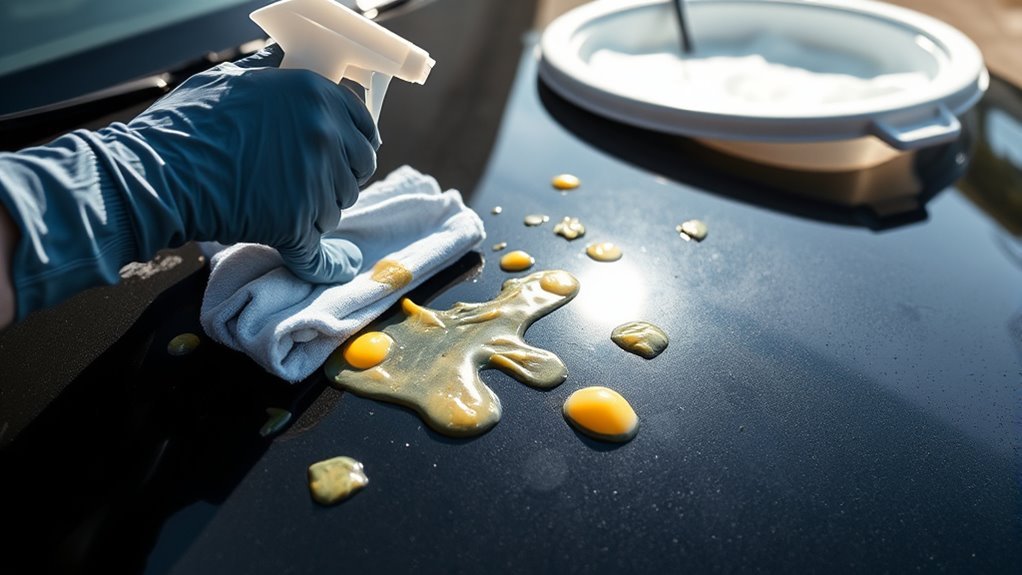
To get egg off your car, start by carefully picking up any loose shells with your fingers or a soft cloth. This helps avoid scratches on your car’s paint. Egg stains on cars can be tricky, so it’s best to act quickly to protect your vehicle’s finish.
Next, spray a gentle cleaning solution like diluted dish soap or vinegar onto the affected area. Let it soak for 5–10 minutes to loosen the egg residue. This step makes removing the mess much easier without damaging the paint.
After soaking, use a microfiber cloth to softly wipe away the residue. For any tough spots, apply a little rubbing alcohol to help break down the stubborn egg. Be gentle, so you don’t harm the surface.
Once the egg is removed, rinse the area thoroughly with warm water. Then, dry your car with a soft cloth to prevent water spots.
Finally, inspect the spot for any damage. If stains or chips persist, consider seeking expert help. You can find more detailed tips to protect your car’s finish and keep it looking great.
Key Takeaways
- Gently remove loose eggshell pieces by hand or with a soft cloth to avoid scratching the car’s paint.
- Spray a mild cleaning solution of dish soap and warm water on the egg residue and let it soak for 5–10 minutes.
- Use a soft microfiber cloth or sponge to gently wipe or blot the residue, avoiding abrasive scrubbing.
- Rinse the cleaned area thoroughly with warm water and pat dry with a clean microfiber cloth to prevent water spots.
- Inspect the surface closely for any damage or residue, and seek professional help if chips, cracks, or discoloration remain.
How To Safely Remove Eggshells From Your Car
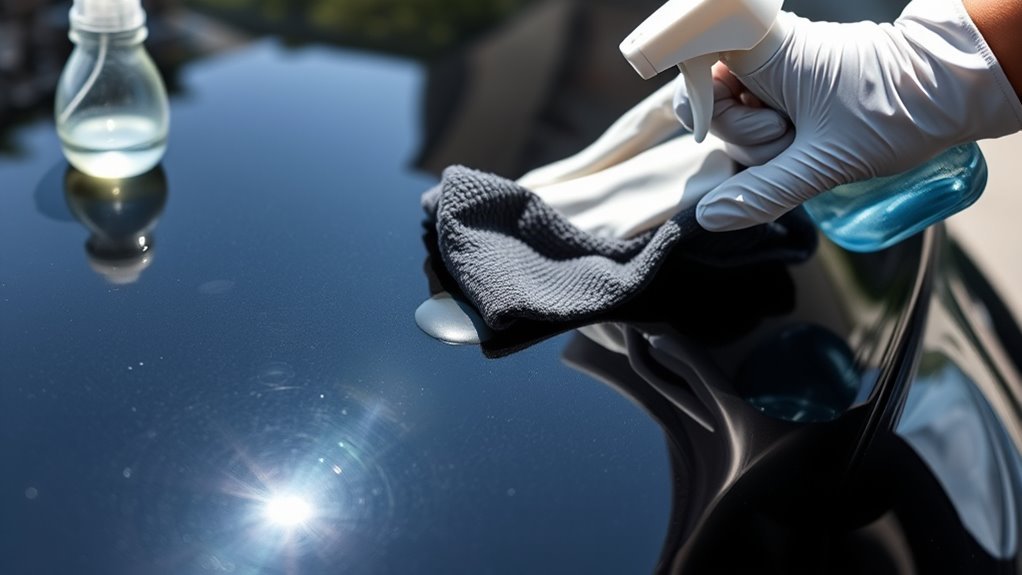
Before you start cleaning, carefully pick up and remove as many eggshell pieces as you can to avoid scratching your car’s paint. Focus on eggshell removal first because any leftover shards can cause scratches if you scrub or wipe over them.
Start by gently removing eggshell pieces to prevent scratches on your car’s paint before cleaning.
Use your fingers or a soft cloth to lift the shells gently. Avoid abrasive tools or harsh chemicals that might damage the paint.
After removing loose pieces, dampen an old washcloth with water from a spray bottle and gently blot the egg mess. This gentle cleaning approach decreases the risk of pushing debris deeper into the paint or causing scratches.
Taking these careful steps ensures your car’s surface stays protected while you prepare for the next phase of cleaning.
Preparing A Gentle Cleaning Solution For Egg Stains
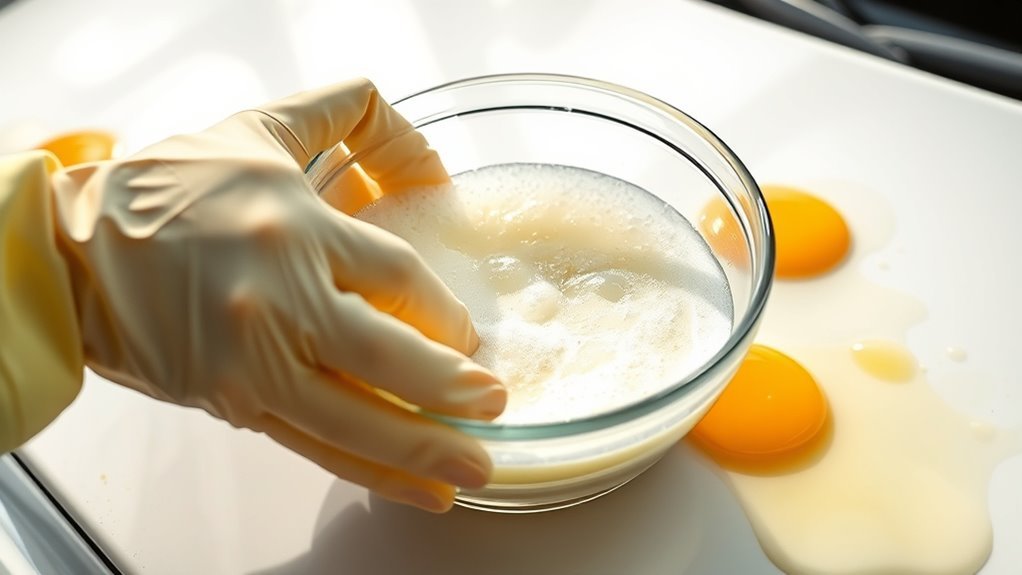
You can start by mixing a tablespoon of dish soap with a cup of warm water to create a gentle cleaning solution for egg stains.
Alternatively, a vinegar-based mixture works well to break down residue without harming your car’s paint.
Both options are easy to prepare and effective when used carefully. Just make sure to handle them gently to keep your car looking great!
Soap And Water
How do you gently break down egg stains without damaging your car’s paint? Start by preparing a gentle cleaning solution. Mix 1 tablespoon of dish soap with 1 cup of warm water in a spray bottle.
Make sure to shake the spray bottle gently so the soap and water blend well. Using a spray bottle, liberally apply the solution onto the egg-stained area to ensure full coverage.
Let it soak for 5-10 minutes to loosen the egg residue. After soaking, take a clean, damp cloth or sponge and gently wipe or scrub the spot.
Finally, rinse the area thoroughly with plain water to remove any soap residue. This simple soap and water method effectively cleans egg stains without harming your car’s paint.
Vinegar-Based Mixture
Two equal parts of white vinegar and water create a gentle yet effective cleaning solution for breaking down egg stains on your car. The acidity in vinegar dissolves egg residues without harming your car’s paint or clear coat.
To boost cleaning power, add a few drops of dish soap to the mixture. Spray this solution liberally over the affected area and let it sit for at least 15 minutes to loosen dried egg remnants.
After soaking, rinse the area thoroughly with clean water to remove all vinegar traces. This helps prevent any potential damage or streaking.
Using this vinegar-based mixture is a smart way to tackle egg stains gently while protecting your car’s finish. It’s easy and works really well!
Step-By-Step Cleaning Guide For Egg On Painted Surfaces
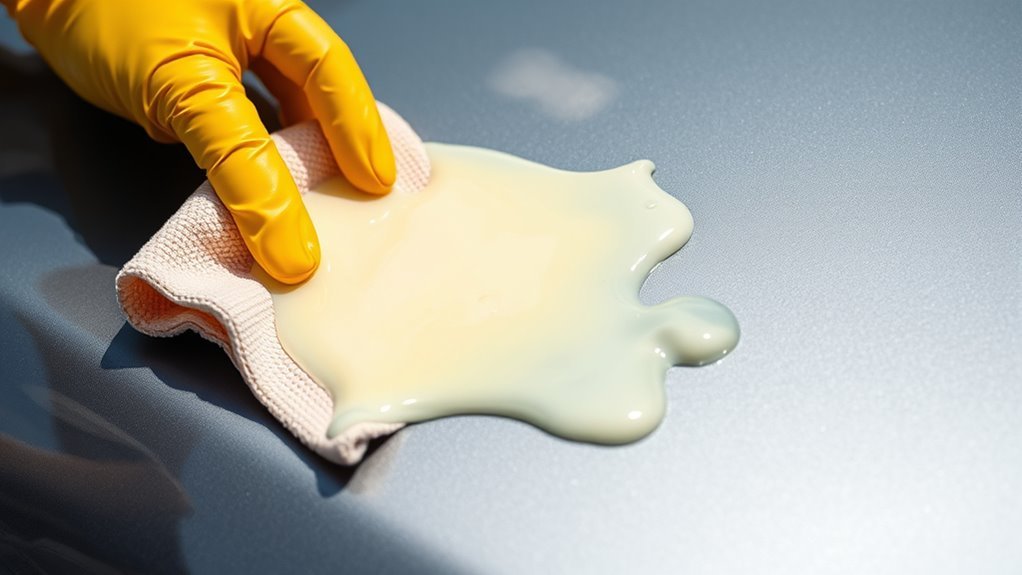
Start by gently removing any loose eggshells to avoid scratching your car’s paint. Then, use a mild soap solution to break down the egg residue without damaging the surface.
Be sure to follow these protective cleaning tips carefully. This way, you can restore your paint safely and effectively.
Egg Removal Techniques
Although dealing with egg on your car’s paint can feel intimidating, you can remove it effectively by following a careful, step-by-step process. Start by gently removing any loose eggshells with your hand to avoid scratching the paint.
Next, spray a mixture of 1 tablespoon dish soap and 1 cup warm water onto the affected area and let it soak for 5-10 minutes. Then, softly blot the egg residue with a damp microfiber cloth or sponge—avoid scrubbing aggressively.
If stubborn spots remain, apply a small amount of rubbing alcohol, let it sit briefly, and rinse thoroughly with clean water. Finally, inspect the surface for leftover residue or damage, and if needed, use a paint-safe polish to restore your car’s finish.
Protective Cleaning Tips
When you’re cleaning egg off your car, taking protective steps can prevent damage to the paint and keep your vehicle looking its best. Start by gently removing any loose eggshells with a soft cloth to avoid scratching.
Next, spray a mild solution of 1 tablespoon dish soap mixed with 1 cup warm water onto the affected area and let it soak for 5-10 minutes. Instead of scrubbing, blot the residue with a damp, old washcloth to minimize harm.
For stubborn spots, apply rubbing alcohol sparingly, then rinse thoroughly to protect the paint. Finally, inspect the surface with a magnifying tool to ensure all egg residue is gone and no damage occurred.
Following these steps keeps your car’s finish safe and clean. It’s a simple way to make sure your ride stays looking great without any unwanted scratches or stains.
How To Loosen Stubborn Egg Residue Without Damaging Paint
If you’re dealing with stubborn egg residue on your car, soaking the area with a carefully mixed solution of vinegar, water, dish soap, and baking soda will help break down the dried material without harming your paint. Let the solution sit for at least 10 minutes to loosen the residue.
Then, gently scrub using a soft microfiber cloth or sponge, avoiding abrasive materials that could scratch the surface. After loosening the egg, rinse the area thoroughly with plain water to remove any leftover cleaning agents.
- Mix vinegar, water, dish soap, and baking soda for soaking
- Allow solution to sit on the residue for 10+ minutes
- Use a soft microfiber cloth or sponge for gentle scrubbing
- Avoid harsh abrasives to protect the paint
- Rinse thoroughly with plain water after cleaning
Using Rubbing Alcohol Safely For Tough Egg Stains
Since tough egg stains can cling stubbornly to your car’s surface, using rubbing alcohol offers a powerful yet gentle way to break them down. Start by dabbing a soft cloth or sponge with isopropyl alcohol, then gently apply it to the affected area.
Avoid scrubbing aggressively to protect your paint. Let the alcohol sit for 4-5 minutes to dissolve the dried egg and residue.
Before applying widely, test a small, hidden spot to guarantee no discoloration or damage occurs. Once the stain loosens, rinse the area thoroughly with plain water to wash away any leftover alcohol and residue.
Finally, dry the spot with a clean microfiber cloth to prevent water spots and keep your car’s finish safe and spotless.
Best Household Ingredients For Removing Egg Stains From Cars
Rubbing alcohol works well for stubborn egg stains, but you don’t have to rely on it alone. Several household ingredients can help you remove egg stains from your car safely and effectively.
Start with gentle solutions before moving to stronger ones to protect your vehicle’s paint.
Here are some of the best household ingredients to try:
- Dish soap mixed with warm water loosens egg stains without harming the surface.
- Diluted vinegar breaks down egg residue gently.
- Baking soda absorbs liquid and lifts stains when sprinkled on the affected area.
- Rubbing alcohol tackles tough, dried-on egg remnants when applied carefully.
- WD-40 dissolves dried egg on paint and other surfaces, but use it cautiously and test first.
Using these ingredients can make cleaning your car easier and safer. Give them a shot, and your ride will look good as new in no time!
How To Remove Egg From Windshields And Glass Surfaces
Three simple steps can help you safely remove egg from your windshield and other glass surfaces without causing scratches or damage. First, mix vinegar, water, dish soap, and baking soda in a spray bottle.
Spray the solution onto the egg-stained glass and let it soak for about ten minutes. Next, gently wipe away the loosened egg using a soft sponge to avoid scratching.
If residue remains, apply WD-40 directly to the stains, wait five minutes, then wipe with a damp cloth to lift stubborn bits. Finally, sprinkle baking soda over the area, wait 15 minutes, and wipe with a damp cloth to absorb leftover liquid and odor.
Make sure to rinse thoroughly afterward to prevent streaks before using your windshield wipers. This way, your glass will be clean and clear without any damage.
Rinsing And Drying Tips To Protect Your Car’s Finish
After you remove the egg residue, rinse the area thoroughly with warm water to wash away any loose debris and prevent stains from setting. Use a gentle stream to avoid harming your car’s clear coat or paint while flushing out all remaining egg particles.
Rinse thoroughly with warm water using a gentle stream to remove egg residue without damaging your car’s paint.
Skip air drying, as it can leave mineral deposits or streaks. Instead, dry the surface carefully with a clean, soft microfiber cloth to prevent water spots and protect the paint’s finish.
Keep an eye on the area as you dry to ensure no residue or water marks remain, preserving your car’s glossy look.
- Use warm water for rinsing immediately
- Apply a gentle water stream to protect the paint
- Pat dry with a soft microfiber cloth
- Avoid air drying to prevent streaks
- Check for leftover residue during drying
How To Inspect Your Car For Egg Damage After Cleaning
After cleaning, take a close look at your car’s surface using a bright light or magnifying loupe to spot any leftover egg residue or damage. Check carefully for cracks, discoloration, or dull spots that could mean the egg caused harm.
Make sure to inspect from different angles and document anything unusual for further attention. It’s all about catching those little issues early before they turn into bigger problems.
Visual Damage Inspection
Although you’ve cleaned the egg off your car, you’ll want to inspect the surface closely to catch any lingering damage. Use a magnifying loupe or a bright flashlight to spot cracks, impact marks, or leftover splatter.
Pay special attention to “Imprint Chips,” which are tiny paint chips caused by dried egg residue. Check the clear coat for signs of discoloration, cracking, or dullness, as these indicate deeper damage.
Be thorough around edges and crevices where residue can hide. Document any damage with clear photos, noting location and size for future repairs.
- Examine for residual egg splatter or impact marks
- Identify and assess imprint chips in the paint
- Inspect clear coat for discoloration or cracks
- Look closely in crevices and edges for residue
- Photograph and note all damage for repair reference
Surface Residue Check
Once you’ve inspected for visible damage, it’s important to check for any leftover egg residue that might still cling to your car’s surface. Use a magnifying loupe or a bright, focused light to closely examine impacted areas like the hood, mirrors, and window edges.
Look for tiny cracks, discoloration, or imprint chips that could signal paint or clear coat damage. Run your fingers gently over the cleaned surface to detect any roughness or particles that might not be visible.
If you spot anything unusual, document it with photos to monitor potential damage over time or decide if professional repair is needed. This thorough surface residue check guarantees your car stays protected after cleaning off egg.
When To Seek Professional Help For Egg-Related Paint Damage
When should you consider calling a professional for egg-related paint damage? If you notice stubborn chips, cracks, or discoloration after cleaning, it’s time to seek expert help.
Professionals can address clear coat failure and deep paint chips that you can’t fix at home. Also, if egg stains remain despite your best efforts or if the egg has damaged your windshield or glass, consulting a specialist is *essential*.
Expert help is crucial for clear coat issues, deep paint chips, persistent egg stains, or glass damage.
Avoid DIY attempts that might cause scratches or peeling. When in doubt about the severity of the damage, a professional assessment can prevent worsening issues.
- Persistent chips, cracks, or discoloration after cleaning
- Clear coat failure or deep paint damage
- Stains that won’t come off with DIY methods
- Visible damage to glass or windshield
- Uncertainty about the damage’s extent
Frequently Asked Questions
What Is the Best Way to Get an Egg off Your Car?
You’ll want to act quickly, gently removing loose eggshells first. Then, blot with a damp cloth and use mild soap or vinegar solution to loosen the egg. Rinse thoroughly, avoiding harsh scrubbing to protect your paint.
Is Egg Hard to Get off a Car?
Yes, egg can be hard to get off your car if it dries and hardens. You’ll need to act quickly; fresh egg wipes off easily, but dried egg may require careful scrubbing to avoid paint damage.
What Should I Do if My Car Gets Egged?
If your car gets egged, act fast! Remove loose shells, gently blot the mess, then clean with mild soap and water. For stubborn spots, use rubbing alcohol carefully. Rinse well and check for paint damage afterward.
Will Egging a Car Damage the Paint?
Yes, egging can damage your car’s paint because the acidic proteins and calcium can etch and discolor the surface. You should clean it off immediately to prevent permanent damage and preserve your car’s finish.
Conclusion
You’ve learned how to tackle egg off your car step by step, and it’s clear that patience and care really pay off. The theory that rushing will save time? It doesn’t hold up—gentle cleaning protects your paint and glass.
By following these steps, you’ll keep your car looking great and avoid damage. So, take your time, use the right solutions, and if things get tough, don’t hesitate to call in the pros.
Removing egg from your car might seem tricky at first, but with patience and the right approach, it’s totally manageable. Remember, using gentle cleaning methods is key to protecting your car’s paint and glass from scratches or stains. So next time you find egg on your car, follow these simple steps carefully, and you’ll get your vehicle looking fresh and clean in no time. Your car will thank you!