How Many Eggs Can a Queen Bee Lay?
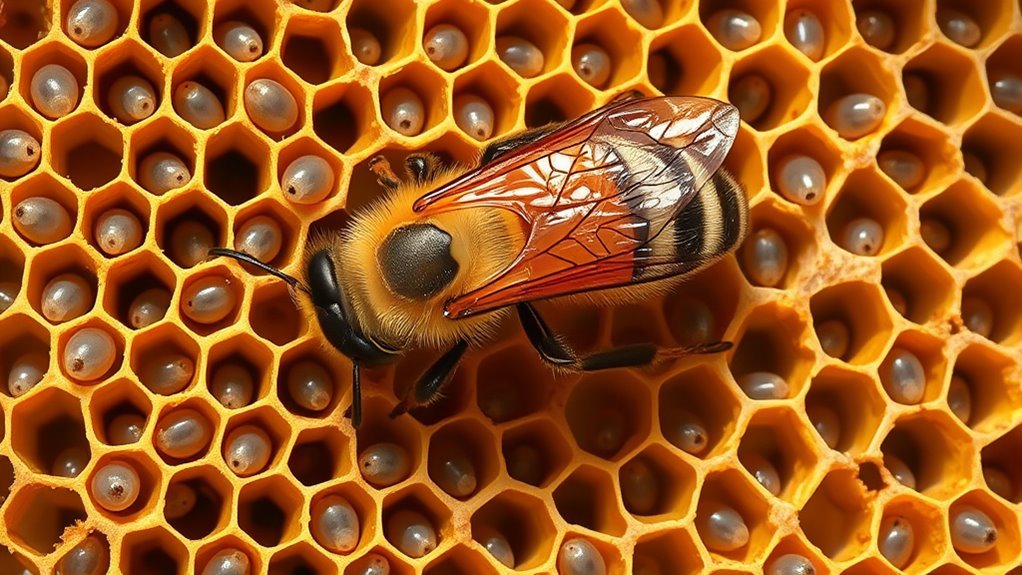
You can expect a queen bee to lay between 1,100 and 1,500 eggs each day, though she can reach up to 3,000 eggs under the best conditions. This incredible egg-laying ability is what keeps the hive thriving and growing.
The queen bee’s productivity depends on several factors, including the hive’s space and overall health.
She also needs strong support from worker bees and a steady supply of food to keep up her pace. Keeping the hive clean and well-ventilated plays a big role too.
Plus, having plenty of empty cells for her to lay eggs in really helps boost her output.
It’s fascinating how much hive conditions and good management shape this amazing process. So, if you’re curious about how a queen bee keeps the colony buzzing, keep exploring!
Key Takeaways
- A queen bee typically lays between 1,100 and 1,500 eggs per day under normal conditions. With ideal hive capacity and environment, egg-laying can increase up to 2,000 eggs daily.
- In fact, under optimal circumstances, a queen bee can lay as many as 3,000 eggs in one day. That’s a lot of eggs!
- The number of eggs laid depends heavily on available empty cells within the hive. Without enough space, the queen can’t lay as many eggs.
- Also, worker bees’ support and hive conditions directly influence the queen’s maximum egg-laying capacity. So, everything needs to work together for her to do her best.
How Many Eggs Does a Queen Bee Lay Each Day?
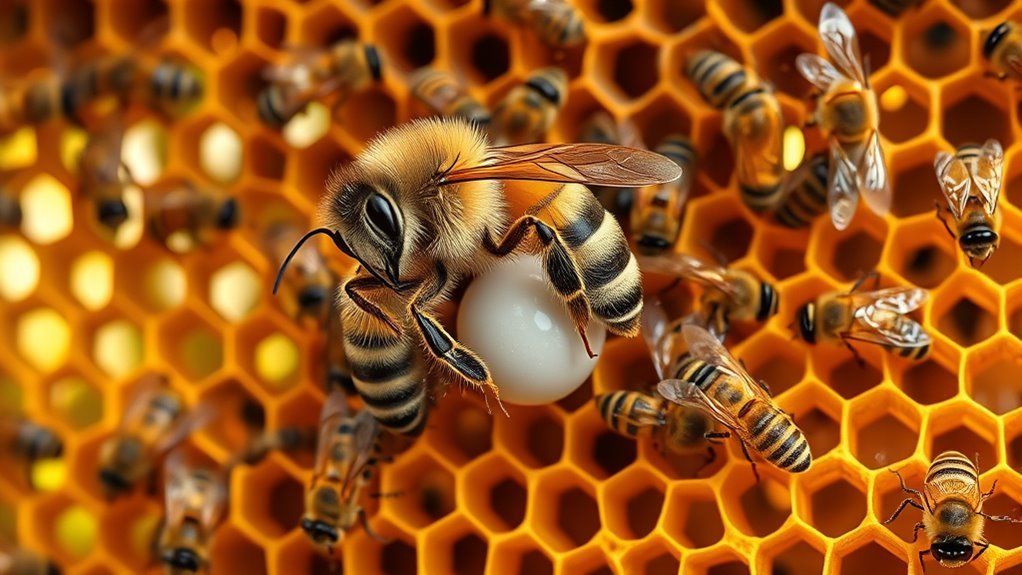
Although the number can vary, a queen bee typically lays between 1,100 and 1,500 eggs each day. You’ll find that daily egg-laying depends largely on hive capacity—the availability of empty cells where the queen can lay fertilized eggs.
In some cases, under ideal conditions, a queen can lay up to 2,000 or even 3,000 eggs daily. While the queen focuses on egg production, worker bees support her by feeding larvae royal jelly, which is essential for honey bees’ development.
This teamwork ensures the colony thrives. Remember, the queen’s ability to lay eggs isn’t just about quantity; it’s about synchronizing with the hive’s needs.
What Hive Conditions Help Queens Lay More Eggs?
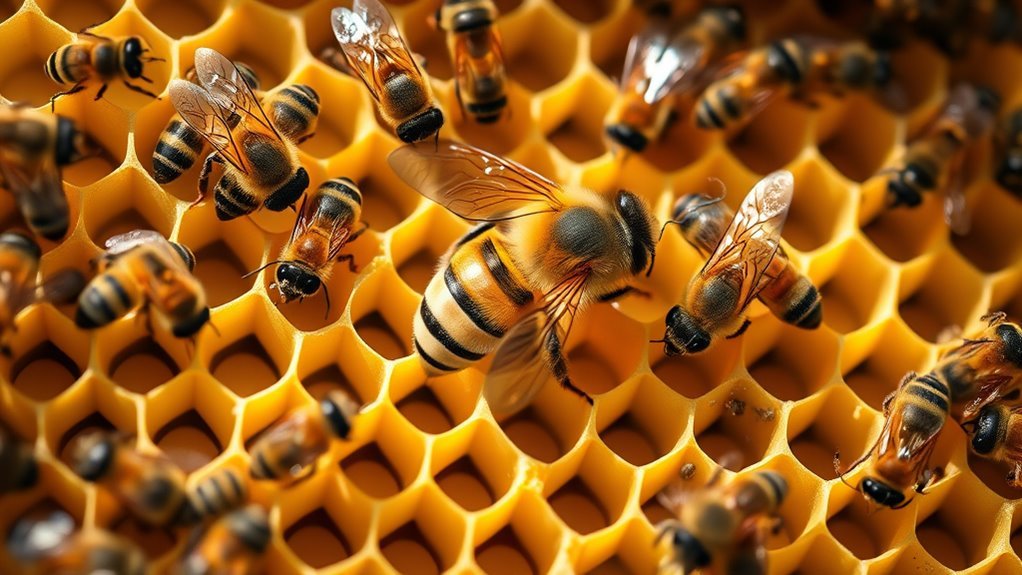
When you want your queen bee to lay more eggs, creating the right hive conditions is essential. Providing ample empty cells gives the queen bee the space she needs for continuous egg-laying.
Maintaining a steady supply of food resources keeps her healthy and supports brood rearing. Proper hive ventilation ensures the hive environment stays at ideal temperature and humidity, which is critical for egg production.
Effective hive management—like removing debris and keeping combs clean—promotes a smooth egg-laying process. A strong colony with active nurse bees also plays a key role, offering care that encourages maximum egg-laying.
Frequently Asked Questions
What Happens if Two Queen Bees Are Born?
If two queen bees are born, you’ll see them fight until only one remains, or one leaves to start a new colony. Sometimes, beekeepers step in to remove extras and keep peace in the hive.
How Many Times Will a Queen Bee Mate?
Imagine a queen bee’s mating flight like a single, daring voyage across the sky—you’ll see she usually mates just once, with 10 to 20 drones, storing sperm to fertilize eggs for years without returning.
What Is the Lifespan of a Queen Bee?
A queen bee typically lives 2 to 4 years, but with good care, she can survive up to 7 years. You’ll notice her productivity peaks in the first couple of years, then gradually declines.
How Do You Tell if a Queen Bee Is Mated?
You can tell a queen bee is mated if her abdomen’s swollen, she’s producing strong pheromones, and she’s laying eggs. Checking for sperm in her spermatheca confirms it, but behavior and appearance often give it away.
Conclusion
You might be surprised to learn that a queen bee can lay up to 2,000 eggs each day—just as your garden might bloom unexpectedly with the right care. It’s no coincidence that when hive conditions are perfect, the queen’s egg-laying peaks, much like how your efforts create the best results.
So, if you want a thriving hive, remember: a healthy environment isn’t just helpful—it’s the secret to a queen’s incredible productivity. Creating ideal hive conditions supports the queen bee’s ability to lay eggs consistently. This means paying attention to temperature, food supply, and overall hive health.
In short, understanding how many eggs a queen bee can lay helps beekeepers focus on maintaining a strong, healthy colony. A well-cared-for hive leads to a queen that can lay thousands of eggs, ensuring the hive’s growth and survival. So, keep your hive healthy, and watch that queen bee work her magic!