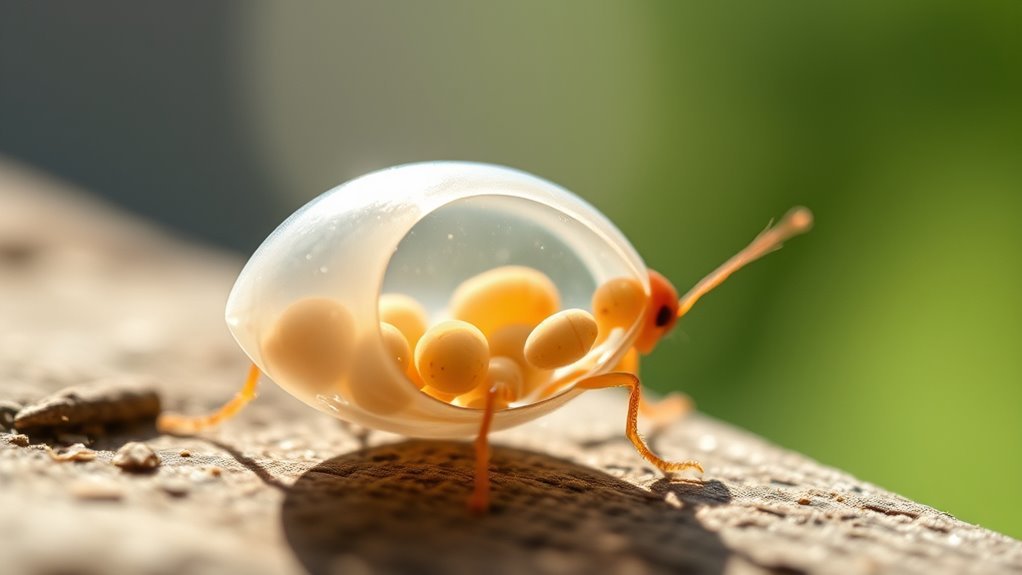
How Long Does It Take Roach Eggs to Hatch?
Roach eggs hatch anywhere from about 28 to 60 days, depending on the species and conditions. Understanding how long it takes for roach eggs to hatch can help you manage infestations better.
Different types of cockroaches have varying incubation periods, which is important to know if you’re dealing with these pests.
German cockroach eggs can hatch in as little as 28 days, while American and Oriental cockroach eggs take longer—up to 60 days.
Temperature and humidity play a big role in this process. Warmth around 75-85°F and humidity between 60-80% speed up hatching, while cooler or drier conditions slow it down.
If you want to understand why these factors matter, keep exploring how they affect incubation. It’s pretty interesting how the environment influences the life cycle of roaches!
Key Takeaways
- Roach eggs hatch in species-specific times, ranging from 28 days (German cockroach) up to 60 days (Oriental and American cockroaches).
- Optimal temperatures between 75°F and 85°F shorten incubation periods, accelerating egg hatching.
- Humidity levels of 60-80% support steady egg development and successful hatching.
- Cooler or drier environments slow down or delay roach egg incubation significantly.
- Multiple nymphs emerge from each egg case, increasing infestation potential after hatching.
Cockroach Egg Hatching Times By Species
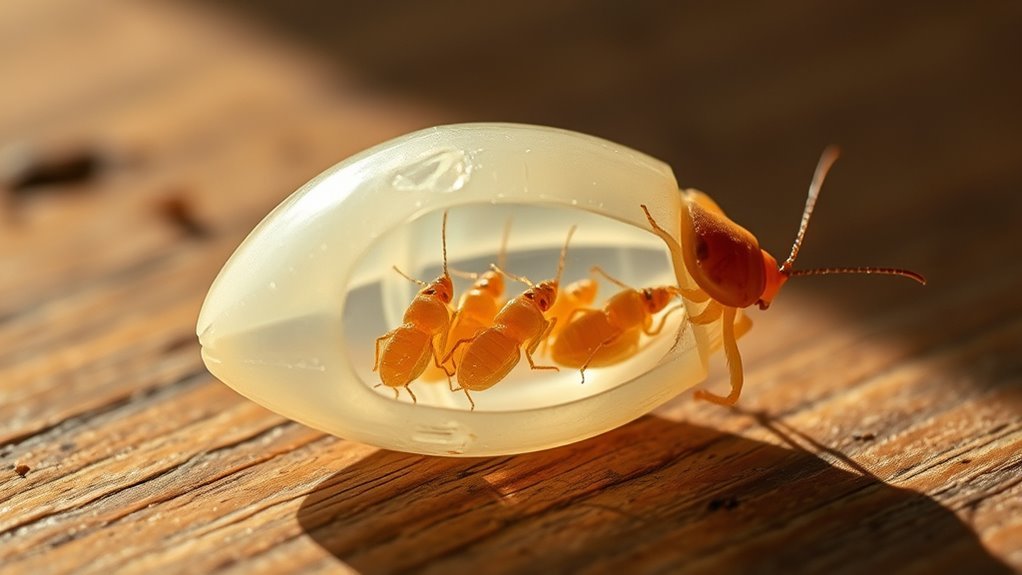
Although egg hatching times vary among cockroach species, you can generally expect German cockroach eggs to hatch within 28 days under ideal conditions. The hatch time depends on the species and environmental factors that affect the incubation period.
For example, Oriental cockroach eggs take longer, sometimes up to 60 days, while American cockroach eggs hatch between 44 and 60 days. Brown-banded cockroach eggs usually hatch in about 50 days.
Each cockroach egg case holds multiple embryos that develop into nymphs once hatched. Understanding the varying hatch times among species helps you better identify and manage infestations.
How Temperature And Humidity Affect Cockroach Egg Hatching
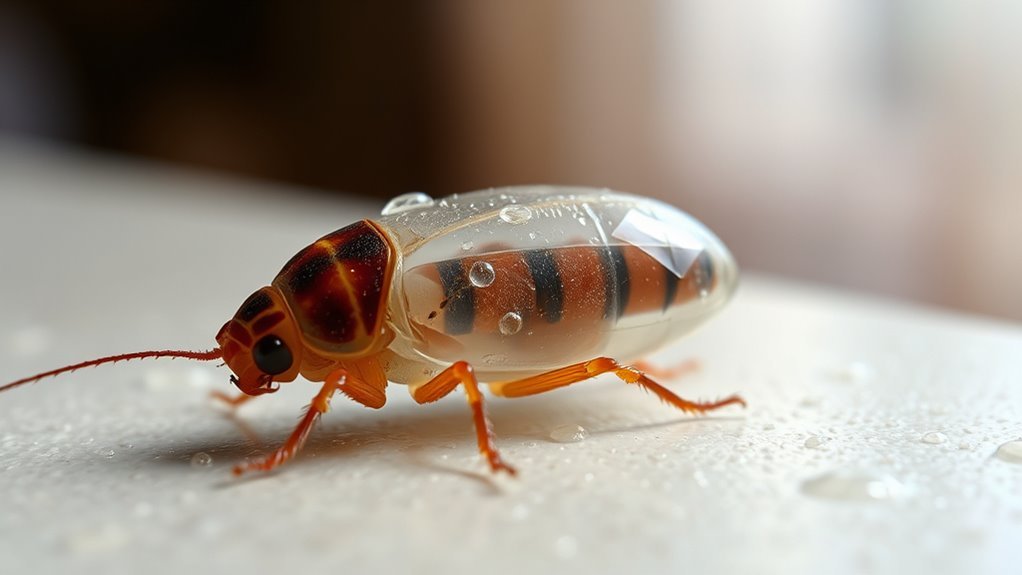
Understanding the specific hatch times for different cockroach species is only part of the picture—environmental factors like temperature and humidity play a major role in how quickly those eggs actually hatch. When temperature stays between 75°F and 85°F, incubation time shortens, sometimes to just 28 days for German cockroach eggs.
Ideal conditions also include humidity levels of 60-80%, which boost hatch rates and support steady egg development. If humidity drops below 40%, hatching time delays or eggs may fail to hatch.
Cooler or drier climates slow down egg development, extending incubation beyond normal ranges. Extreme fluctuations in temperature or humidity can cause dormancy or incomplete development, reducing hatch success.
Frequently Asked Questions
How Fast Do Roaches Multiply?
Roaches multiply incredibly fast. You’ll see their population explode within months because females lay eggs continuously. With warm, humid conditions, their numbers skyrocket, making it tough to control infestations once they start breeding rapidly.
Can You 100% Get Rid of Roaches?
You can’t 100% guarantee roach elimination because eggs resist treatments. But if you stay consistent with cleaning, sealing entry points, and using professional help, you’ll greatly reduce their numbers and keep your home mostly roach-free.
Where Do Cockroaches Lay Eggs in the House?
You’ll find cockroaches laying eggs in dark, hidden spots like cracks, under sinks, inside cabinets, or behind appliances. They prefer moist areas like basements or dry, high places such as cabinet tops or picture frames.
How Many Roaches Are in One Egg Sack?
You’ll find that one egg sack, or ootheca, typically holds 30 to 50 roach eggs. That means each sack can hatch dozens of nymphs, fueling rapid roach population growth if left unchecked in your home.
Conclusion
Now that you know how long roach eggs take to hatch, you can better prepare your home defense. Just like a knight readying his armor before battle, you’ll want to control temperature and humidity to slow their growth.
Keep in mind, different species hatch at different speeds, so staying vigilant is key. With this knowledge, you’re armed to stop those pesky invaders before they swarm your space.
Understanding the hatching timeline of roach eggs helps you act quickly and efficiently. By monitoring conditions that encourage egg development, you can disrupt their life cycle and prevent infestations. So, stay alert and proactive—your home’s protection depends on it!