7 Tips to Make Chickens Lay More Eggs
To make your chickens lay more eggs, start by choosing high-yield breeds like Leghorns or hybrids for steady production. These breeds are known for their reliable egg-laying abilities, which can really boost your flock’s output.
Keeping your chickens happy and healthy is key to getting consistent eggs. Keep their coop clean, safe, and well-ventilated to reduce stress. A comfortable environment helps your chickens relax and focus on laying.
Also, provide 14–16 hours of consistent light daily to mimic natural daylight patterns and encourage egg production.
Boost their diet with 18–20% protein plus calcium supplements for strong shells. Good nutrition is essential for healthy hens and quality eggs.
Encourage natural behaviors with comfortable nesting and foraging opportunities to keep them active and content.
Regularly check their health and manage parasites promptly. Healthy chickens are happy layers.
Explore more ways to enhance your flock’s egg-laying success below.
Key Takeaways
– Choose high-yield breeds like Leghorns or hybrids like Red Star for consistent, abundant egg production.
These breeds are known for laying a lot of eggs, so picking the right one really makes a difference.
– Maintain a clean, well-ventilated, and predator-proof coop with comfortable, private nesting boxes.
Your hens will feel safer and more relaxed, which helps them lay better.
– Provide 14-16 hours of consistent light daily using timers to support hens’ laying cycles.
This might sound a bit technical, but timers make it easy to keep their schedule steady.
– Feed a balanced diet with 18-20% protein and supplement calcium regularly for strong eggshells.
Good food equals healthy hens and better eggs; it’s that simple.
– Promote hen health by managing parasites, reducing stress, and encouraging natural behaviors like dust bathing.
Happy, healthy hens are the best layers you can have!
Choose High-Yield Breeds for Better Egg Production
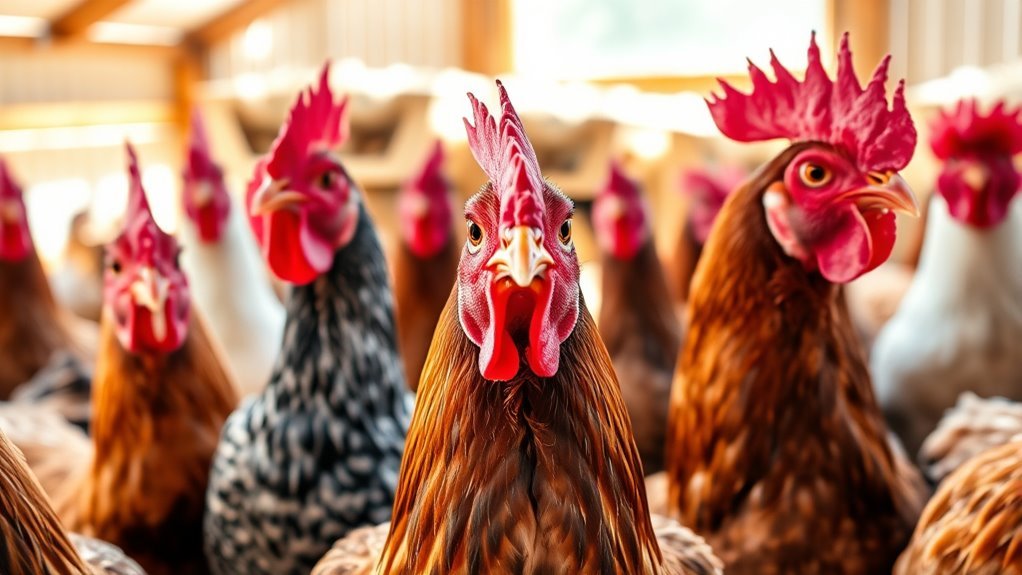
Wondering how to boost your flock’s egg production? Start with smart breed selection by choosing high-yield breeds known for their egg laying capacity.
Breeds like Leghorns, Rhode Island Reds, and Australorps consistently lay over 250 eggs yearly, making them top choices. Hybrid breeds such as Red Star and Black Star are specifically bred to maintain steady egg production throughout the year, giving you reliable results.
If you want variety without sacrificing output, consider Cream Legbars or Easter Eggers. They lay between 150-200 eggs annually and add colorful eggs to your collection.
Picking breeds suited to your climate and management style also maximizes their potential. By focusing on high-yield breeds and hybrids, you set your flock up for better egg production right from the start.
Maintain a Clean, Safe Coop to Support Egg Laying
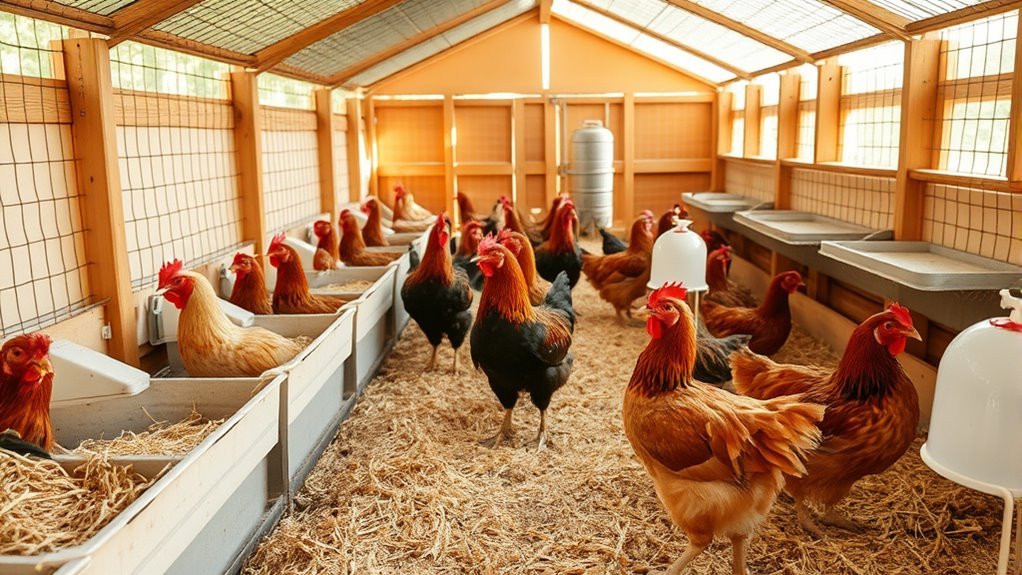
Although choosing the right breed is important, maintaining a clean and safe coop plays a crucial role in supporting your hens’ egg laying. You should clean the coop weekly to guarantee a hygienic environment.
Also, replace bedding often with fresh materials like straw or wood shavings. Keeping the coop well-ventilated is key to reducing moisture and ammonia.
These steps help prevent mold and reduce stress, which directly impact egg production. Plus, make sure your coop is predator-proof to protect your hens from harm.
| Task | Benefit | Frequency |
|---|---|---|
| Clean coop | Hygienic environment | Weekly |
| Replace bedding | Fresh bedding | Regularly |
| Ensure ventilation | Prevent mold, reduce stress | Always |
Encourage Foraging and Provide Comfortable Nesting
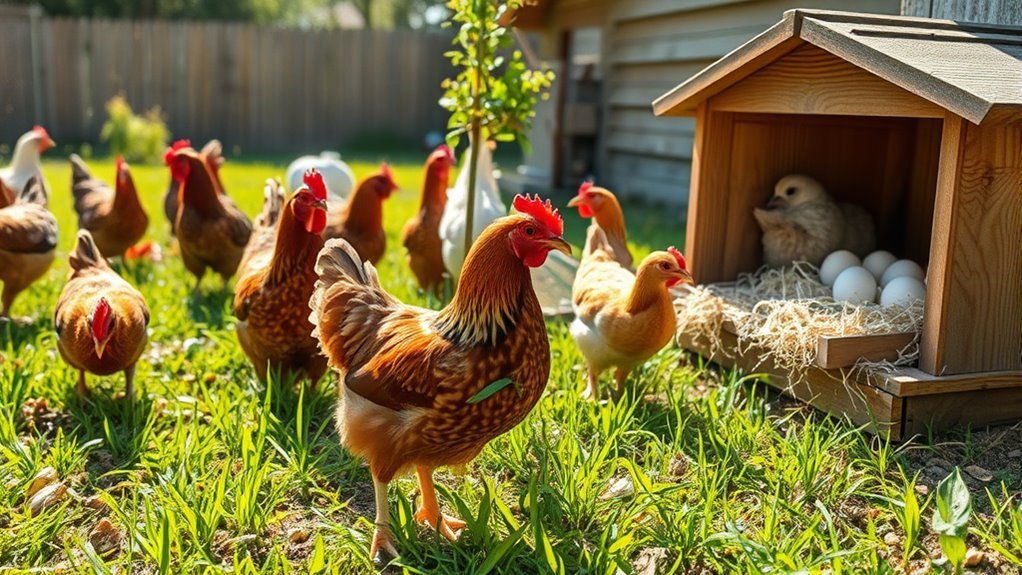
You can boost egg production by encouraging natural pecking through providing straw or greens for foraging. It keeps your hens busy and happy.
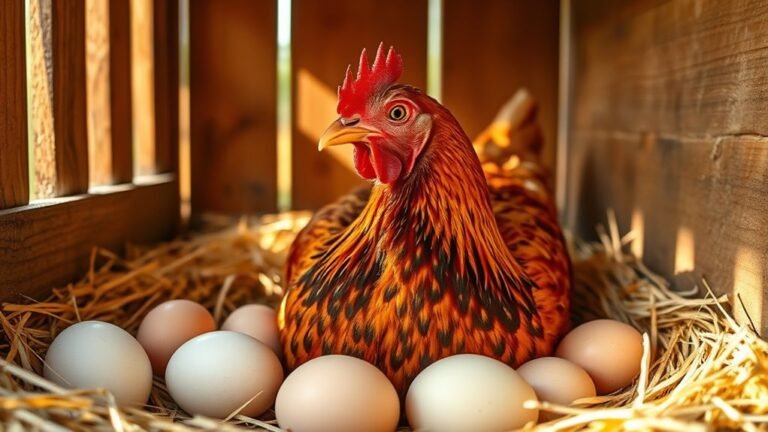
Make sure your hens have cozy, clean nesting boxes with soft bedding to lay comfortably. They’ll appreciate a comfy spot to settle down.
Creating a calm, private space helps them relax and lay eggs regularly. When they feel safe, they’re more likely to keep laying.
Promote Natural Pecking
When you provide straw or hay in the run, you encourage your hens to forage naturally, which boosts their egg production. Natural foraging supports mental stimulation and reduces stress. This is key to healthy pecking behavior.
Comfortable nesting boxes with soft bedding motivate hens to lay eggs consistently and return regularly. Environmental enrichment through foraging and cozy spots promotes overall well-being.
| Factor | Benefit |
|---|---|
| Straw in run | Encourages natural foraging |
| Soft bedding | Increases hen comfort |
| Nesting boxes | Reduces stress, boosts laying |
| Environmental enrichment | Stimulates pecking behavior |
| Adequate space | Promotes natural behaviors |
Cozy Nesting Spaces
Encouraging natural foraging sets the stage for hens to feel comfortable and motivated in their environment. To boost egg production, focus on creating cozy nesting spaces.
Provide a well-cushioned nesting box with soft bedding like straw or hay to mimic natural nesting behavior. Make sure nesting areas are dark, secluded, and offer privacy so hens feel secure when laying eggs.
Multiple nesting boxes reduce competition and stress, encouraging consistent laying. Keep these spaces clean and dry to prevent contamination and attract hens back regularly.
Provide Consistent 14–16 Hours of Light Daily
Although hens naturally respond to daylight, maintaining a consistent 14 to 16 hours of light daily is key to keeping their egg production steady. You can use artificial lighting to extend the natural light during shorter days, especially in winter.
This helps ensure your chickens continue to lay eggs regularly. Just be careful not to exceed 16 hours of light, as too much can stress your flock and disrupt their natural rest cycles.
Using a timer helps provide consistent hours of light, so your chickens develop a reliable laying routine. By managing light exposure thoughtfully, you support *ideal* egg production without causing unnecessary stress.
Boost Protein Intake for Better Egg Production
To boost egg production, aim for a protein intake of 18-20%. Adjust it seasonally to meet your hens’ needs.
Try including a variety of protein sources like mealworms, sunflower seeds, or high-protein feed. This keeps their diet balanced.
Doing this helps your hens stay healthy and lay consistently. It’s especially important during colder months.
Protein Sources Variety
Why does varying protein sources matter for your hens? Different protein sources provide a range of essential amino acids and nutrients that keep your chickens healthy and consistently laying.
Incorporate high-protein treats like mealworms and sunflower seeds along with plant-based protein from legumes. Adding protein-rich grains ensures they get steady nutrition, especially during shorter days.
Don’t forget crushed oyster shells for calcium, which strengthens eggshells and encourages laying.
| Protein Source | Benefit |
|---|---|
| Mealworms & Sunflower Seeds | High-protein treats for energy |
| Legumes (peas, lentils) | Plant-based protein, boosts health |
| Protein-rich grains | Sustains laying in low light |
Mix these regularly to keep your hens thriving and productive.
Optimal Protein Percentage
A diet containing 16-20% protein is essential for your hens to maintain steady egg production, especially during colder months. Boosting protein levels from 16% to 18-20% supports energy needs and helps hens lay consistently, particularly around their peak age.
High-protein feeds like soybean meal or mealworms supply vital amino acids that improve egg shell quality and overall reproductive health. So, it’s really important to keep those protein numbers in check.
To optimize protein intake, consider these tips: Choose chicken feed with at least 16-20% protein content. Also, try incorporating high-protein feeds for balanced nutrition.
You can add protein-rich treats too, like sunflower seeds or cooked eggs. Keep an eye on egg shell quality so you can adjust protein levels as needed.
Proper protein management directly impacts egg production and keeps your hens healthy and productive. It’s a simple step that makes a big difference!
Seasonal Protein Adjustments
Although shorter daylight hours in winter naturally slow down egg production, you can help your hens maintain their laying rhythm by boosting their protein intake to 18-20%. Seasonal protein adjustments are key to supporting winter egg laying and molting recovery.
By increasing protein supplementation with high-protein treats like mealworms or cooked eggs, you provide essential amino acids that enhance egg formation and strengthen immune systems. These seasonal adjustments also help hens stay warm and reduce stress, which otherwise can halt laying.
Consistently adjusting protein levels ensures your flock has the nutrients needed for sustained egg production throughout the year. Remember, tailoring feed according to seasonal needs optimizes productivity and shortens recovery during molting, making protein a crucial part of your winter care strategy.
Add Calcium to Keep Eggshells Strong
How can you make certain your hens lay eggs with strong, durable shells? Adding calcium to their diet is key to maintaining eggshell strength and supporting consistent egg production. Without enough calcium, eggshells become thin and prone to breakage.
That risks contamination and poor egg quality. You can easily supplement their diet with crushed oyster shells or dried eggshells. These provide the necessary calcium for healthy shell formation.
To keep your hens’ eggshells strong, remember to:
- Offer crushed oyster shells daily as a calcium supplement
- Guarantee hens get about 3.5 grams of calcium weekly
- Provide calcium-rich foods to prevent shell defects
- Regularly supply supplements to support hen health and strong eggshells
This simple step boosts eggshell durability and your flock’s productivity.
Monitor Hen Health and Manage Parasites Promptly
Since parasites can quickly stress your hens and lower egg production, you need to inspect them regularly for signs like feather loss or unusual behavior. Effective parasite management starts with maintaining coop cleanliness—remove waste and replace bedding weekly to prevent infestations.
Encourage dust baths using diatomaceous earth or sand, which help chickens naturally eliminate external parasites. When you spot mites or other parasites, act promptly with natural remedies or appropriate treatments to restore hen health.
Monitoring your flock closely ensures you catch issues early, minimizing stress and boosting laying performance. By prioritizing hen health and managing parasites consistently, you create a comfortable environment that supports steady egg production throughout the year.
Frequently Asked Questions
What Can I Give My Chickens to Help Them Lay More Eggs?
You can give your chickens protein-rich treats like mealworms and sunflower seeds, plus calcium sources like crushed eggshells or oyster shells. Don’t forget fresh water and herbs like oregano to keep them healthy and laying regularly.
How Many Eggs Will 4 Chickens Lay in a Week?
Four healthy hens can lay about 20 eggs weekly. You’ll likely get between 16 and 24 eggs depending on breed and care. Keep them happy and well-fed to maximize their egg-laying potential each week.
Does Vinegar Help Chickens Lay Eggs?
Yes, vinegar can help chickens lay eggs by improving their digestion and gut health. Adding small amounts to their water supports a healthy digestive system, which may boost egg production, but don’t overdo it to avoid digestive upset.
How to Speed up Egg Laying?
You can speed up egg laying by increasing light exposure to 14-16 hours daily, which boosts hens’ productivity by up to 50%. Also, feed them high-protein diets and keep their environment calm and stress-free.
Conclusion
Want to see your hens lay more eggs consistently? By choosing high-yield breeds, keeping their coop clean, and ensuring they get enough light, protein, and calcium, you’re setting them up for success.
Don’t forget to encourage foraging and watch their health closely to catch any issues early. With these simple steps, you’ll enjoy a steady supply of fresh eggs.
Ready to boost your flock’s productivity? It’s easier than you think! Following these tips will help you increase egg production naturally and keep your chickens happy and healthy. A clean coop, proper nutrition, and good care make all the difference in getting more eggs from your hens every day. Start applying these easy changes and watch your egg count rise!