

Why Was Peter Pan Played by a Woman?
You’ll find Peter Pan is traditionally played by a woman because of practical and artistic reasons. Casting a female avoids child labor restrictions and suits the stage demands like flying.
Women naturally bring out Peter’s youthful energy and playful innocence, capturing his timeless androgyny perfectly.
This tradition started over a century ago and became standard after iconic performances. If you keep exploring, you’ll understand how this choice shapes the magic and spirit behind the character.
It’s pretty fascinating how a simple casting decision adds so much to Peter Pan’s charm and timeless appeal.
Key Takeaways
– Early 20th-century theater customs favored women for Peter Pan because there were legal restrictions on child actors.
It was just easier and safer to cast women in the role.
– Female actors often had androgynous looks, which made them perfect for playing Peter’s boyish, youthful character.
They could really capture that youthful vibe.
– Women were also great at handling the tricky stage tasks, like flying scenes.
This made casting more practical and consistent.
– Plus, iconic performances by actresses like Maude Adams set the trend.
They made it normal for women to play Peter Pan.
– Casting women helps keep Peter Pan’s timeless innocence, sense of adventure, and gender ambiguity alive on stage.
It’s part of what makes the character so special.
Historical Background of Women Playing Peter Pan

Since the early 20th century, women have traditionally played Peter Pan. This practice is rooted in English theater customs around 1904. Nina Boucicault was the first to take on the role, setting a precedent that soon became standard in theater practices.
You’ll find this tradition partly developed because of casting restrictions on child actors. These restrictions made female performers more practical choices. Plus, women’s androgynous qualities helped them convincingly portray the boyish character.
Notable actresses like Maude Adams and Mary Martin further solidified this theatrical norm by delivering iconic performances. In the early 20th century, English theater favored this approach, blending practical considerations with artistic ones.
Why Women Are Ideal for Playing Peter Pan
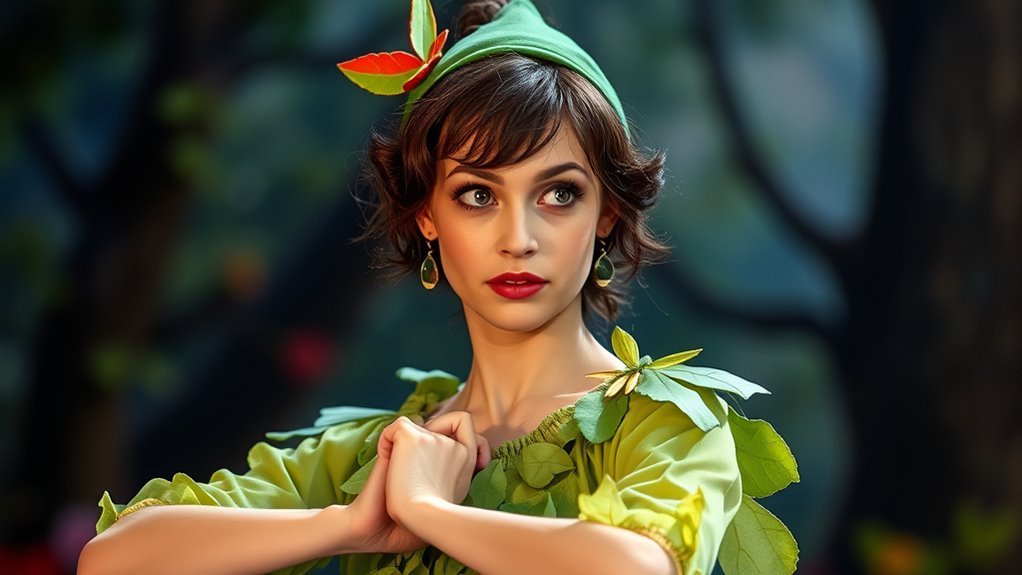
The tradition of women playing Peter Pan isn’t just about history—it’s about how well female actors capture the character’s youthful energy and boyish charm. Women bring a natural youthful appearance and playfulness that’s essential for Peter Pan’s spirit.
Since child actors faced legal limits and flying on stage posed challenges, female actors stepped in, blending androgyny with gender fluidity to achieve performance realism. This stage tradition lets women convincingly embody the timeless, adventurous boy without losing innocence.
You’ll notice female actors excel in portraying Peter Pan’s gender-ambiguous nature, making the character believable and engaging. By embracing androgyny and playful energy, women keep the magic alive, showing why they remain ideal for this iconic role in theater.
Frequently Asked Questions
What Is Peter Pan Syndrome in Females?
Peter Pan Syndrome in females means you might avoid adult responsibilities, cling to childlike behaviors, and struggle with commitment. You may find it hard to grow emotionally, often due to past experiences or fear of growing up.
What Is the Dark Original Story of Peter Pan?
You’ll find the original Peter Pan story darker, with themes of kidnapping, violence, and death. Peter’s rebellious, cunning nature challenges innocence, reflecting loss and mortality beneath the surface of eternal youth and childhood wonder.
What Is the Dark Theory About Peter Pan?
Like chasing shadows in Neverland, you confront the dark theory: Peter Pan hides a fear of growing up, masking childhood trauma and escapism. You see eternal youth as denial, avoiding life’s harsh truths and inevitable pain.
Conclusion
So, why has Peter Pan often been played by women? It’s because they bring a unique blend of youthful energy and vocal range that perfectly captures the boy who never grows up.
You might wonder—doesn’t it seem magical that a woman can so effortlessly become a timeless boy? In this theatrical dance of identity, women don’t just play Peter; they embody the spirit of eternal childhood.
This choice highlights the power of theater to blur lines and bring characters to life in unexpected ways. Ultimately, having women play Peter Pan reminds us that the magic of Peter Pan lies not just in the story, but in the energy, spirit, and timelessness that female actors bring to the role. It’s a beautiful example of how casting can deepen the connection between audience and character, keeping the magic of eternal childhood alive on stage.