How Does a Chicken Egg Get Fertilized
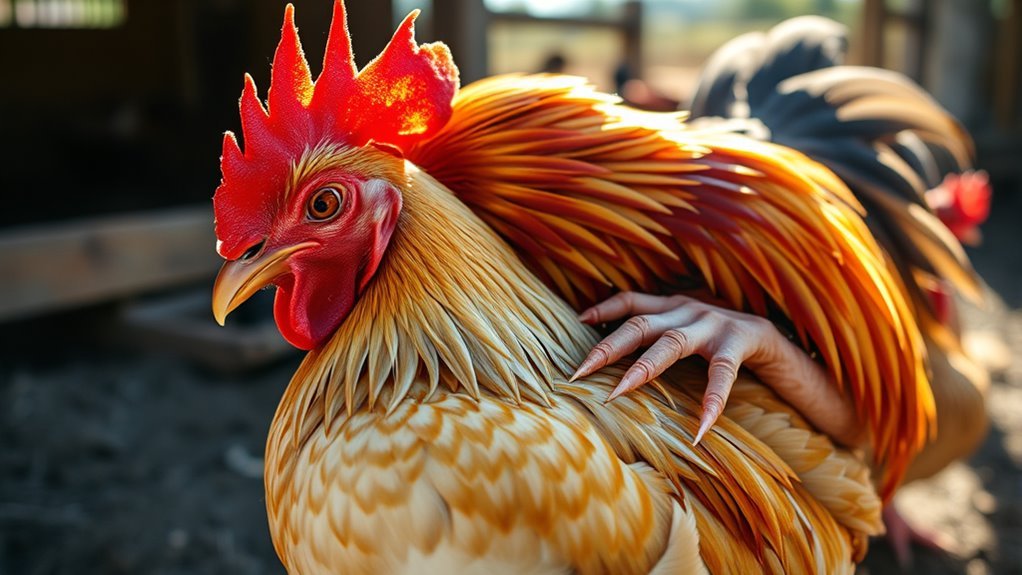
When a rooster mates with a hen, he transfers sperm through cloacal contact, even though he has no external reproductive organs.
That sperm travels to the hen’s oviduct, where it can fertilize eggs for several weeks after just one mating.
Fertilized eggs look like regular eggs at first, so to tell if one’s fertilized, you typically have to use techniques like candling.
Keep exploring, and you’ll uncover how fertilization and egg development really work.
Key Takeaways
- Fertilization happens when the rooster and hen press their cloacas together, which transfers sperm to the hen.
- The hen then stores this sperm inside her body. This storage lets her fertilize multiple eggs over several weeks without needing to mate again.
- This all takes place inside the hen’s oviduct, about 24 hours before she lays the egg.
- One mating session can provide enough sperm to fertilize several eggs during the incubation period.
- You can’t tell if an egg is fertilized just by looking at it. The best way to check is by candling the egg after some incubation, where you can see embryo development.
How Roosters Fertilize Eggs
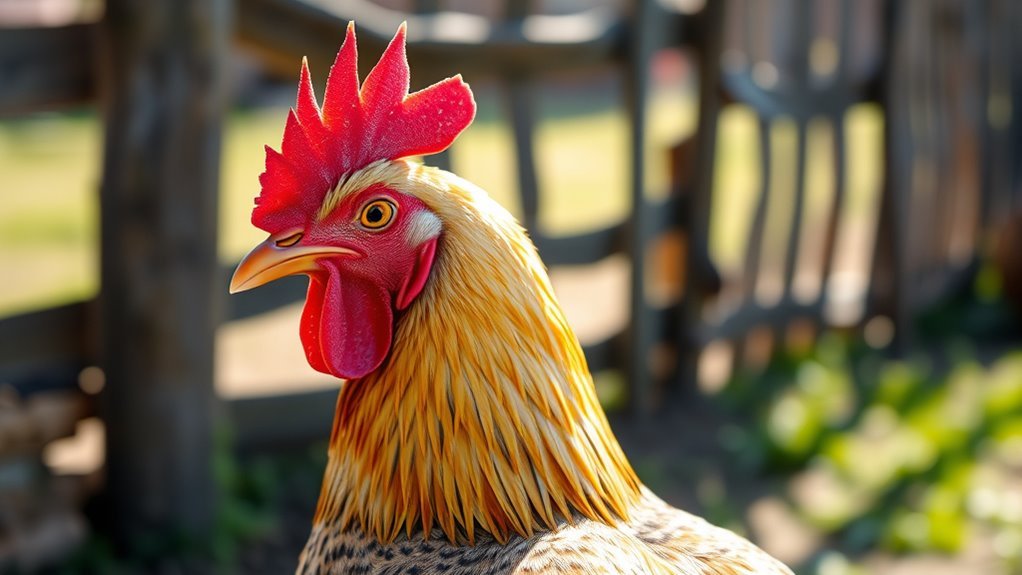
Although roosters don’t have external reproductive organs, they fertilize eggs by transferring sperm to hens through cloacal contact during mating. When a rooster mates with a hen, he presses his cloaca against hers, allowing sperm to transfer into her reproductive tract.
Roosters fertilize eggs by pressing their cloaca against hens’, transferring sperm during mating.
This sperm can be preserved inside the hen for several weeks, supporting the fertilization process over time. Fertilization occurs in the hen’s oviduct about 24 hours before she lays her egg.
Thanks to sperm storage, a single mating can result in several fertilized eggs during the incubation period. Understanding this helps you differentiate fertilized vs unfertilized eggs later.
The efficient sperm transfer and storage system ensures fertilized eggs develop properly, making the reproductive process both effective and fascinating.
How to Identify Fertilized Eggs Before Incubation
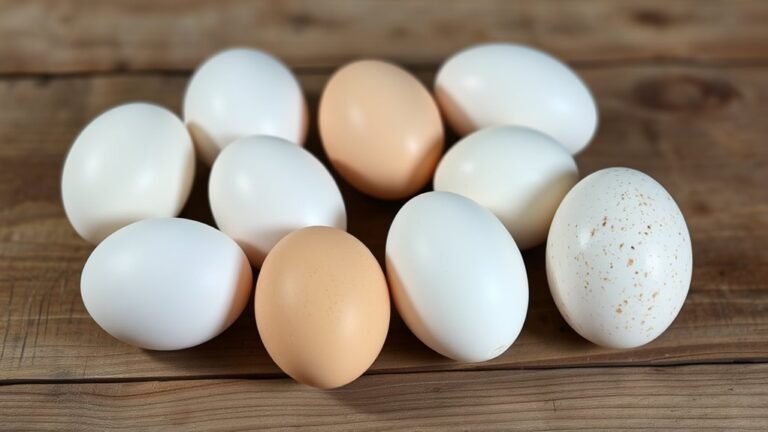
When you want to identify fertilized eggs before incubation, you’ll find that their external appearance looks just like unfertilized ones. You can’t rely on visual inspection alone to detect fertilization.
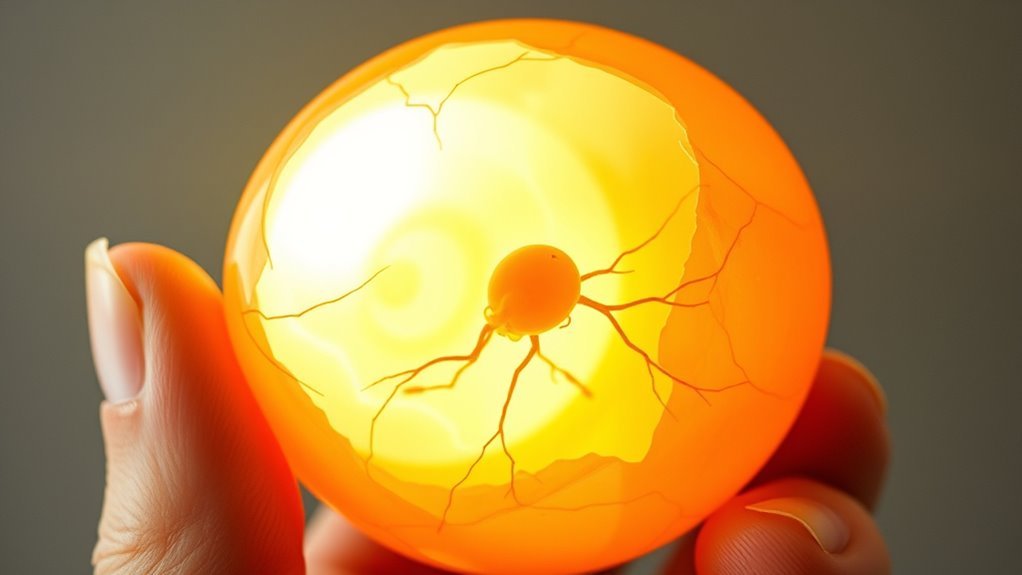
The key lies in the yolk, where fertilized eggs often have a small, white spot called the germinal disc—a bullseye-like mark. However, cracking the egg to see this destroys it.
Instead, candling is a better method, though veins and embryo development usually become visible only after 4-7 days of incubation. Don’t confuse blood spots with fertilization; they’re just ruptured vessels and don’t indicate an embryo.
Frequently Asked Questions
How Do Farmers Know if a Chicken Egg Is Fertilized?
You can tell if a chicken egg is fertilized by candling it. Shine a bright light through the egg and look for a “bullseye” or vein patterns inside, which show embryo development and fertilization.
How Do Hens Lay Eggs Without a Rooster?
Hens lay eggs without a rooster because their bodies naturally produce eggs on a regular cycle. You don’t need a rooster for them to lay; hormones and light trigger egg production regardless of fertilization.
Are Fertilized Eggs Safe to Eat?
You absolutely can plunge into fertilized eggs without fear—they’re just as safe and tasty as any other egg. They won’t hatch in your fridge, and their nutrition matches perfectly with unfertilized ones every single time.
How Does a Rooster Fertilize an Egg?
A rooster fertilizes an egg by mating with a hen, pressing his cloaca against hers to transfer sperm. The sperm travels inside her, fertilizing eggs internally before the shell forms, enabling multiple fertilized eggs over time.
Conclusion
Now that you know how roosters dance their way into the hen’s heart to fertilize eggs, you’re ready to spot the hidden spark inside each shell. Think of fertilized eggs as tiny seeds of life, waiting patiently beneath their smooth, speckled coats.
With this knowledge, you hold the key to nurturing new beginnings. It’s pretty amazing to realize that these simple eggs carry the promise of chirping chicks and fresh morning dawns on your farm.
Understanding how a chicken egg gets fertilized helps you appreciate the natural cycle of life on your farm. Fertilized eggs are the starting point for raising healthy chicks, bringing new life and energy to your flock.
So, whether you’re an experienced farmer or just curious, recognizing fertilized eggs connects you to nature’s incredible process of growth and renewal. It’s all about turning ordinary eggs into the hope and excitement of tomorrow’s chirping chicks.