7 Facts About How Many Eggs Silkie Chickens Do Lay
You’ll find that Silkie chickens typically lay about three small, fragile eggs per week, totaling nearly 100 eggs a year. These unique birds are known for their gentle nature and fluffy feathers, but when it comes to egg production, they’re a bit different from your average chicken.
Their eggs are smaller and softer than standard chicken eggs, usually white or cream-colored.
Broodiness can cut their output by half since broody hens focus on incubation, not laying. So, if your Silkie hen gets broody, don’t be surprised if the egg count drops.
Younger, healthy hens lay more consistently, and proper care boosts production. If you want to understand factors like age, nutrition, and incubation tips, there’s plenty more to explore.
Key Takeaways
- Silkies typically lay about 3 eggs per week, averaging around 100 eggs annually.
- Four Silkie hens can collectively produce approximately 19 eggs each week.
- Egg production is steady after hens begin laying but drops significantly during broodiness.
- Silkies lay smaller, soft-shelled eggs weighing 35-50 grams, usually white or cream-colored.
- Younger Silkies lay more consistently, while older hens produce fewer eggs after 2-3 years.
Silkie Egg Production Per Week and Year
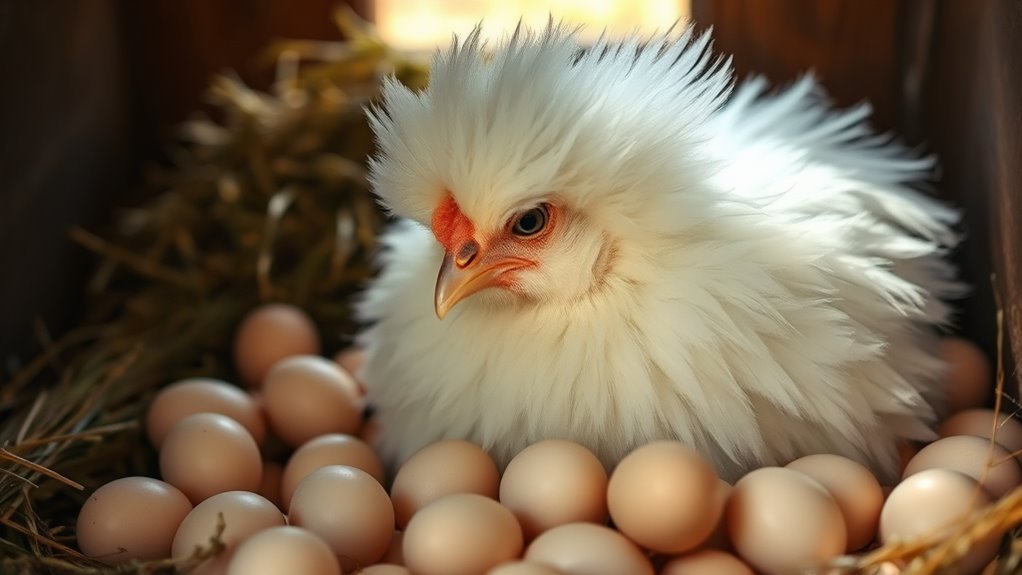
Although Silkies aren’t known for high egg production, you can expect each hen to lay about three eggs per week, totaling roughly 100 eggs per year. Silkie egg production stays fairly steady once they start laying, with some variation in egg laying frequency.
On average, one hen lays an egg every three days, so your flock’s eggs per week depend on how many hens you have. For instance, four Silkies can produce around 19 eggs weekly.
However, keep in mind that broody Silkie hens might reduce egg output as they focus on nesting rather than laying. Despite not being bred for high egg counts, Silkies provide a reliable annual egg count that fits well with backyard flocks looking for unique chickens with moderate egg production.
Factors Affecting Silkie Egg-Laying Consistency
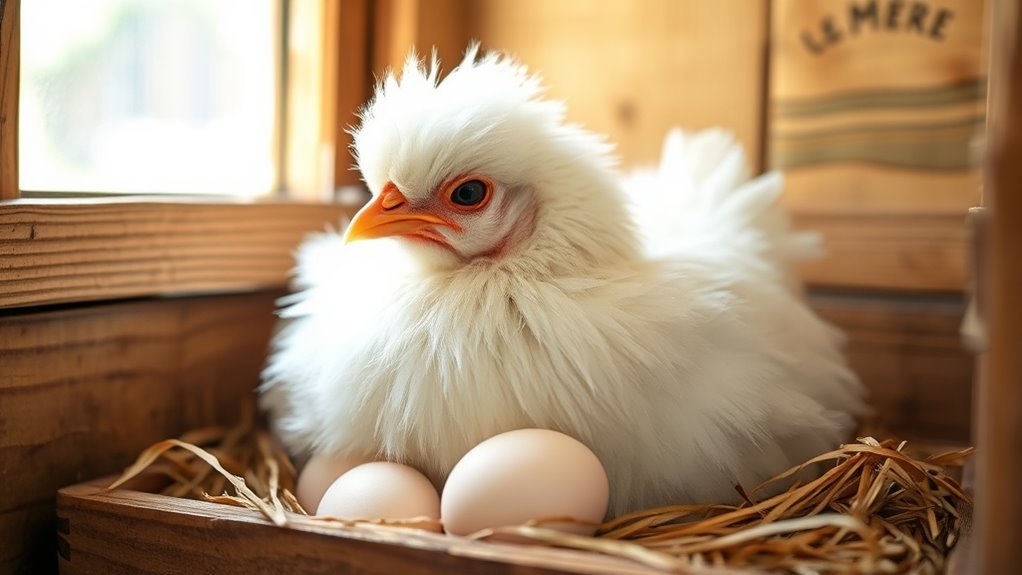
Understanding why Silkie egg production varies can help you manage your flock better and set realistic expectations. Silkies’ strong broody nature often interrupts egg production, causing inconsistency.
Age plays a role too—young hens lay more, while older ones slow down. Environment and nutrition also impact laying; stress, poor diet, or inadequate nesting can reduce egg output.
| Factor | Impact on Egg Production | Tips for Improvement |
|---|---|---|
| Broody | Pauses laying during brooding periods | Provide distraction or separate hen |
| Age | Younger hens lay more consistently | Rotate flock to maintain layers |
| Environment | Stress or poor conditions lower output | Ensure clean, quiet nesting area |
Silkie Egg Size and Color Compared to Other Breeds
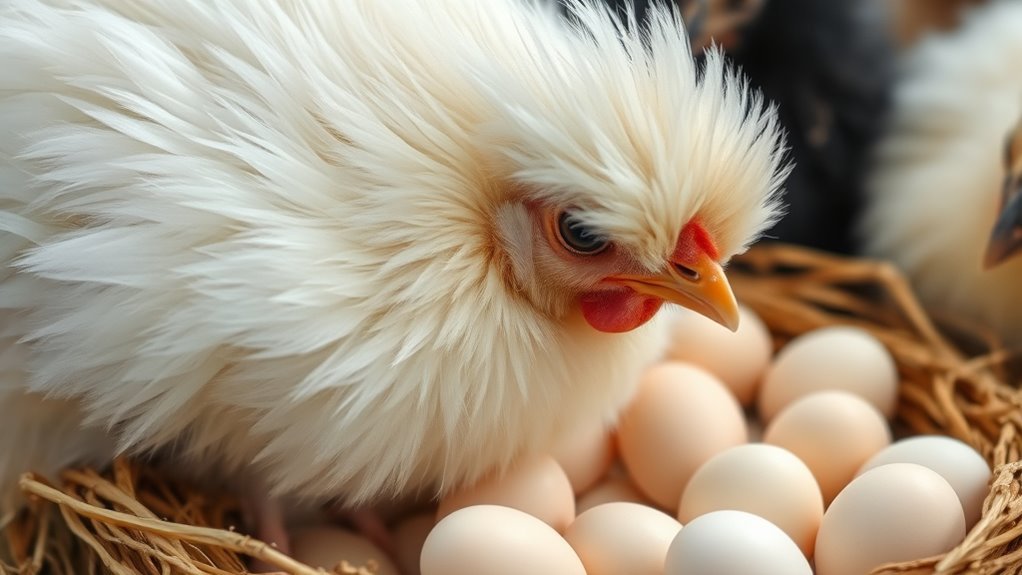
You’ll notice Silkie eggs are smaller than those of standard chickens, usually weighing between 35 to 50 grams. Their shells tend to be white or cream-colored, much like other bantam breeds.
Comparing these traits helps you understand how Silkies stand out from other chickens. It’s pretty interesting once you start looking closely!
Egg Size Variations
How do Silkie eggs compare in size and color to those of other chicken breeds? Silkie eggs are noticeably smaller, typically weighing between 35 to 45 grams, which is less than standard chicken eggs. Their egg size reflects their bantam heritage, making them a unique choice if you’re used to larger breeds.
The egg shell of Silkie eggs tends to be softer and more fragile, so you’ll want to handle them carefully. While the color usually ranges from white to cream, you might notice subtle shade differences depending on each hen.
Keep in mind, Silkie egg production is lower, with about 100 to 120 eggs per year. Despite their size, the yolks are often larger and brightly colored, adding value to these charming small eggs.
Eggshell Color Differences
Although Silkie eggs are smaller than those of many other breeds, their eggshell color tends to stay within a white to off-white range, much like other light-colored chickens. You’ll notice that while Silkie eggs don’t stand out in color, their size and yolk vibrancy make them unique.
When comparing egg color differences, keep these in mind:
- Silkie eggshell color usually ranges from pure white eggs to subtle off-white eggs.
- Unlike breeds with brown or speckled eggs, Silkies maintain consistency in their light eggshell color.
- Small variations in eggshell color can occur due to diet or individual hens but rarely shift far from white or off-white.
How Broodiness Affects Silkie Egg Production
When Silkies become broody, they focus intensely on incubating eggs, which often stops them from laying new ones. Broodiness causes a significant egg laying reduction, sometimes cutting Silkie egg production by half or more.
During this period, your Silkie will refuse to leave the nest, dedicating herself solely to broodiness and incubation. This behavior leads to fewer eggs overall, as she’s not adding new ones while incubating eggs.
During broodiness, Silkies stay on the nest, focusing on incubation and pausing new egg laying.
To maintain steady egg production, you’ll need to manage this natural instinct by breaking the broody cycle. Providing distractions or removing her from the nest can help end broodiness, encouraging her to resume laying.
Understanding how broodiness affects your Silkie’s egg output helps you balance her nurturing behavior with consistent egg production. It’s all about finding that sweet spot between care and keeping those eggs coming.
Impact of Age and Health on Silkie Egg Output
Since a Silkie’s egg production depends heavily on her age and health, understanding these factors can help you manage your flock more effectively. Silkie hens start laying at 7 to 9 months, with egg production improving as they mature.
But keep in mind, it declines sharply after 2 to 3 years. Maintaining your hens’ health through proper nutrition is essential. Illness or stress can quickly reduce egg output.
Consider these key points:
- Young Silkies increase egg production up to 2 years old.
- After 3 years, expect egg production to drop markedly.
- Good nutrition and a stress-free environment sustain steady egg laying.
Tips to Boost Silkie Egg Production
To boost your Silkie’s egg production, focus on providing a balanced diet rich in calcium, protein, and vitamins. This helps keep them healthy and ready to lay.
You’ll also want to enhance their environment with adequate lighting and a clean, stress-free space. These simple changes can make a noticeable difference in how often your Silkies lay eggs. Give it a try and see the results!
Optimal Nutrition Strategies
Although Silkie chickens are known for their unique appearance rather than high egg production, you can still boost their laying potential through ideal nutrition strategies. Focus on providing a balanced diet rich in essential nutrients to enhance egg production and strengthen eggshells.
Here are three key tips:
- Offer high-quality layer feed fortified with protein, vitamins, and minerals to meet your Silkie’s nutritional needs.
- Supplement their diet with calcium sources like oyster shell or calcium grit to promote strong eggshells and consistent laying.
- Guarantee your Silkies have constant access to fresh, clean water. Hydration directly affects their overall nutrition and egg production, so don’t overlook this simple step.
Environmental Enhancements
When you create a comfortable and stress-free environment for your Silkie chickens, you’ll notice an improvement in their egg production. Start by ensuring your coop has consistent lighting—natural light or supplemental artificial lighting encourages hens to lay more eggs.
Keep the temperature steady and moderate, avoiding extremes that can disrupt their laying cycle. Reducing stress is essential: minimize loud noises, protect them from predators, and handle them gently to keep them calm.
Provide cozy nesting boxes with clean straw bedding, so your Silkies feel safe and motivated to lay regularly. By focusing on proper lighting, coop conditions, temperature control, stress reduction, and comfortable nesting, you’ll help your Silkies reach their full egg-laying potential.
Collecting and Incubating Silkie Eggs
Since Silkie chickens lay about 2 to 3 small, cream-colored eggs per week, you’ll want to collect them regularly to keep them clean and encourage steady production. Frequent egg collection helps prevent broodiness, which can halt egg production.
When selecting eggs for incubation, choose well-shaped, clean eggs no older than 10 days to ensure fertile eggs develop properly.
To successfully incubate Silkie eggs, maintain specific temperature and humidity levels for about 20 to 21 days. Here’s a quick guide:
- Collect eggs daily to avoid broodiness and keep egg production consistent.
- Choose eggs carefully for incubation, focusing on cleanliness and age.
- Monitor incubation conditions closely to promote healthy hatching of fertile eggs.
Following these steps will help you manage your Silkie eggs effectively.
Frequently Asked Questions
How Many Eggs Do Silkies Lay in a Day?
You can expect a Silkie to lay about 0.4 eggs per day, meaning they usually produce three small eggs each week. Their daily egg count varies, so don’t count on them laying every single day.
How Many Eggs Can a Silkie Chicken Hatch?
You can expect a Silkie chicken to hatch around 100 eggs per year, depending on conditions. She’s a great mother, often goes broody, and naturally incubates eggs for about 20 to 21 days.
Do Silkie Chickens Lay Good Eggs?
Yes, you’ll find Silkie chickens lay good eggs—they’re small, cream-colored, and nutritious. While not the highest producers, their eggs have a unique flavor and are perfectly safe to eat, making them a tasty choice.
What Are Some Interesting Facts About the Silkie Chicken?
Silkies are like fluffy clouds with feet, known for their gentle nature and unique black skin. You’ll love their broody instincts and calm demeanor, making them perfect pets rather than just egg layers in your backyard flock.
Conclusion
Now that you know silkies lay fewer eggs than typical hens, you might wonder if their broodiness actually boosts overall egg production. While being broody means they stop laying temporarily, it’s key for hatching chicks. This makes silkies perfect if you want to raise your own flock.
So, if you’re after quantity, silkies might not be your top pick—but for charm and chick-raising, they’re hard to beat. Their unique personality and dedication to sitting on eggs make them stand out. Keep experimenting and see what works best for you! When it comes to how many eggs silkie chickens do lay, remember it’s about more than just numbers—it’s about their special qualities too.