How Do You Cook Hard Boiled Eggs in the Microwave in 5 Easy Steps?
To cook hard-boiled eggs in the microwave, start by bringing your eggs to room temperature. This helps them cook evenly and reduces the chance of cracking.
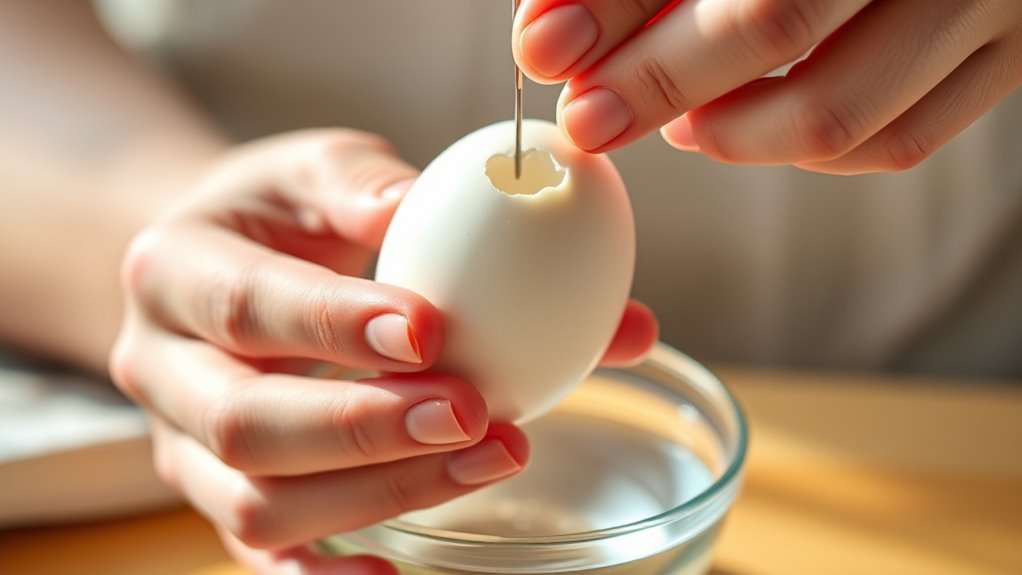
Next, pierce each egg gently to prevent them from bursting while cooking.
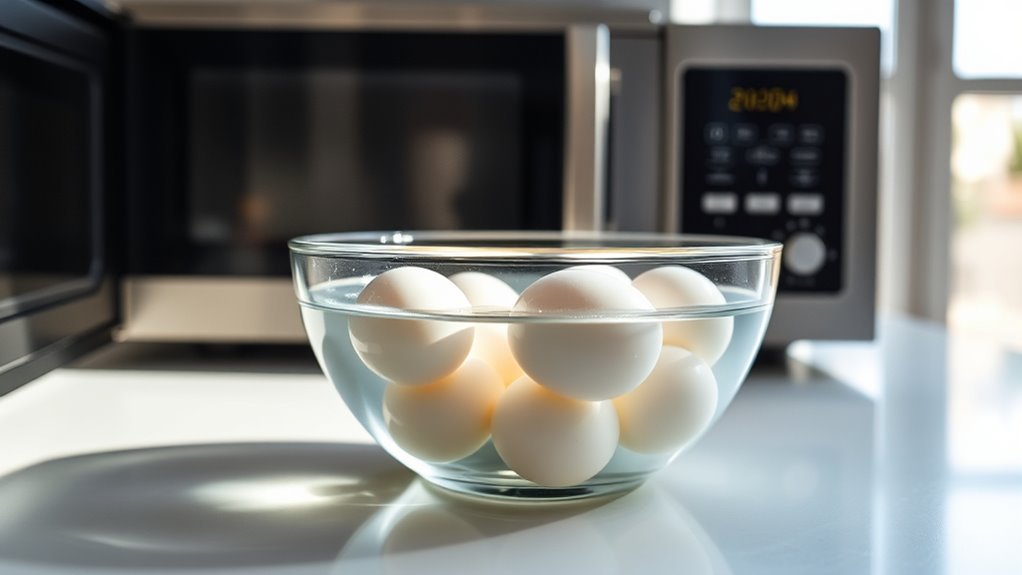
Place the eggs in a microwave-safe bowl filled with hot water and add a pinch of salt.
Cooking at 50-100% power for 4-6 minutes usually does the trick. It’s best to keep an eye on them so they don’t overcook.
Once done, immediately transfer the eggs to ice water. This stops the cooking process and makes peeling much easier.
When your eggs are still warm, gently crack the shells and peel them.
Now, you’re ready to serve or store your hard-boiled eggs chilled.
Keep going to discover tips for perfect results every time!
Key Takeaways
- Pierce the broader end of eggs multiple times to release steam and prevent cracking.
- Submerge eggs in a microwave-safe bowl filled with about an inch of hot water, adding a pinch of salt.
- Cover the bowl with vented plastic wrap to allow steam to escape and prevent splattering.
- Microwave eggs at 50%-100% power for 4 to 6 minutes, adjusting time based on egg size and wattage.
- Immediately transfer eggs to ice water for at least five minutes to cool and stop cooking.
Prepare and Pierce Eggs Safely for Microwaving
Before microwaving, make certain your eggs are at room temperature or soak cold eggs in water for 3-4 minutes to minimize cracking. This step helps reduce temperature shock, which can cause eggshells to crack.
Ensure eggs are at room temperature or soak in water briefly to prevent cracking from temperature shock.
Next, gently pierce the broader end of each egg multiple times using a pin or fork. This allows steam to escape during cooking, preventing explosion inside the microwave.
Always handle eggs gently when placing them in hot water or the microwave to avoid sudden impact damage. Use a microwave-safe container filled with enough hot water to fully submerge the eggs—about an inch deep—to ensure even cooking.
Adding a pinch of salt to the water improves heat conduction and aids in crack prevention, making your hard-boiled eggs safer and more consistent every time.
Microwave Eggs With Proper Timing and Power Settings
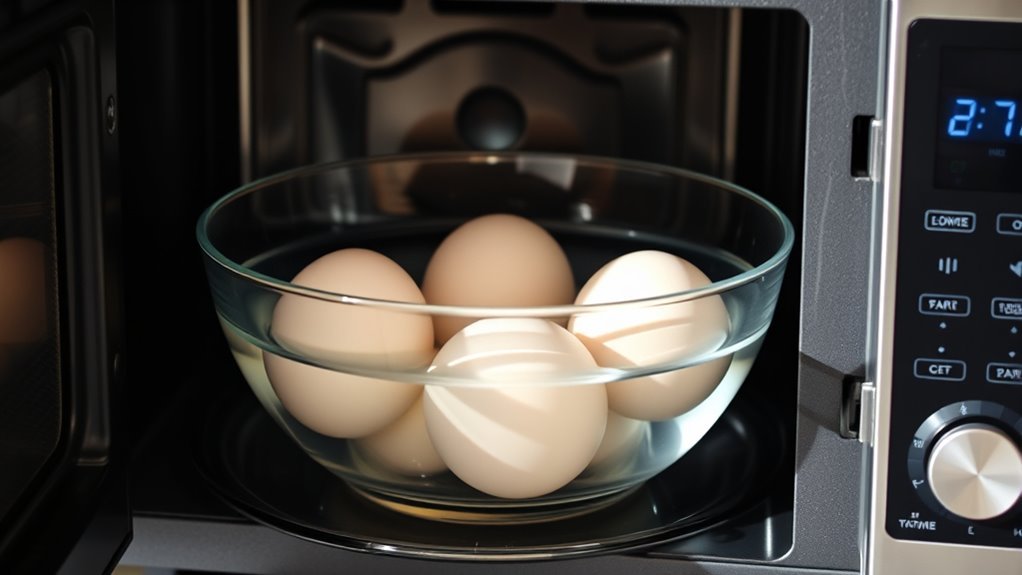
When microwaving your eggs, set the power level between 50% and 100%. Adjust the time to about 4 to 6 minutes depending on the size of the eggs and your microwave’s wattage.
Start by placing pierced eggs in water inside a large microwave-safe bowl. Make sure they’re fully submerged to promote even cooking.
Cover the bowl with vented plastic wrap to allow steaming while preventing splattering. Proper microwave power settings and cooking time help prevent explosions and ensure thorough cooking without overcooking.
The steaming process softens the eggs inside the shell, which actually makes peeling easier after cooking. Once the microwave hard boiled eggs finish cooking, avoid letting them sit in hot water because that can cause continued cooking.
Instead, get ready to transfer them quickly to an ice water bath. This helps achieve the ideal texture and makes peeling a breeze.
Cool Eggs Quickly in Ice Water to Stop Cooking

Although your eggs just finished microwaving, you’ll want to transfer them immediately to a bowl of ice water to stop the cooking process. Plunging eggs in ice water provides rapid cooling that prevents overcooking and stops the yolks from developing a greenish ring.
Transfer microwaved eggs to ice water immediately to halt cooking and prevent greenish yolk rings.
This ice bath cools eggs quickly, preserving their texture and moisture. Submerging the eggs in ice water for at least five minutes completes the cooling process and makes them safe to handle.
The cold water also causes the shell to contract slightly, so you’ll peel easily without damaging the egg whites. Skipping this step risks continued cooking from residual heat, leading to rubbery whites and a less appealing yolk.
Using an ice bath for the eggs is crucial for overcooking prevention and ensures perfect results every time. It’s a simple trick that really makes a difference!
Peel Your Microwave Hard-Boiled Eggs With Ease
Wondering how to peel your microwave hard-boiled eggs without frustration? Start by cooling them immediately in ice water after microwaving. This cooling causes the shell to contract and loosen, making peeling easy to peel.
Use older eggs whenever possible; their shells peel easily because they’re less tightly adhered to the membrane than fresh ones. When ready to peel, gently tap and roll the egg on a hard surface to crack the shell evenly.
You’ll find that the shell comes off more smoothly, especially when you peel while the egg is still slightly warm. These simple steps ensure your microwave hard boiled eggs won’t give you any trouble during peeling, leaving you with perfectly peeled eggs every time.
Serve and Enjoy Your Perfect Microwave Eggs
After cooling your microwave hard-boiled eggs in an ice bath, you can easily peel off the shell to reveal smooth, firm eggs ready to serve. You can serve your microwave eggs whole, halved, or sliced, depending on your preference.
Add seasoning like salt, pepper, or herbs to enhance their flavor. These hard-boiled eggs make a great addition to salads, sandwiches, or stand alone as a quick, protein-packed snack.
If you’re not eating them right away, store your properly cooled eggs in the refrigerator to maintain freshness for up to five days. This way, you always have convenient, nutritious eggs on hand to enjoy whenever you need a fast meal or snack.
Frequently Asked Questions
How to Boil Hard Boiled Eggs in the Microwave?
You place eggs in a microwave-safe bowl, cover with water, pierce shells, microwave for 4-6 minutes, then let them sit. Finally, cool in ice water before peeling for perfect hard-boiled eggs.
How to Microwave Hard Boiled Eggs Without Them Exploding?
Want to avoid an eggplosion? Pierce your eggs, cover them loosely, microwave on low power in short bursts, and let them rest. This gentle dance keeps eggs intact and perfectly cooked without bursting in your microwave.
What Is the Easiest Way to Cook an Egg in the Microwave?
You crack the egg into a microwave-safe container, pierce the yolk, cover it loosely, then microwave on high for 30-40 seconds. Let it rest, cool in water, and adjust time for desired doneness.
Can You Hard Boil an Egg in the Microwave Without Water?
Trying to hard boil an egg in the microwave without water is like lighting a firecracker in a glass jar—dangerous and messy. You shouldn’t do it, or the egg will likely explode and create a big mess.
Conclusion
Now that you’ve mastered microwave magic, making hard-boiled eggs is a breeze! With proper piercing, perfect power, and prompt plunging into ice, you’ll peel these pearls with pure pleasure.
Remember, quick cooling curbs overcooking, creating creamy centers every time. Serve, savor, and share your simply spectacular, speedy snack.
So next time you need a nutritious nibble, rely on your reliable, rapid microwave method for eggs that delight and satisfy! This easy microwave hard-boiled eggs technique saves time and effort, making it perfect for busy days or last-minute cravings. Give it a try, and enjoy perfectly cooked eggs that are ready in minutes!