What Materials Is an Egg Beater Made Of?
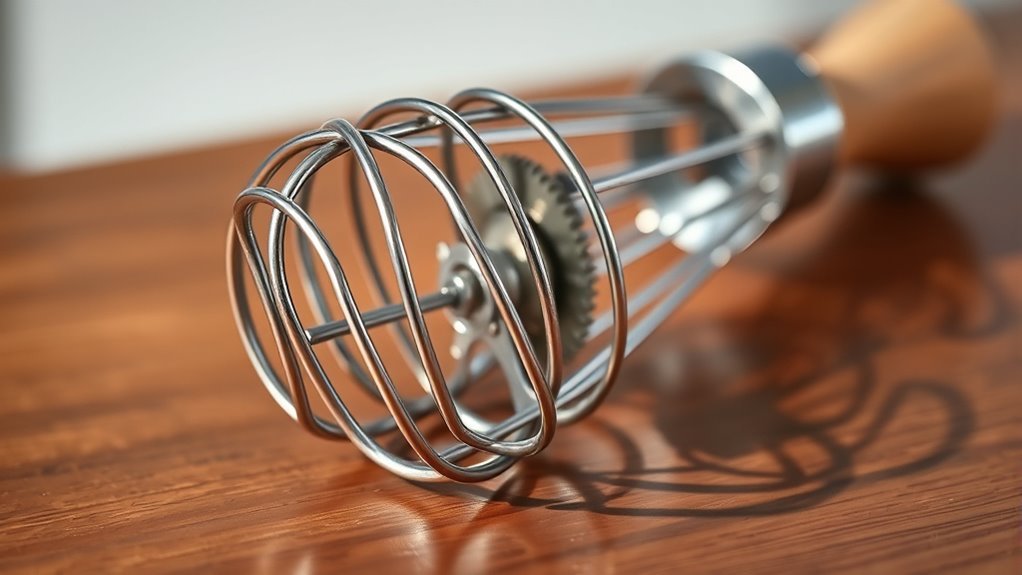
When you use an egg beater, you’re working with stainless steel blades that resist rust. These blades help whip your ingredients efficiently every time.
The gears inside can be made of metal or plastic, designed for smooth and long-lasting rotation.
The handles are usually made from sturdy hardwood like oak or comfortable plastic. This gives you a good grip while mixing.
Depending on the model, the mixing bowls might be durable plastic or glass.
All these materials come together to guarantee efficient whipping and durability.
Want to know how these materials impact the performance and lifespan of your egg beater? Keep reading, and I’ll break it down for you!
Key Takeaways
- Egg beaters commonly feature stainless steel or metal alloy blades for durability and rust resistance. These materials help the blades stay sharp and strong over time.
- Handles are made from hardwood like oak or maple, or comfortable plastic for a secure grip and longevity. This makes them easy to hold and use without slipping.
- Mixing bowls are usually crafted from durable plastic or glass. This ensures they have good structural integrity and are easy to clean after use.
- Internal gears and cogs are constructed from metal or plastic. These materials support smooth and reliable rotation, so the beater works efficiently.
- Material choices in beaters focus on enhancing performance, durability, and user comfort. This matters a lot, especially when you use the beater frequently.
What Are Egg Beaters Made Of?
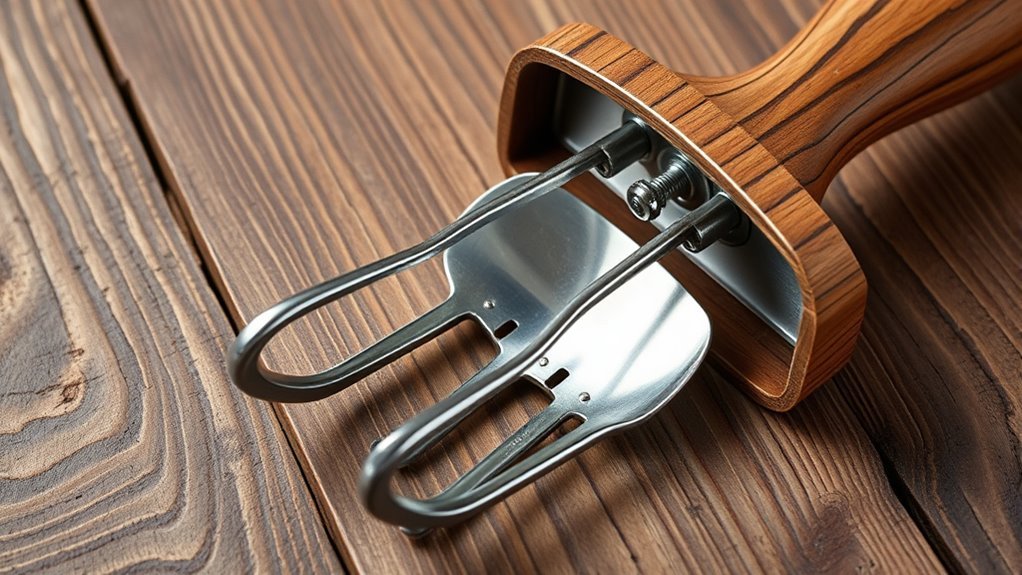
Although egg beaters come in various designs, they’re typically made from a combination of metal, plastic, and sometimes wood. You’ll find the beaters themselves often crafted from stainless steel or other metal alloys for efficient whipping.
The handle, where you grip the tool, is usually made from wood or plastic, offering comfort and control during use. The mixing bowl or container frequently uses durable plastic or glass, often marked with measurements to help you mix precisely.
Inside, the gears and cogs that power the rotation may be metal or plastic, depending on the model. This blend of materials guarantees your egg beater is both functional and comfortable to handle, making kitchen tasks easier every time you use it.
How Egg Beater Materials Affect Durability and Performance
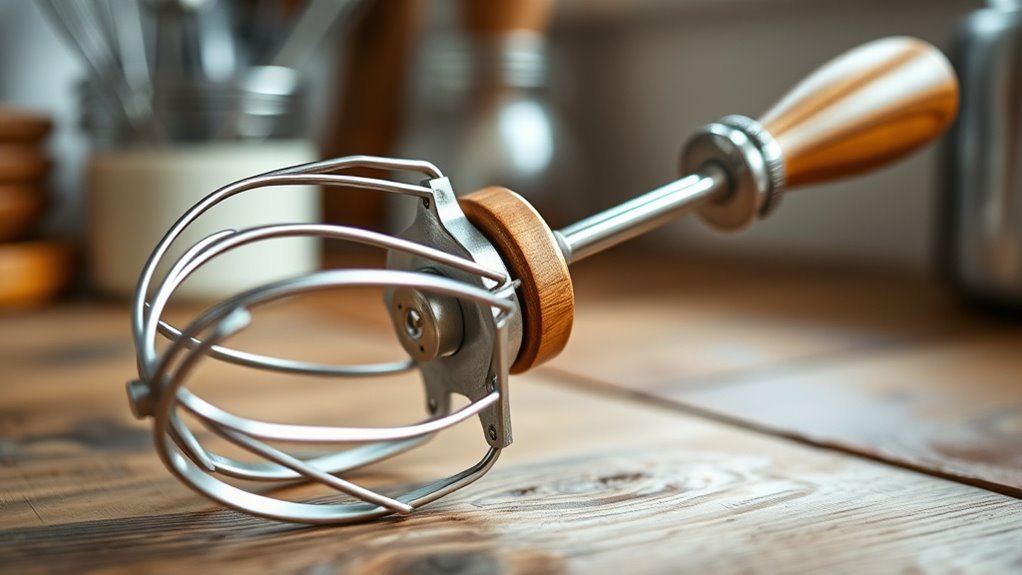
When you choose an egg beater made from quality materials like stainless steel, hardwood, and glass, you’re investing in durability and reliable performance. Stainless steel blades and gears resist rust and corrosion, guaranteeing your egg beater stays strong even after frequent use.
Hardwood handles, often crafted from oak or maple, provide a sturdy grip that won’t easily crack or splinter, adding to the tool’s longevity. Meanwhile, glass bowls on vintage models resist staining and maintain structural integrity over time.
This combination of stainless steel, hardwood, and glass not only enhances durability but also keeps your egg beater functioning smoothly. By selecting these materials, you confirm consistent performance and a kitchen tool that can handle mechanical stress without breaking down.
Frequently Asked Questions
How to Make Your Own Egg Beaters?
You’ll start by shaping durable metal for the beaters and handle, add food-safe plastic or silicone grips, and assemble them with a sturdy gear mechanism. Make sure everything’s non-corrosive, easy to clean, and safe for food use.
Are Egg Beaters Actually Healthy?
Yes, Egg Beaters are healthy because they’re low in calories, fat, and cholesterol. They provide essential vitamins and minerals, reduce bacterial risks, and suit heart-conscious diets, making them a smart choice for your nutrition.
Are Egg Beaters Made Out of Real Eggs?
Imagine a painter mixing colors without the original pigments—you’re not using real eggs in Egg Beaters. Instead, they’re crafted from egg whites and added ingredients, giving you the flavor and texture without the whole egg’s presence.
Do Egg Beaters Contain Iron?
Yes, Egg Beaters contain a small amount of iron, mainly from added vitamins like ferrous orthophosphate. You won’t find much iron, so check the nutrition label if you need precise details.
Conclusion
You’ll find that most egg beaters are made from stainless steel and plastic, combining durability with ease of use. Notably, stainless steel resists rust and lasts up to 10 times longer than other metals, so your egg beater can stay reliable for years.
Choosing quality materials means you’ll enjoy better performance and less hassle in the kitchen. Plus, plastic parts help keep the egg beater lightweight and easy to handle.
So, when picking an egg beater, remember: the right materials make all the difference in durability and efficiency. Opting for stainless steel and sturdy plastic ensures your egg beater won’t wear out quickly and will stay efficient every time you use it. In the end, investing in the right materials means your kitchen tool will be both dependable and comfortable to use, making your cooking experience smoother and more enjoyable.