

What Do Carpet Moth Eggs Look Like?
You’ll find carpet moth eggs as tiny, oval-shaped, creamy white to slightly yellowish specks about 0.5mm in size. These eggs are usually laid on natural textiles like wool or silk, sticking to fabric fibers in hidden spots such as seams, cuffs, or other undisturbed areas.
Their sticky coating helps them blend in, making them really hard to spot without some kind of magnification.
If you want to protect your belongings from carpet moth damage, knowing exactly where and how to detect these eggs is super important. Catching them early can save your fabrics from serious harm.
So, keep a close eye on those hidden corners where carpet moth eggs tend to hide!
Key Takeaways
- Carpet moth eggs are tiny and oval-shaped, about 0.5mm in size. They usually range from creamy white to a slightly yellowish color.
- They have a sticky coating that helps them stick firmly to fabric fibers. You’ll often find them laid in small clusters or scattered individually.
- These eggs blend right in with natural fibers like wool or silk, which makes them pretty hard to spot without some magnification.
- Usually, they hide out in undisturbed spots like seams, cuffs, or behind buttons, especially in dark locations.
- Because they can look like dust or debris, it’s important to check carefully if you want to catch them early and prevent an infestation.
What Do Carpet Moth Eggs Look Like?
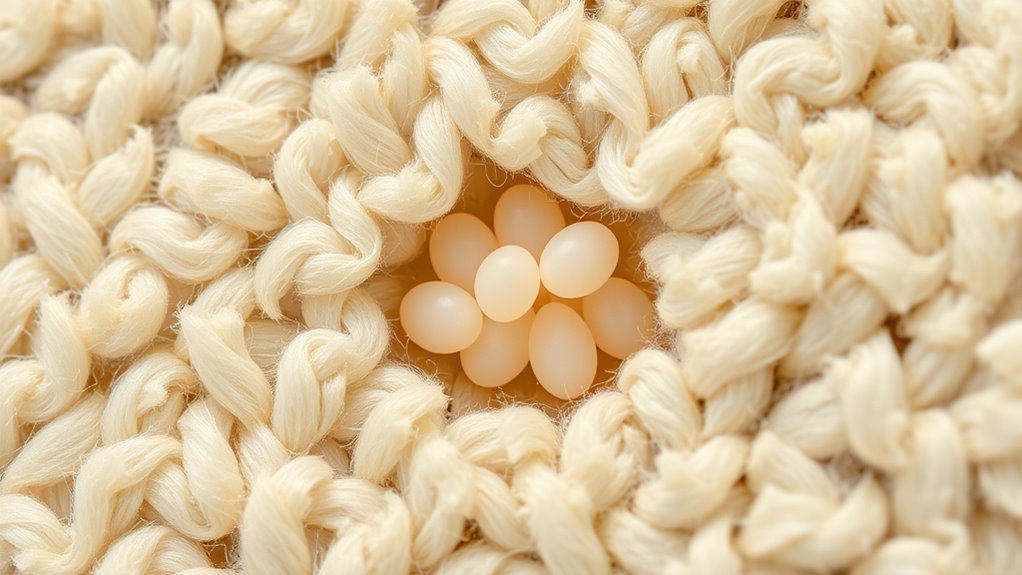
Although carpet moth eggs are tiny and often overlooked, knowing what they look like can help you catch an infestation early. Carpet moth eggs are tiny, oval-shaped, and about 0.5mm in size. They usually appear creamy white or slightly yellowish, making them blend in with fabric fibers.
These eggs are laid either in small clusters or scattered individually, often deep within fabric fibers like seams or cuffs. Each egg has a sticky coating that helps it cling firmly to the fibers, so they don’t easily fall off.
Although fresh carpet moth eggs are hard to see without magnification, once they hatch in 4 to 10 days, larvae emerge and start damaging your fabrics immediately. Recognizing these tiny eggs is your first step to stopping a moth problem early.
Where Are Carpet Moth Eggs Found and How to Spot Them

Since carpet moth eggs are so tiny and well-hidden, you’ll often find them deep within fabric fibers—like seams, cuffs, or behind buttons. They stick firmly thanks to a sticky coating.
These eggs prefer hidden areas, especially on natural fibers such as wool, silk, or fur. You’ll usually find them in dark, undisturbed spots.
Their eggs appear as tiny specks or granular clusters, which can easily be mistaken for dust or organic residues. To spot these signs of infestation, conduct a thorough fabric inspection focusing on vulnerable textiles.
Look closely for egg clusters or scattered specks that reveal carpet moth eggs. Catching these early helps prevent damage, so stay vigilant and inspect fabrics regularly to protect your belongings from infestation.
Frequently Asked Questions
Can You See Carpet Moth Eggs?
You usually can’t see carpet moth eggs with the naked eye because they’re tiny and blend into fabric fibers. You’ll need a magnifying glass and close inspection to spot them, especially in hidden or seam areas.
Will Vacuuming Get Rid of Carpet Moths?
You can’t just rely on vacuuming like a knight with a sword; it helps remove moth eggs and larvae but won’t fully get rid of carpet moths. Combine vacuuming with treatments like freezing or cleaning for best results.
How Do You Know if Moths Have Laid Eggs?
You’ll know moths have laid eggs if you spot tiny, gritty specks on fabrics, notice silk webbing, or find small holes in your clothes. Checking seams and hidden areas closely can reveal their presence.
What Time of Year Do Carpet Moths Lay Eggs?
Think of carpet moths as artists painting from late spring to early autumn, laying eggs mostly in warm months. You’ll find them active especially in late summer, though indoor heat can trick them into laying year-round.
Conclusion
Now that you know carpet moth eggs are tiny, white, and almost invisible, you might think they’re harmless. But don’t be fooled—their delicate appearance hides the potential for serious damage to your carpets and fabrics.
Spotting these minuscule eggs early means you can act fast, protecting your home before the moths hatch and multiply. So, keep a close eye on those hidden corners; what seems insignificant can quickly become a big problem.
Remember, carpet moth eggs might be small, but ignoring them can lead to extensive damage to your carpets and clothing. Early detection is key to preventing an infestation and saving your fabrics. Stay vigilant and inspect your carpets regularly to catch any signs of moth eggs before they turn into a costly headache.