
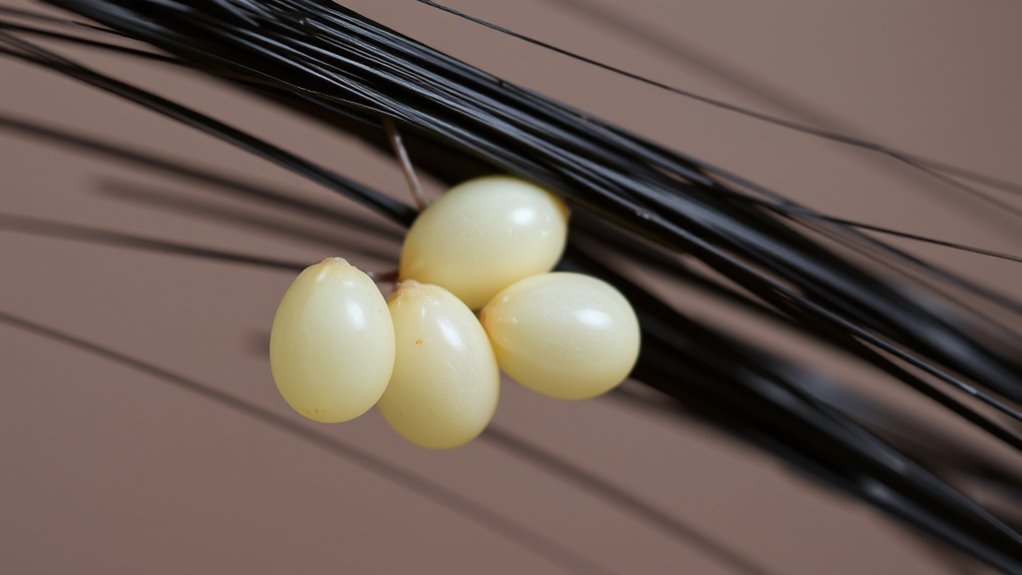
What Colour Are Dead Lice Eggs?
You’ll notice dead lice eggs look dull and come in white, gray, or translucent shades, unlike shiny live eggs. They often sit more than a quarter-inch from the scalp and lack the dark embryo spot inside.
Sometimes, they turn brown or black as they decompose, signaling no chance of hatching. Knowing these color cues helps you focus on active eggs and avoid unnecessary treatments.
Keep going to discover how to spot them with confidence. Understanding the color of dead lice eggs can make a big difference when dealing with lice removal.
Recognizing these subtle differences saves time and frustration, so you only target live eggs and lice.
Key Takeaways
- Dead lice eggs appear white, gray, or translucent, lacking the shine of live eggs. They often turn brown or black as they decompose, signaling non-viability.
- White or gray coloration usually indicates older, non-hatchable eggs. Dead eggs have a dull, matte finish and may look shriveled or empty.
- These color changes help you tell dead eggs apart from live ones. Plus, they’re a good way to see if your treatment is working.
Colors That Signal Dead Lice Eggs
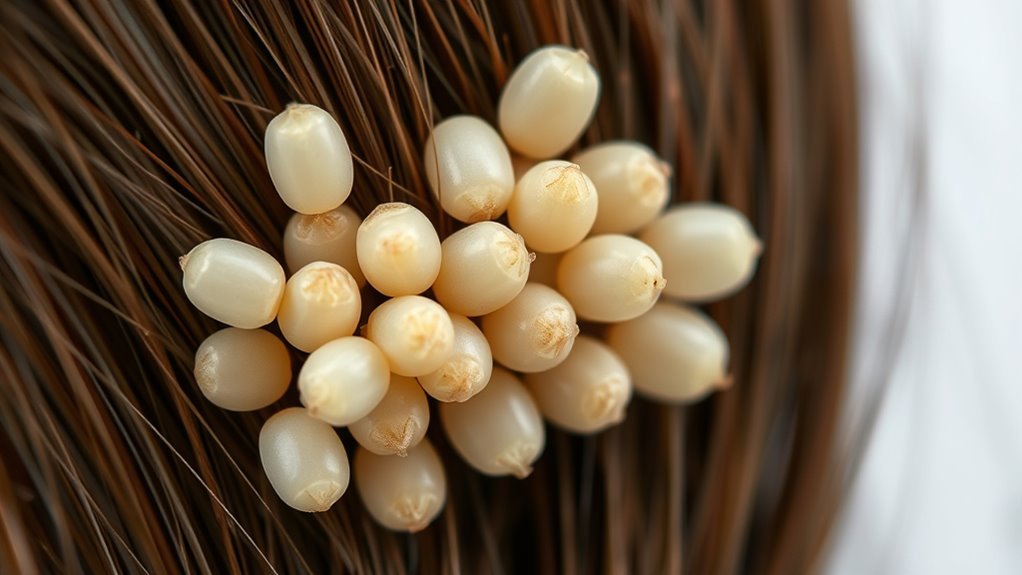
While live lice eggs are shiny and vibrant, dead lice eggs usually show colors like white, gray, or translucent. You’ll notice these dead eggs appear dull or matte compared to the fresh ones.
As they age, dead eggs often change color, turning brown or black as they begin to decompose. This color shift signals that the eggs are non-viable and no longer capable of hatching.
The exact shade depends on how long the dead eggs have been attached to the hair. White or gray dead eggs typically indicate older, non-viable eggs that have lost their potential to develop.
Recognizing these colors helps you understand the status of lice eggs, ensuring you know which ones are no longer a threat. It’s a handy way to tell what’s what when dealing with lice.
How to Differentiate Dead Lice Eggs From Scalp Debris
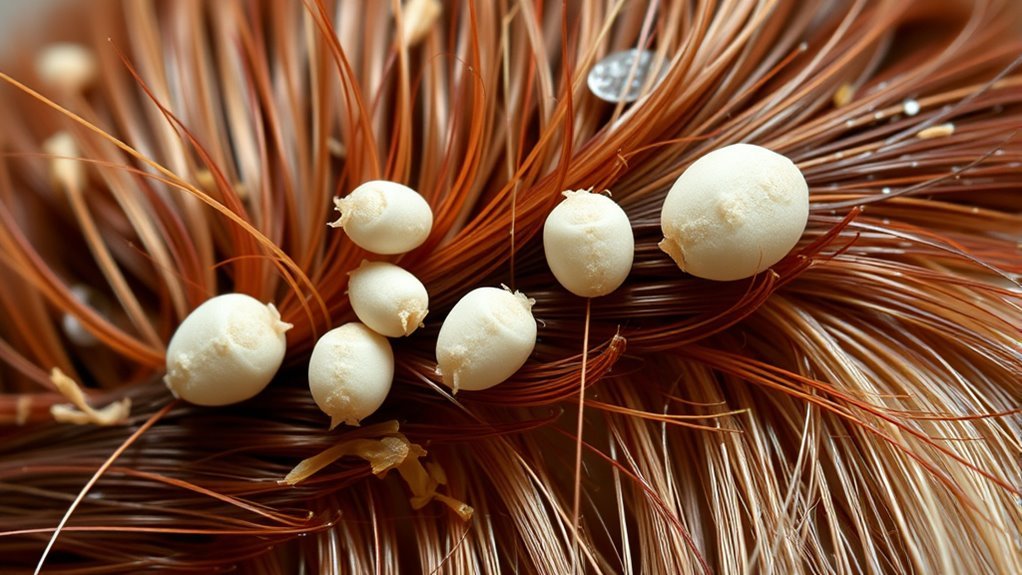
Recognizing the colors of dead lice eggs helps you identify which ones are no longer a threat, but distinguishing them from scalp debris is equally important. Dead eggs are firmly attached or glued to hair shafts, unlike scalp debris that flakes off easily.
You can tell dead eggs by their dull appearance and shriveled, empty shell look. They don’t have the dark embryo spot you see in live eggs.
Their location on the hair is also a clue—dead eggs usually sit more than 1/4 inch away from the scalp, which means they’re old. Using bright light or a magnifying glass can help you see these features more clearly.
Frequently Asked Questions
How to Tell if Lice Eggs Are Dead?
You can tell lice eggs are dead if they’re white or dull, lack a dark spot inside, feel hollow, and are located farther from the scalp. They also look flattened and may crumble easily when touched.
Will Dead Lice Eggs Eventually Fall Out?
Dead lice eggs usually won’t fall out on their own because they stick tightly to hair shafts. You’ll need to comb them out or use treatments to remove them effectively over time.
Can Dead Lice Eggs Be Black?
You won’t find dead lice eggs black; over 90% of lice eggs are white or translucent when dead. Black eggs usually mean they’re alive or covered in dirt, so don’t mistake color alone for death.
Why Do I Have Dead Lice Eggs but No Lice?
You have dead lice eggs but no lice because the infestation was recently treated or the lice naturally died. Those empty eggs stick to your hair, even though no live lice remain, showing past presence, not current infestation.
Conclusion
Now that you know dead lice eggs are usually white or translucent, you’ll find it easier to spot them compared to the tan or brown live ones.
Interestingly, a single female louse can lay up to 10 eggs a day, so catching those dead eggs early can really help control an infestation.
Keep an eye out for the color clues, and you’ll be one step ahead in keeping your scalp lice-free!
Recognizing the difference between dead and live lice eggs is key to managing lice effectively. White or translucent dead eggs mean the infestation is dying off, while tan or brown eggs indicate active lice. By spotting these differences, you can better target treatments and prevent the lice from spreading. So, paying attention to the color of lice eggs not only helps you monitor progress but also supports quicker, more effective lice removal. Stay vigilant, and you’ll increase your chances of having a healthy, lice-free scalp in no time!