

How to Tell If an Egg Has Been Fertilized Step by Step
You can tell if an egg’s fertilized by first looking for a small white bulls-eye called a blastoderm on the yolk, which shows early development. This is one of the easiest signs to spot if you want to know about egg fertilization.
After about a week of incubation, candle the egg by shining light through it; if you see blood vessels or a red spot, it’s fertilized.
Unfertilized eggs stay clear and lack these signs.
Cracking the egg to check the blastoderm is another quick method. Keep going to find out more about detecting fertilization accurately and easily.
Key Takeaways
- Look for a small white bulls-eye (blastoderm) on the yolk, indicating fertilization and embryo development.
- Candle eggs after one week to observe blood vessels and embryo growth, confirming fertilization.
- Identify a red spot with branching blood vessels during candling as a sign of embryo viability.
- Detect a slight cloudy ring around the yolk as an early indicator of fertilization.
- Crack eggs open to visually check for the blastoderm as a quick fertilization test.
Recognizing Fertilized Eggs: Visual Clues and Physical Characteristics
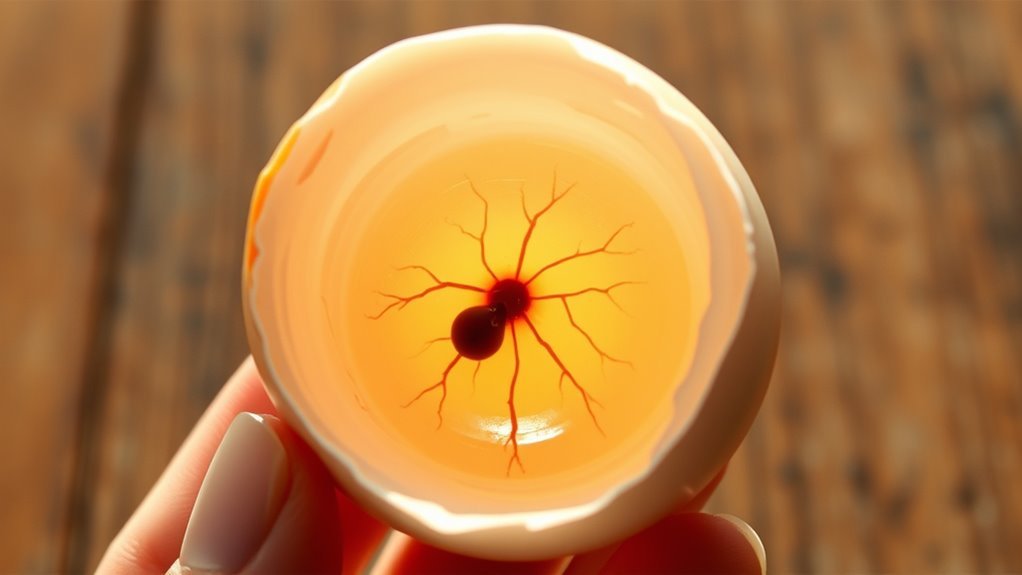
When you crack open a fertilized egg, you’ll often notice a small white bulls-eye called a blastoderm on the yolk. This clearly sets it apart from an unfertilized egg.
This small white spot is an essential visual clue indicating embryo development and viability. During candling, you’ll see a red spot with spidery blood vessels radiating inside the egg. That’s another sign of a growing embryo.
Fertilized eggs sometimes show a slight cloudy ring around the yolk, hinting at early development stages. In contrast, unfertilized eggs appear clear or uniform when candled and lack these distinctive features.
How to Test If an Egg Is Fertilized: Methods That Work

Although you can get quick answers by cracking open an egg to look for the blastoderm, testing fertilization more reliably involves candling eggs after about a week. Candling allows you to observe embryo development, including visible blood vessels and embryonic growth, which confirms fertilization.
Unfertilized eggs lack these signs and show no blood vessels or movement. Using a microscope helps detect the blastoderm early on if you want more detail before candling. Testing multiple eggs improves your overall assessment of fertilization rates.
These detection methods help you distinguish between fertilized and unfertilized eggs without breaking them open. By regularly candling and examining for the blastoderm, you’ll effectively track embryonic growth and guarantee the eggs you have are indeed fertilized eggs.
Frequently Asked Questions
How Do I Know if an Egg Has Been Fertilized?
You can tell an egg’s fertilized by candling it after a week to spot embryo growth or cracking it open to look for a small white blastoderm spot. Fertilized eggs won’t develop without incubation.
Is 3 Day Old Sperm Fertilizing an Egg?
Oh sure, 3-day-old sperm aren’t just hanging out—they’re still busy fertilizing eggs! If they’re healthy and motile, they can totally do the job. So yes, don’t underestimate those seasoned swimmers!
What Happens 2 Days After Sperm Meets Egg?
Two days after sperm meets egg, you’ll see rapid cell division called cleavage. The fertilized egg becomes a morula with 16-32 cells, traveling toward the uterus and preparing for implantation, though you won’t notice any symptoms yet.
What Are the Signs of a Fertile Egg?
You’ll notice a small white spot called a blastoderm inside a fertile egg, sometimes with a bullseye ring. Candling reveals blood vessels or dark spots, confirming embryo growth and fertility, even though the shell looks the same.
Conclusion
You might think telling if an egg is fertilized is too tricky without fancy tools, but it’s simpler than you expect. By carefully candling the egg in a dark room or gently cracking it open, you can spot signs like blood vessels or a blastoderm.
With a little practice, you’ll quickly tell fertilized eggs from unfertilized ones, making your egg-checking process easier and more confident every time. Knowing how to tell if an egg has been fertilized helps you decide which eggs to incubate or eat.
So, if you want to become better at identifying fertilized eggs, just remember to use these simple methods regularly. Soon, checking eggs for fertilization will feel natural and straightforward, saving you time and effort in your egg handling routine.