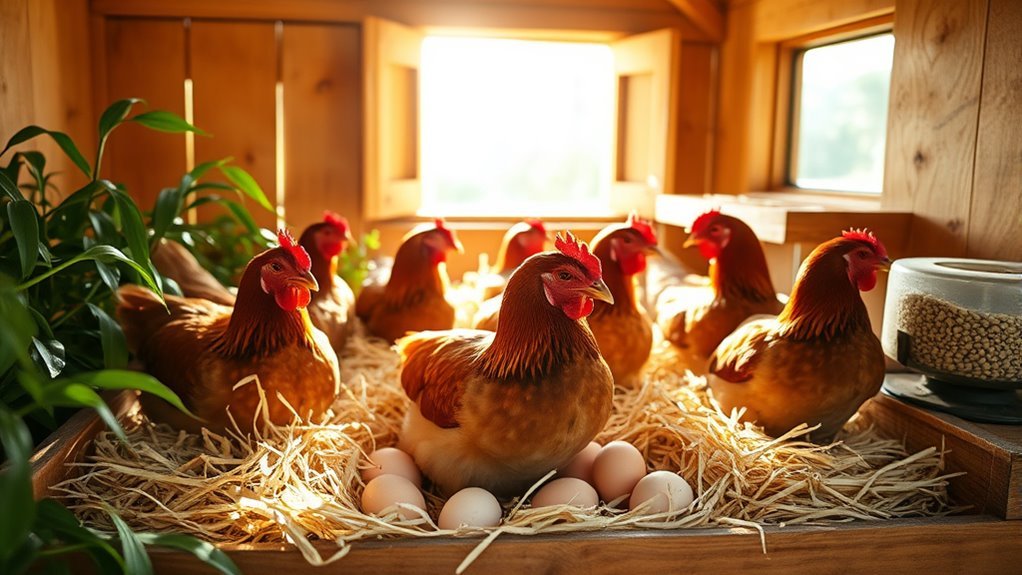
10 Tips to Get My Chickens to Lay Eggs
To get your chickens laying consistently, start by selecting breeds known for egg production and make sure they’re at least 18 weeks old. Choosing the right breeds is key because some hens just lay more eggs than others.
Keep the coop warm and draft-free to keep your chickens comfortable. Providing 14–16 hours of light daily with supplemental lamps really helps encourage steady laying.
Set up clean, private nest boxes with soft bedding so your hens feel safe when they lay. It’s also important to collect eggs frequently to prevent egg-eating habits.
Feed a balanced diet that’s rich in calcium and protein, especially during molting when hens need extra nutrients. Managing broodiness and seasonal changes can also help maintain steady egg production.
Want to boost your flock’s productivity even more? There are deeper strategies you can explore to keep those eggs coming!
Key Takeaways
- Provide 14-16 hours of daily light with supplemental lighting. This helps keep egg laying consistent all year round.
- Feed a balanced, high-protein diet to your chickens. Also, offer free-choice calcium, like oyster shells, so their eggshells stay strong.
- Make sure the coop stays comfortable and insulated, ideally between 50-70°F. This prevents cold stress and supports steady laying.
- Give your chickens clean, private nest boxes with soft bedding. Collect eggs multiple times a day to discourage egg-eating habits.
- When managing molting and broodiness, try to reduce stress as much as possible. Protein treats and light therapy can also encourage your hens to keep laying.
When Do Chickens Start Laying Eggs?
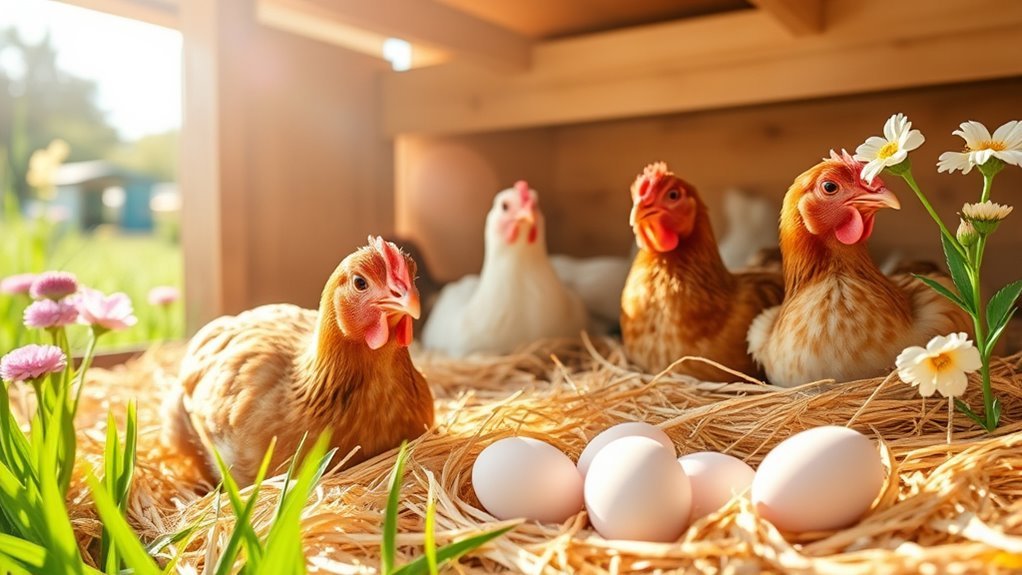
Although the exact timing varies by breed, your chickens will generally start laying eggs between 18 and 20 weeks of age. The age to lay eggs depends largely on breed and egg production characteristics.
Smaller breeds often reach chicken maturity sooner, sometimes laying their first eggs as early as 16 weeks, while larger breeds might take up to 24 weeks. When laying eggs in hens begins, those first eggs are usually smaller but grow to standard size over time.
Factors like diet, environment, and health also influence the time to lay eggs. Understanding your flock’s egg-laying age helps you manage expectations and care practices, ensuring your hens start producing eggs at their ideal time as they reach maturity.
Best Chicken Breeds for Egg Laying
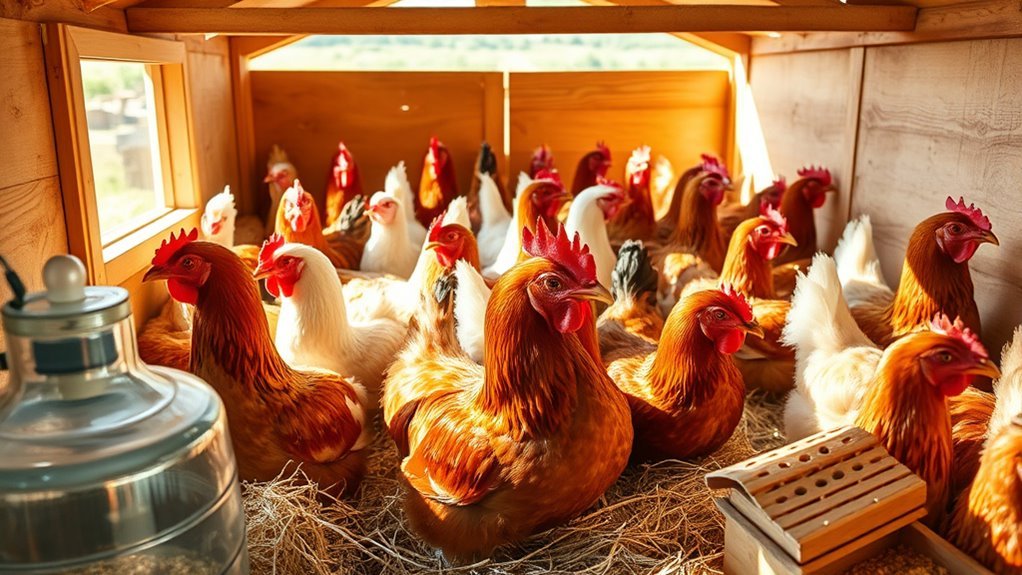
If you want a steady supply of eggs, choosing the right chicken breed is essential. Your breed selection affects egg laying frequency, shell color, and when hens start laying.
Small breeds like Leghorns are early layers, beginning around 16-18 weeks. Meanwhile, hybrids such as Golden Comets offer high egg production with over 300 eggs yearly.
For brown eggs, Rhode Island Reds and Australorps are reliable. If you prefer blue eggs, Ameraucanas are an excellent choice.
| Breed | Egg Color | Key Trait |
|---|---|---|
| Golden Comet | Brown | High egg production |
| Leghorn | White | Early layers |
| Ameraucana | Blue | Unique egg color |
Choose wisely to maximize your flock’s egg-laying potential.
How to Keep Your Coop Warm and Cozy for Egg Laying
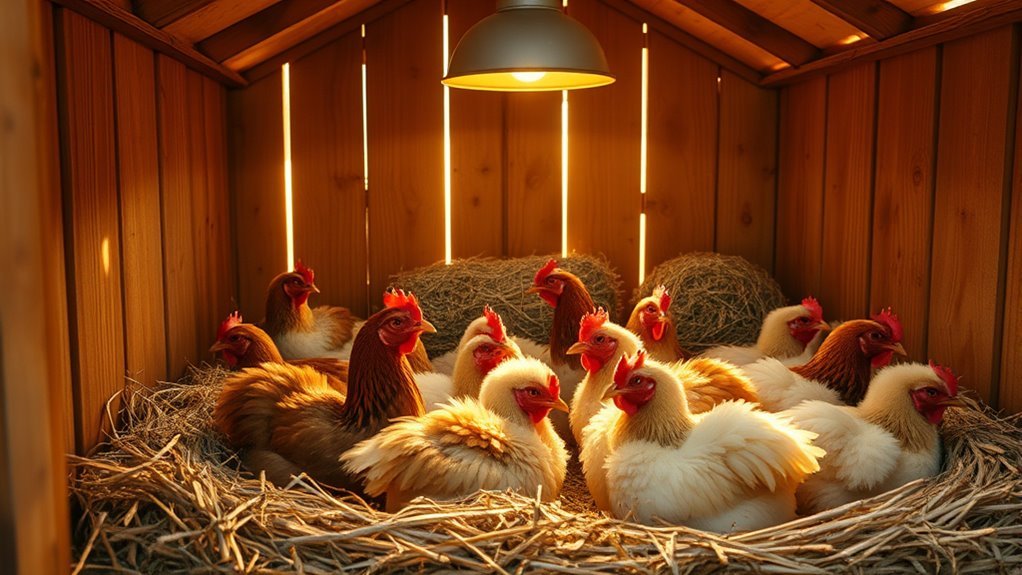
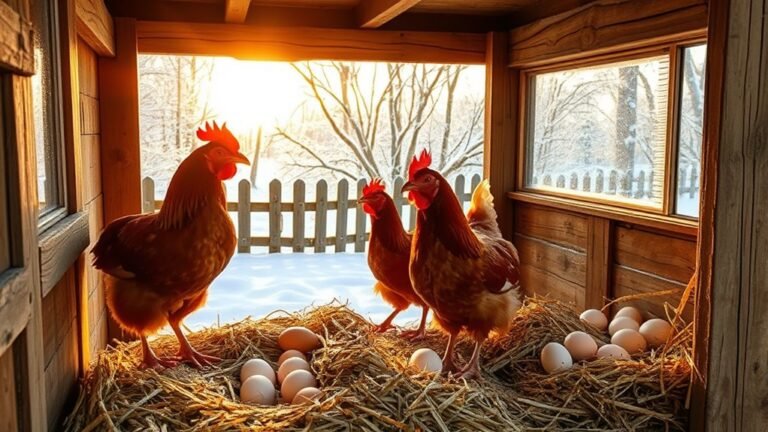
You’ll want to insulate your coop with materials like foam panels or straw to trap heat and keep the chill out. Maintaining a steady temperature between 50-70°F using a heat lamp or ceramic heater helps your hens stay comfortable.
Don’t forget to seal drafts and provide plenty of bedding to keep the space warm and cozy for egg laying. It really makes a difference when your hens have a snug spot to settle in!
Insulating The Coop
Keeping your chicken coop well insulated plays a crucial role in maintaining a warm and cozy environment that encourages consistent egg laying. Proper insulation boosts heat retention, stabilizes coop temperature, and prevents cold stress that can disrupt your hens’ laying cycle.
To create an ideal nesting environment, focus on these key steps:
- Use materials like straw, foam boards, or hay for effective insulation.
- Seal all gaps and cracks to guarantee a draft-free coop.
- Add thick bedding such as straw or wood shavings for extra warmth and comfort.
- Maintain coop warmth above 45°F to prevent laying interruptions.
- Regularly check insulation integrity to avoid temperature fluctuations.
Doing these things will really help keep your hens happy and laying regularly. It’s all about keeping that cozy vibe going strong!
Maintaining Comfortable Temperatures
Although chickens are hardy animals, maintaining a coop temperature between 55-70°F (13-21°C) helps keep your hens comfortable and laying consistently. To achieve this, focus on insulation and draft prevention by sealing gaps and adding weatherstripping around windows and doors.
Use deep litter bedding to retain warmth and create a cozy coop environment. In colder climates, supplemental heat like heat lamps or heated waterers ensures steady temperature control without overheating.
Don’t forget proper ventilation to reduce moisture and humidity, which can decrease comfort for hens and disrupt egg production. Balancing insulation, draft prevention, supplemental heat, and ventilation is key to maintaining a stable coop temperature.
This way, you provide the comfort hens need to lay eggs reliably all year round.
Setting Up Nest Boxes That Encourage Eggs
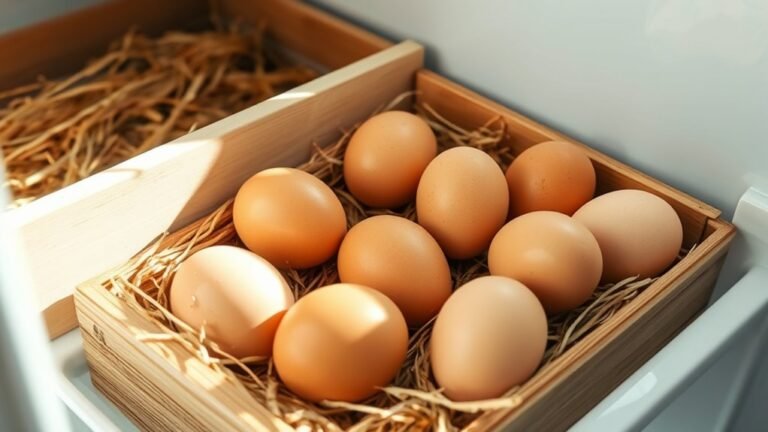
You’ll want to make sure your nest boxes are the right size—big enough for your hens to comfortably settle in but cozy enough to feel secure. Adding soft, clean bedding like straw or shredded paper will make the space inviting and encourage laying.
Don’t forget to collect eggs frequently to keep the boxes clean and your hens happy. It really helps keep things fresh and your birds coming back for more.
Ideal Nest Box Size
How big should your nest boxes be to encourage hens to lay eggs? The ideal size guarantees hens have enough space and comfort, making them more likely to use the boxes consistently.
When setting up nest boxes, focus on size, location, and bedding to create a welcoming laying environment.
- Nest boxes should be at least 12 inches wide to provide enough space for hens during laying.
- Raise boxes 12-18 inches off the ground to create a secure, private spot.
- Provide one nest box per 3 hens to avoid overcrowding and competition.
- Use 2-4 inches of soft bedding material for added comfort and privacy.
- Position boxes in a quiet, dimly lit area to help hens feel safe and encourage laying.
These steps guarantee your nest boxes meet hens’ needs for comfort and privacy, boosting egg production.
Comfortable Nesting Materials
Nest boxes that offer the right size and placement set the stage, but the materials inside truly make hens feel at home. To encourage laying, fill your nesting boxes with soft bedding like straw, shredded paper, or grass clippings, ensuring they’re comfortable and inviting.
Provide one nesting box for every three hens to avoid overcrowding and competition. Maintain cleanliness by regularly replacing bedding, preventing odors and parasites that can stress your flock.
Adding covers or curtains to the nesting boxes increases privacy, making hens more likely to settle inside. Remember, a clean, private, and cozy environment within the nesting boxes is essential to promote consistent egg laying.
Frequent Egg Collection
Collecting eggs frequently—ideally every few hours—plays a crucial role in encouraging your hens to lay consistently in their designated boxes. Frequent egg collection helps discourage egg-eating and keeps your coop tidy.
To set up effective nest boxes that encourage laying eggs, consider these tips:
- Provide at least one nest box per three hens to reduce competition and mislaid eggs.
- Use comfortable bedding like straw or shredded paper to make nest boxes inviting.
- Place nest boxes in a quiet area of the coop to keep hens calm and focused.
- Cover nest boxes with curtains or flaps to create a private, secure space.
- Keep nest boxes clean and dry to maintain a healthy laying environment.
What to Feed Chickens to Boost Egg Laying
Because egg production depends heavily on nutrition, you should provide your chickens with a high-protein diet containing at least 20-22% protein. Layer feed formulated for egg-laying hens meets this requirement and supports consistent egg production.
You can also supplement their diet with treats like mealworms or sunflower seeds later in the day. This helps boost protein intake and can stimulate laying the next morning.
Always offer constant access to calcium sources such as crushed oyster shells. This is key to helping hens form strong eggshells.
Incorporate supplemental feed like herbal teas or medicinal herbs to improve overall hen health. Keeping their diet balanced with fresh water and avoiding nutritional gaps is essential.
Why Calcium and Protein Matter for Egg Laying
You need to make sure your hens get enough calcium to build strong, healthy eggshells. At the same time, protein plays a key role in helping hens produce eggs consistently and stay healthy.
Balancing these two nutrients is essential for boosting your flock’s egg production. It’s all about giving them what they need to keep laying day after day.
Calcium’s Role In Shells
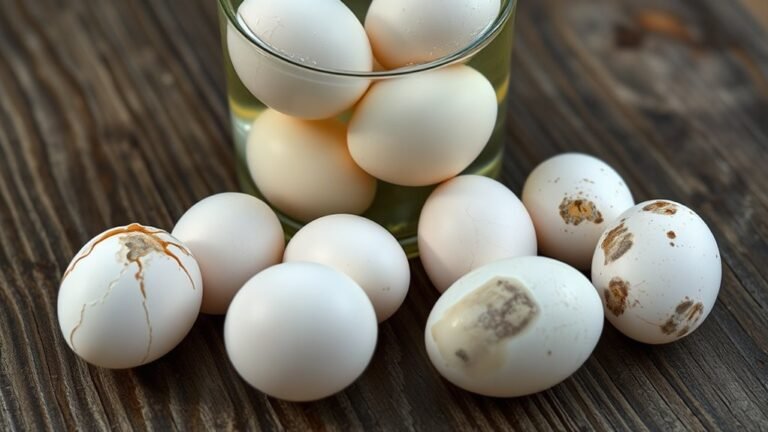
When hens don’t get enough calcium, their eggshells turn thin or even disappear, which really hurts egg quality. Calcium is super important because eggshells are mostly made of calcium carbonate. This gives the shell its strength and protection.
To help hens form proper shells and keep them strong, you’ll want to make sure they have a steady supply of calcium.
Here’s how you can boost calcium for strong eggshells:
- Offer oyster shells or crushed eggshells as a calcium source.
- Make sure hens have free access to calcium throughout the day.
It’s also a good idea to keep an eye on shell quality regularly to catch any signs of calcium deficiency early.
Don’t forget to maintain a balanced diet overall to support shell formation. And try to avoid sudden diet changes because they can mess with calcium absorption.
Protein Boosts Egg Production
How exactly does protein influence your hens’ egg production? Protein plays an essential role in developing healthy reproductive organs and maintaining egg quality.
Providing high-protein diets—around 16-20% protein during peak laying—boosts egg size and shell strength. When hens don’t get enough protein, they lay fewer eggs with weaker, thinner shells, increasing breakage.
You can increase protein intake by adding feed supplements like mealworms, sunflower seeds, or scratch. Especially later in the day, this helps hens recover energy and sustain consistent egg-laying cycles.
Protein is also indispensable for molting recovery, supporting healthy hens ready to resume laying quickly. By ensuring your flock gets adequate protein, you’ll promote better egg production and overall hen health.
How to Prevent Egg Eating and Collect Eggs Promptly
Although egg eating can become a frustrating problem, collecting eggs promptly and frequently helps you break the habit early. To prevent egg-eating, focus on hen management and creating an environment that discourages pecking behavior.
Here’s what you can do:
- Collect eggs promptly, ideally multiple times daily, to reduce temptation.
- Keep nesting boxes clean with ample bedding to discourage hens from eating soiled eggs.
- Use nest box curtains or covers to hide eggs from hens.
- Supplement calcium intake with oyster shells or crushed eggshells to address dietary deficiencies.
- Remove and cull persistent egg-eaters to protect the flock.
Managing Molting and Broodiness to Maintain Egg Laying
Since molting and broodiness naturally pause your hens’ egg production, understanding how to manage these phases is key to maintaining steady laying. During molting, which lasts 6-8 weeks, your hens stop egg laying to focus on feather regrowth.
Give them protein-rich treats like mealworms to support this process and help them restart laying faster.
Broodiness can also halt egg production since hens want to sit on eggs. You can reduce broodiness by minimizing stressors like loud noises or predators.
Using supplemental light to simulate longer days helps too. This artificial lighting encourages hens to break broodiness and resume egg laying.
How Seasonal Changes Affect Chicken Egg Production
Managing molting and broodiness helps keep your hens laying regularly, but seasonal changes also play a big role in egg production.
During fall and winter, shorter daylight triggers hormonal shifts that reduce ovulation, causing a seasonal decline in egg production. Molting further pauses laying as hens focus energy on feather growth.
To understand these effects, consider: shorter daylight means fewer light hours, signaling hens to lay less. Molting typically coincides with fall, intensifying the drop in egg laying.
Winter egg laying naturally decreases without intervention, but artificial lighting can offset the impact of reduced light hours. Also, maintaining warmth supports hens during colder months.
Recognizing how seasonal changes influence your flock helps you plan better care and optimize egg production year-round. It’s all about working with nature’s rhythms to keep your hens happy and productive.
How to Use Supplemental Light to Extend Egg Laying
When daylight hours shrink during fall and winter, you can help your hens keep laying by providing supplemental light in the coop. Chickens need around 14-16 hours of light daily to maintain steady egg laying, so using artificial light lets you extend egg production during these darker months.
Set up coop lighting with a timed source that offers even, indirect illumination to avoid stressing your hens. Gradually increase light exposure by 15-minute increments each week to help hens adjust comfortably without shock. This careful approach supports consistent winter egg production.
Make sure your supplemental lighting is safe, energy-efficient, and properly installed to prevent hazards. By managing light exposure thoughtfully, you’ll effectively extend egg laying and keep your flock productive all winter long.
Frequently Asked Questions
What Will Encourage Chickens to Lay Eggs?
You’ll encourage chickens to lay eggs by providing plenty of light, a nutritious diet with calcium, a calm, safe environment, clean nesting boxes, and collecting eggs regularly to keep them motivated and stress-free.
What to Do if Your Chickens Won’t Lay Eggs?
If your chickens won’t lay eggs, check their diet, lighting, and stress levels. Keep their coop clean, reduce disturbances, and watch for illness or molting. Adjust conditions to encourage them, and be patient—they’ll start laying again soon.
What Stimulates Hens to Lay Eggs?
You stimulate hens to lay eggs by providing 14-16 hours of light daily, ensuring they get enough calcium and protein, offering cozy nesting spots, minimizing stress, and collecting eggs regularly to encourage consistent laying habits.
How to Get Chickens to Lay Eggs Quicker?
You can speed up egg-laying by providing 14-16 hours of light daily—like a sunrise that never ends. Feed high-protein treats, offer calcium freely, and keep hens stress-free for quicker, healthier egg production.
Conclusion
By following these tips, you’ll help your chickens lay eggs consistently, like a well-tuned clock keeping perfect time. Remember, creating a warm, comfortable coop, feeding them right, and managing their natural cycles all play a part.
With patience and care, you’ll enjoy fresh eggs daily and keep your flock happy and healthy. Stick with these simple steps, and soon you’ll see your chickens thriving and producing like never before.
Getting your chickens to lay eggs regularly isn’t just about feeding them; it’s about understanding their needs. A cozy environment, proper nutrition, and attention to their natural rhythms make all the difference. When you focus on these key areas, you set the stage for healthy hens and a steady supply of fresh eggs. So keep up the good work and watch your flock flourish with these easy-to-follow tips!