How to Cook Eggs for Dogs With Diarrhea in 10 Essential Steps
Choose fresh, clean eggs and set out your cooking tools. Wash your hands and sanitize surfaces before gently cracking eggs into a clean bowl.
Whisk them thoroughly until smooth, then cook slowly over low heat, stirring often to keep them soft. Avoid adding salt or spices.
Let the eggs cool completely to room temperature before serving small portions to your dog. Watch their reaction, and you’ll find helpful tips to make sure their sensitive stomach stays safe and comfortable.
Key Takeaways
- Choose fresh, clean, and uncracked eggs. It’s best if they’re organic or free-range to ensure safety and quality for dogs with diarrhea.
- Cook eggs slowly over low heat. Stir frequently until they’re softly set. This helps keep them tender and easy to digest.
- Let the cooked eggs cool completely to room temperature before serving. This way, you avoid burns and help your dog digest them more easily.
- Serve the eggs plain, without any seasonings or additives. You don’t want to irritate your dog’s sensitive digestive system.
- Start with small portions and watch how your dog responds. Then, you can gradually increase the serving size to support recovery safely.
Pick Fresh, Quality Eggs
When selecting eggs to cook for your dog with diarrhea, make sure you pick fresh, high-quality ones to minimize health risks. Look for eggs with clean, uncracked shells—this helps prevent bacterial contamination that could worsen your dog’s condition.
Avoid eggs showing discoloration or unusual odors, as those signs indicate poor freshness. It’s best to opt for organic or free-range eggs whenever possible; they usually have fewer additives and better nutrient profiles, which can support your dog’s recovery.
Always check the expiration date and buy from reputable sources to guarantee the eggs are fresh eggs that provide the best nutrition. By prioritizing quality eggs, you reduce the risk of bacterial infections and give your dog a safer, more beneficial meal during their upset stomach.
Get Your Cooking Supplies Ready
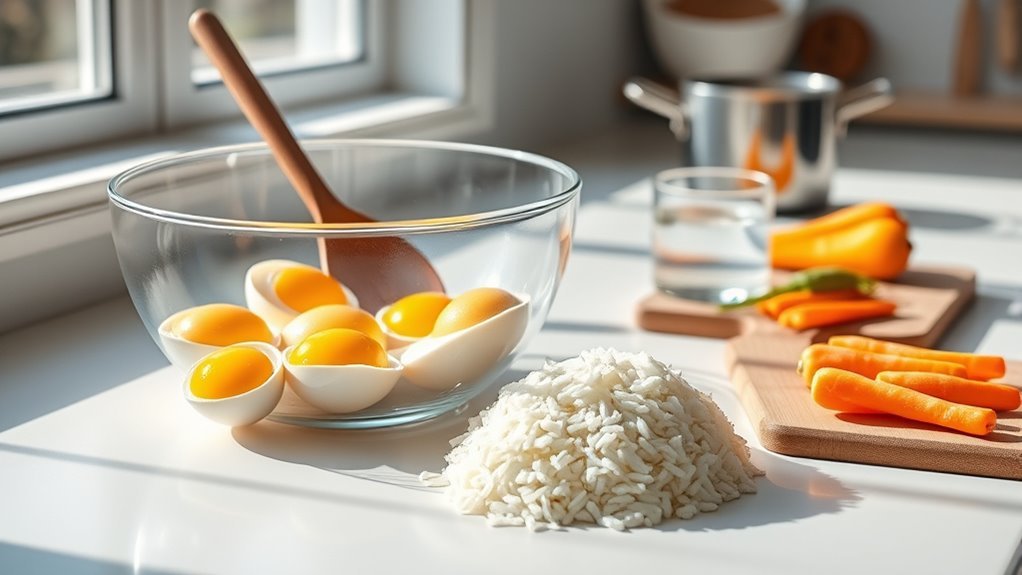
Before you start cooking eggs for your dog with diarrhea, gather all the necessary supplies to keep the process smooth and hygienic. Having everything ready guarantees you prepare safe, nutritious cooked eggs as food for dogs without delays or contamination.
Here’s a quick checklist:
| Supplies | Purpose |
|---|---|
| Non-stick skillet | Cook eggs evenly |
| Spatula | Stir and flip |
| Small bowl | Beat eggs |
| Whisk or fork | Mix eggs smoothly |
| Measuring spoons | Add water or broth precisely |
Make sure all utensils are clean, and choose fresh eggs with uncracked shells. Preparing these supplies beforehand helps you deliver safe, healthy food for dogs.
Plus, it keeps your cooking space organized and stress-free.
Wash Your Hands and Clean Cooking Area
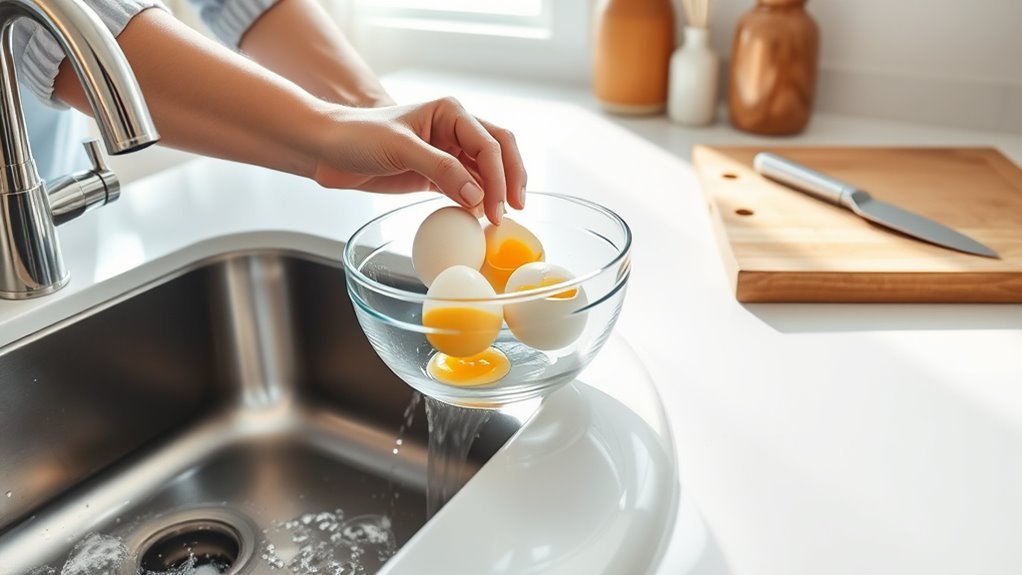
Before you start cooking, make sure to wash your hands thoroughly with warm water and soap for at least 20 seconds. It’s a simple step but super important.
Also, clean and sanitize all your cooking surfaces and utensils. This helps keep harmful bacteria away and protects your dog’s health while you prepare their meal. Easy, right?
Hand Hygiene Practices
Although cooking eggs for your dog is simple, maintaining strict hand hygiene and a clean cooking area is essential to prevent contamination and guarantee your pet’s health. Start by washing your hands thoroughly with warm water and soap for at least 20 seconds before handling eggs or utensils.
Dry your hands with a clean towel to avoid recontamination. Next, sanitize all countertops and surfaces with a pet-safe disinfectant or a vinegar solution before you begin cooking.
Use separate cutting boards and utensils exclusively for preparing eggs to prevent cross-contamination with other foods. After cooking, wipe down all utensils, bowls, and the cooking area to keep everything hygienic.
Following these hand hygiene practices ensures your dog’s meal stays safe and helps support their recovery from diarrhea. It’s a small effort that makes a big difference!
Sanitizing Cooking Surfaces
Keeping your hands clean is just one part of preparing eggs safely for your dog with diarrhea. You need to focus on disinfecting surfaces too. Before you begin, wipe down all countertops and cooking surfaces with a pet-safe disinfectant or a vinegar solution.
This helps eliminate harmful bacteria that can worsen your dog’s condition. Make sure to clean utensils, bowls, and cutting boards thoroughly with hot, soapy water after use. Using separate cutting boards for eggs and other foods also prevents cross-contamination.
Throughout the process, keep the cooking area clean and dry to reduce bacterial growth. By paying attention to sanitizing surfaces, you guarantee the eggs you prepare are safe and healthy for your dog’s sensitive digestive system.
Crack Eggs Carefully Into a Clean Bowl
When you crack eggs for your dog, tap each one gently on the edge of a clean bowl to avoid breaking the shell too forcefully. Hold the egg carefully and open the shell slowly, letting the contents slide into the bowl without dropping shell fragments.
Always use a clean bowl and fresh eggs—avoid cracked or dirty eggs to keep things safe and hygienic. After cracking eggs, check the bowl for any small shell pieces before proceeding.
Removing these fragments is important to prevent choking hazards or contamination. Using a clean bowl guarantees the eggs remain uncontaminated, which is especially vital when preparing food for a dog with diarrhea.
Taking these careful steps helps maintain food safety and supports your dog’s recovery.
Whisk Eggs Until Smooth and Fully Blended
After carefully cracking your eggs into a clean bowl, the next step is to whisk them until smooth and fully blended. Whisk eggs vigorously, combining yolks and whites into a uniform pale yellow mixture with bubbles.
This smooth blend breaks down proteins, making digestion easier for your dog. Use a whisk or fork to beat the eggs thoroughly, avoiding clumps and shell fragments that could upset your dog’s stomach.
Fully blended eggs also ensure even cooking and a soft, fluffy texture suitable for dogs with diarrhea.
Cook Eggs Over Low Heat for Soft Texture
Since gentle heat preserves the eggs’ soft texture, cook them slowly over low heat to make digestion easier for your dog. Whether you’re preparing scrambled eggs or boiled eggs, using low heat prevents the eggs from becoming tough or rubbery, which can irritate a sensitive stomach.
Cooking eggs over low heat guarantees they remain tender and fluffy, making them easier to digest. Stir your eggs frequently while cooking to promote even doneness and maintain a soft consistency.
This method also helps retain more nutrients and minimizes harmful compounds that high heat can create. By choosing low heat, you provide your dog with a gentle, nourishing meal that supports recovery from diarrhea without compromising taste or nutrition.
Cook Eggs Gently for Dogs With Diarrhea
To keep eggs gentle on your dog’s sensitive stomach, cook them slowly on low heat using a non-stick or well-seasoned pan. When you cook eggs for dogs with diarrhea, stir them gently and continuously to guarantee even cooking and maintain a soft, fluffy texture.
Avoid overcooking, as eggs that are too firm can become tough and harder to digest. Cook eggs until they’re just softly set, preserving nutrients and making them easier on your dog’s digestive system.
Once cooked, let the eggs cool completely before serving to prevent burns and help your dog eat comfortably. By cooking eggs gently, you provide a bland, nutritious meal that supports recovery without upsetting your dog’s stomach further.
Avoid Seasonings and Salt in Eggs
When preparing eggs for your dog with diarrhea, you should avoid adding seasonings, salt, or any spices. These can irritate your dog’s sensitive digestive system and make their symptoms worse.
Instead, serve plain eggs to help them recover faster. Remember:
Serve plain eggs to support quicker recovery and avoid digestive irritation in your dog.
- Seasonings may contain additives that cause allergic reactions.
- Salt can increase dehydration and upset your dog’s stomach.
Also, avoid butter, cheese, or milk since they can make diarrhea worse. Plain eggs provide a gentle, easily digestible protein source.
Keeping eggs unseasoned helps minimize inflammation risks during digestive upset. So, plain and simple is the way to go!
Let Cooked Eggs Cool Completely Before Serving
You should always let cooked eggs cool completely before serving them to your dog to avoid burns and choking.
Check that the eggs are at room temperature, which also helps them firm up for easier digestion.
Cooling eggs properly keeps the food safe and gentle on your dog’s upset stomach.
Importance Of Cooling
Although it might be tempting to serve eggs to your dog right away, letting them cool completely is essential for their safety and comfort.
Proper cooling guarantees that the eggs are safe to eat and easy to digest, especially for dogs with diarrhea.
When you allow the eggs to cool, you:
- Prevent burns and choking hazards by avoiding hot food
- Help eggs firm up for easier chewing
- Reduce the risk of gastrointestinal irritation
- Preserve the eggs’ texture and nutritional value
- Support gentle digestion for sensitive stomachs
Safe Temperature Checks
Letting eggs cool properly sets the stage for a safe feeding experience. After cooking, always let your eggs cool completely to room temperature before serving. This safe temperature assures your dog won’t suffer burns or discomfort when eating.
Use a cool plate or bowl to speed up the cooling eggs process and help them firm up, making them easier to chew and swallow. Before feeding, check that the eggs are no longer warm to the touch—this simple step prevents choking and digestive upset.
Benefits For Digestion
When you serve cooked eggs at room temperature, you help ease your dog’s digestion and prevent irritation in their sensitive stomach.
Letting boiled eggs cool completely before serving offers several benefits:
- Prevents burns and choking hazards by avoiding hot eggs
- Preserves nutrients essential for gentle digestion
- Reduces gastrointestinal discomfort and irritation
It also firms up eggs slightly, making them easier to chew.
Plus, it supports safe feeding for dogs with diarrhea or sensitive stomachs.
Serve Small Portions and Watch Your Dog
Because every dog reacts differently, you should serve eggs in small, controlled portions tailored to your dog’s size and tolerance. Start with a teaspoon or tablespoon, depending on your dog’s weight, and serve small portions to avoid overwhelming their digestive system.
After feeding, watch your dog closely for any signs of discomfort or worsening diarrhea. If they handle the eggs well, you can gradually increase the portion size.
Using measured servings helps prevent overfeeding, which could aggravate gastrointestinal issues. Always monitor your dog‘s condition and adjust portions as they recover and tolerate more food without symptoms.
Frequently Asked Questions
Can Boiled Eggs Stop Diarrhea in Dogs?
Boiled eggs can’t directly stop diarrhea, but they can help firm up your dog’s stool by providing gentle, digestible protein. You should introduce them gradually and watch for improvements while consulting your vet for persistent issues.
How to Cook Scrambled Eggs for Dogs With Diarrhea?
You don’t need a time machine—just whisk eggs thoroughly, cook slowly on low heat without oil or seasoning, stir gently until fluffy, then cool completely before serving small portions to soothe your dog’s upset stomach.
What Is the Fastest Way to Cure Diarrhea in Dogs?
The fastest way to cure your dog’s diarrhea is to fast them for 12 hours, then offer bland foods like boiled chicken and rice, keep them hydrated, and consult a vet if symptoms persist or worsen quickly.
What Is the Healthiest Way to Cook Eggs for Dogs?
Think of eggs as a gentle hug for your pup’s tummy—you’ll want to boil or scramble them plain, without oils or spices, cooking on low heat to keep nutrients intact and avoid any digestive distress.
Conclusion
By following these steps, you’ll whip up a gentle, soothing meal for your pup like a breeze on a calm day. Remember, patience is key—cooked eggs can help settle your dog’s upset tummy without adding any extra stress.
Keep portions small, avoid seasonings, and always let the eggs cool before serving. These simple precautions make the eggs easy on your dog’s digestive system and reduce the risk of further irritation.
With care and attention, you’re giving your furry friend the comfort they need to bounce back in no time. Cooking eggs for dogs with diarrhea is a great way to provide gentle nutrition that supports recovery. Just stick to these easy steps, and you’ll help your pup feel better—one bite at a time.