How Old Do Chickens Have to Be to Lay Eggs?
You’ll typically see your chickens start laying eggs between 18 and 22 weeks old, depending on their breed and environment. Different chicken breeds reach egg-laying age at different times.
Faster-maturing hybrids often lay closer to 18 weeks, while heritage breeds may take up to 22 weeks.
You can spot signs like bright red combs and nesting behaviors as your hens get ready. These are good clues that egg-laying is just around the corner.
Plus, factors like nutrition, light exposure, and stress levels all affect when and how well they lay.
Keep going if you want to understand how these elements work together. Knowing this helps you create the best conditions for your hens to start laying healthy eggs on time.
Key Takeaways
- Chickens typically start laying eggs between 18 and 22 weeks of age. Hybrid breeds usually begin laying earlier, around 18 weeks old.
- Heritage or smaller breeds may start laying closer to 22 weeks. You’ll notice bright red combs, wattles, and nesting behaviors when they’re about to lay.
- Proper lighting, nutrition, and environment all play a role in exactly when they start laying eggs. So, these factors can speed things up or slow them down a bit.
When Do Chickens Start Laying Eggs?
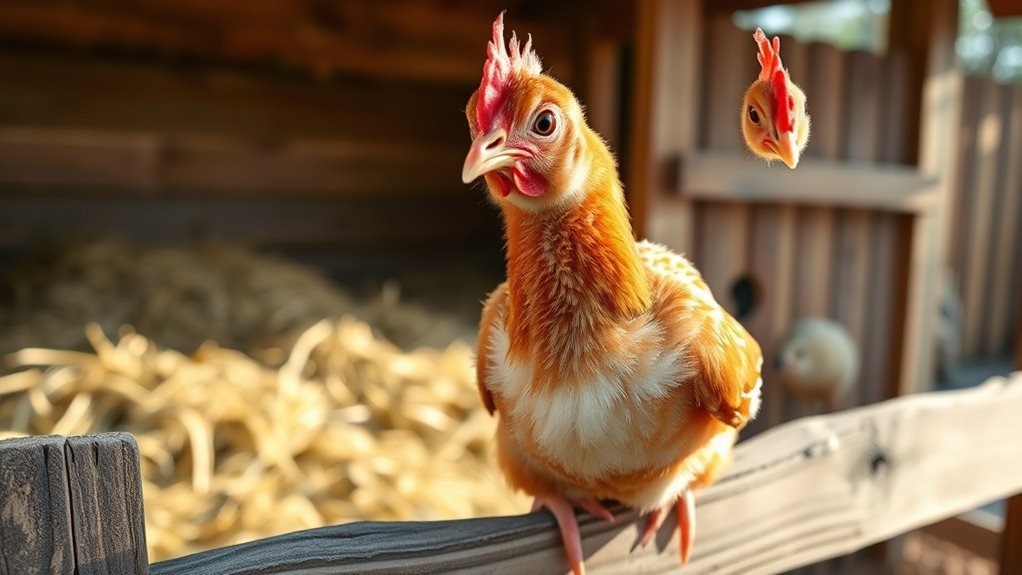
Although the exact timing varies by breed and environment, chickens usually start laying eggs between 18 and 22 weeks old. When chickens start laying eggs depends largely on their breed; faster-maturing hybrids often reach laying age closer to 18 weeks, while heritage or smaller breeds may take up to 22 weeks.
You’ll notice physical signs like a bright red comb and wattles, signaling hens start laying soon. Nesting behavior and squatting are key behavioral clues that your hens are gearing up for egg production.
The first egg marks the beginning of their laying phase, typically influenced by factors such as daylight hours, which help regulate their reproductive cycle. Understanding these signs helps you anticipate when your flock’s laying age will arrive.
How Nutrition, Light, and Environment Affect Egg Laying
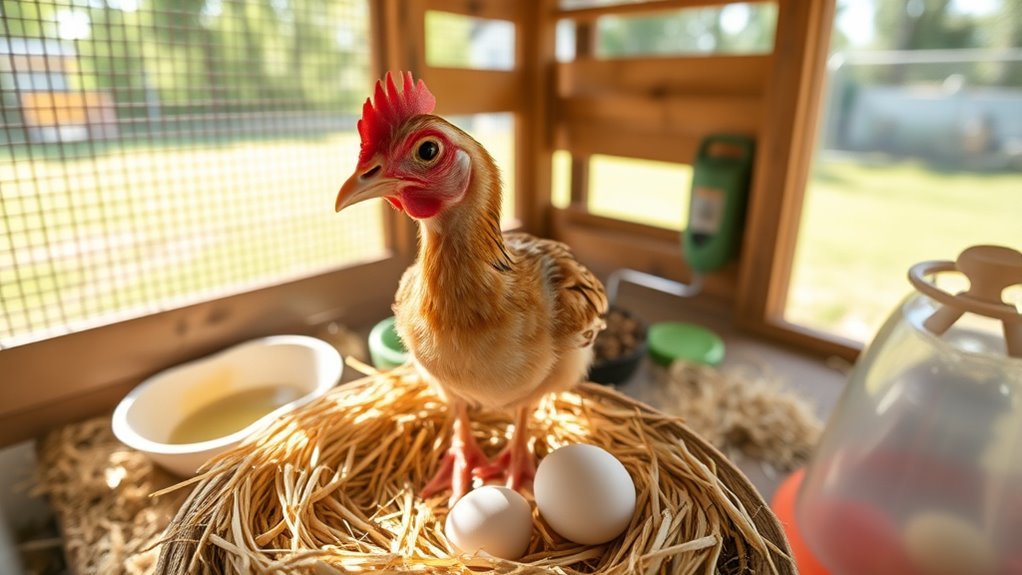
Because hens rely heavily on their surroundings, proper nutrition, light, and environment play essential roles in maintaining steady egg production. You’ll want to provide at least 16 hours of light daily, especially during winter, to stimulate egg laying.
Balanced nutrition rich in calcium and protein supports hen health and strong eggshells. Reducing stress by keeping a safe, comfortable environment is critical, as stress directly lowers egg production.
Supplemental lighting with timers can help maintain consistent daylight hours year-round. Ensuring hens stay healthy and hydrated also promotes ideal reproductive function.
| Factor | Impact on Egg Laying |
|---|---|
| Light | Stimulates egg laying with 16+ daylight hours |
| Nutrition | Calcium and protein essential for production |
| Environment | Reduces stress, promoting regular laying |
| Hen Health | Hydration and wellness support egg production |
Frequently Asked Questions
Can You Eat a Chicken 1st Egg?
Yes, you can eat a chicken’s first egg. It might be smaller or have a thinner shell, but it’s safe. You’ll find it’s fine for cooking or feeding back to your hens without any health risks.
Can 4 Month Old Chickens Lay Eggs?
You’re not likely to see a 4-month-old chicken laying eggs—it’s like expecting a toddler to run a marathon! Usually, they start laying around 18 weeks, so be patient while they grow and develop fully.
What Is the 90/10 Rule for Chicken?
The 90/10 rule means you get 90% of a hen’s eggs in her first two years, then production drops to 10%. You’ll want to replace older hens to keep egg numbers high on your farm.
How Do I Know When My Chickens Are Ready to Lay Eggs?
You’ll know your chickens are ready to lay when their combs and wattles turn bright red and enlarge, they start squatting, lay small soft-shelled eggs, and show nesting behavior with increased vocalizations.
Conclusion
You’ll find that most chickens start laying eggs around 18 to 24 weeks old. But factors like nutrition, light, and environment can speed or slow this.
For example, a backyard chicken keeper noticed her hens began laying earlier when she adjusted their diet and extended daylight hours with a lamp.
By understanding these influences, you can better support your flock’s health and productivity. This means you’ll get fresh eggs sooner and more consistently, which is great for any chicken owner.
So, if you want to encourage your hens to start laying eggs earlier, focus on providing proper nutrition and making sure they get enough light each day. A healthy environment plays a big role too. Remember, knowing how old chickens have to be to lay eggs is just part of the picture—taking care of these factors will help your flock thrive and keep those eggs coming regularly.