
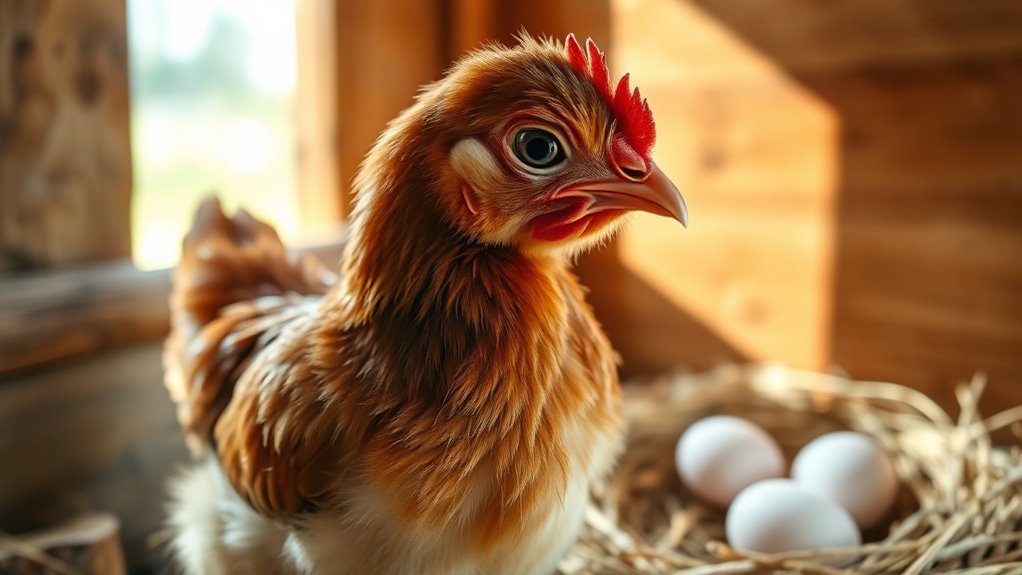
How Old Are Chickens When They Start to Lay Eggs?
Chickens usually start laying eggs between 18 and 22 weeks old, but this can vary based on breed and conditions.
Early-maturing breeds might begin as soon as 16 weeks, while larger breeds could take up to 30 weeks.
You’ll notice physical signs like bright red combs and wattles, plus behaviors such as squatting or nesting.
These clues help you know when your hen is ready.
Keep following to uncover more ways to spot and support her readiness.
Key Takeaways
- Chickens typically start laying eggs between 18 and 22 weeks old.
- Early-maturing breeds like Easter Eggers may begin laying as early as 16 weeks.
- Larger breeds such as Brahmas often start laying around 30 weeks old.
- Physical maturity, including developed combs and wattles, signals readiness to lay.
- Lighting, nutrition, and environmental conditions can accelerate or delay egg-laying onset.
When Do Chickens Start Laying Eggs?
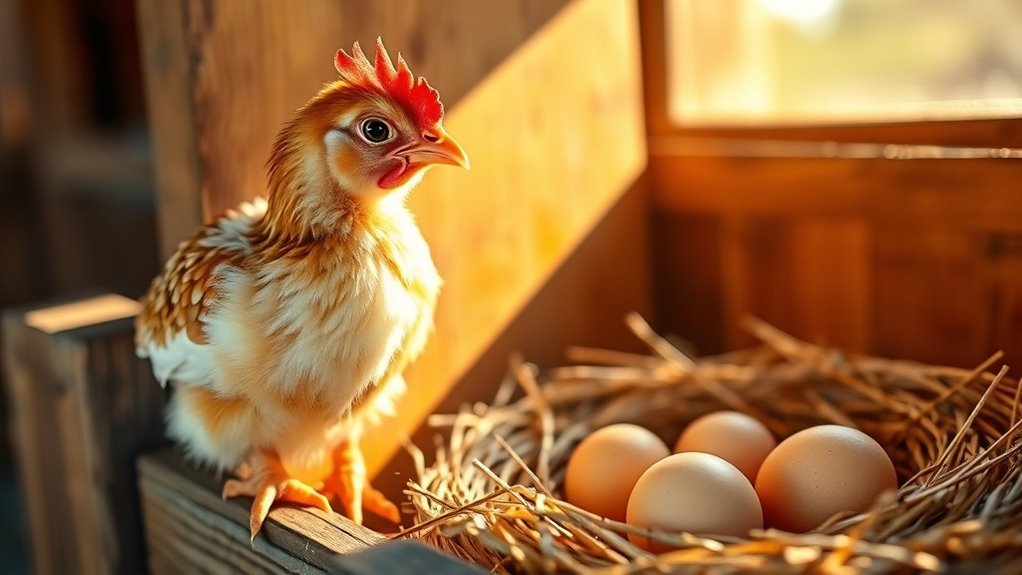
While the exact timing varies by breed and conditions, chickens usually start laying eggs between 18 and 22 weeks old. You’ll notice breed differences play a big role—early-maturing breeds like Easter Eggers can begin egg production as early as 16 weeks, while larger breeds like Brahmas might wait until around 30 weeks.
The age of laying depends heavily on hen maturity and physical maturity, marked by developed combs and wattles. Environmental factors such as proper lighting, nutrition, and health also influence when hens start laying.
Nesting behavior often increases just before egg production begins, indicating hen development is nearing the laying age. Understanding these factors helps you predict when your chickens start laying eggs and manage their care effectively.
How to Tell When Your Hen Is Ready to Lay Eggs
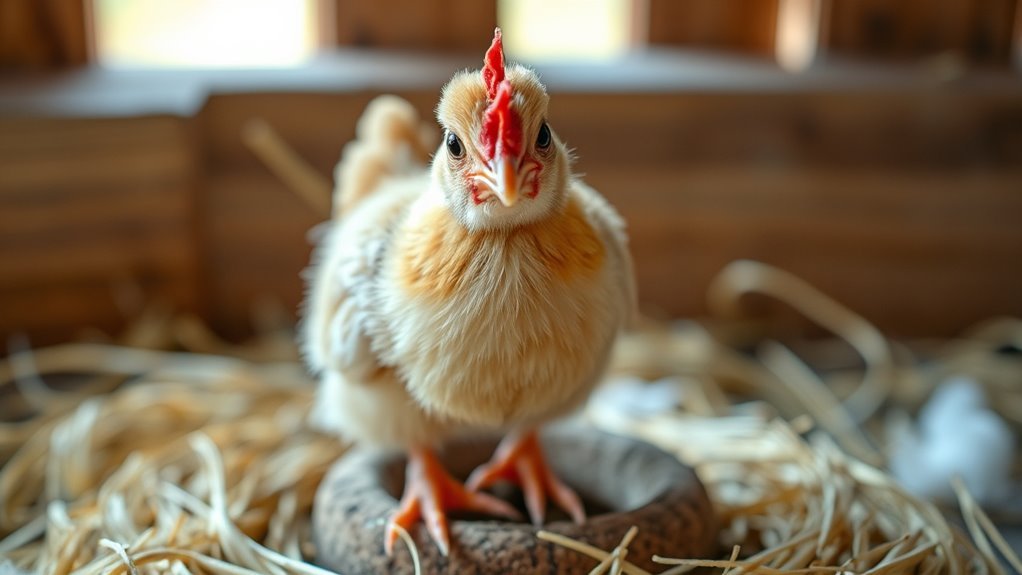
If you want to know when your hen is ready to lay eggs, watch for key physical and behavioral signs. Mature hens show clear signs of readiness as they approach their peak laying age.
As a chicken owner, you can spot these signs to anticipate egg production.
Look out for:
Look out for key signs that your hen is ready to begin laying eggs.
- A bright red, swollen comb and wattles, which are physical signs of readiness to lay.
- Hens squatting with their rump raised, signaling they’re preparing to start laying.
- Increased interest in nesting boxes and consistent pecking or rooting behaviors.
- Soft “bock-bock” vocalizations indicating imminent egg production.
Frequently Asked Questions
Can You Eat the First Laid Chicken Egg?
Yes, you can eat the first egg a chicken lays. It’s safe and nutritious, though it might be smaller or have a softer shell. Many people enjoy this special milestone without any health concerns.
Do 4 Month Old Chickens Lay Eggs?
Like a young artist’s first sketch, 4-month-old chickens rarely lay eggs, but if they do, those eggs are small and imperfect. You’ll usually see egg-laying beginning a bit later, once they’re more mature.
How Do You Tell When Your Chickens Are Ready to Lay Eggs?
You’ll know your chickens are ready to lay when their combs and wattles swell and redden, they squat often, show nesting interest, make “bock-bock” sounds, and check nesting boxes regularly.
Why Do Chickens Scream When They Lay an Egg?
Chickens scream when they lay eggs because it’s physically intense and unfamiliar, especially for new layers. You’ll notice it’s their way to communicate or alert the flock, and it varies based on their temperament.
Conclusion
Now that you know when chickens start laying eggs, you’re ready to watch your hens closely for signs of readiness. Usually, they begin around 5 to 6 months old, but it can vary.
Keep an eye on their behavior and physical changes, just like a Victorian farmer might have done, trusting your instincts. With a little patience and care, you’ll soon enjoy fresh eggs from your flock—nature’s timeless gift to your kitchen.
Remember, chickens typically start laying eggs between 5 and 6 months of age, but factors like breed, diet, and environment can influence this timing. Paying attention to your hens’ health and comfort helps ensure a steady supply of fresh eggs. So, get ready to welcome those first eggs and savor the rewarding experience of raising chickens that lay eggs for your table.