
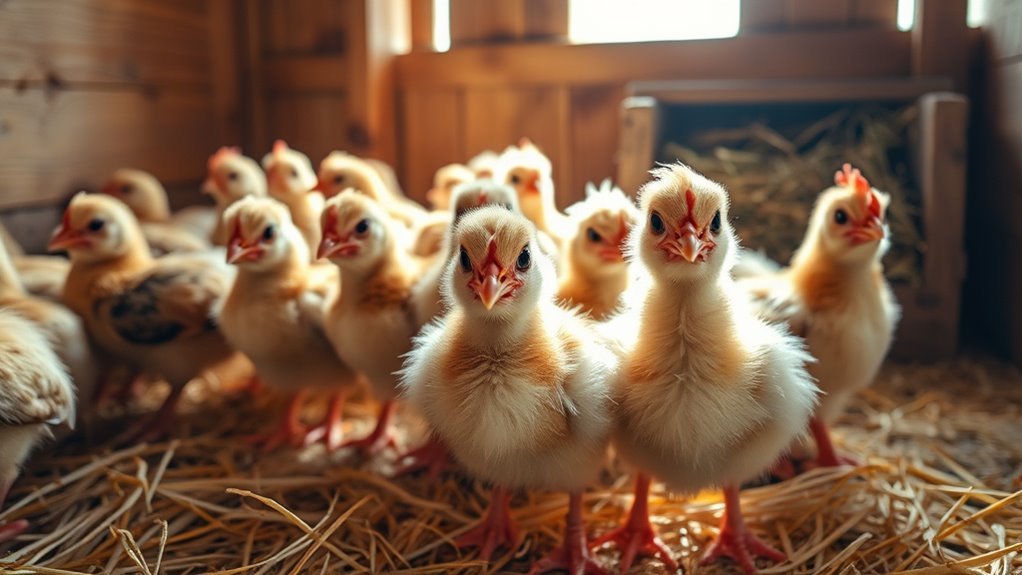
How Many Weeks Until Chickens Lay Eggs Guide
You can expect your chickens to start laying eggs between 16 and 20 weeks old, though this varies by breed—smaller breeds often start earlier.
How many weeks until chickens lay eggs can depend on several factors, including breed and environment.
Daylight plays a big role; longer days encourage earlier laying, so consistent lighting helps.
Make sure their diet has enough calcium to support good eggshells.
Preparing clean nest boxes and monitoring physical signs like comb color can also speed things up.
Keep going to discover how to set up their environment perfectly.
Key Takeaways
- Chickens typically start laying eggs between 16 to 20 weeks of age, depending on breed and size. Smaller breeds usually begin laying earlier than larger breeds, often closer to 16 weeks.
- You’ll notice signs like enlarged combs and nesting interest when hens are getting ready to lay. These are good indicators that egg-laying time is near.
- To encourage earlier and consistent egg production, try extending daylight to at least 16 hours daily. It really helps stimulate their laying cycle.
- Also, make sure to provide a clean, quiet nesting area. Proper calcium nutrition is important too, as it supports successful early laying.
When Do Chickens Start Laying Eggs?
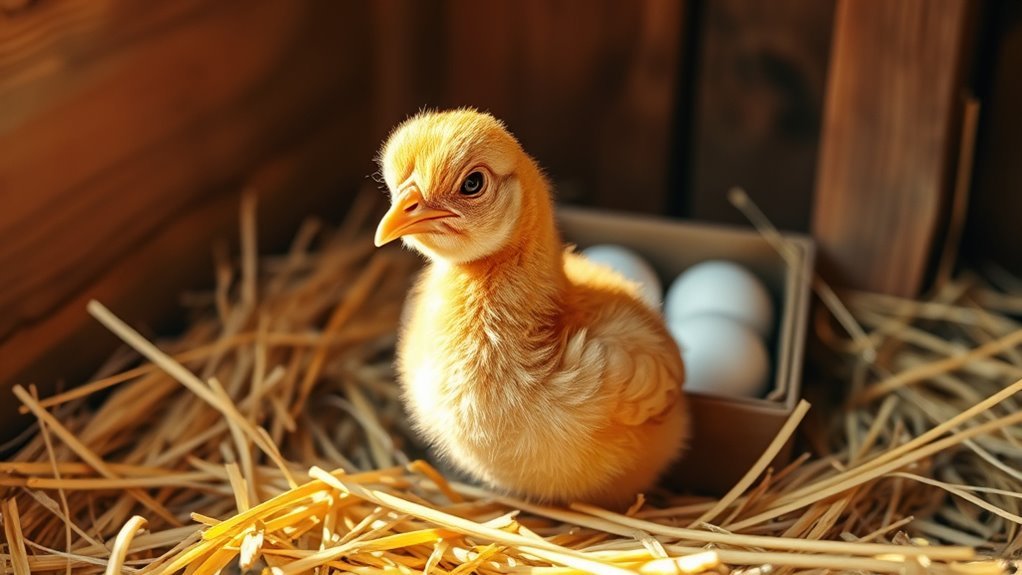
Although the exact timing varies by breed, chickens usually start laying eggs between 16 and 20 weeks old. You’ll notice breed differences, as smaller breeds often begin laying eggs earlier than larger ones.
Pay attention to signs of readiness like a hen’s body changes—enlarged, reddening combs—and increased interest in nesting boxes. These signs signal that your chickens are preparing to lay their first egg.
Early eggs might be small, irregularly shaped, or soft-shelled but show that laying has started. Daylight hours also influence when chickens start laying eggs; longer days encourage production.
Ensuring proper nutrition and good health supports this process, helping your flock pass smoothly into egg-laying. Watching these cues helps you anticipate and support your hens’ start of laying early eggs.
How to Prepare Your Flock and Coop for Early Egg Laying
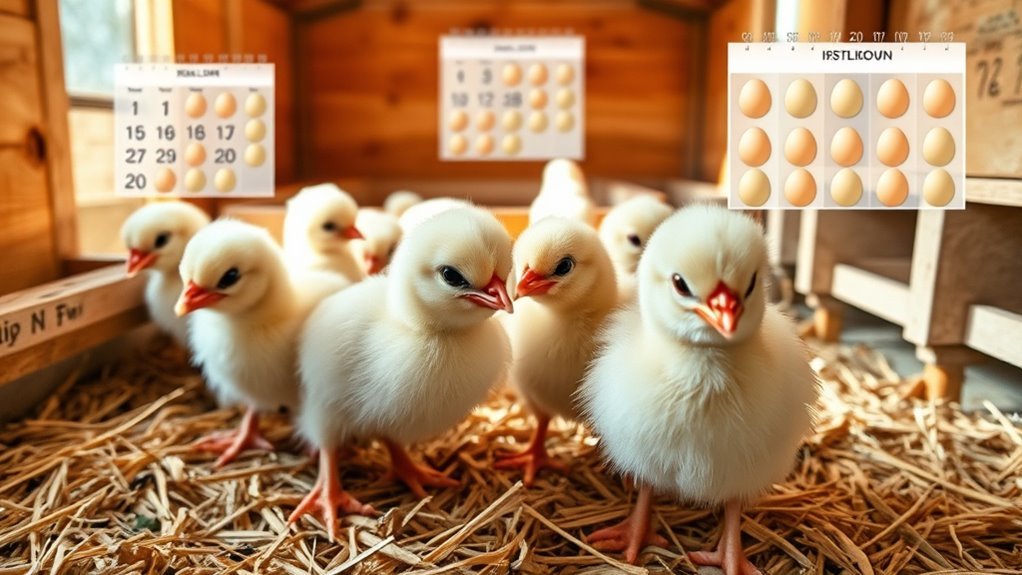
Once your hens approach 16 weeks old and show signs of readiness, it’s time to get their coop and routine ready for egg laying. Start by opening clean, cozy nest boxes lined with straw or pine shavings. Place them in a quiet, dark corner of the coop to encourage natural nesting behavior.
Make sure to provide a balanced diet rich in calcium, like oyster shells or crushed eggshells. This helps support eggshell formation for those early eggs.
Maintain consistent lighting of at least 16 hours daily using artificial lights. This simulates spring conditions, which promote laying.
Keep an eye on your hens for signs of readiness, such as reddening combs and increased nesting activity. Proper preparation guarantees a smooth shift from breeding to laying, helping your flock produce healthy early eggs reliably.
Frequently Asked Questions
Do Chickens Stop Laying in October?
No, chickens don’t have to stop laying in October. You can keep them laying by providing enough light and good nutrition. Without extra light, they might slow down, but proper care helps maintain egg production through fall.
What Triggers Chickens to Lay Eggs?
Like a clock striking noon in a Renaissance painting, hormonal changes trigger hens to lay eggs. You’ll notice their combs brighten and nesting behaviors increase, especially when they get 14-16 hours of light daily to stimulate production.
How Many Eggs Will 200 Chickens Lay a Day?
You can expect about 100 eggs daily from 200 hens during peak production since each hen lays roughly every other day. Keep in mind, factors like breed and age can cause slight variations in actual egg counts.
How Do Chickens Act Right Before They Lay Eggs?
You might think chickens get noisy before laying, but they actually get quieter and squat more. You’ll notice them exploring nests, their combs brighten, and they eat more—signs they’re gearing up to lay an egg soon.
Conclusion
Now that you know when your chickens start laying eggs, you can prepare your coop properly and patiently. Providing a peaceful, pristine place promotes prompt production. Remember, readiness and routine really ramp up results.
With care and consistency, your flock will flourish, filling your days with fresh, fabulous eggs faster than you think. So stay steady, stay sharp, and soon you’ll savor the satisfying sight of eggs every morning!
Keeping your chickens comfortable and happy is key to egg laying success. Regular feeding, clean water, and a calm environment help encourage your birds to lay eggs on schedule.
By understanding how many weeks until chickens lay eggs, you can better manage your expectations and care. With the right setup and patience, your coop will soon be full of fresh, delicious eggs that make every morning special!