
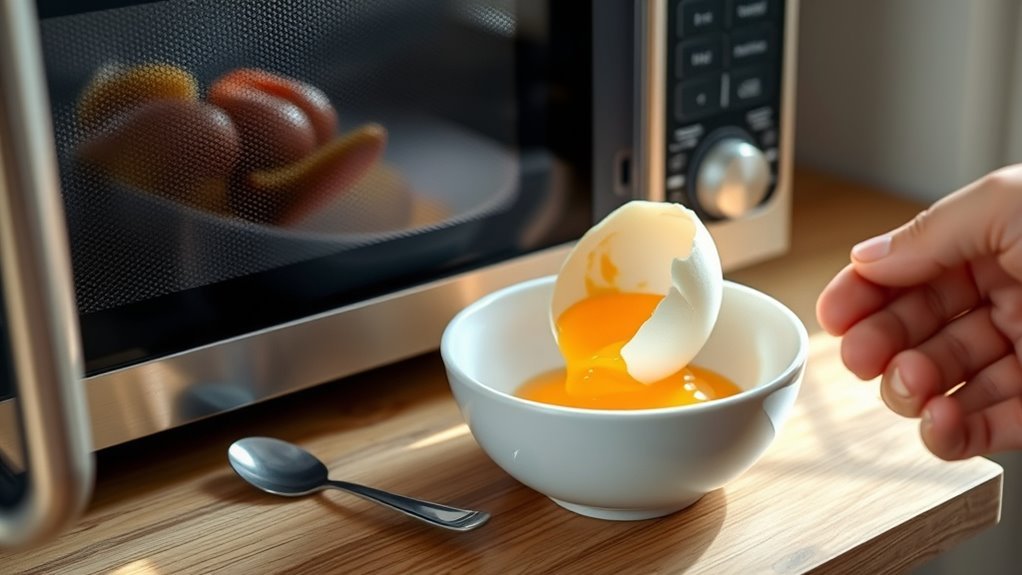
7 Easy Steps to Make a Soft Boiled Egg in the Microwave
Start by bringing two room-temperature eggs to warm water briefly to avoid cracking. This simple step helps prepare your eggs for cooking without any surprises.
Next, preheat microwave-safe water with a pinch of salt until it’s boiling. The salt not only seasons the water but also helps prevent the eggs from cracking during microwaving.
Gently lower the pierced eggs into the hot water without cracking them. It’s important to pierce the eggs first so they don’t explode in the microwave.
Microwave on high for 30–40 seconds, then let the eggs stand for 30 seconds to finish cooking. This ensures the yolks stay soft and perfectly cooked.
Finally, transfer the eggs to an ice bath for easy peeling and to lock in that ideal texture.
Follow these simple steps, and you’ll master the art of soft-boiled microwave eggs with ease and precision.
Key Takeaways
- Pierce the eggshell at the wide end to release steam and prevent cracking during microwave cooking.
- Use a microwave-safe bowl filled with salted water, fully submerging the eggs for even cooking.
- Microwave on high for 30-40 seconds, then let the eggs stand for 30 seconds to finish cooking.
- Immediately transfer eggs to an ice bath for 2 minutes to stop cooking and ease peeling.
- Gently peel eggs under running water to avoid damaging the delicate soft-boiled whites.
Quick Overview: Soft-Boiled Eggs in the Microwave
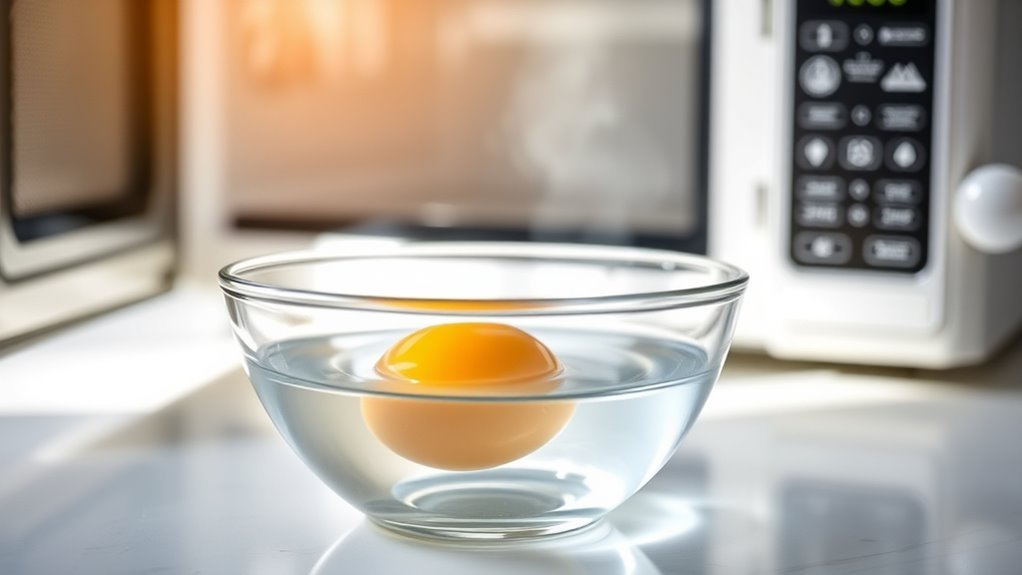
How can you make soft-boiled eggs quickly without a stovetop? You can prepare them in about 14 minutes using your microwave. Start by heating water in a microwave-safe bowl until it’s very hot.
Make soft-boiled eggs quickly without a stovetop by heating water in your microwave-safe bowl until very hot.
Then, carefully pierce the eggs to prevent cracking and place them in the hot water. Microwave the bowl for around 3 minutes, but keep an eye on the cooking times since microwaves vary.
Once done, immediately transfer the eggs to an ice bath. This rapid cooling stops cooking and helps you get that perfect soft, runny yolk texture.
Using the right bowl and handling the eggs properly ensures safe and consistent results every time you make soft-boiled eggs in the microwave.
Gather Ingredients and Ready Your Kitchen
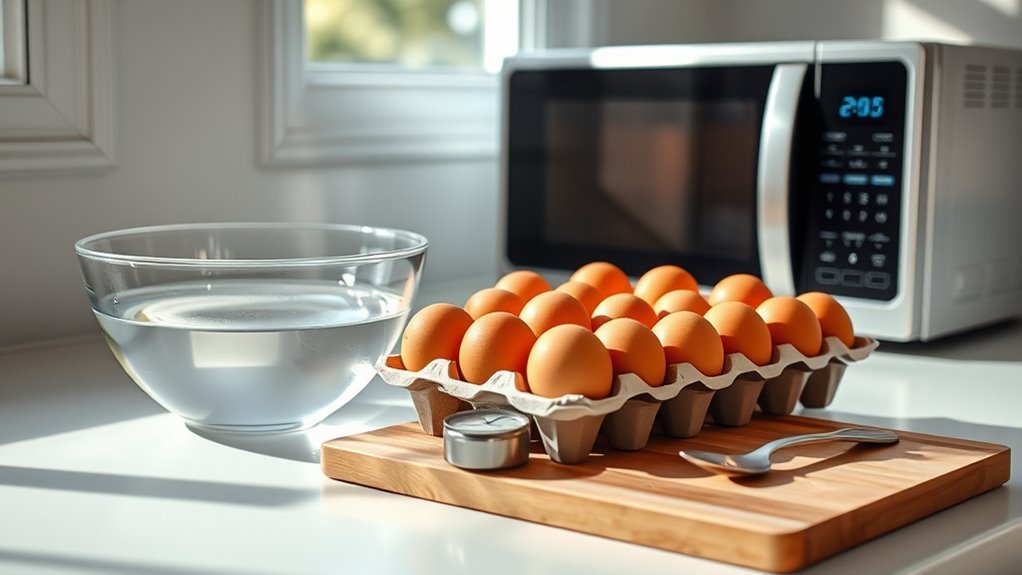
Before you start cooking, make sure you have everything ready for a smooth process. Proper preparation is key to making soft boiled eggs in the microwave without any mishaps.
Here’s what you’ll need:
- Two large eggs at room temperature to guarantee even cooking and prevent cracking.
- A microwave-safe bowl filled with water and a teaspoon of salt to help the eggs cook evenly.
- A pin or needle to pierce the eggshells at the wide end, allowing steam to escape safely.
- A timer to monitor the cooking time accurately, usually around 3 minutes depending on your microwave.
Having these ingredients and tools ready will streamline your cooking and help you achieve perfect soft boiled eggs every time.
Bring Eggs to Room Temperature Using Warm Water
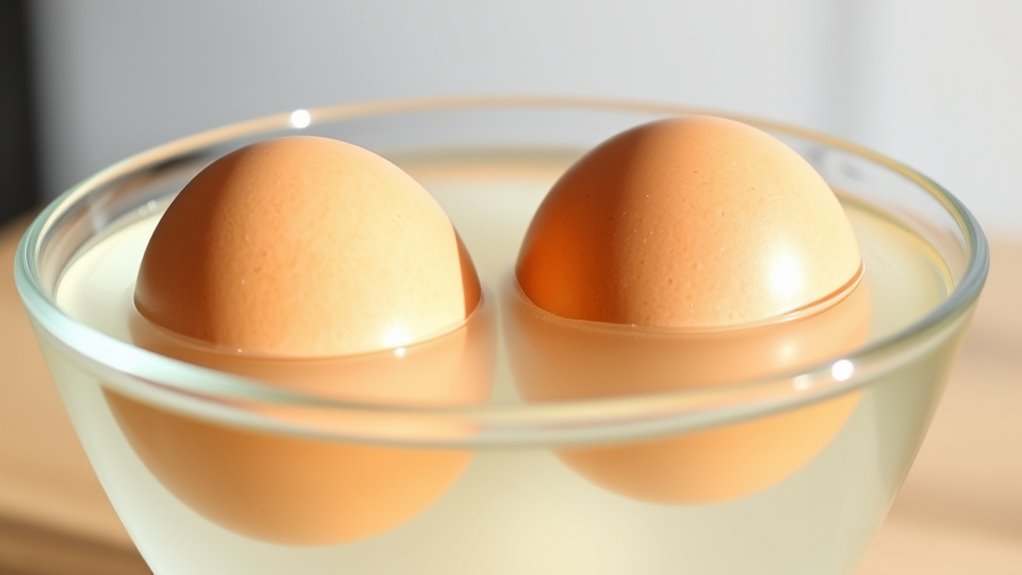
You’ll want to bring your eggs to room temperature using warm water before cooking. This gentle warming prevents cracks by avoiding sudden temperature changes.
Using warm—not hot—water guarantees the eggs heat evenly for the best soft-boiled texture. It really makes a difference!
Warm Water Benefits
Why does warming eggs in warm water make a difference? Using warm water helps regulate the egg’s temperature gently, preventing sudden changes that could cause cracking.
This simple step guarantees your eggs cook evenly and turn out perfectly soft boiled every time.
Here’s why you should use warm water to bring eggs to room temperature:
- Gradually raises egg temperature for better temperature regulation.
- Minimizes thermal shock, helping prevent cracking.
- Promotes even cooking by avoiding cold spots inside the egg.
- Provides consistent, reliable results when microwaving eggs.
Preventing Egg Cracks
Since rapid temperature changes can cause eggshells to crack, bringing your eggs to room temperature with warm water helps prevent this problem. Submerging cold eggs in warm water allows their temperature to gradually equalize, reducing stress on the shell.
This gentle warming avoids sudden expansion that can lead to cracks. Using warm water—not hot—ensures the eggshell heats evenly, which helps prevent cracks during microwaving.
When eggs reach room temperature through this method, you’ll also achieve more even heat distribution inside the egg, minimizing breakage. Taking this simple step before cooking is essential if you want perfectly soft boiled eggs without messy cracks.
Optimal Water Temperature
How warm should the water be to safely bring your eggs to room temperature? Using warm water is key to temperature stabilization, preventing egg cracking and ensuring your soft-boiled eggs cook evenly.
Here’s how to do it right:
- Fill a bowl with warm water—about 100°F (38°C) is ideal.
- Submerge your cold eggs in the warm water gently to avoid sudden shocks.
- Let the eggs soak for 5-10 minutes to gradually raise their temperature.
- Remove the eggs once they feel close to room temperature, ready for microwave cooking.
This process prevents sudden temperature changes that cause cracking and promotes even cooking. So, your soft-boiled eggs come out perfect every time.
Preheat Water to Boiling in the Microwave
Start by filling a microwave-safe bowl with water and adding a pinch of salt to help it boil faster. Microwave the water on high for about 1 to 1.5 minutes, keeping an eye on it to reach a rolling boil.
Make sure the water is hot and bubbling vigorously. This sets the stage for perfectly cooked eggs.
Use Microwave-Safe Bowl
Choose a microwave-safe bowl that’s large enough to fully submerge your eggs without risking overflow. This guarantees even cooking and prevents messes when making a soft boiled egg.
Follow these steps for best results:
- Select a microwave-safe bowl to handle the heat safely. It’s important to use the right bowl so nothing gets damaged or overheated.
- Fill it with enough water to cover the eggs completely. You want the eggs fully submerged to cook evenly.
- Cover the bowl with a microwave-safe lid or vented plastic wrap to trap steam and heat. This helps the eggs cook just right.
- Preheat the water until it reaches a rolling boil before adding eggs to avoid cracking. Starting with hot water makes a big difference!
Add Salt For Boiling
Once you’ve prepared your microwave-safe bowl filled with water and covered it, adding salt can improve your boiling process. Add a teaspoon of salt to the water before you preheat it in the microwave. This helps the water reach a rolling boil faster, usually within 1 to 1.5 minutes.
Salted water not only speeds up boiling but also enhances flavor and guarantees even cooking. It reduces the risk of your eggs cracking and prevents them from sticking to the container.
After the water has boiled, stir it briefly to distribute the salt evenly. This simple step sets the stage for perfectly soft boiled eggs by creating the ideal environment for cooking.
Monitor Water Heating Time
How long should you microwave salted water to get the perfect boil? Typically, heating it on high for about 1 to 1 ½ minutes works well.
To ensure success, you need to monitor the boiling water closely. Here’s how to manage the water heating time:
- Use a microwave-safe bowl large enough to fully submerge your eggs without overflow.
- Microwave salted water on high power, watching carefully to avoid splattering.
- Stop once the water reaches a vigorous rolling boil—this preheating step helps prevent eggs from cracking.
- Immediately add the eggs after boiling to maintain an even cooking temperature.
Add Eggs Gently to Hot Water Without Cracking
Although it may seem simple, adding eggs gently to hot water requires care to prevent cracking. To start, make sure your eggs are at room temperature or slightly warmed to avoid thermal shock when they hit the boiling water.
Before adding eggs, pierce the larger end with a pin to let air escape, which reduces cracking risk. Use a spoon or tongs to add eggs slowly and gently into the hot water, avoiding drops from a height.
Lower each egg with a steady motion to keep control and prevent sudden impacts that can crack the shell. By handling the eggs carefully, you’ll guarantee they stay intact and ready for perfect soft boiling.
Microwave Eggs for Perfect Soft-Boiled Texture
To achieve a perfect soft-boiled texture in the microwave, you’ll need to prepare your eggs carefully to prevent them from bursting. Microwave eggs require some simple steps to guarantee the cooking process goes smoothly and yields tender, runny yolks.
First, pierce the yolks and whites 4-5 times with a fork to release steam. Then, place the eggs in a microwave-safe dish and cover with vented plastic wrap to allow steam to escape.
Microwave on high or medium power for 30-40 seconds, then let the eggs stand for 30 seconds. Be careful not to overheat them—that way, you’ll keep that soft boiled texture intact and avoid any explosions.
Following these steps will help you achieve perfectly soft boiled eggs using your microwave eggs cooking process. It’s pretty straightforward once you get the hang of it!
Cool, Peel Easily, and Serve Your Soft-Boiled Eggs
Once your eggs have reached that perfect soft-boiled stage in the microwave, the next step is to cool them quickly to stop the cooking process. Place your soft-boiled eggs in an ice bath for about 2 minutes to cool them down efficiently.
This cooling not only halts cooking but also helps you peel easily by reducing shell sticking. When you’re ready to peel, gently tap and roll each egg on a hard surface to crack the shell. Then peel under running water or in the ice bath to protect the delicate egg white.
Using eggs about a week old makes peeling smoother. Serve your perfectly peeled soft-boiled eggs immediately for the best texture, or store them in an airtight container for up to two days.
Frequently Asked Questions
How Do I Make an Easy Soft-Boiled Egg in the Microwave?
You crack eggs into a microwave-safe bowl, pierce yolks, add salt, cover loosely, and microwave for 30-40 seconds. Let them rest six minutes, then plunge into ice water before peeling for soft, runny yolks.
How Can I Make Soft-Boiled Eggs Quickly and Easily?
Want soft-boiled eggs fast? Crack them in a microwave-safe bowl, pierce yolks, cover, and microwave briefly. Let them rest, then cool quickly. You’ll have perfect, tender yolks in under two minutes—no fuss!
How to Make Hard Boiled Eggs Using a Microwave?
You place eggs in a microwave-safe bowl, cover them with water, pierce the large ends, and microwave on high for 9-12 minutes. Then, transfer eggs to an ice bath for 5 minutes before peeling.
How Do You Hard Boil an Egg in the Microwave Without Exploding?
You won’t explode your egg if you crack it into a microwave-safe bowl, poke the yolk, cover it loosely, and cook in short bursts. Then, immediately cool it in cold water to stop cooking and prevent cracking.
Conclusion
Now that you’ve mastered the art of soft-boiled eggs in the microwave, you hold the golden key to a quick, comforting breakfast. Like a gentle sunrise breaking through morning fog, these tender eggs brighten your day with ease.
With just a splash of hot water and a moment’s patience, you’ve transformed simple ingredients into a warm, silky delight. It’s amazing how something so easy can taste this good.
So go ahead—peel back the shell and savor your perfect, effortless creation. Making soft-boiled eggs in the microwave means no fuss, no waiting around, just fast, delicious results every time. Whether you’re rushing out the door or enjoying a slow morning, this simple method brings you soft, creamy eggs that feel like a little breakfast luxury. Give it a try, and enjoy your new go-to for a soft-boiled egg that’s quick, easy, and absolutely satisfying.