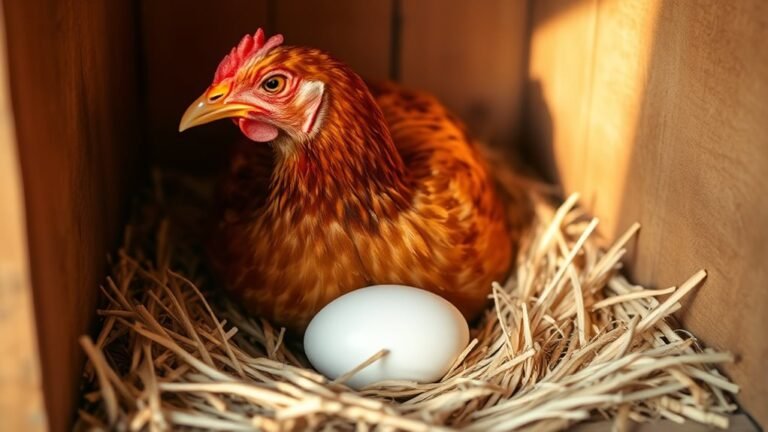
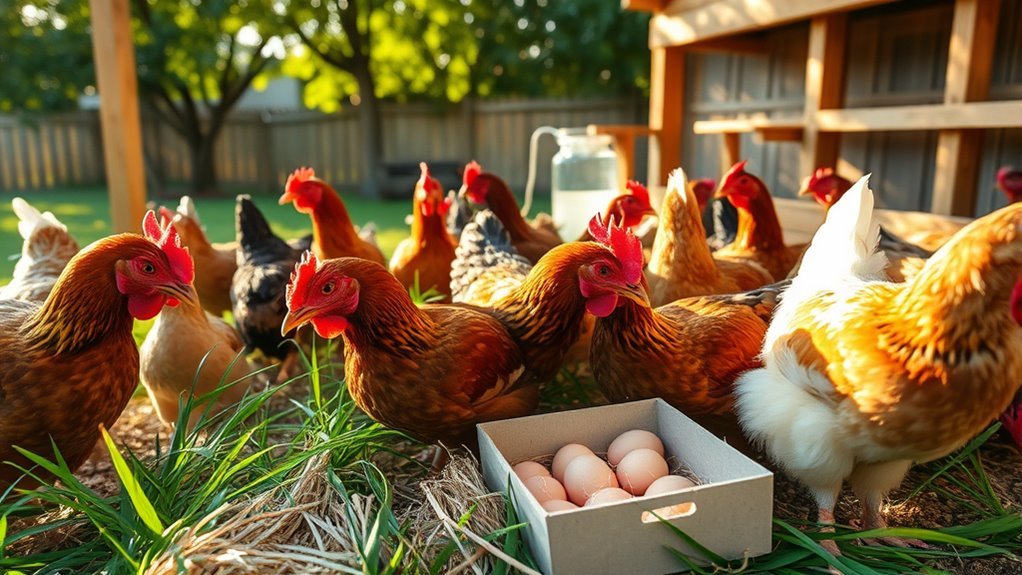
7 Tips to Get Hens to Lay More Eggs
To get your hens laying more eggs, start by keeping their coop clean, well-ventilated, and predator-proof. This helps reduce stress, which is key for better egg production.
Try extending daylight hours to 14-16 with timed lighting. Hens love that extra light, especially during shorter days.
Also, boost their protein intake, especially in colder months when they need more energy.
Make sure they have constant access to calcium sources like crushed oyster shells. Strong shells mean healthier eggs, and calcium is essential for that.
Encourage natural foraging by scattering feed around and adding natural objects in their space. It keeps hens active and happy.
You can even add herbs like oregano and garlic to their diet for health support.
With these simple steps, you’ll find plenty of ways to optimize your flock’s egg production and keep your hens happy and healthy!
Key Takeaways
– Provide 14-16 hours of light daily using timers to stimulate consistent egg laying.
This helps keep your hens on a regular schedule so they lay more often.
– Ensure a balanced diet with 18-20% protein and constant calcium sources like crushed oyster shells.
Good nutrition is key to healthy eggs and happy hens.
– Maintain a clean, well-ventilated, and predator-proof coop to reduce stress and support hen health.
A comfy coop means less worry for your birds and better egg production.
– Incorporate fresh or dried herbs such as oregano, thyme, and garlic to boost immunity and reproductive health.
These natural additions can give your flock a little extra health boost.
– Encourage natural behaviors by offering foraging opportunities with scattered grains, dirt runs, and natural objects.
Let your hens do what they love—it makes them happier and more productive!
Why Hens Stop Laying Eggs
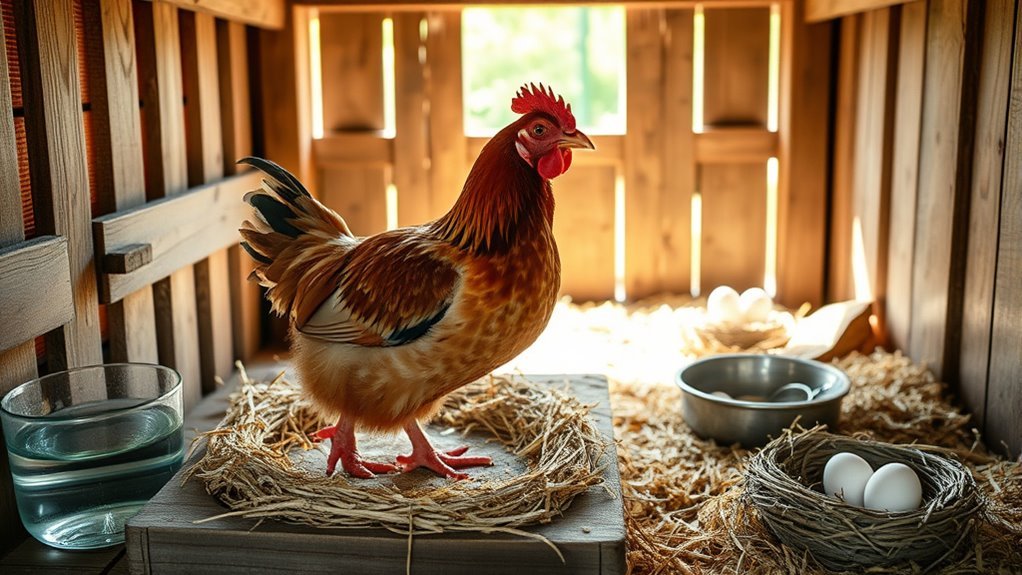
Although it can be frustrating, hens often stop laying eggs due to natural factors like molting or aging, which slow down or halt production. You’ll notice egg production drops when hens undergo these changes.
Another key factor is light hours; hens need about 14-16 hours of daylight daily to maintain consistent laying. When daylight decreases, especially in winter, hens stop laying more frequently.
Nutrition plays a big role too—if your hens don’t get enough calcium in their diet, their eggshell quality suffers, and they may stop laying altogether. Keep an eye on their diet and environment to prevent these common issues.
Understanding these reasons helps you address them effectively and encourage your hens back to steady egg production.
Maintain a Clean, Comfortable Coop
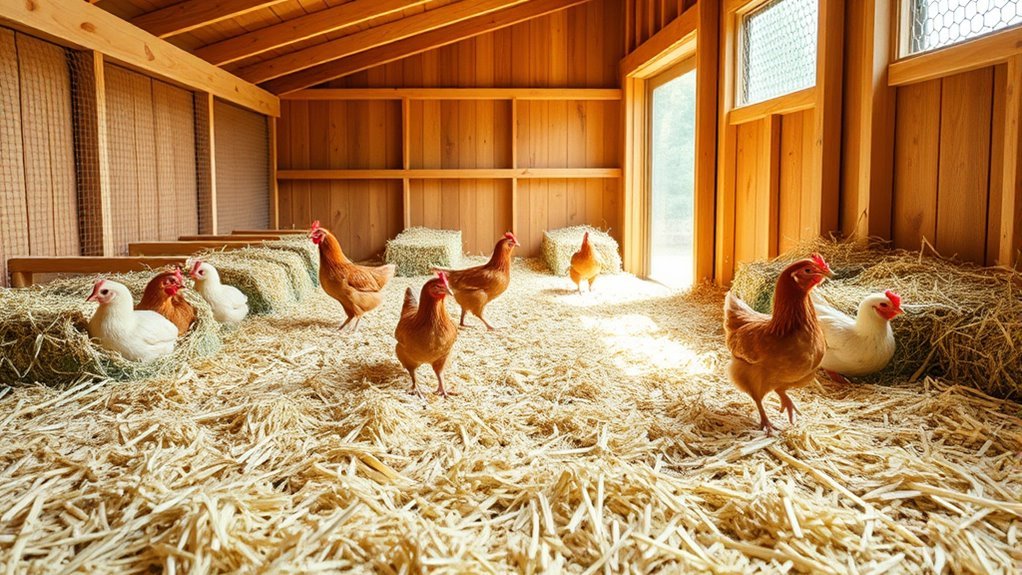
Keeping your coop clean and comfortable plays a big role in encouraging hens to lay more eggs. A clean coop creates a comfortable environment that helps reduce stress and supports consistent egg laying.
A clean, comfortable coop lowers stress and supports steady egg production in your hens.
You should regularly remove waste and replace bedding to prevent harmful bacteria buildup. Proper ventilation keeps the coop dry and prevents respiratory issues that can disrupt egg laying.
Also, make certain your coop is predator-proof to maintain a sense of safety for your hens. Focus on these key points to maintain an ideal coop:
- Remove waste and refresh bedding often
- Ensure good airflow and dryness
- Keep the coop predator-proof
- Designate tidy nesting areas
These steps help reduce stress and promote healthy, productive hens. It’s really all about making your hens feel safe and cozy so they can do their best!
Adjust Lighting to Boost Egg Production
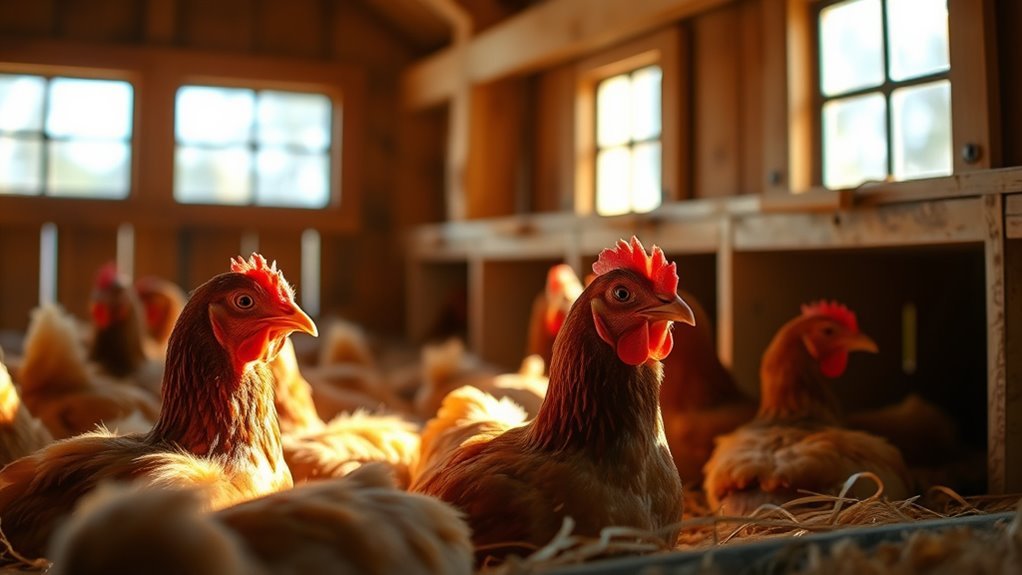
When you adjust the lighting in your coop, you can considerably boost your hens’ egg production. Chickens need at least 14 hours of light daily, with around 16 hours being ideal for laying.
During shorter days, especially in winter, adding artificial lighting to the coop can keep egg production steady. Use a timer to maintain a consistent light schedule, providing light in the early morning or evening to safely extend daylight hours.
Gradually increase lighting duration to avoid stressing your hens or upsetting their natural rhythms. Remember, hens still require 6-8 hours of darkness for restful sleep and good health.
Increase Protein in Your Hens’ Diet
Adjusting the lighting sets the stage for better egg production, but what your hens eat plays an equally vital role. Increasing protein in your hens’ diet to around 18-20% supports consistent egg production, especially during colder months.
Proper lighting and a protein-rich diet are key to consistent egg production, especially in colder months
Protein is essential because it takes about a day for a hen to form an egg, so regular intake keeps them laying daily. To boost protein in their feed, try these tips:
- Offer small daily portions of high-quality animal protein like mealworms or canned tuna
- Provide protein-rich snacks right after a hen lays an egg
- Maintain feed at the recommended protein level year-round
- Use protein to help hens maintain energy and warmth for productivity
Add Calcium Supplements for Stronger Shells
Since calcium plays a crucial role in eggshell strength, you’ll want to provide your hens with constant access to calcium supplements like crushed oyster shells or eggshells. Hens need about 3-4 grams of calcium daily to lay strong, durable eggs with healthy shells.
Offering free-choice calcium supplements ensures they can consume what they need, especially during peak laying periods. Adding oyster shells or crushed eggshells to their feed helps improve shell quality and reduces breakage.
Without enough calcium, hens may produce thin or shell-less eggs and might even stop laying altogether. So, keep calcium supplements available at all times to support ongoing shell formation and maintain consistent egg production.
This simple step goes a long way toward healthier hens and stronger, more reliable eggshells. It’s an easy way to keep your flock happy and your eggs looking great!
Encourage Natural Foraging and Scratching
You can boost your hens’ egg production by providing straw bedding and designing covered runs that protect them while allowing natural behaviors.
Encourage pecking and scratching by scattering feed and creating a comfortable environment for foraging.
These simple steps keep your flock active and healthy, which helps maintain steady laying.
Provide Straw Bedding
Although hens will lay eggs without it, providing straw bedding encourages their natural foraging and scratching behaviors. This can actually boost egg production.
Adding straw bedding to the coop environment mimics wild nesting conditions, helping hens feel secure. When they feel safe, they’re more motivated to keep up consistent egg-laying behavior.
Straw lets hens peck, scratch, and search for insects or seeds. This increases their activity and helps reduce stress.
To optimize your hens’ egg output, remember to:
- Use fresh straw regularly to keep the coop clean and dry
- Allow space for natural foraging and scratching
- Create a comfortable, soft bedding area
- Encourage exploration to stimulate reproductive instincts
Design Covered Runs
When hens have access to a covered run, they’re more likely to engage in natural foraging and scratching behaviors that boost egg production. A covered run keeps hens safe from predators and harsh weather, creating a stress-free environment.
Using straw or natural bedding encourages scratching, which stimulates their instincts and supports health. Make sure your run is predator-proof and dry to prevent injuries and stress that can stop laying.
Providing ample space with natural elements lets hens explore freely, leading to more consistent egg production.
| Feature | Benefit |
|---|---|
| Covered run | Protects from predators |
| Predator-proof | Reduces stress and injuries |
| Bedding | Encourages scratching |
| Dry environment | Prevents health issues |
| Ample space | Promotes natural behaviors |
Promote Pecking Behavior
Encouraging hens to peck and scratch naturally boosts their health and egg production by stimulating instinctual behaviors. To promote pecking behavior, you’ll want to create opportunities that mimic their natural instincts and encourage foraging.
Try these tactics:
- Scatter grains like corn and oats on the ground to stimulate foraging and scratching.
- Provide access to a dirt or grass run where hens can peck at soil and insects.
You can also serve feed on the ground instead of in feeders to increase natural pecking behavior. Adding natural objects such as rocks or branches in the coop can encourage exploring and pecking, too.
These simple steps help keep your hens happy and active, which is great for their overall well-being!
Use Herbs and Natural Remedies to Boost Egg Production
You can boost your hens’ egg production by growing medicinal herbs like oregano and thyme right in their coop. Herbal supplements such as aloe vera and chamomile help reduce stress and improve their overall health.
Adding these natural remedies to their routine supports better laying and keeps your flock thriving. It’s a simple way to give your hens a little extra boost naturally!
Herbal Supplements Benefits
Since herbal supplements offer natural antioxidants and antimicrobial properties, they can substantially boost your hens’ egg production. By adding herbs like oregano, thyme, and sage, you support your hens’ immune health, helping them stay healthier and lay consistently.
Herbs also reduce stress and inflammation, which often hinder egg production. You’ll notice better gut health and nutrient absorption when you use natural remedies like garlic and turmeric, further encouraging higher egg yields.
Consider these benefits when incorporating herbal supplements:
- Enhance immune health to prevent illness
- Reduce stress and inflammation that affect laying
- Support reproductive health with raspberry leaf and chamomile
- Promote gut health for improved nutrient absorption
Using herbal supplements regularly helps maintain steady egg production, especially during stressful or seasonal changes. It’s a natural way to keep your flock happy and productive!
Growing Medicinal Plants
Herbal supplements work best when you grow the plants yourself, guaranteeing a fresh, steady supply of natural remedies for your hens. Cultivating medicinal herbs like oregano, thyme, and sage directly supports hen health and boosts egg production.
You can also grow fenugreek and red clover, which are known to naturally stimulate reproductive health in chickens. Incorporate fresh herbs or herbal teas into their diet to improve immune function and encourage consistent laying.
Additionally, plants like garlic and turmeric reduce inflammation and enhance overall vitality. By maintaining a variety of these medicinal plants in your coop or run, you provide your hens with herbal supplements that promote regular egg production and stronger health.
Growing your own medicinal herbs guarantees you have a natural, effective way to support your flock’s productivity. It’s a simple step that makes a big difference!
Frequently Asked Questions
What Will Help My Hens Lay More Eggs?
You’ll help your hens lay more eggs by giving them 14-16 hours of light, feeding a calcium-rich diet, boosting protein intake, ensuring a safe environment, and regularly checking their health to keep them stress-free and productive.
How to Trigger Chickens to Lay Eggs?
You can practically make your hens lay eggs like clockwork by giving them 14-16 hours of light, a calcium-packed diet, and a stress-free, cozy home. They’ll be egg machines before you know it!
What Foods Encourage Chickens to Lay Eggs?
You’ll encourage chickens to lay eggs by feeding them crushed oyster shells for calcium, adding protein like mealworms or tuna, and including whole corn and oats. Fresh greens like alfalfa also boost their reproductive health.
What Triggers Hens to Lay Eggs?
Imagine dawn’s gentle fingers waking your hens; light triggers their bodies to surge with hormones, especially progesterone, telling them it’s time to lay eggs. You’ll see more eggs once their internal clocks align with longer daylight.
Conclusion
By following these tips, you can help your hens lay more eggs and stay healthy. Did you know hens need about 14-16 hours of light daily to maintain peak egg production? Adjusting their environment and diet makes a huge difference.
Remember, a happy, well-cared-for hen is a productive hen. Keep their coop clean, feed them right, and watch your egg count rise.
Your efforts to provide proper lighting, nutrition, and a clean, comfortable space will truly pay off. When hens are healthy and stress-free, egg production naturally improves. So, take good care of your flock, and enjoy the rewards of more fresh eggs every day!