10 Facts About How Much Protein Is in a Fried Egg
You get about 6.3 grams of complete protein in a large fried egg, split between 3.6 grams in the white and 2.7 grams in the yolk.
Frying doesn’t reduce protein, but using healthier oils like olive or avocado boosts nutrition.
This protein helps control hunger, supports muscle growth, and aids weight loss.
Fried eggs are low in carbs and perfect for breakfast or post-workout.
Keep exploring to discover how timing and cooking choices maximize these benefits.
Key Takeaways
- A large fried egg contains about 6.3 grams of complete protein with all nine essential amino acids.
- Protein is evenly split between yolk (2.7 g) and white (3.6 g), providing balanced nutrition.
- Frying does not significantly reduce protein content despite slight water loss.
- Egg whites offer highly digestible protein supporting muscle repair and growth.
- Fried eggs provide about 90 calories and less than 1 gram of carbs, making them a low-carb protein source.
How Much Protein Is in a Fried Egg?
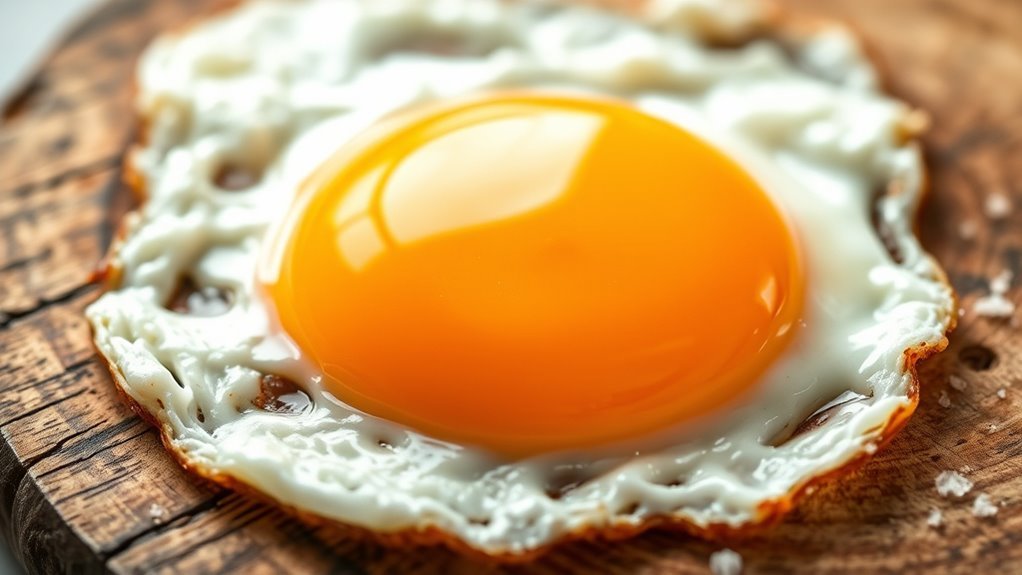
Although cooking methods vary, a large fried egg contains about 6.3 grams of protein, making it a reliable source no matter how you prepare it. When you eat fried eggs, you’re getting a solid protein content that stays consistent whether the egg is raw, boiled, or fried.
This means you don’t have to worry about losing protein through cooking. Fried eggs provide a complete protein source, supplying all nine essential amino acids your body needs.
Knowing the protein content in fried eggs helps you plan your meals better, especially if you’re focused on muscle building or maintaining a balanced diet. So, next time you enjoy fried eggs, remember you’re fueling your body with quality protein.
How Is Protein Divided Between Yolk and White?
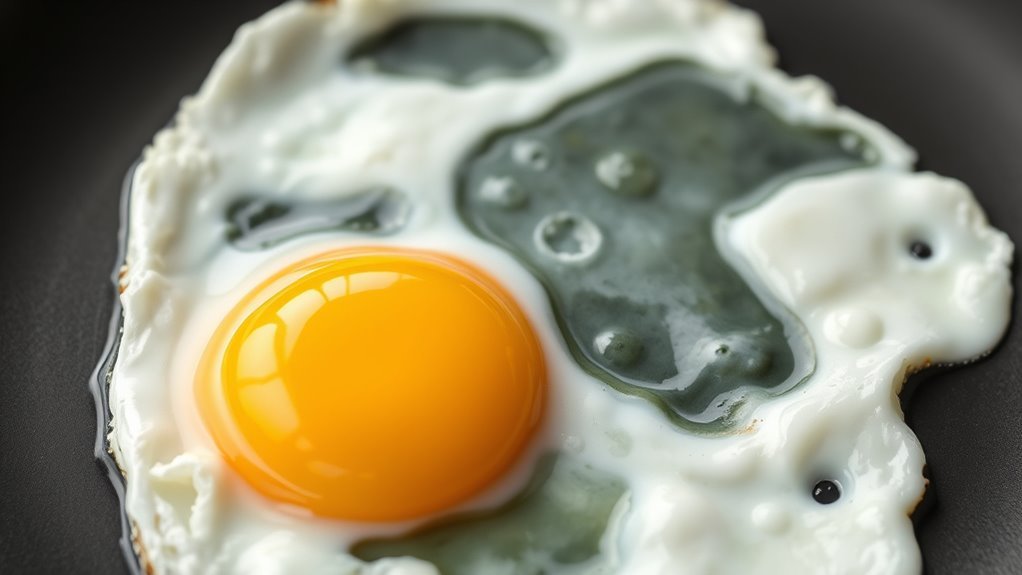
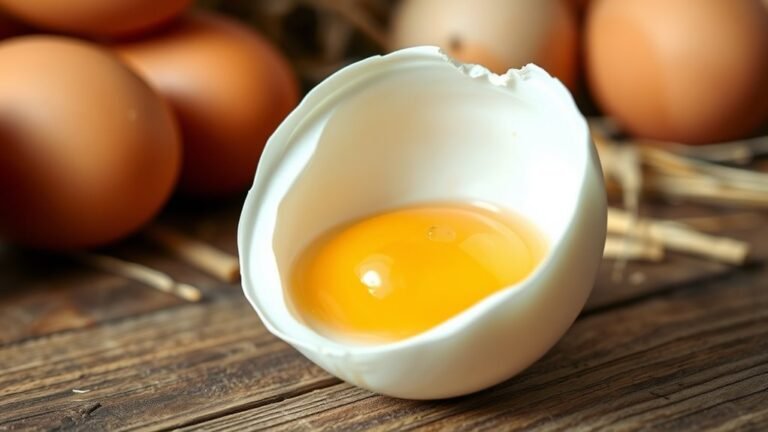
When you enjoy a fried egg, it’s helpful to understand how its protein is split between the yolk and the white. In a large egg, about half of the total protein—roughly 2.7 grams—comes from the yolk. The yolk also provides essential nutrients like vitamins D and B12 along with its protein.
The egg white, on the other hand, contains about 3.6 grams of protein and is the primary protein source, rich in various amino acids and water. Together, the yolk and white contribute equally to the egg’s protein content, maintaining this balance whether the egg is raw or cooked.
Does Frying Change the Protein Content?
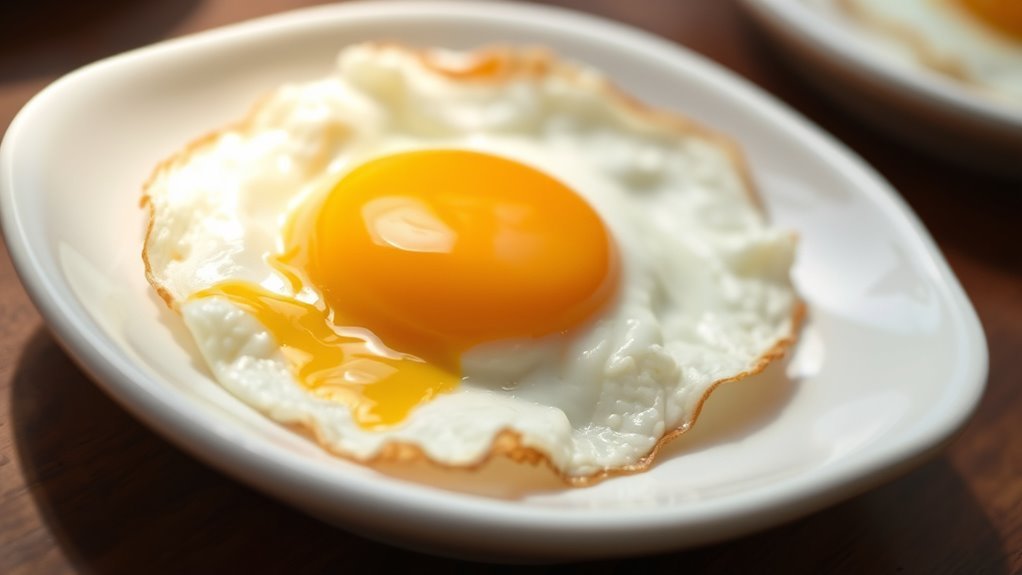
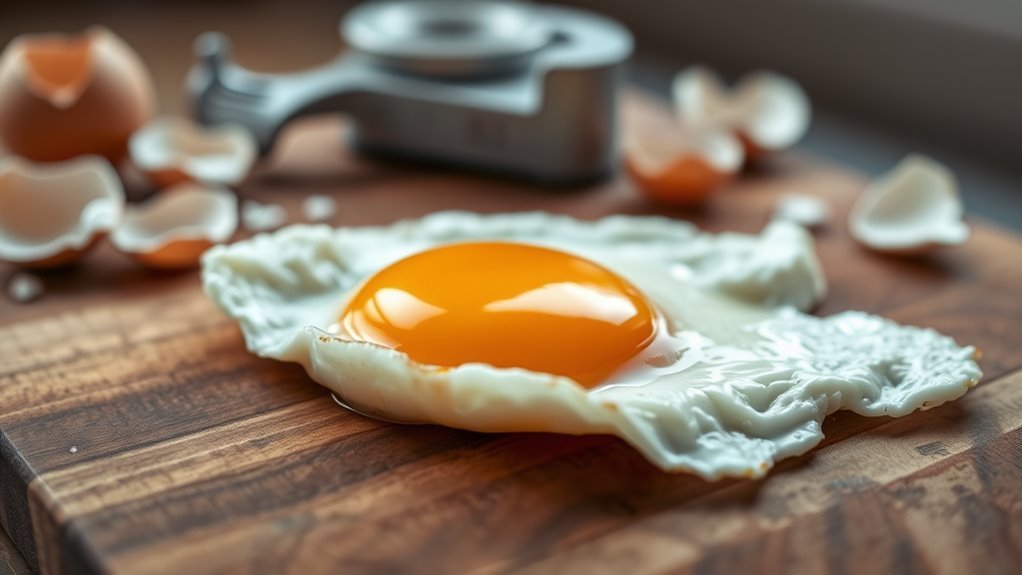
How does frying affect the protein content in your egg? When you fry an egg, the total protein amount stays nearly the same as in a raw egg. The heat changes the egg’s texture and flavor but doesn’t destroy or reduce the protein itself.
Whether you eat a fried, boiled, or scrambled egg, the protein content remains consistent. You might notice slight differences due to water loss during frying, but these don’t substantially impact the protein quantity.
How Cooking Oils Affect Fried Egg Nutrition
Frying an egg keeps its protein intact, but the oil you choose can considerably shape its overall nutrition. Using healthier cooking oils like olive or rapeseed oil boosts monounsaturated fats, which benefit your heart.
Oils high in polyunsaturated fats, such as sunflower oil, are also great for heart health. Just keep in mind the amount of oil you use; less oil or cooking spray reduces added fat and calories.
Choose oils with high smoke points like avocado or sunflower oil to maintain nutrition when frying at higher temperatures.
| Cooking Oil | Nutrition Benefit |
|---|---|
| Olive Oil | High in monounsaturated fats |
| Rapeseed Oil | Heart-healthy fats |
| Sunflower Oil | High smoke point, polyunsaturated fats |
| Avocado Oil | Stable at high heat |
Why Fried Egg Protein Helps Weight Loss
You’ll find that the high protein content in a fried egg helps you feel full longer, making it easier to control your calorie intake. This protein also supports muscle maintenance, which is key when you’re trying to lose weight.
Including fried eggs in your meals can keep you satisfied and on track with your goals. It’s a simple way to stay full and avoid unnecessary snacking throughout the day.
High Protein Content
Why does a fried egg make such a great addition to a weight loss plan? It’s all about the high protein content. A fried egg provides around 6.3 grams of complete protein, which means you get all the essential amino acids your body needs.
This protein helps you maintain muscle mass even when you’re eating fewer calories. Plus, the high protein content in an egg boosts your metabolism, helping your body burn energy more efficiently.
Including fried eggs in your meals not only supports muscle preservation but also promotes fat loss. So, by adding a simple fried egg to your diet, you’re choosing a nutrient-dense, protein-packed food that can enhance your weight loss efforts effectively and sustainably.
Satiety and Calorie Control
Because fried eggs boast about 6.3 grams of high-quality protein, they help you feel full longer, making it easier to eat fewer calories throughout the day. This increased satiety reduces hunger and curbs cravings, supporting your calorie control efforts naturally.
When you include fried eggs in your meals, the protein slows digestion and lowers hunger hormone levels, so you’re less likely to overeat. Plus, protein’s thermic effect slightly boosts your metabolism, helping you burn more calories after eating.
Since fried eggs are both low in calories and rich in protein, they’re a smart choice for managing your weight without feeling deprived. Incorporating them regularly can make sticking to a calorie-controlled diet simpler and more satisfying.
Muscle Maintenance Support
Beyond helping control hunger, the protein in fried eggs plays a key role in maintaining your muscle mass during weight loss. Each fried egg offers about 6.3 grams of protein per serving, packed with all nine essential amino acids.
These amino acids support muscle repair and growth, helping you preserve lean muscle even as you shed pounds.
Here’s why fried egg protein supports muscle maintenance and weight loss:
- Provides complete protein per serving to fuel muscle recovery
- Contains essential amino acids that prevent muscle breakdown
- Boosts satiety, reducing overall calorie intake
- Supports metabolism and muscle function during dieting
- Works best with strength training to enhance muscle retention
Including fried eggs in your diet helps maintain muscle and promotes healthier weight loss. It’s a simple way to keep your muscles happy while you drop the pounds.
How Fried Eggs Fit Into Your Daily Protein Needs
When you include a fried egg in your meal, you add about 6.3 grams of complete protein. That covers around 11% of the daily protein recommended for women and 13% for men.
This protein contains all nine essential amino acids, making it ideal for muscle repair and overall health. By adding a fried egg to your diet, you can conveniently guarantee your protein intake without adding many calories or fat, especially if you cook it with minimal oil.
Whether you’re aiming to meet daily protein goals or support weight management, fried eggs fit well into your nutrition plan. They offer a simple, effective way to ensure you get quality protein throughout your day.
Comparing Protein in Different Egg Sizes
Adding a fried egg to your meal boosts your protein intake, but the amount varies depending on the egg’s size. If you want to maximize protein, choosing the right size matters.
Here’s a quick comparison: Small eggs contain about 4.79 grams of protein. Large eggs, a popular choice, offer roughly 6.3 grams of protein.
Extra-large eggs provide around 7.06 grams. Jumbo eggs pack the most protein, approximately 7.94 grams. The protein difference from small to jumbo eggs is about 2.5 grams.
No matter the size, each fried egg contributes valuable protein to your diet. Picking a large or bigger egg can give you a stronger protein boost without adding much extra volume.
Are Fried Eggs a Complete Protein Source?
You’ll get all nine essential amino acids from a fried egg, making it a complete protein source. This high-quality protein supports muscle repair and boosts your immune system.
Including fried eggs in your diet helps meet your daily protein needs efficiently. They’re a simple and tasty way to fuel your body.
Essential Amino Acids
Because fried eggs contain all nine essential amino acids, they qualify as a complete protein source. This means when you eat a fried egg, you’re getting a high-quality protein that supports your body’s crucial functions.
A single large fried egg offers about 6.3 grams of protein, covering all the essential amino acids your body can’t produce on its own.
Here’s why essential amino acids in fried eggs matter:
- Support muscle repair and growth
- Boost immune system function
- Provide a balanced amino acid profile
- Combine egg whites and yolks for enhanced nutrition
- Serve as a versatile protein option for various diets
Protein Quality Benefits
When you choose fried eggs, you’re getting a complete protein source that contains all nine essential amino acids your body needs. This means the protein quality in fried eggs is exceptional, supporting muscle repair and growth effectively.
Each large fried egg packs about 6.3 grams of Much Protein, making it easier for you to meet your daily protein requirements. The protein in fried eggs is highly digestible and bioavailable, so your body absorbs it efficiently.
Most of this protein comes from the egg white, which contains roughly 3.6 grams per 33 grams of raw egg white. Regularly including fried eggs in your diet guarantees you benefit from their complete amino acid profile and excellent protein quality.
Common Myths About Eggs and Protein: Debunked
How much do you really know about the protein in eggs? Let’s debunk some common myths that might be holding you back from enjoying them fully.
Egg yolks aren’t unhealthy; they’re packed with essential nutrients like vitamin D and choline. And fried eggs? They aren’t much higher in calories than other methods—about 90 calories per large egg.
Raw eggs aren’t better; cooking boosts protein availability and cuts Salmonella risk. Plus, eggs don’t raise heart disease risk when eaten moderately.
They contain less than 1 gram of carbs, making them a low-carb choice. Understanding these facts helps you appreciate the true value of eggs and their protein without falling for common misconceptions.
Best Times and Ways to Eat Fried Eggs for Protein
If you want to boost your protein intake effectively, eating fried eggs at breakfast is a smart choice since one large fried egg provides about 6.3 grams of complete protein.
You can also enjoy fried eggs after workouts to support muscle repair. Pairing them with vegetables or whole grains creates a balanced, protein-rich meal.
Cooking with minimal oil and draining excess fat helps keep it healthy. It’s a simple way to make your fried eggs better for you.
| Best Time to Eat | Why It Works |
|---|---|
| Breakfast | Fuels your day with protein |
| Post-Workout | Aids muscle recovery |
| Snack | Controls appetite, promotes satiety |
Frequently Asked Questions
Is a Fried Egg a Good Protein?
Yes, a fried egg is a great protein source. You get all essential amino acids, supporting muscle growth and satiety. Plus, it’s affordable and versatile, fitting easily into your diet for balanced nutrition and weight management.
Is 2 Eggs a Day Enough Protein?
Two eggs a day can give you a solid protein boost, but they might not cover all your needs if you’re very active. You’ll want to include other protein sources for a balanced diet.
Is 2 Fried Eggs a Day Healthy?
Think of two fried eggs as small powerhouses; yes, eating them daily can be healthy if you fry them with minimal oil and balance your diet with veggies and other proteins to keep nutrients and fats in check.
How Much Protein Do 3 Fried Eggs Contain?
Three fried eggs contain about 18.9 grams of protein, giving you a solid boost for your daily needs. You’ll get protein from both the yolks and whites, making it a balanced, nutritious choice.
Conclusion
You might think frying eggs shrinks their protein punch, but it actually keeps it strong, making your meal both tasty and nutritious. While the yolk and white share protein differently, frying doesn’t rob you of this muscle fuel.
Pairing fried eggs with healthy oils boosts benefits, and timing your intake can maximize gains. So, don’t just see fried eggs as comfort food—embrace them as a clever, protein-packed ally in your healthy lifestyle.
Fried eggs are a great source of high-quality protein, essential for muscle repair and growth. Whether you enjoy them for breakfast or a quick snack, they deliver a solid protein boost without losing nutritional value during cooking.
Including fried eggs in your diet supports your fitness goals while satisfying your taste buds. So, next time you fry an egg, remember you’re fueling your body with a delicious, protein-rich meal that fits perfectly into a balanced, healthy lifestyle.