

How Long Do Guinea Eggs Take to Hatch?
Guinea eggs typically take about 26 to 28 days to hatch, depending on the breed and environment. If you’re planning to hatch guinea eggs, it’s important to know the right conditions to give those eggs the best chance.
Temperature and humidity play a big role in whether your keets will hatch healthy and strong.
You’ll want to keep the incubator temperature steady at 99.5°F with good airflow to guarantee even heat.
Humidity should stay around 45-50% during most of incubation, then rise to 65-70% in the last few days.
Managing these conditions closely helps improve hatch success and healthy keets.
Learn how to fine-tune temperature and humidity for the best results.
Key Takeaways
- Guinea eggs typically take between 26 to 28 days to hatch. Incubation duration can vary slightly based on breed and environmental conditions.
- Most keets hatch around day 26 to 28, but sometimes they come earlier or later than that.
- Keeping the temperature and humidity steady helps make sure the eggs hatch on time and successfully.
- If the conditions fluctuate too much, it might delay hatching or even lower the number of eggs that hatch.
What Is the Typical Incubation Period for Guinea Eggs?
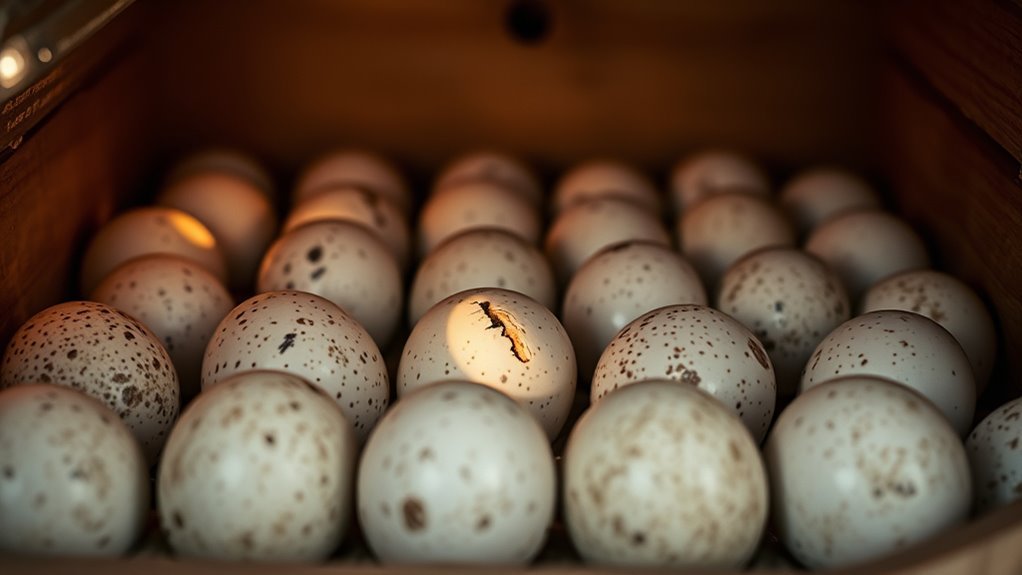
While the incubation period for guinea eggs generally lasts about 26 to 28 days, you might notice slight variations depending on the breed and environmental conditions. Most keets hatch around days 26 to 28, but some may hatch a bit earlier or later within this range.
The incubation duration directly impacts the hatch rate, so maintaining consistent temperature and humidity during this time is essential. If conditions fluctuate, it can affect the hatch day and reduce the number of healthy keets.
Understanding this typical incubation period helps you better anticipate when your guinea eggs will hatch and plan accordingly. By closely monitoring the incubation period, you increase your chances of a successful hatch and healthy keets emerging right on schedule.
How to Manage Temperature and Humidity for Guinea Egg Incubation
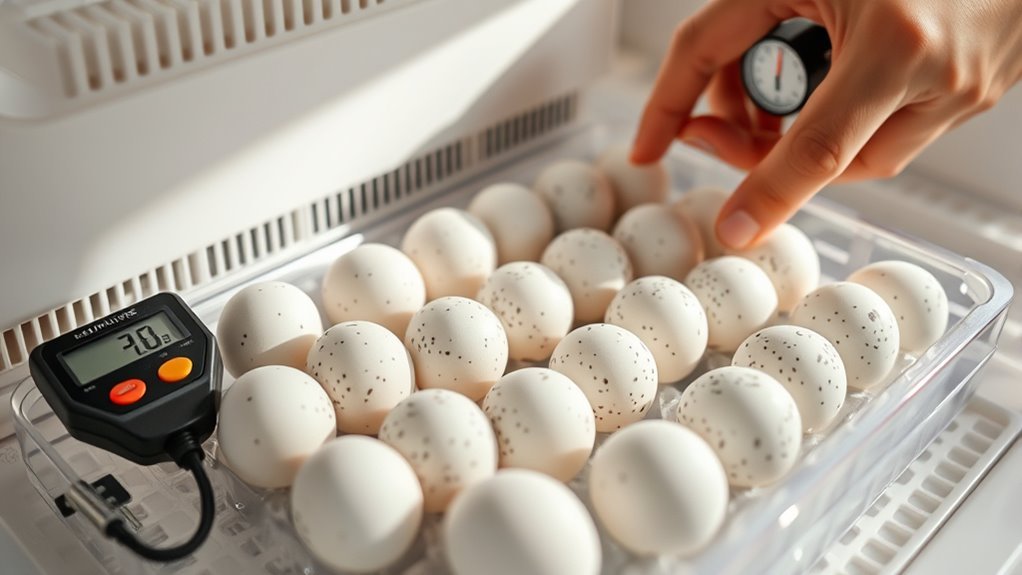
Properly managing temperature and humidity is essential to successfully incubate guinea eggs and guarantee healthy keets. Maintain the incubator temperature at 99.5°F (37.5°C) with forced-air circulation, and regularly perform temperature calibration to avoid deviations beyond 0.5°F.
Consistent temperature and humidity control are key to successfully hatching healthy guinea keets.
Keep humidity levels between 45-50% during most of the incubation period, using an egg turner to assure even development. Increase humidity to 65-70% during the last three days, known as lock down, to support the hatching process.
Adjust humidity by adding water to the reservoir or modifying air intake, but try to avoid large fluctuations. Also, monitor fertile eggs for weight loss and slightly reduce humidity if necessary.
Proper humidity management and stable incubator temperature throughout incubation will help you successfully hatch guinea eggs and raise healthy keets. It’s all about keeping things steady and consistent!
Frequently Asked Questions
How Long Do Guineas Sit on Eggs?
You’ll find guineas sit on their eggs for about 26 to 28 days, hardly leaving the nest except to eat or drink. They keep constant contact, ensuring the eggs stay warm until they hatch.
Is It Hard to Hatch Guinea Eggs?
Hatching guinea eggs isn’t a walk in the park, but if you keep your nose to the grindstone with temperature, humidity, and turning, you’ll increase your chances. Patience and care make all the difference here.
What Day Do Guinea Eggs Go Into Lockdown?
Guinea eggs go into lockdown around day 23 of incubation. You’ll stop turning them and increase humidity to 65-70% to help the keets hatch successfully during this essential final stage.
What Is the Downside of Guinea Fowl?
Imagine your peaceful yard suddenly filled with loud, piercing calls—guinea fowl can be noisy, aggressive, and escape artists. They’ll peck, chase, and scratch up your garden, so you’ll need strong fences and patience.
Conclusion
Now that you know guinea eggs typically take about 26 to 28 days to hatch, you’re ready to manage temperature and humidity like a pro. Remember, keeping conditions just right is like walking a tightrope over a volcano—one wrong move can ruin everything!
Stay attentive and adjust as needed. Soon, you’ll be celebrating the arrival of healthy, chirping chicks. Your patience and care will truly pay off in the most amazing way!
By carefully monitoring temperature and humidity during the 26 to 28 day incubation period, you give your guinea eggs the best chance to hatch successfully. Consistency is key, so don’t rush the process. With the right environment and a little TLC, you’ll enjoy watching your guinea chicks emerge strong and healthy. It’s a rewarding experience that makes all the effort worthwhile!