How Can You Tell If a Chicken Is Egg Bound?
You can tell if your chicken is egg bound if she’s straining to lay but produces no egg, shows vent swelling or inflammation, and acts lethargic or reluctant to move. These signs are pretty clear indicators that something’s wrong with her egg-laying process.
You might also notice a hunched posture, changes in appetite, or unusual droppings.
If you see any of these symptoms, it means she needs prompt care to avoid complications. Egg binding can be serious, so it’s important to act quickly.
If you want to learn how to support her safely and effectively, keep exploring to discover the best steps to help your hen.
Key Takeaways
- Look for straining without egg production and swelling around the vent area.
- Observe reluctance to move, changes in appetite, and unusual droppings.
- Check for vent swelling, tissue inflammation, or a palpable egg near the vent.
- Notice signs of lethargy, distress, or vocalizations indicating discomfort.
- Monitor for a hunched posture and difficulty passing the egg.
How to Tell If Your Chicken Is Egg Bound
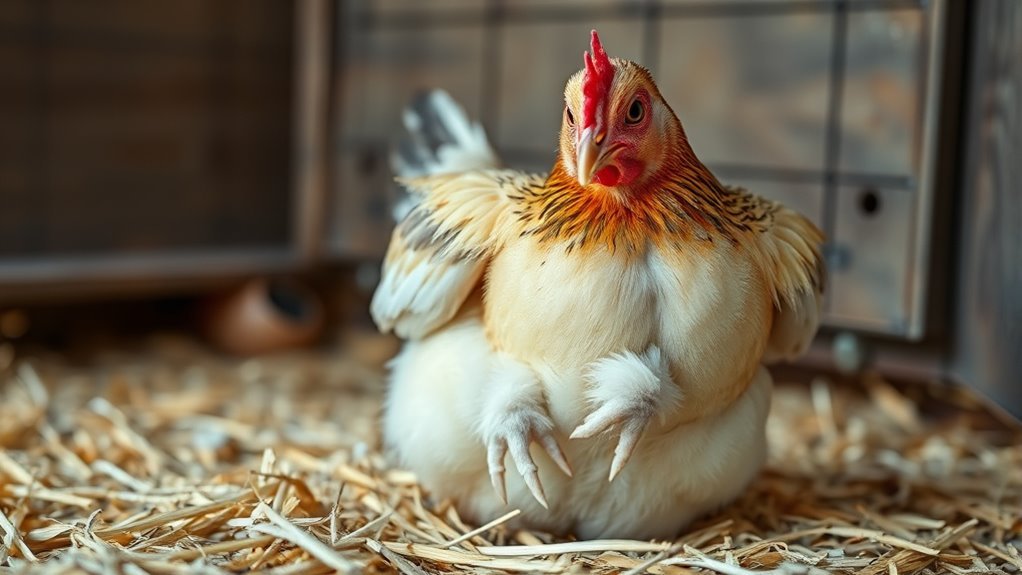
If you notice your chicken straining without producing an egg, swelling around the vent, or reluctance to move, she might be egg bound. Egg bound hens often show vent swelling, lethargy, and other signs of distress like a hunched posture or unusual vocalizations.
Straining without laying, vent swelling, and reluctance to move can indicate a hen is egg bound.
You may feel a palpable egg near the vent or inside the reproductive system during a gentle exam. This condition often results from lack of calcium, which weakens muscle contractions needed to pass the egg.
Straining without success, tissue inflammation, or a prolapsed vent are serious symptoms. Watch for changes in appetite, activity, or abnormal droppings, as these can also signal trouble.
Recognizing these signs early helps you respond quickly to support your hen’s health. So, keep an eye out and don’t hesitate to take action if something seems off.
How to Help an Egg Bound Chicken
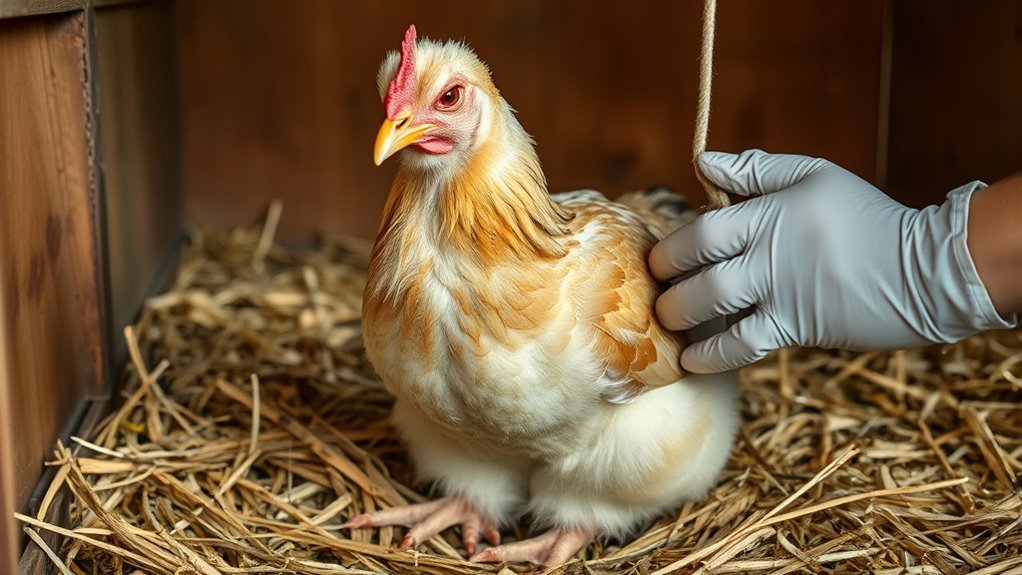
When your hen shows signs of being egg bound, you’ll want to act quickly to ease her discomfort and prevent complications. First, help by gently lubricating her vent with petroleum jelly or saline to aid egg passage.
Soak her in warm water to relax muscles and encourage movement, providing a quiet, stress-free environment. Administer calcium supplements like crushed Tums or calcium powder to stimulate muscle contractions necessary for laying.
Carefully palpate the vent area to locate the egg; if you can see or feel it, gently break the shell to assist removal. Throughout, keep your hen calm and monitor her closely for any signs of distress.
These steps can notably improve her chances of a safe recovery from being egg bound. Just take it slow and be gentle—you’ll do great!
Frequently Asked Questions
How Do You Treat an Egg Bound Chicken?
You treat an egg-bound chicken by lubricating her vent, giving calcium supplements, soaking her in warm water, gently feeling for the egg, and if needed, carefully breaking the shell. Keep her warm and monitor closely afterward.
How Long Can a Chicken Live if Egg Bound?
When push comes to shove, a chicken can live about 24 to 48 hours if egg bound. You’ve got to act fast—delays can turn a tough situation into a heartbreaking loss.
What Can Be Mistaken for Egg-Bound Chicken?
You might mistake a swollen abdomen, abnormal droppings, or a red, inflamed vent for egg binding. Lethargy and unusual discharge can also confuse you, as they often signal infections or other health issues instead.
What Are the Early Signs of a Chicken Being Egg-Bound?
You’ll notice your hen acting restless, straining without laying, and showing swelling near her vent. She might lose appetite, become less active, and make distressed calls. Palpating near her vent can confirm an egg’s presence.
Conclusion
If you suspect your chicken is egg bound, don’t wait for things to go south. Keep an eye out for signs like straining, lethargy, or a swollen abdomen.
Acting quickly can make all the difference—sometimes, it’s a race against the clock. By staying calm and providing the right care, you’ll give your feathered friend the best chance to recover.
Remember, a stitch in time saves nine when it comes to egg-bound chickens. Catching these signs early and knowing how to help can prevent serious health issues. So, if your chicken seems off or uncomfortable, don’t hesitate to check for egg binding. Quick action and proper care are key to helping your chicken heal and get back to laying healthy eggs.