
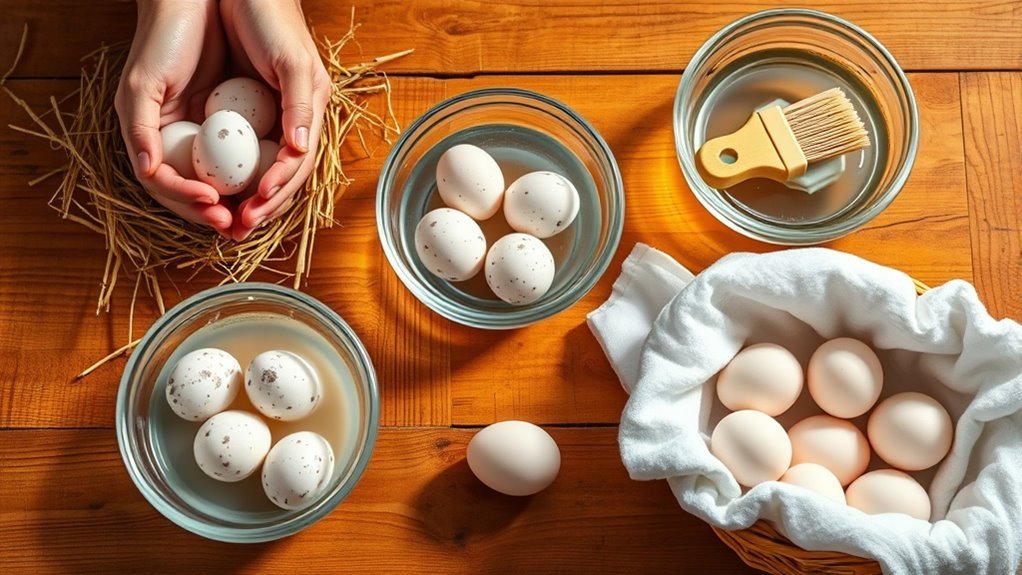
How to Do and Clean Fresh Chicken Eggs in 5 Easy Steps
To clean fresh chicken eggs in five easy steps, start by gathering them at least twice daily. This helps keep your eggs fresh and reduces the chance of dirt or cracks. Always inspect each egg carefully for any damage or dirt before moving on.
Keeping your nesting boxes clean and dry is super important. It reduces contamination and helps your hens lay cleaner eggs.
When it comes to washing, use warm water and a soft, food-grade scrubber. Avoid harsh chemicals—they can harm the egg’s natural protective coating.
After washing, dry the eggs thoroughly with a clean towel to prevent bacteria growth.
Finally, store your eggs pointed end down in a cool, dry spot. This simple trick keeps your eggs fresher for longer.
Follow these easy steps, and you’ll protect your eggs’ quality while picking up some essential care tips along the way!
Key Takeaways
- Collect eggs at least twice daily. Make sure to inspect them and handle them gently to avoid dirt and shell damage.
- Clean nesting boxes every day. Use dry bedding to keep the eggs both dirt-free and bacteria-free.
- Wash eggs with warm water and a soft silicone scrubber. Use a natural enzyme cleaner and avoid harsh chemicals.
- After washing, dry the eggs thoroughly with a clean towel. Pay special attention to cracks and air cells to keep bacteria away.
- Store eggs pointed end down. Keep them in a cool, dry, temperature-controlled place, away from sunlight and moisture.
How to Gather and Inspect Eggs for Cleanliness
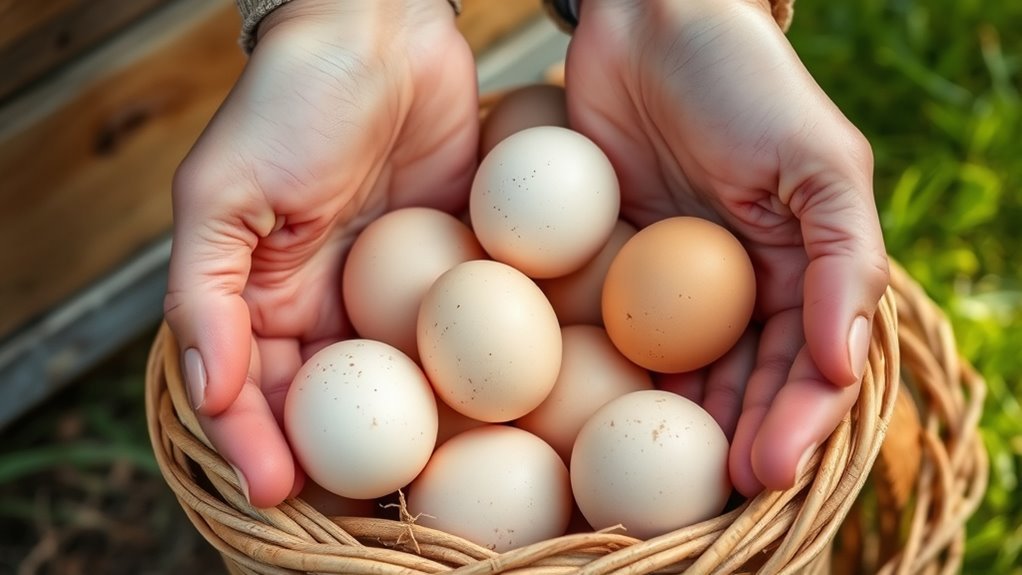
Although it may seem simple, gathering eggs regularly—at least twice a day—helps keep them clean by preventing dirt and manure buildup. When you collect eggs, make sure to inspect each one carefully.
Look for visible dirt, cracks, or debris that could affect their cleanliness and safety. If you find eggs with rough or dirty shells, consider cleaning them before storage or use.
Handling eggs gently is vital to avoid shell damage, which can increase the risk of bacterial contamination. Removing any soiled or cracked eggs promptly also prevents contamination from spreading to other eggs.
Keep Nesting Boxes Clean to Reduce Dirt on Eggs

To keep your eggs clean, make certain you clean nesting boxes daily to prevent dirt, manure, and debris buildup. Use bedding materials like hemp or straw to absorb moisture and reduce dirt transfer onto eggs.
Clean nesting boxes daily and use absorbent bedding like hemp or straw to keep eggs free from dirt and moisture.
Installing curtains or dividers can stop chickens from sleeping or pooping in nesting boxes, helping maintain cleaner eggs. Keep nesting boxes dry and well-maintained to discourage bacteria growth and keep eggs naturally cleaner.
Also, collect eggs frequently—ideally twice daily—to minimize their exposure to dirt and reduce contamination risks. By maintaining clean nesting boxes and collecting eggs regularly, you guarantee your eggs stay fresh and clean, making them safer and more enjoyable to use.
Clean eggs start with a clean nesting environment. It’s really that simple!
Wash Eggs Safely Using Warm Water and Gentle Tools
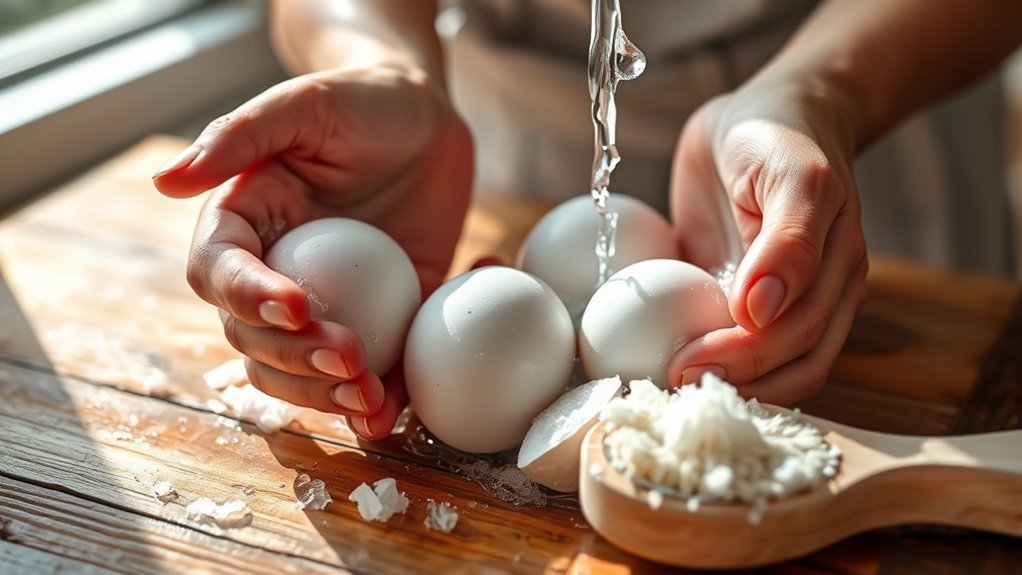
When you wash fresh chicken eggs, always use warm water that’s at least 20°F warmer than the eggs themselves. This helps keep bacteria from seeping through the porous shell.
Use a soft, food-grade silicone scrubber and a natural enzyme egg cleaner to gently remove dirt. This way, you preserve the eggshell’s natural protection.
Avoid harsh chemicals like soap or bleach because they can damage that protective coating.
| Tool | Purpose |
|---|---|
| Warm Water | Keeps eggshell protection |
| Silicone Scrubber | Gently cleans dirt |
| Natural Enzyme Cleaner | Maintains clean eggs |
Rinse the eggs briefly with warm water, then dry them right away. Doing this prevents mold and bacteria growth.
This method guarantees you keep your eggs clean, safe, and fresh.
Dry Eggs Thoroughly After Cleaning to Prevent Bacteria
Since moisture encourages bacterial growth, you should dry eggs thoroughly right after washing them. Use a clean, soft towel or paper towel to remove all residual water from the shell.
This step is essential because leftover moisture can promote bacteria and mold, leading to spoilage. Make sure to pay close attention to drying every crack and crevice, especially around the air cell and bloom.
By drying eggs thoroughly, you help preserve their natural coating, which protects against contamination. Avoid air-drying eggs in humid environments, as this can encourage bacterial infiltration.
A gentle, consistent drying method ensures the eggs stay fresh longer and reduces the risk of bacteria developing after cleaning. It’s a simple step that really makes a difference!
Store Eggs Pointed End Down in a Cool, Dry Place
Although it might seem like a small detail, storing eggs pointed end down plays a crucial role in keeping them fresh longer. When you place eggs this way, the yolk stays centered and the air cell remains stable, reducing spoilage risks.
This position also helps prevent the yolk from touching the shell, lowering contamination chances. Make sure to keep your eggs in a cool, dry place, as moisture and heat can damage their natural protective coating.
A consistent, temperature-controlled environment away from direct sunlight is ideal. Storing eggs pointed end down also minimizes cracks and keeps bacteria from entering through the shell.
Frequently Asked Questions
What Is the Best Way to Clean Farm Fresh Chicken Eggs?
The best way to clean farm-fresh eggs is to rinse them gently with warm water around 110°F, use a natural enzyme cleaner with a silicone scrubber, then dry them thoroughly to keep the protective bloom intact.
Do I Need to Wash Farm Fresh Eggs Before I Hard Boil Them?
Don’t let the grass grow under your feet—yes, you should wash farm-fresh eggs before hard boiling. Use warm water to remove dirt and bacteria, keeping your eggs safe and tasty without compromising their natural coating.
Can I Use Dawn Dish Soap to Wash Farm Fresh Eggs?
You shouldn’t use Dawn dish soap to wash farm fresh eggs. It can penetrate the shell, removing the protective coating and leaving harmful residues. Instead, use warm water and gently scrub with a soft brush or cloth.
How Long Can Farm Fresh Eggs Sit Out Without Being Washed?
You can let farm fresh eggs sit out unwashed for up to two weeks without worrying. Their natural bloom protects them, but once you wash them, you’ll need to refrigerate to keep them safe and fresh.
Conclusion
Now that you know how to gather and inspect eggs for cleanliness, keep nesting boxes tidy, and wash eggs safely with warm water, you’re already halfway there.
Next, make sure to dry them thoroughly and store them properly to keep those eggs fresh and safe.
By following these easy steps, you’ll protect your eggs from bacteria and maintain their freshness.
Trust the process, and you’ll enjoy cleaner, safer eggs every time you collect them.
Fresh chicken eggs that are well cared for can really make a difference in your kitchen.
So, take the time to clean and handle your eggs correctly—it’s worth it for the taste and peace of mind.
With these simple habits, you’re set for success and ready to savor the rewards of fresh, high-quality chicken eggs every day!