Do Chickens Lay Eggs in Winter: How to Keep Them Laying
Chickens often stop laying eggs in winter because shorter daylight and cold temperatures signal their bodies to conserve energy. This natural slowdown means you might notice fewer fresh eggs during the colder months. But don’t worry—there are ways to keep your hens laying through winter!
To keep your hens laying, provide 14-17 hours of low-intensity artificial light daily and keep the coop warm with good insulation and extra bedding. These simple steps trick their bodies into thinking it’s still springtime, encouraging egg production.
Also, make sure they have access to fresh, unfrozen water. Staying hydrated is just as important in winter as it is in summer. These tips help counter natural winter slowdowns and keep your egg supply steady.
If you want to know how to create the perfect winter environment, you’ll find helpful tips ahead.
Key Takeaways
- Chickens naturally reduce or stop egg laying in winter because of shorter daylight and colder temperatures.
- You can use low-intensity artificial lighting for about 14-17 hours a day to keep them laying.
- Insulating the coop with straw or deep litter helps keep your hens warm and comfy.
- Make sure they have heated waterers or that you regularly thaw their water so they stay hydrated.
- Keep good ventilation going, but avoid drafts.
- And try to stick to a consistent winter care routine to keep things running smoothly.
Why Chickens Stop Laying Eggs in Winter
Although it might surprise you, chickens naturally slow down or stop laying eggs in winter because shorter daylight and colder temperatures signal their bodies to conserve energy. As daylight hours decrease, the hen reproductive cycle shifts, causing hormonal changes that reduce egg production.
Chickens slow or stop egg laying in winter as shorter days and cold trigger energy conservation.
Cold weather makes hens prioritize staying warm over winter egg laying, often triggering seasonal molting, which further pauses egg production. This natural response helps chickens survive harsh conditions by conserving resources.
Without intervention, winter egg production nearly halts as chickens stop laying. However, you can maintain winter egg laying by simulating longer days with artificial light.
Understanding why chickens reduce egg production in winter helps you provide better winter chicken care, ensuring your flock stays healthy even when nature signals them to pause.
How to Prepare Your Coop and Care Routine for Winter Egg Laying
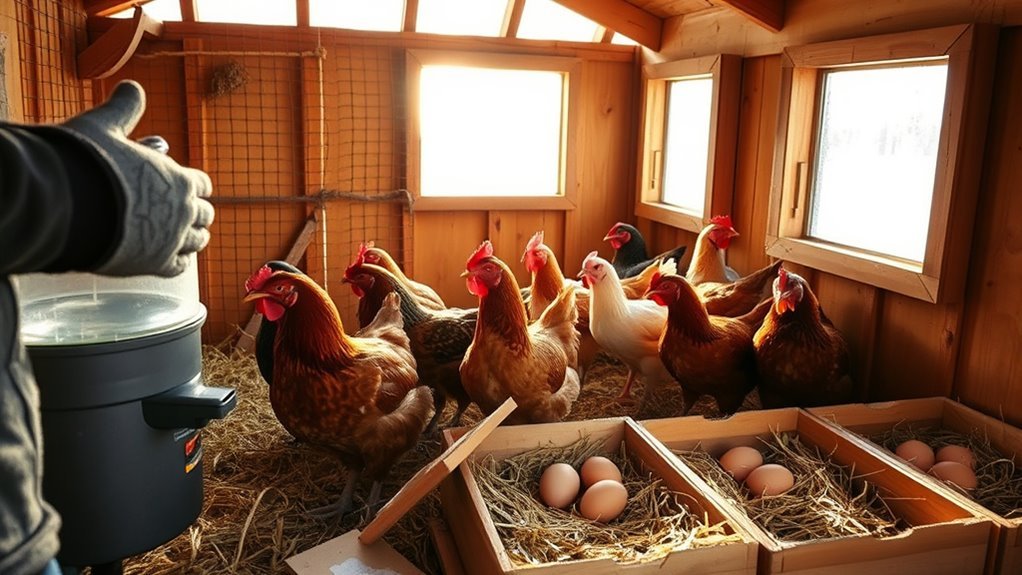
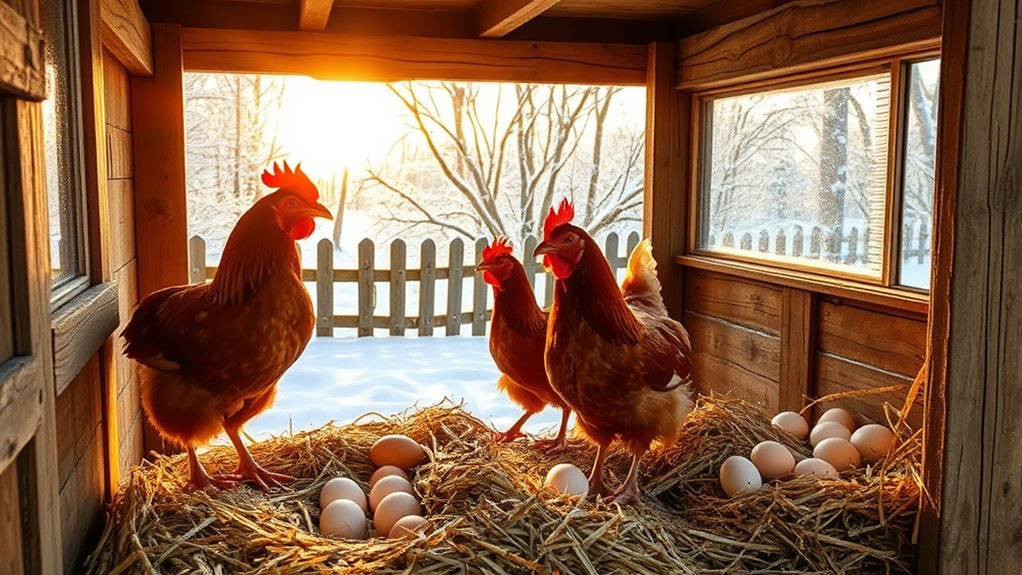
When daylight fades and temperatures drop, your hens need extra support to keep laying eggs through winter. Start by improving coop insulation using the deep litter method or straw to maintain coop warmth and prevent frostbite.
Add extra bedding to keep the floor dry and cozy. Install secure vents to allow airflow without drafts or predator entry.
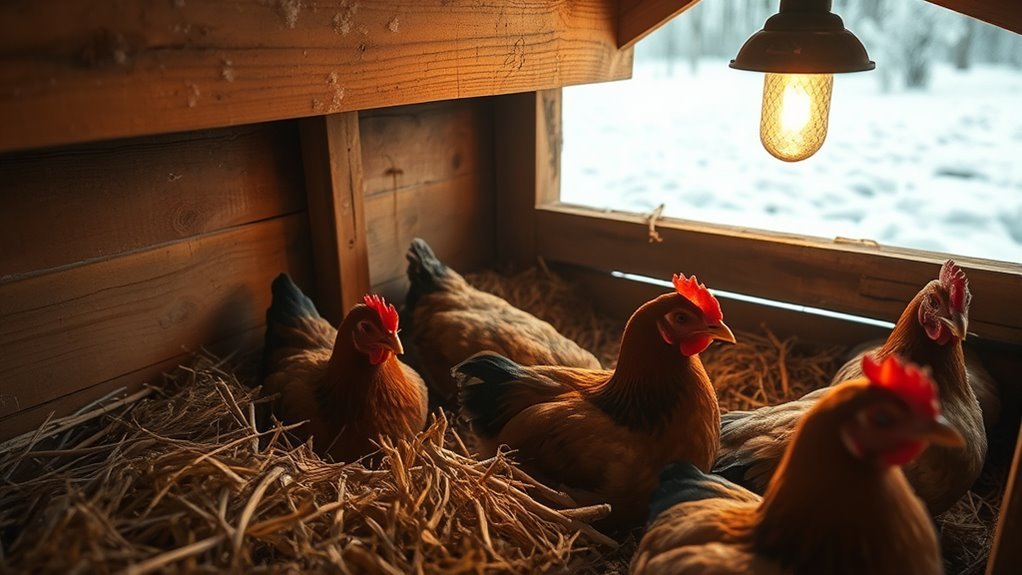
Use low-intensity artificial light for 14-17 hours daily to stimulate winter egg laying. Heat lamps can help, but use them cautiously to avoid fire hazards.
Guarantee hens always have access to fresh water by providing heated waterers or thawing frozen water regularly. A well-prepared coop and consistent care routine will create a safe, warm environment that encourages your chickens to keep laying despite the cold.
Frequently Asked Questions
How Long Do Chickens Stop Laying Eggs in the Winter?
Chickens usually stop laying eggs for about 3 to 4 months during winter. You can help them keep laying by providing supplemental light and maintaining a comfortable environment, especially when daylight drops below 10-12 hours.
How Cold Is Too Cold for Chickens in Their Coop?
Think of your coop as your chickens’ fortress—below 20°F threatens their sanctuary. If it dips under freezing without proper insulation, you risk frostbite and health issues. Keep their haven warm, draft-free, and cozy to protect them.
How Soon Can You Eat an Egg After a Chicken Lays It?
You can eat an egg right after it’s laid, but it’s best to wait 24 hours to let the protective bloom form. Avoid washing until just before use to keep that natural barrier intact.
Is It Hard to Keep Egg-Laying Chickens?
Think managing chickens is tough? It can be, but you’ll find it rewarding. You just need to provide proper care, nutrition, and shelter, especially during winter. With patience, keeping them laying regularly isn’t as hard as it seems.
Conclusion
Just like the winter sun dips low, your hens’ egg-laying slows down, signaling nature’s pause. But with the right care—warmth, light, and comfort—you become the gentle gardener, coaxing blooms from a frosty earth.
Keep their coop cozy and spirits bright, and you’ll see those precious eggs return, little suns breaking through the cold. Remember, your care is the spark that turns winter’s hush into a hopeful, egg-filled dawn.
In winter, chickens naturally lay fewer eggs because of reduced daylight and colder temperatures. To keep them laying, provide extra warmth and add supplemental lighting to mimic longer days. Make sure their coop is dry and draft-free, and offer nutritious feed to support their energy needs.
With patience and the right environment, you can help your hens continue to lay eggs even during the colder months. So, if you’re wondering, “Do chickens lay eggs in winter?” the answer is yes—with a little extra care, you can keep your flock happy and productive all season long.