How to Stop Oil Leak From Oil Pan Step by Step
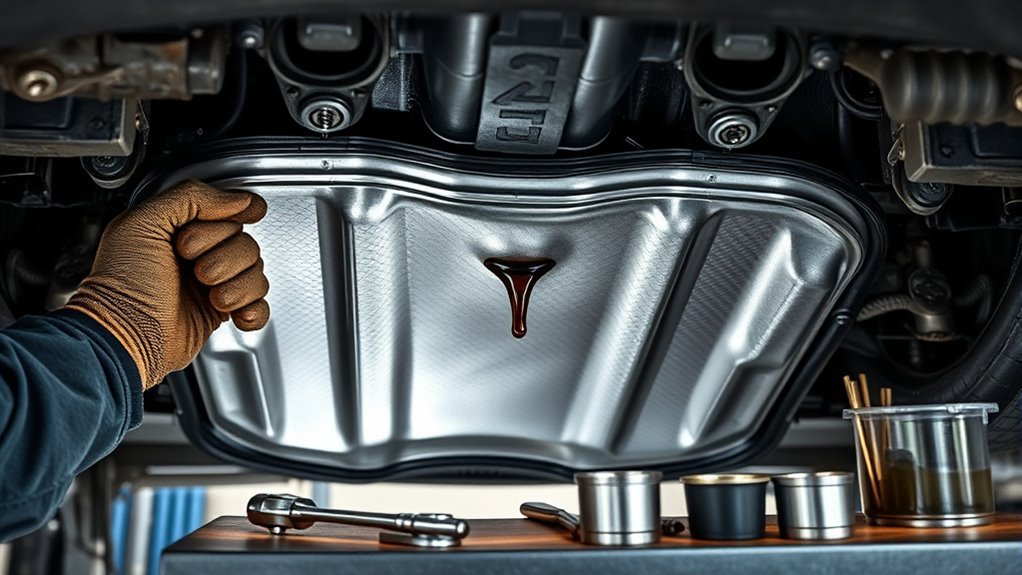
To stop an oil leak from your oil pan, start by inspecting and tightening the bolts in a crisscross pattern using a torque wrench. This helps avoid damaging the pan and ensures an even seal. A loose bolt is often the culprit behind many oil leaks, so don’t skip this step.
If leaks continue, clean the surface thoroughly. Then, apply a high-quality sealant to minor leaks without removing the pan. This quick fix can save you time and effort if the leak isn’t severe.
For ongoing leaks or if you notice a damaged gasket, replacing the gasket is the best solution. It’s a bit more involved but necessary to keep your engine safe from oil loss.
Finally, make it a habit to regularly check and maintain the oil pan area. Keeping an eye on things helps prevent small leaks from turning into big problems.
Stick with these steps, and you’ll handle oil pan leaks like a pro in no time!
Key Takeaways
- Inspect and tighten oil pan bolts incrementally in a crisscross pattern using a torque wrench to manufacturer specifications. This helps ensure even pressure and prevents warping.
- Replace any damaged or stripped bolts before tightening to prevent further leaks or damage. You definitely don’t want to skip this step because faulty bolts can cause bigger problems down the road.
- Clean the gasket and oil pan surface thoroughly before applying high-quality sealant on minor leaks. A clean surface makes the sealant stick better and do its job properly.
- If leaks persist, remove the oil pan and replace the deteriorated gasket for long-term reliability. Sometimes the gasket just can’t be saved, so swapping it out is the best move.
- Regularly monitor and clean the oil pan area after repairs to ensure the leak has stopped. Keeping an eye on it helps catch any issues early before they get worse.
Check and Tighten Oil Pan Bolts to Stop Minor Leaks
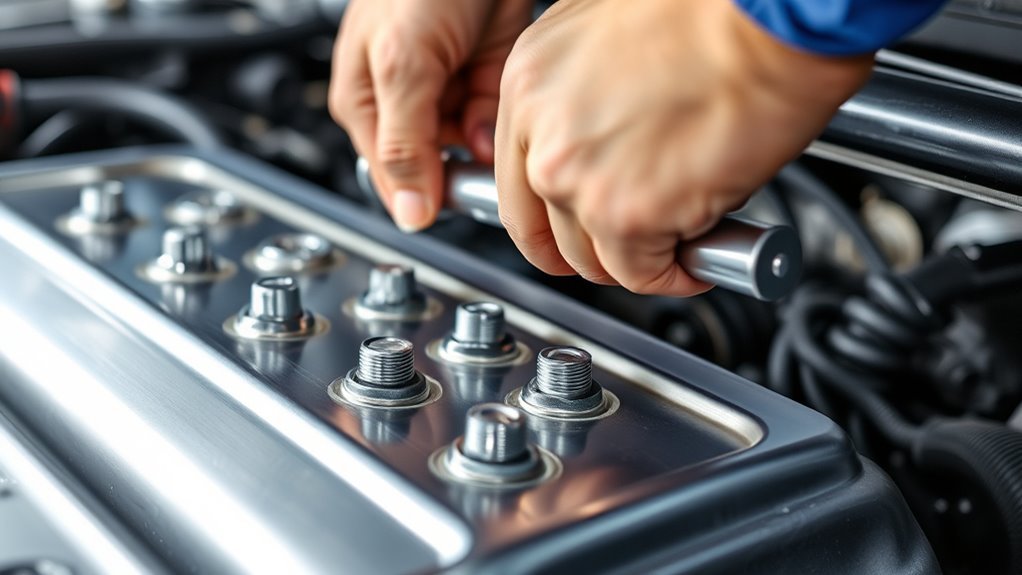
Before you rush to replace the oil pan gasket, check and tighten the oil pan bolts first to stop minor leaks. Use a wrench to tighten the bolts incrementally, starting from the center and working outward in a crisscross pattern.
This helps evenly distribute pressure and prevents damage to the gasket or threads. Make sure you don’t overtighten—consult the manufacturer’s torque specifications and use a torque wrench for accuracy.
Before tightening, inspect each bolt for corrosion or damage; replace any that are stripped or broken. Once you’ve finished tightening, clean the area around the bolts thoroughly.
Keep an eye on the spot over the next few weeks to catch any signs of continued leakage early and avoid unnecessary repairs.
Fix Persistent Oil Pan Leaks: When to Apply Sealant or Replace the Gasket
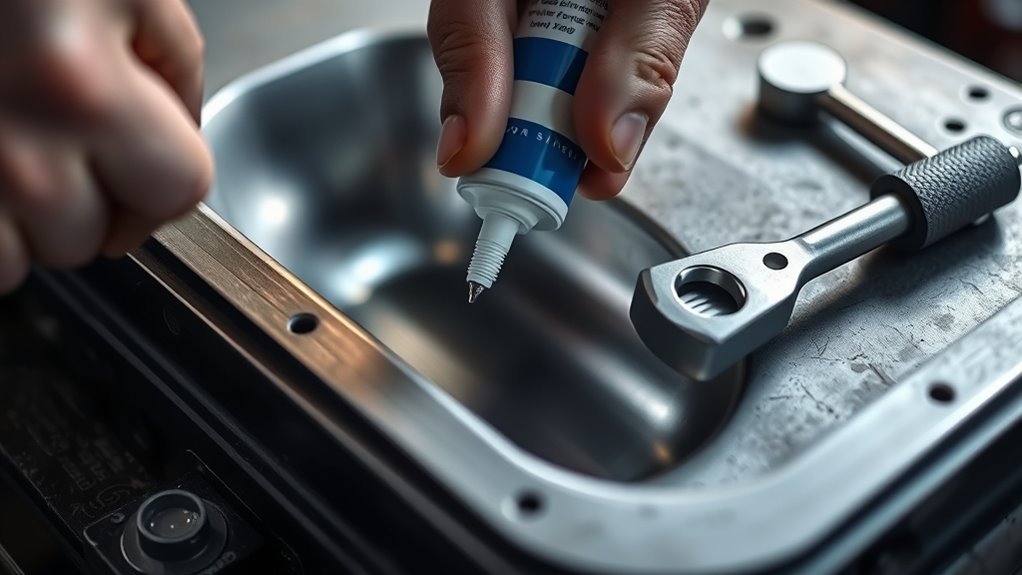
If your oil pan leak persists despite tightening the bolts, you can try applying a high-quality sealant like Permatex along the gasket edge to stop small, slow leaks without removing the pan. This method works best when the gasket is still mostly intact but slightly torn or pushed out.
Before applying the sealant, clean the surface thoroughly to guarantee proper adhesion, and allow the sealant to cure fully for a lasting fix. It’s a pretty simple way to handle minor leaks without a big hassle.
Clean the surface well and let the sealant cure completely for an easy, effective minor leak fix.
However, if the leak continues or worsens, it’s time to replace the oil pan gasket. Persistent leaks often indicate significant gasket deterioration that sealant alone can’t fix.
Replacing the gasket requires removing the oil pan, but it’s essential for a reliable, long-term repair and to prevent further oil loss. So, don’t put it off if the sealant doesn’t do the trick!
Frequently Asked Questions
How Do I Stop My Oil Pan From Leaking Without Removing It?
You can stop your oil pan from leaking without removing it by cleaning the area, applying a sensor-safe sealant along the gasket, loosening bolts slightly to spread it, then retightening and letting the sealant cure fully before use.
What Can I Use to Seal a Leaking Oil Pan?
You can’t just slap any goo on it—use a high-quality, sensor-safe sealant like Permatex “The Right Stuff.” It seals minor oil pan leaks effectively when applied correctly, preventing messy drips and saving your engine’s life!
Can You Still Drive Your Car if Your Oil Pan Is Leaking?
You can drive with a small oil pan leak if you check oil levels often, but don’t ignore it. If the leak worsens or oil drops quickly, stop driving to avoid serious engine damage and costly repairs.
Can JB Weld Stop an Oil Leak?
Yes, you can use JB Weld to temporarily stop an oil leak, but it’s not a permanent fix. Make sure you clean and dry the area well before applying, and plan to replace the gasket soon.
Conclusion
To stop an oil leak from your oil pan, start by checking and tightening the bolts. You’d be surprised that 60% of minor leaks are fixed this way.
If the leak persists, applying sealant or replacing the gasket is your next step. These fixes usually do the trick and prevent further damage.
Taking these actions promptly not only saves you money but also protects your engine’s health. A small leak left unattended can lead to bigger, costlier problems down the road.
Remember, a well-maintained oil pan keeps your vehicle running smoothly. Stopping an oil leak early is key to avoiding expensive repairs and ensuring your engine stays in top shape. So, keep an eye on your oil pan, tighten those bolts, and replace the gasket or sealant when needed to keep your car leak-free and reliable.