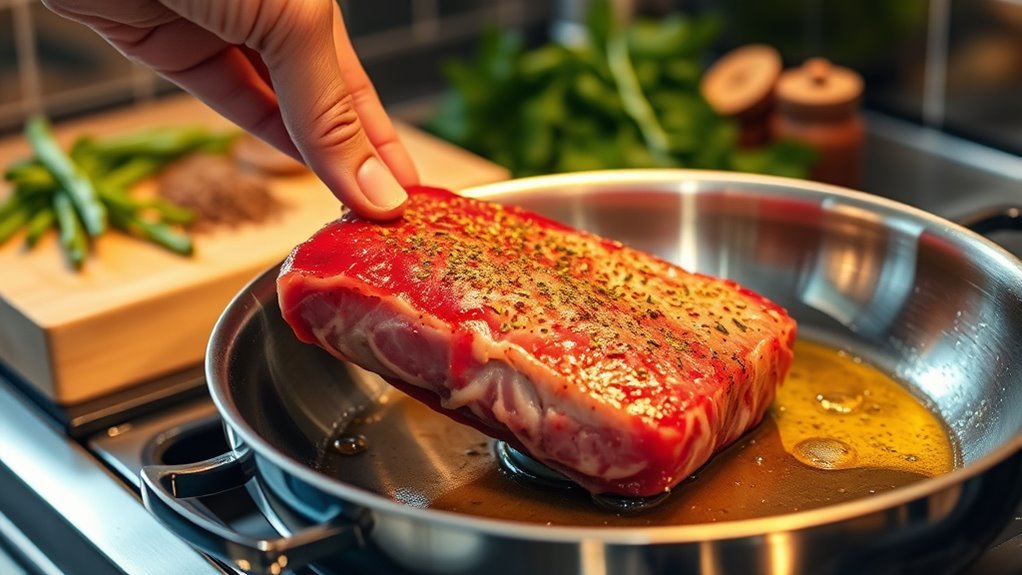
5 Steps to Properly Cook on Stainless Steel Pans
To cook perfectly on stainless steel pans, start by preheating your pan using the water droplet test until beads roll and sizzle. This simple trick helps you know when your pan is hot enough for cooking.
Once it’s ready, add oil and let it shimmer and coat the surface evenly.
Place your food in the pan and be patient. Wait for it to release naturally before flipping—that’s the secret to forming a great crust and preventing sticking.
After cooking, deglaze the pan to transform the browned bits, called fond, into rich, flavorful sauces.
Finally, care for your pan by letting it cool down and gently cleaning it. Keep going to uncover tips that enhance your cooking experience.
Key Takeaways
- Preheat the pan over medium heat and use the water droplet test to ensure proper cooking temperature. This little trick helps you know when the pan is just right.
- Add oil only after the pan passes the water test. Wait until the oil shimmers evenly across the surface before moving on.
- Place food in the pan and wait 2-4 minutes for a natural crust to form. This helps prevent sticking, so be patient before flipping.
- Deglaze the pan with liquid to lift fond. Then, simmer and finish your sauces with butter or herbs for extra flavor.
- Let the pan cool before cleaning. Use warm water and a soft sponge to gently clean it and keep it in great shape.
Preheat Your Stainless Steel Pan Using the Water Droplet Test
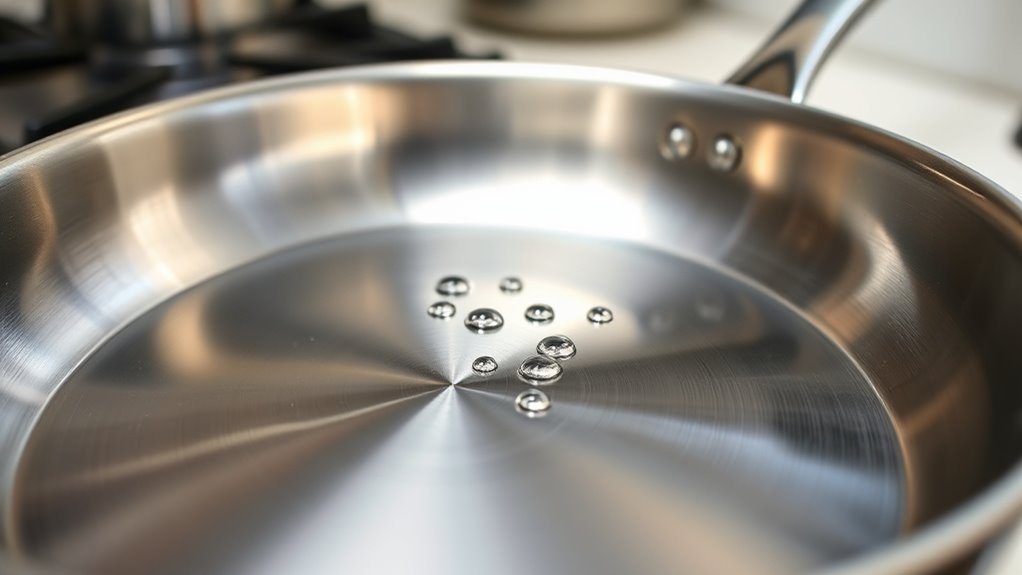
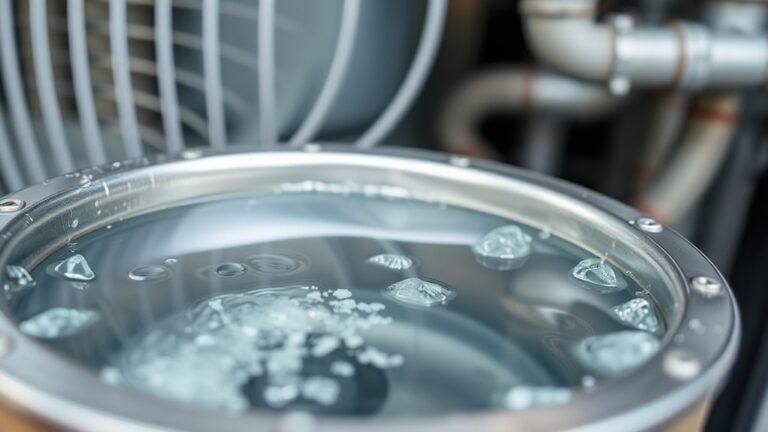
Before adding any oil, preheat your stainless steel pan over medium heat for 2 to 3 minutes. Then flick a few drops of water onto its surface.
This water droplet test helps you gauge the pan temperature and guarantees proper preheating. If the water beads up and rolls around, your pan is ready for cooking.
When the droplets sizzle and evaporate within seconds, you’ve reached the ideal temperature for searing. If the water evaporates instantly, the pan is too hot—you’ll need to lower the heat and let it cool slightly.
Proper preheating protects your stainless steel cookware and prevents food from sticking when you add oil later. Mastering this step sets the foundation for perfectly cooked meals every time.
Add Oil to Your Stainless Steel Pan at the Right Time
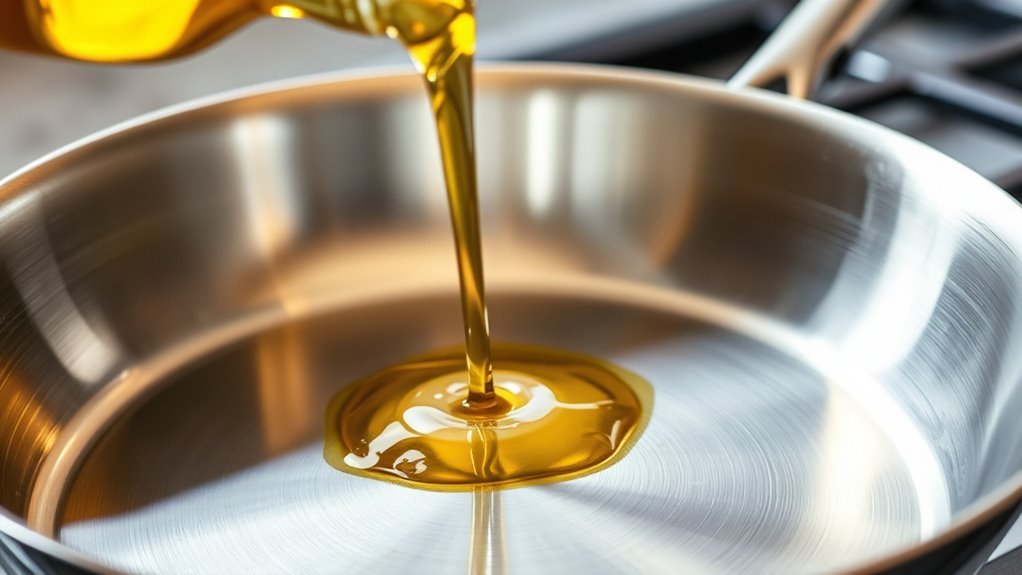
Once your stainless steel pan passes the water droplet test and reaches the right temperature, add the oil to guarantee even heating and prevent sticking. You want to preheat the pan until the water droplets sizzle and dance, signaling it’s hot enough.
Pouring oil too early or into a cold pan causes uneven heating and can make food stick. After adding oil, watch for it to shimmer and flow smoothly across the surface—that’s the sign it’s ready for searing.
This timing ensures the oil forms a protective layer, preventing your food from bonding with the metal. By following this step carefully, you’ll achieve that perfect sear and avoid frustrating sticking, making your cooking on stainless steel pans much more successful.
Let Food Release Naturally on Stainless Steel Before Flipping
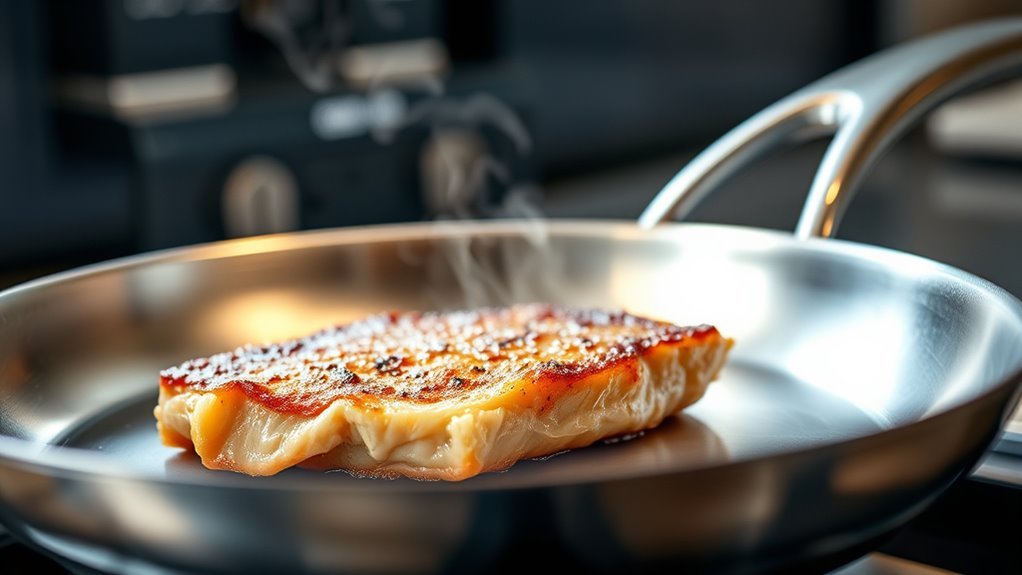
Although it can be tempting to flip your food early, letting it release naturally from the stainless steel pan guarantees a perfect sear and prevents sticking. When cooking with stainless steel, proper preheating is essential—use the water droplet test to know when the pan is ready.
Once you place your protein, wait 2-4 minutes without moving it. This patience allows crust formation, which enhances the pan’s non-stick properties through natural food release. You’ll notice the food begins to lift easily when it’s ready to turn.
Flipping too soon disrupts crust development, causing sticking and tearing. By letting food release naturally, you achieve better browning, a crisp exterior, and make cleanup easier.
Mastering food release is key to perfect results on stainless steel pans. It’s all about patience and timing!
Turn Fond Into Flavorful Sauces With Deglazing
When you add a splash of wine, broth, or vinegar to your hot stainless steel pan, you release the rich flavors trapped in the browned bits called fond. Deglazing uses this liquid to loosen and dissolve the fond stuck to your pan’s surface.
As you scrape with a wooden spoon, the browned bits blend into the liquid, creating a flavorful base for your sauce. Simmer the mixture to reduce the liquid, concentrating those deep, savory flavors.
Finish by stirring in butter or fresh herbs for a polished touch. This simple technique transforms leftover fond into a delicious sauce that enhances your dish, making the most of your stainless steel pan’s cooking potential.
Deglazing is essential for turning fond into truly flavorful sauces. Give it a try next time you cook—it really brings your meals to the next level!
Maintain Your Stainless Steel Pan for Long-Lasting Use
After you’ve mastered deglazing to enhance flavors, keeping your stainless steel pan in top shape guarantees it performs well for years to come. Always preheat your pan with proper heat control to help food naturally release and reduce sticking.
After cooking, let your stainless steel pan cool completely before cleaning to avoid warping. Use gentle cleaning methods like warm water and a soft sponge to preserve its polished surface.
Regularly inspect riveted handles and tighten them as needed for safety. Polish the exterior occasionally with a stainless steel cleaner to keep that shine and remove water spots.
Finally, store your pan carefully—don’t stack heavy items on it to prevent dents and scratches. Following these steps ensures your pan stays reliable and looking great.
Frequently Asked Questions
What Is the Trick to Cooking With Stainless Steel Pans?
The trick to cooking with stainless steel pans is preheating them properly, adding oil at the right time, and letting food sear undisturbed until it naturally releases. You’ll avoid sticking and get great browning every time.
Can You Cook Curry in Stainless Steel?
Yes, you can cook curry in stainless steel; you’ll find it handles heat evenly and preserves flavors perfectly. Just preheat, add oil, and simmer gently—you’ll avoid sticking and develop rich, deep, authentic curry taste every time.
How Do You Keep Food From Sticking to Stainless Steel Pans?
You keep food from sticking by properly preheating your pan, adding oil once it shimmers, avoiding overcrowding, and letting food sear fully before flipping. Use the water droplet test to make certain of the right temperature.
What Foods Should Not Be Cooked in a Stainless Steel Pan?
Think of your stainless steel pan as a delicate dance floor—avoid acidic foods, sticky eggs, sugary treats, and boiling starchy pasta without care. These can cause damage, sticking, or burns, ruining your cooking performance and cleanup ease.
Conclusion
Think of your stainless steel pan as a trusted dance partner—when you preheat it just right and add oil at the perfect moment, you set the stage for a graceful performance. Let your food take its time to release naturally, like a dancer finding their rhythm.
Use deglazing to transform the lingering steps into a rich, flavorful finale. This technique enhances your dish by lifting those tasty browned bits off the pan.
With proper care, your stainless steel pan will continue this beautiful dance, creating culinary masterpieces for years to come. Remember, mastering these steps—preheating, timing your oil, allowing natural food release, deglazing, and regular maintenance—ensures your pan performs at its best every time you cook. Cooking on stainless steel pans becomes easier and more enjoyable when you follow these simple tips, making every meal a delicious success.