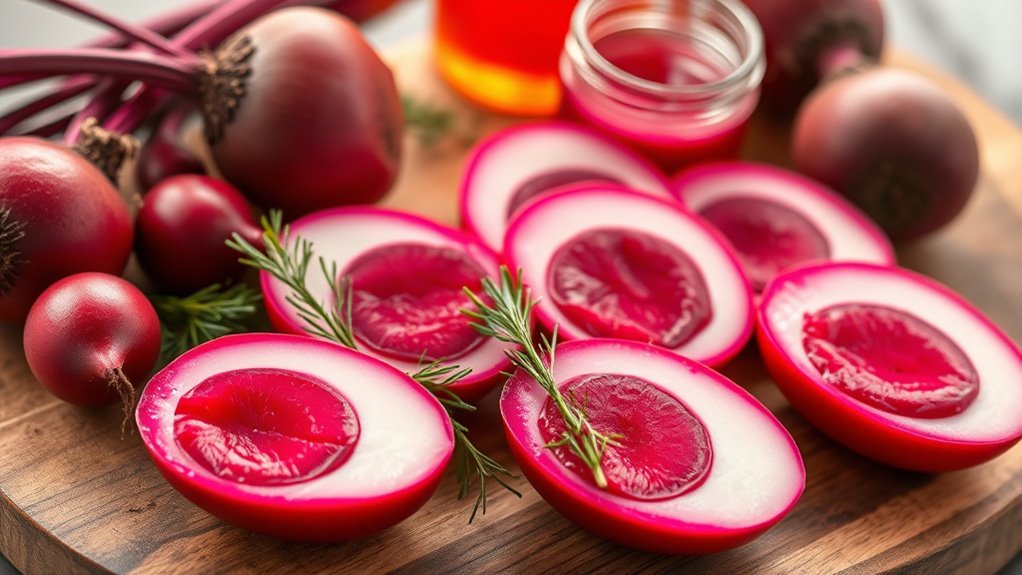
How to Make Red Beet Pickled Eggs in 7 Easy Steps
Choose fresh, medium-sized beets and eggs that are at least a week old for easy peeling.
Hard-boil the eggs by boiling them, then cool them quickly in ice water.
Next, prepare a flavorful brine by simmering beet liquid, vinegar, water, sugar, and spices together.
Once done, let the brine cool completely.
Now, layer sliced beets and peeled eggs in a jar.
Pour the cooled brine over the eggs and beets, making sure everything is submerged.
Refrigerate the jar for at least three days to let the flavors develop.
Remember to keep the eggs fully covered by the brine and consume them within a week for the best flavor and safety.
Here’s how to perfect each step for vibrant, tasty pickled eggs that are bursting with color and flavor!
Key Takeaways
- Select medium-sized fresh beets and eggs that are at least one week old. This helps make peeling easier and gives you that vibrant color you want.
- Hard-boil the eggs by boiling them first. Then, let them rest covered for about 10-12 minutes. After that, cool them in ice water before peeling.
- Prepare the pickling brine by boiling the beet liquid along with vinegar, water, sugar, and spices. Once it’s all combined, let the brine cool completely.
- Layer sliced beets and peeled eggs in a jar. Pour the cooled brine over them until everything is covered, then seal the jar airtight.
- Refrigerate the jar for at least 3 days. You can enjoy the pickled eggs within 7-10 days, but always check for spoilage before eating.
Choosing the Best Eggs and Beets for Pickled Eggs
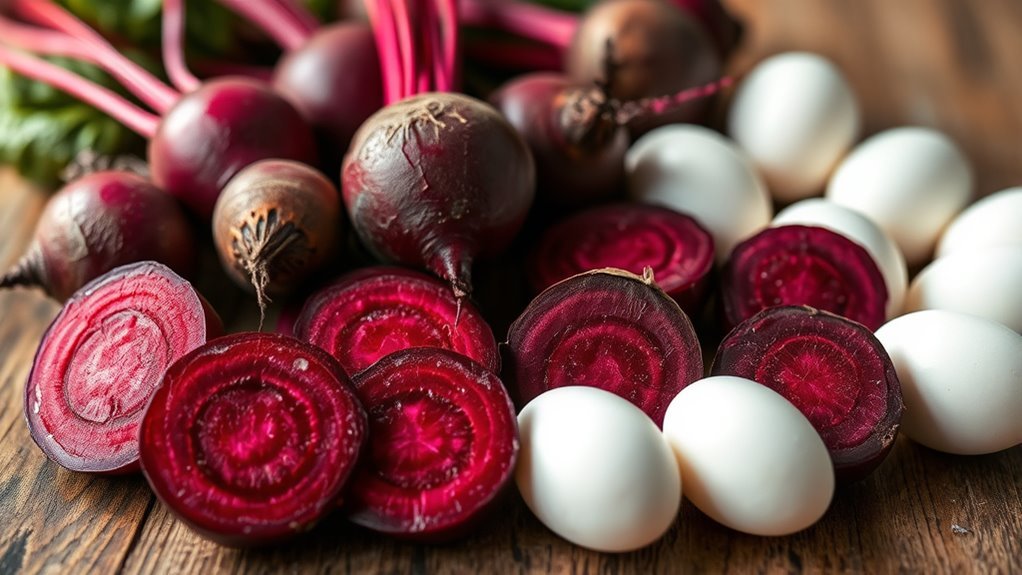
When selecting eggs for pickled eggs, choose ones that are at least a week old to make peeling easier after boiling. Older eggs peel more smoothly, saving you time and frustration when preparing your hard-boiled eggs.
Next, focus on the beets. Fresh beets, especially medium-sized ones, deliver the best beet color and flavor for your pickled eggs.
Opt for organic beets if you can, as they tend to be higher quality and free from pesticides. Rinse them thoroughly to remove any dirt or soil before cooking.
Avoid beets with cuts, bruises, or soft spots to ensure longevity and a vibrant final product.
While canned sliced beets offer convenience, fresh beets produce richer colors and a more natural taste that truly enhances your pickled eggs.
How to Hard-Boil Eggs Perfectly for Pickled Eggs
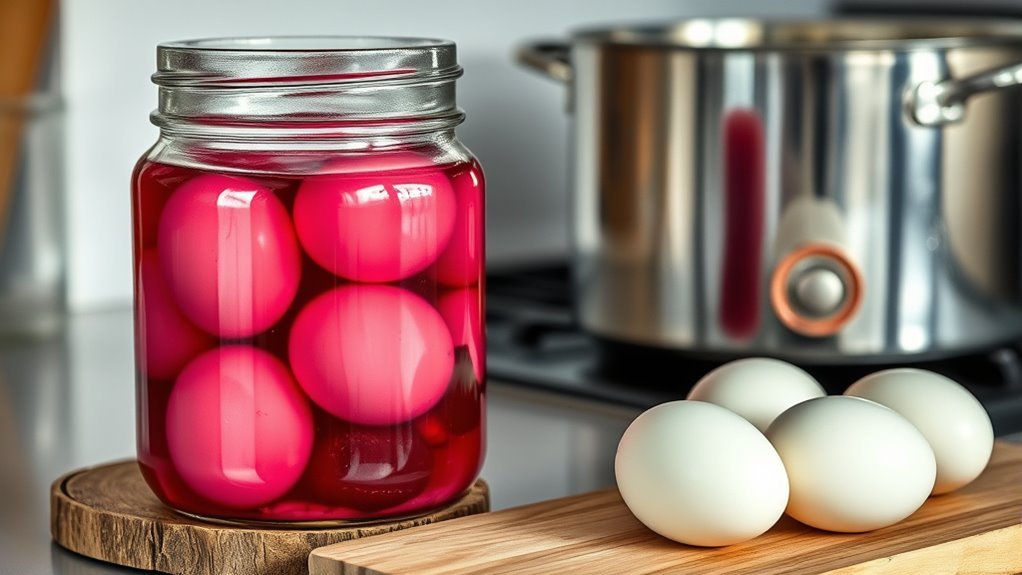
Although boiling eggs seems simple, mastering the perfect hard-boil guarantees your pickled eggs have the ideal texture and peel easily. Start by placing large eggs in a saucepan, covering them with cold water, and bringing it to a rolling boil.
Master the perfect hard-boil by starting eggs in cold water and bringing to a rolling boil for ideal texture.
Then, remove from heat and cover, letting the eggs sit for 10-12 minutes to make sure they’re perfectly cooked. Next, transfer the eggs to ice water for cooling, which stops the cooking process and makes shell removal easier.
When peeling, use this technique for smooth shell removal: gently tap eggshells to crack, peel under running water to loosen shell, and handle eggs carefully to avoid damage.
This precise egg cooking and peeling technique guarantees flawless egg preparation for your pickled eggs.
Preparing the Beet Pickling Brine for Pickled Eggs
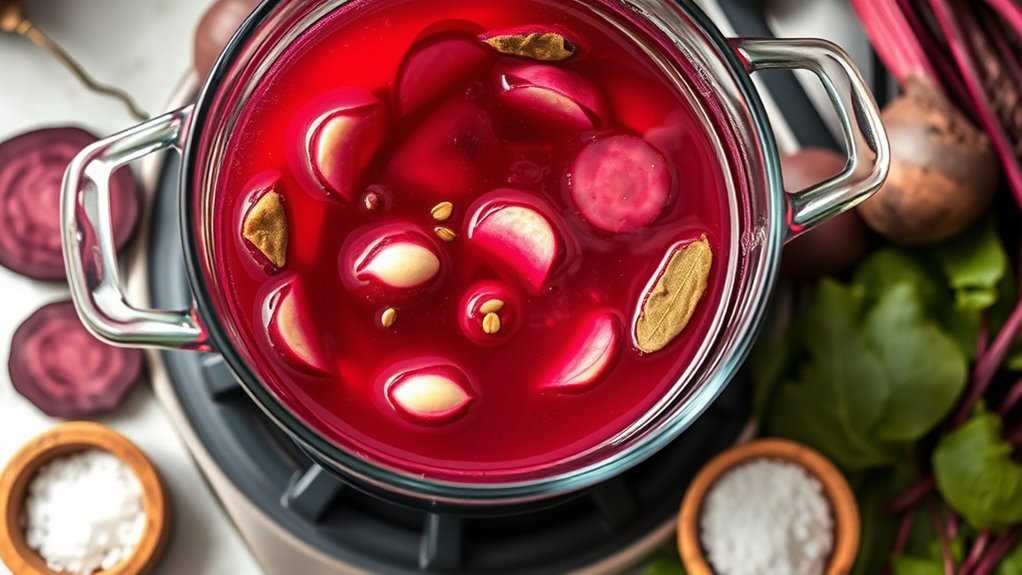
Since the brine infuses the eggs with vibrant color and tangy flavor, you’ll want to prepare it carefully by combining beet pickling liquid, white vinegar, water, sugar, and optional spices in a saucepan. Start with 1/2 cup beet pickling liquid, 1/2 cup white vinegar, 1/4 cup water, 1/3 cup sugar, and spices like cinnamon or cloves.
Heat the mixture over medium heat and bring to a boil, stirring until the sugar dissolves completely. Then, simmer the brine for about 15 minutes to allow flavor melding between the spices and beets.
Remove the saucepan from heat and let the pickling brine cool completely. It’s important to let it cool during this process before pouring it over the layered eggs and beets for perfect infusion.
Layering Eggs and Beets in the Pickling Container
To achieve vibrant color and balanced flavor, you’ll want to layer the peeled eggs and sliced beets carefully in a clean, wide-mouth jar. This layering technique guarantees even color absorption and flavor infusion by maximizing contact between ingredients and brine.
Start by placing a single layer of beets at the jar’s bottom or middle, depending on your desired color intensity. Then, alternate layers of eggs and beets, gently pressing each layer down to enhance contact without cracking the eggs.
Begin with a beet layer, then alternate eggs and beets, pressing gently to ensure even flavor without cracking.
Remember to leave space for the pickling liquid to cover everything fully. Visualize the arrangement like this:
- Sliced beets forming a colorful base
- Smooth, peeled eggs nestled evenly above
- Alternating layers packed lightly but firmly
This careful layering guarantees your pickled eggs soak up rich flavor and that beautiful red hue.
Pouring Hot Beet Brine Over the Eggs
Once you’ve layered the eggs and beets evenly in the jar, it’s time to pour the hot beet brine over them. Slowly pouring brine with a ladle or spoon helps prevent breakage and shifting, guaranteeing full submersion.
The hot liquid promotes quick infusion of color and flavor into the eggs. Leave about half an inch of headspace for jar sealing and expansion.
Let the brine cool to room temperature before sealing to avoid condensation and spoilage.
| Step | Key Tip |
|---|---|
| Pouring brine | Use spoon/ladle to slow pour |
| Full submersion | Guarantee eggs are completely covered |
| Infusion | Hot brine accelerates flavor |
| Headspace | Leave ½ inch for expansion |
| Temperature control | Cool before sealing jar |
How Long to Refrigerate Pickled Eggs for Best Flavor
Although you can enjoy your pickled eggs after just a day, letting them refrigerate for at least three days really brings out their best flavor. This refrigeration time allows the eggs to absorb the tangy beet brine fully, enhancing both taste and color.
For an even richer experience, aim for 5-7 days of storage, which improves tenderness and deepens the vibrant hue.
Keep in mind these key points during the refrigeration period:
- After 3 days, expect a balanced flavor and freshness.
- By 5-7 days, color intensifies and texture softens.
- Store pickled eggs for up to 2 weeks max to avoid spoilage or rubberiness.
Proper refrigeration guarantees your pickled eggs maintain excellent flavor, freshness, and safety throughout this period. So, take your time and enjoy them at their tastiest!
Storing Pickled Eggs and Knowing When They’re Ready
To store your pickled eggs properly, keep them fully submerged in the brine and refrigerated for up to 10 days. You’ll want to wait at least 3 days for the flavors to develop, with peak taste usually around a week.
Always check for any off smells or textures before eating to verify they’re still safe. It’s better to be cautious and enjoy them at their best!
Optimal Refrigeration Duration
When you store pickled eggs in the refrigerator, giving them at least three days allows the flavors and vibrant red color to develop fully. Optimal refrigeration duration is key to balancing freshness and food safety.
Typically, you’ll want to refrigerate pickled eggs for 5-7 days to enhance flavor, but consume them within 7-10 days to avoid spoilage. Always keep eggs submerged in the brine inside a sealed storage container to maintain quality and prevent drying out.
Keep in mind: proper storage time prevents spoiled eggs and ensures safe consumption. It’s a good idea to monitor freshness by noting the storage container’s expiration date.
Refrigeration duration beyond two weeks risks food safety issues, so don’t extend storage time unnecessarily.
Following these tips helps you enjoy perfectly pickled eggs every time.
Signs of Egg Readiness
Knowing how to spot the signs of egg readiness helps you enjoy your pickled eggs at their best. After you refrigerate your eggs, let them sit for days—at least three—to allow proper absorption of the vibrant color and flavor infusion from the beet brine.
Check readiness by gently opening the jar and observing the color intensity. The eggs should display a rich pink or purple hue, indicating they’ve fully absorbed the brine.
Make sure the pickled eggs are fully submerged during this process for even flavor absorption. While they’re technically edible after three days, waiting about a week yields ideal flavor and color.
Safe Storage Practices
How should you store your pickled eggs to keep them fresh and safe? Always use refrigeration and an airtight container, preferably glass or plastic, to ensure proper storage. Avoid metal containers, which can cause sliminess.
Make sure the eggs remain fully submerged in the brine to maintain freshness and prevent spoilage.
Keep these tips in mind for safety and optimal shelf life:
- Store eggs in the fridge, never at room temperature
- Check regularly for mold, off smell, or discoloration
- Consume within 7-10 days for best flavor and safety
If you notice any signs of spoilage, discard the eggs immediately. Proper refrigeration and airtight storage are key to enjoying your pickled eggs safely and deliciously.
Frequently Asked Questions
How to Make Pickled Eggs With Red Beets?
You boil and peel eggs, then layer them with cooked red beets in a jar. Pour hot vinegar brine over them, seal, and refrigerate for at least three days to let flavors and colors develop fully.
What Is the Easiest Pickled Egg Recipe?
You don’t need a culinary degree—just boil, peel, and dunk eggs in beet juice or vinegar brine. Layer with beets, refrigerate three days, and voilà! You’ve got fancy eggs faster than you can say “gourmet.”
What Kind of Vinegar Do You Use for Red Beet Eggs?
You’ll want to use distilled white vinegar for a sharp, clean acidity or apple cider vinegar for a sweeter, more complex tang. Avoid malt or flavored vinegars since they can overpower the delicate beet and egg flavors.
How Long Does It Take for Eggs to Pickle in Beet Juice?
It takes about 3 days for eggs to start pickling in beet juice, but you’ll get better color and flavor if you wait 5 to 7 days. Beyond two weeks, they might turn rubbery, so watch the timing.
Conclusion
Now that you’ve mastered these simple steps, can you imagine the vibrant, tangy red beet pickled eggs waiting in your fridge? With perfectly hard-boiled eggs soaked in that rich, flavorful brine, you’re just days away from a delicious snack or unique addition to any meal.
Keep them chilled, let the flavors meld, and enjoy the satisfying crunch and zing. These red beet pickled eggs are not only a tasty treat but also add a beautiful pop of color to your dishes. Ready to impress your taste buds and guests alike? Grab your jar, dig in, and savor every bite of this easy, homemade pickled egg recipe!