How Long Do Finch Eggs Take to Hatch?
You can expect finch eggs to hatch within 12 to 16 days after incubation begins. This timeline can vary a bit depending on the species and environment.
Both parents usually share incubation duties, keeping the eggs warm and turning them regularly. This is essential for healthy development.
Stable conditions and minimal disturbances are key to ensuring successful hatching.
If you’re curious about how parental behavior and environmental factors influence this process, there’s more valuable insight ahead.
Key Takeaways
- Finch eggs typically take between 12 to 16 days to hatch after incubation begins. The exact hatching time varies depending on the finch species and environmental conditions.
- Eggs laid later in the clutch may hatch slightly later than the first eggs. So, don’t be surprised if some chicks show up a bit after their siblings.
- Monitoring eggs from day 12 helps anticipate the emergence of finch chicks. It’s a good way to know when to expect them.
- Consistent parental incubation and stable environmental conditions are crucial for timely hatching. Without these, the timing can get a bit unpredictable.
How Long Do Finch Eggs Usually Take to Hatch?
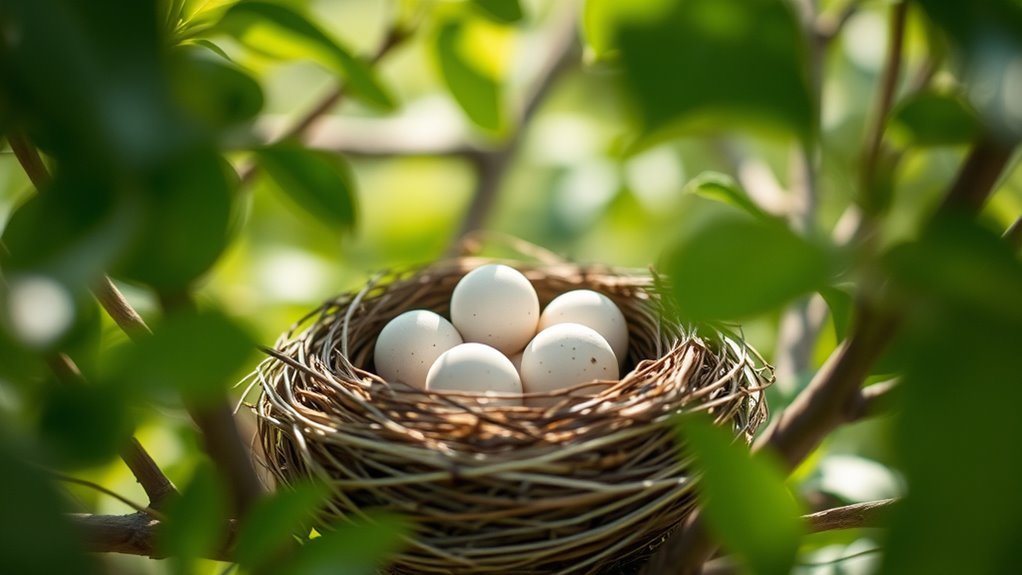
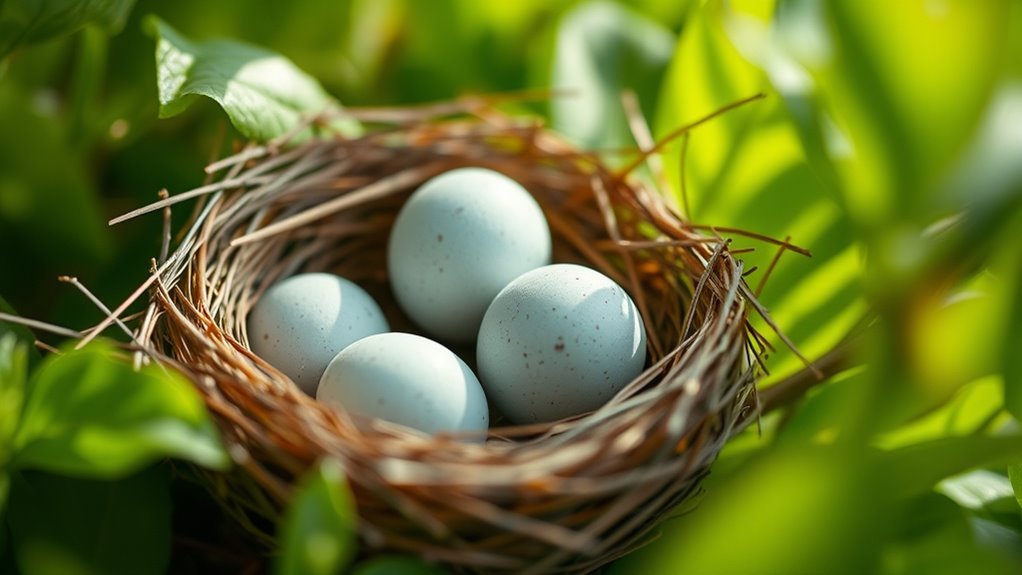
Although the exact timing can vary by species and environment, finch eggs usually take between 12 to 16 days to hatch once incubation starts. During this incubation period, both parents often share the duty of keeping the eggs warm, ensuring proper development.
You’ll notice the hatch time can slightly differ, especially if eggs are laid later in the clutch—they tend to hatch a bit after the first ones. To track progress, monitor the finch eggs closely from day 12 onward; signs of hatching become more apparent.
Understanding this incubation period helps you anticipate when the chicks will emerge, giving you a clearer idea of the finch eggs’ development timeline and allowing you to prepare for the next stage of care.
Environmental and Behavioral Factors Affecting Finch Egg Incubation and Hatch Success
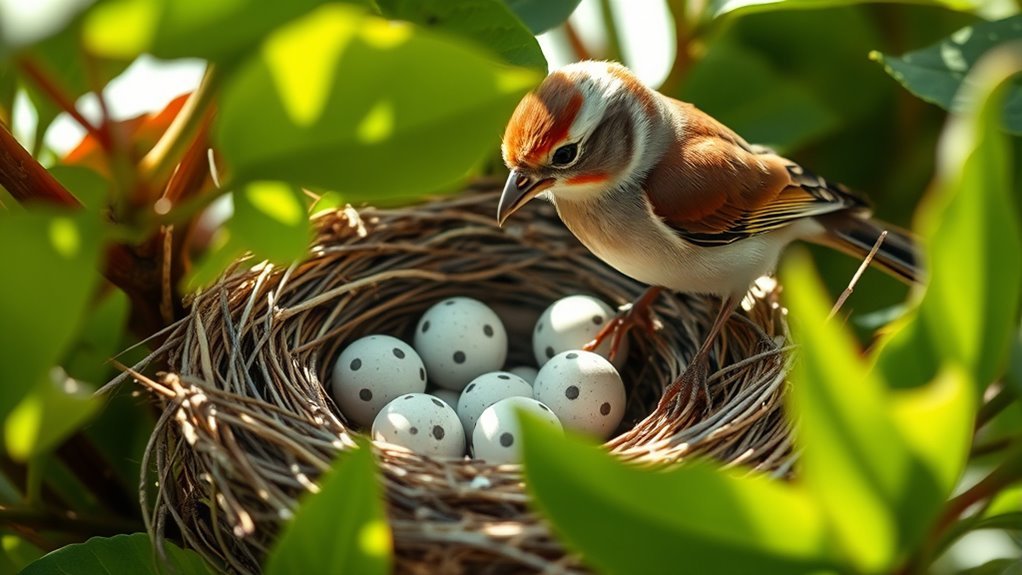
When you care for finch eggs, you need to understand how environmental and behavioral factors influence their incubation and hatch success. Incubation success depends heavily on stable temperature and humidity, as fluctuations can delay or prevent hatching.
Environmental factors like weather changes and loud disturbances near the nest cause female finches to leave the eggs, risking abandonment. You’ll notice that parental behavior plays a vital role; turning eggs regularly and maintaining warmth ensures proper development.
However, if external stimuli disrupt these behaviors, the chances of successful hatching drop markedly. To maximize hatch success, minimize disturbances and maintain a calm environment, allowing parent finches to incubate eggs consistently throughout the typical 12-16 day period.
Frequently Asked Questions
How Long Does a Finch Sit on Her Eggs?
A finch sits on her eggs for about 14 days, mostly staying put to keep them warm. She’ll leave briefly to eat or drink but returns quickly to maintain the right temperature and protect the clutch.
Why Do Finches Throw Eggs Out of Nests?
You’ll see finches toss eggs when they spot a cracked shell or sense danger nearby. They act like tiny guardians, removing unhealthy or unfertilized eggs to protect their precious nest and start fresh without risk.
Do Finches Come Back to the Same Nest Every Year?
Yes, finches often return to the same nest or nearby site each year if it’s safe and successful. You’ll notice they sometimes reuse old nests, especially in sheltered, elevated spots, but may build new ones too.
Can You Touch Finch Eggs?
Think of finch eggs as fragile treasures; you shouldn’t touch them. Handling can scare the parents away, risking their care. If you must, use gloves gently, but the best choice is to watch quietly from afar.
Conclusion
When you’re waiting for finch eggs to hatch, patience truly is a virtue. Typically, they’ll take about 11 to 14 days. But remember, factors like temperature and parental care can speed things up or slow them down.
You’ve got to give nature the time it needs—after all, Rome wasn’t built in a day. By staying attentive and providing a stable environment, you’ll increase the chances of those little finches hatching strong and healthy.
So, keep the nest cozy and avoid disturbing the eggs too much. With the right care, those finch eggs will hatch into lively, healthy chicks ready to brighten your day. Just hang in there—good things come to those who wait when it comes to finch egg hatching!