10 Best Method to Lift a Sinking Concrete Slab Compared Side by Side
Concrete slabs that sink unevenly can cause serious issues like cracks, water pooling, or structural damage. Finding the best method to lift a sinking concrete slab is essential to restore stability and safety without costly replacements. Polyurethane foam injection is a popular product category designed to address these problems efficiently.
Polyurethane foam injection is a popular product category designed to address these problems efficiently. This solution works well for homeowners and contractors looking for a durable, minimally invasive way to lift and level concrete slabs. In this review, we’ll explore how this method operates, what makes it stand out, and who it suits best.
You’ll learn about its benefits, typical applications, and potential limitations to help you decide if it meets your needs.
Proven Techniques to Restore Stability and Level Your Concrete Surface
| Image | Product | Price |
|---|---|---|
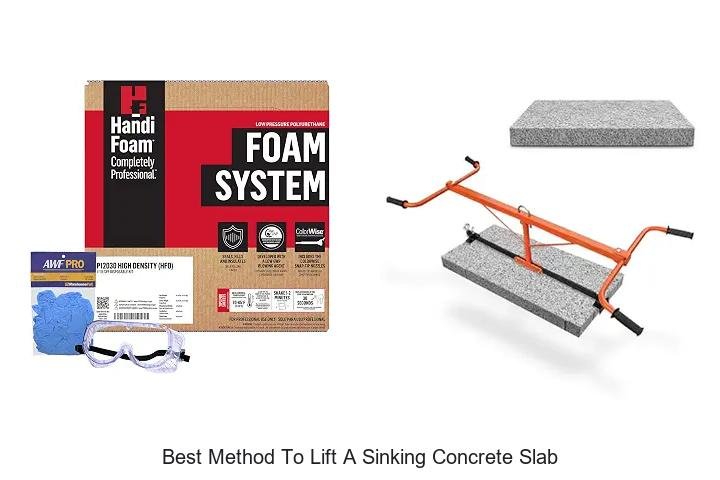
Pick 1  | HandiFoam High Density Closed Cell Spray Foam Insulation Kit | Check Price On Amazon |
Pick 2  | Paver Lifter Tool by Paver Slab | Check Price On Amazon |
Pick 3  | Heavy-Duty Paver Slab Lifter Adjustable Span Tool | Check Price On Amazon |
1. HandiFoam High Density Closed Cell Spray Foam Insulation Kit
Heavy-duty lifting projects call for materials that provide both strength and durability. This foam kit delivers a high-density solution suitable for stabilizing and lifting sinking concrete slabs. The HandiFoam High Density Closed Cell Spray Foam Insulation Kit features a 3.1 lb/ft³ polyurethane foam with about 40 psi compressive strength, making it highly resistant to crushing under weight.
Its 95% closed-cell structure limits moisture intrusion and maintains dimensional stability even under stressful conditions. The product is designed for professional use, offering fast expansion and quick tack-free time in about a minute. Included with the kit are two-component cylinders, hoses, nozzles, gloves, and goggles, ensuring a complete setup.
Beyond lifting concrete, it excels in roofing repairs and insulation where foot traffic durability is required. The foam’s thermal insulation rating starts strong and holds up well over time, which adds value in cold storage or industrial settings.
Its high compressive strength and rigidity make it ideal for concrete slab stabilization and pool deck support. While it may require some experience to apply smoothly, the package provides all necessary tools. This kit suits contractors and serious DIYers who need a robust, reliable option to raise and stabilize heavy concrete surfaces safely.
Pros
- High compressive strength for heavy lifting
- Includes safety goggles and gloves
- Fast curing time under one minute
Cons
- Limited coverage area per kit
- Requires careful handling and prep
- Better suited for professional use
Who Should Buy It?
This kit is ideal for contractors or skilled homeowners managing heavy-duty lifting of concrete slabs or similar applications. It suits those needing strong, moisture-resistant foam with quick curing times and ready-to-use components for serious stabilization jobs.
Key Specifications
| Specification | Details |
|---|---|
| Material | Polyurethane Foam |
| Load Capacity (lbs) | Approx. 40 psi compressive strength |
| Included Components | A & B Cylinders, Hoses, Applicator, Fan & Cone Nozzles, Manual, Gloves, Goggles |
| Coverage | Up to 115 board feet |
| Brand | AWF PRO |
| Durability Features | 3.1 lb/ft³ foam density, 95% closed-cell structure |
| Special Design Elements | Low-pressure two-component spray, Class A fire rating |
The product’s key specs highlight a high-density polyurethane foam with approximately 40 psi compressive strength and 95% closed-cell content. These measures indicate strong resistance to compression, making the foam capable of supporting heavy weights without deformation. The spray foam kit includes all necessary components like cylinders, applicator nozzles, hoses, gloves, and goggles, which enables an all-in-one setup for safety and convenience. The coverage up to 115 board feet allows for lifting and stabilizing sizable slab areas in one application cycle.
High compressive strength means the foam won’t easily break down under heavy concrete slabs or foot traffic. The closed-cell structure prevents moisture absorption, preserving stability and insulation quality over time. Low-pressure spray design aids in controlled application, minimizing waste and mess. This makes the kit particularly well suited for commercial or industrial users who require durable, fire-rated foam for both structural repair and insulation. Users who need reliable lifting strength and fast curing will find this option beneficial.
2. Paver Lifter Tool by Paver Slab
Lifting large paving slabs can be a physically demanding task, but a tool that offers adaptability and strength makes the job easier. The Paver Lifter Tool by Paver Slab stands out for its versatile adjustment and robust build. Designed to handle slabs from 12 to 47 inches, it suits a wide range of projects without needing multiple tools.
Its 330-pound load capacity allows it to lift even heavy slabs securely, ideal for construction and landscaping work. The tool is constructed from 0.45-inch thick solid steel, giving it great resilience against bending and wear.
Its efficient lever mechanism reduces the effort needed, lowering fatigue during longer jobs. The tool’s large adjustable span and strong frame make it a reliable piece of equipment for professionals and DIYers alike. Overall, it balances ease of use and durability to offer good value under demanding conditions.
Pros
- Wide 12″–47″ adjustable span
- 330 lbs heavy-duty capacity
- Sturdy 0.45″ solid steel frame
Cons
- Weighs 32 pounds, can feel heavy
- Not suitable for slabs over 47 inches
- No power source; fully manual
Who Should Buy It?
Ideal for contractors and DIYers needing flexible slab lifting options. Best suited to users working with various slab sizes and requiring solid, durable construction for heavy slabs.
Key Specifications
| Specification | Details |
|---|---|
| Load Capacity (lbs) | 330 |
| Adjustable Span (inches) | 12-47 |
| Material | 0.45″ Thick Solid Steel |
| Item Weight (lbs) | 32 |
| Included Components | Paver Slab Lifter Tool |
| Power Source | Manual |
| Durability Features | Reinforced steel frame |
| Special Design Elements | Optimized lever-action mechanism |
| Brand | Paver Slab |
The adjustable span ranging from 12 to 47 inches means this tool can handle a variety of slab sizes without needing extra equipment. Its 330-pound load capacity supports the lifting of heavy pavers or stones safely. Constructed from 0.45-inch thick solid steel, the tool resists bending or deformation over time. With a weight of 32 pounds, it strikes a balance between portability and strength, making it manageable while providing dependable lifting power for various landscaping or construction tasks.
These specifications contribute directly to improved performance and user comfort. The lever-action design reduces the strain of manual lifting, helping users work longer without excessive fatigue. The durable steel construction extends the lifespan of the tool under tough use. Manual operation means no need for batteries or power outlets, increasing flexibility onsite. This combination appeals most to professionals and serious DIYers looking for a rugged, adaptable tool that can handle regular, heavy-duty jobs with reliable results.
3. Heavy-Duty Paver Slab Lifter Adjustable Span Tool
Handling heavy concrete slabs becomes easier with this adjustable heavy-duty slab lifter. Its wide span adjustment and solid steel build make it reliable for various paving projects.
The tool features a 0.45-inch thick solid steel structure rated for loads up to 330 pounds. It offers an adjustable clamping span between 9 and 47.2 inches, allowing it to fit different slab sizes with ease.
The bolt-fixed locking system enhances safety and holds slabs firmly without slipping. Designed ergonomically, the non-slip handle helps reduce user fatigue and minimizes injury risks.
It requires no power source and performs well in outdoor, wet environments. This tool suits landscaping contractors and professionals working with diverse hardscape materials, offering durable and versatile slab lifting support.
Pros
- Heavy-duty solid steel construction
- Wide adjustable span from 9 to 47.2 inches
- Ergonomic handle reduces physical fatigue
Cons
- Heavy at 32 pounds
- May be bulky for small-scale jobs
- Limited to slabs under 330 lbs
Who Should Buy It?
Ideal for landscaping professionals and contractors handling various concrete slabs. Best for users needing a durable, adjustable tool for heavy lifting on diverse paving projects.
Key Specifications
| Specification | Details |
|---|---|
| Load Capacity (lbs) | 330 |
| Adjustable Span (inches) | 9-47.2 |
| Material | 0.45-inch thick solid steel |
| Item Weight (lbs) | 32 |
| Power Source | Manual |
| Durability Features | Bolt-fixed locking, reinforced clamping jaws |
| Special Design Elements | Telescopic adjustment, non-slip handle |
| Coverage | Various concrete pavers, stone slabs, patio units |
| Brand | Heavy-Duty Paver |
The 330-pound load capacity ensures this tool can handle most concrete slabs used in landscaping. Its wide adjustable span from 9 to 47.2 inches allows compatibility with many slab sizes without extra tools. The heavy solid steel construction provides strength and rigidity, vital for stability when lifting. Weighing 32 pounds, it balances durability with manageable weight for transport. The manual operation and bolt-fixed safety design suit outdoor, wet, or uneven job sites, ensuring reliable performance without power sources.
These specifications contribute to both comfort and durability during use. The telescopic span adjustment enables quick setup, cutting down prep time and adapting to different slab widths on the fly. The ergonomic, non-slip handle reduces strain on the user’s hands and back. The bolt-locked clamping system prevents slipping or loosening, increasing safety for heavy loads. Professionals lifting various sizes and weights of slabs benefit most, as the tool supports heavy-duty work while lowering injury risks.
4. Heavy Duty Paver Slab Lifter 9 to 47.2 Adjustable Span

Handling a wide range of slab sizes without hassle is key for any paving project. The Heavy Duty Paver Slab Lifter offers an impressive adjustable span from 9 to 47.2 inches, making it highly versatile.
This tool is built to work faster and protect your back with its ergonomic lever-action design, reducing bending and strain. Constructed from 0.45-inch thick solid steel, it supports loads up to 330 pounds without bending. The bolt-fixed joints add durability, preventing failure common with welds.
Its 20° gravity-lock lever converts stone weight into a strong grip while protecting delicate surfaces. This lifter suits professionals handling varied slab sizes seeking strength and efficiency in a single tool.
The included safety design and heavy construction make it reliable for daily, intense use. Setup and adjustment are simple, enabling quick work on different stone sizes. The tool balances toughness with ergonomics, improving comfort during long projects and ultimately saving time and effort.
Pros
- Massive 9 to 47.2-inch adjustable span
- Ergonomic lever reduces back strain
- Durable bolt-fixed joints resist snapping
Cons
- Heavy 28-pound weight may tire users
- Limited to 330 lbs load capacity
- Size may be bulky for tight spaces
Who Should Buy It?
Ideal for professionals and serious DIYers needing wide slab size range. Great for those lifting heavy stones regularly who want durability and back protection.
Key Specifications
| Specification | Details |
|---|---|
| Load Capacity (lbs) | 330 |
| Adjustable Span (inches) | 9 to 47.2 |
| Material | High-Strength Carbon Steel |
| Item Weight (lbs) | 28 |
| Included Components | Paver Slabs Lifter |
| Power Source | Hand Powered |
| Durability Features | Bolt-Fixed Safety Design, 0.45-inch Solid Steel Build |
| Special Design Elements | 20° Gravity-Lock, Non-Marring Grip, Ergonomic Lever Action |
| Coverage | Versatile slab sizes from small bricks to jumbo stones |
| Brand | BZ SUN |
The adjustable span of 9 to 47.2 inches enables lifting a wide range of slab sizes. This flexibility means you can handle everything from small garden bricks to large commercial stones without switching tools. The load capacity of 330 pounds suits heavy slabs typical in many projects. The solid steel material, weighing 28 pounds, provides the strength needed to prevent bending or warping during use. Hand powering makes it portable and straightforward to operate on any site where power sources may be limited.
These specifications contribute directly to performance and durability. The bolt-fixed safety design eliminates weld weaknesses, ensuring long-term reliability under heavy loads. The ergonomic lever-action reduces strain on the lower back, allowing longer work periods with less fatigue. Non-marring grips protect delicate stone surfaces, maintaining aesthetics. Overall, these features benefit professional contractors and serious DIY users who require a tough, versatile tool capable of handling various slab sizes efficiently and safely.
5. Paver Slabs Lifter & Extractor Tool

Engineered for moving heavy materials safely and with ease, this tool excels at handling dense paver slabs. Its industrial-grade design combines maximum strength with a smart leverage system that saves effort.
Built mainly from iron, it features reinforced jaws and a durable blade to withstand tough jobs. The adjustable jaw fits slabs up to 40 inches wide, accommodating various sizes without needing multiple tools.
The leverage design minimizes bending and strain, offering safer handling of heavy blocks. Weighing nearly 32 pounds, it provides stability without being cumbersome. This tool suits builders, landscapers, or homeowners needing to move or realign heavy pavers efficiently.
Durable, versatile, and well-designed, it offers solid value for demanding lifting and moving tasks.
Pros
- Heavy-duty iron construction resists wear
- Adjustable jaws fit slabs up to 40 inches
- Leverage design reduces back strain
Cons
- Relatively heavy to carry for some users
- Limited to slabs weighing 350 lbs or less
- Manual operation requires physical effort
Who Should Buy It?
Ideal for professionals and homeowners handling heavy slabs. Perfect when frequent lifting or repositioning of large pavers is needed. Best for those seeking a durable, manual tool that eases strain and increases safety during heavy slab movements.
Key Specifications
| Specification | Details |
|---|---|
| Load Capacity (lbs) | 350 lbs |
| Adjustable Span (inches) | Maximum 40 inches |
| Material | Iron |
| Item Weight (lbs) | 31.9 pounds |
| Included Components | Slab Mover |
| Power Source | Hand powered |
| Durability Features | Full iron body, reinforced jaws, durable blade |
| Special Design Elements | Leverage mechanism, adjustable wide jaw |
| Coverage | Most common paver slab sizes up to 40 inches |
| Brand | Unavailable |
The 350-pound load capacity means the tool can safely handle most heavy paver slabs without risk of damage or failure. Its adjustable jaw reaching up to 40 inches accommodates a wide range of slab sizes commonly used in landscaping or construction. Iron material ensures the product is tough and resistant to bending or breaking. Weighing nearly 32 pounds, it offers robust build quality for stability during lifting while remaining portable enough for job sites. Included is the slab mover component necessary for operation.
High durability features like a full iron body and reinforced jaws extend the tool’s lifespan even under rigorous use. The specialized leverage design minimizes physical strain by improving lifting efficiency, making repetitive slab moving safer and more comfortable. Its wide adjustability prevents the need for multiple lifting tools, saving costs and reducing tool clutter. This tool benefits workers frequently moving heavy slabs needing a safe and reliable manual solution.
6. Paver Slab Lifter Adjustable Heavy-Duty Extractor

Lifting and adjusting large slabs can be challenging without the right tool. This heavy-duty paver slab lifter offers impressive versatility with its wide adjustable span, handling various slab sizes effortlessly. It features a reinforced mechanical clamping system that grips slabs securely and evenly, preventing slippage and damage during lifting.
Crafted from solid iron and alloy steel, the lifter supports loads up to 350 lbs, making it suitable for heavy-duty outdoor tasks. The tool is well-built to resist rust and wear, ensuring durability over time.
Operating it by hand is straightforward, and its broad jaw range reduces the need for multiple tools, cutting down on costs. Ideal for contractors or serious DIY landscapers, it delivers reliable performance on patios and driveways.
Overall, it balances strength, precision, and ease of use, offering great value for demanding lifting jobs.
Pros
- Wide adjustable jaw range fits many slab sizes
- Strong iron construction supports heavy loads
- Clamping structure prevents slab cracking
Cons
- Heavier weight may be tiring for extended use
- Not powered, requires manual effort
- Limited to slabs 2 inches or thicker
Who Should Buy It?
This tool suits landscapers and contractors who lift various slab sizes. Its heavy-duty design benefits users needing secure, stable clamping for heavy pavers. Those lifting slabs regularly outdoors will appreciate its durable build and rust resistance.
Key Specifications
| Specification | Details |
|---|---|
| Load Capacity (lbs) | 350 |
| Adjustable Span (inches) | 11.8-47.2 |
| Material | Heavy alloy steel |
| Item Weight (lbs) | 34.8 |
| Included Components | BODY |
| Power Source | hand_powered |
| Durability Features | Rust and corrosion resistant, wear-resistant blade |
| Special Design Elements | Reinforced mechanical clamping structure |
The load capacity of 350 lbs means the lifter can handle heavy concrete slabs and pavers commonly used in patios and driveways. Its adjustable span ranges from 11.8 to 47.2 inches, allowing it to grasp various sizes of slabs securely. Made from heavy alloy steel, it offers robustness while weighing 34.8 pounds, making it sufficiently portable yet solid enough for demanding lifting tasks. Included is the main body component, simplifying the setup.
These specifications ensure the lifter performs reliably in outdoor settings, thanks to rust and corrosion resistance and a wear-resistant blade for longevity. The reinforced mechanical clamping structure applies even pressure, reducing slab damage risk and improving grip stability. The manual, hand-powered operation suits users requiring control without extra power sources. Overall, the lifter fits professionals and dedicated DIY users needing heavy-duty slab handling tools.
7. Heavy Duty Block Lifter Adjustable Paver Extractor Tool

Handling heavy pavers and concrete blocks becomes much simpler with this adjustable lifter. Its wide grip span covers a variety of block sizes without needing multiple tools. The heavy-duty block lifter adjusts smoothly from 12 to 47 inches, letting users lift driveway bricks, wall blocks, or larger patio slabs with ease.
Made from thick blue carbon steel, it withstands up to 330 pounds without bending. Its two-person leverage design reduces strain by locking the stone in place, cutting down on muscle fatigue.
Reinforced bolt-secured joints keep the frame rigid during tough lifts, making it very durable on demanding outdoor jobs. The lifter’s flat, slip-resistant jaws protect heavy materials from scratches and fit tight seams securely. Weighing about 38 pounds, it strikes a good balance between sturdiness and manageability.
This tool offers a practical solution for landscapers or DIYers working with heavy concrete or stone, streamlining tough lifting tasks while protecting materials.
Pros
- Adjustable span fits many block sizes
- Heavy-duty steel resists bending
- Non-marring jaws protect surfaces
Cons
- Requires two-person operation for heaviest loads
- Heavier weight may tire some users
- Limited to 330 lbs maximum load
Who Should Buy It?
Ideal for homeowners, landscapers, and masons who lift various sized concrete or stone blocks. Best for those wanting to reduce strain during manual lifting on driveway, patio, or retaining wall projects.
Key Specifications
| Specification | Details |
|---|---|
| Load Capacity (lbs) | 330 |
| Adjustable Span (inches) | 12-47 |
| Material | High-vis blue carbon steel |
| Item Weight (lbs) | 38.2 |
| Durability Features | Bolt-secured joints, 0.45″ thick frame |
| Special Design Elements | Two-person leverage system, slip-free jaws |
| Coverage | Standard driveway bricks, retaining wall blocks, patio slabs |
| Brand | Heavy Duty Block Lifter |
The adjustable span from 12 to 47 inches lets users grip a range of block sizes without swapping tools. Handling blocks safely up to 330 pounds suits various outdoor heavy lifting tasks. The thick 0.45-inch carbon steel frame ensures rigidity, while bolt-secured joints prevent bending or snapping. At just over 38 pounds, the lifter is hefty but manageable for most applications. Its high-visibility blue finish stands out well for easy location on job sites.
These specifications directly improve performance by offering secure grips on many stone sizes, reducing back strain through the thoughtful leverage system. Durability is enhanced by reinforced connections and rust-resistant coating, ensuring long service life. Users benefit most when lifting heavy blocks regularly, especially when teamwork is possible to maximize leverage. The slip-free jaws protect delicate surfaces, making it suitable for textured or smooth stones alike.
8. ELLIS Adjustable Steel Shore 10-14

Heavy-duty structural support becomes manageable with this adjustable steel shore that handles substantial loads up to 56,000 lbs. Its steel construction and precise adjustment system make it reliable for leveling floors, supporting beams, and bracing concrete slabs.
Designed for both residential and commercial use, it features a patented mechanism that reduces friction under load, improving jacking efficiency. The adjustable height range from 10 to 14 inches allows for flexible placement, while the secure locking system ensures stability throughout the project. Made from high-strength steel, its reinforced top plate and robust build promise long-lasting durability.
Setup requires a 1-inch steel adjustment rod, which is sold separately, but the Acme screw mechanism simplifies fine-tuning the height. This shore is ideal for users who need a dependable, high-capacity solution for lifting and supporting sunk concrete, beams, or foundations, delivering both performance and dependable support at a competitive value.
Pros
- Extremely high 56,000 lb load capacity
- Precise height adjustment with Acme screw
- Durable high-strength steel construction
Cons
- Adjustment rod sold separately
- Heavy weight at 34 lbs
- Limited adjustable span of 10-14 inches
Who Should Buy It?
This product suits contractors and homeowners tackling heavy structural issues. Ideal for foundation, floor, and beam support where strong, adjustable jacks are needed. It fits projects requiring reliable and secure temporary or permanent bracing.
Key Specifications
| Specification | Details |
|---|---|
| Price | Not provided |
| Load Capacity (lbs) | 56,000 |
| Adjustable Span (inches) | 10-14 |
| Material | High Carbon Steel |
| Item Weight (lbs) | 34 |
| Included Components | Housing |
| Power Source | Manual |
| Durability Features | High-strength steel, reinforced top plate, patented friction-minimizing design |
| Special Design Elements | Acme screw mechanism, lock-set screw, pre-drilled top plate |
| Coverage | Foundations, beams, floors, concrete slabs |
| Brand | ELLIS |
The key specifications highlight a solid steel construction designed to hold up to 56,000 pounds. Its height adjusts between 10 and 14 inches, allowing it to fit various spaces and project needs. Weighing 34 pounds, it offers impressive strength but requires a bit of effort to move and position. Included components focus on the housing, with the adjustment rod sold separately to enable precise control. The design features like the Acme screw and lock-set screw add security and customization in height settings.
These specifications ensure strong and stable support for heavy projects, from foundation repairs to concrete slab lifting. The high load capacity and reinforced materials deliver durable performance especially under demanding conditions. Adjustable height makes setup flexible, but users should be prepared for manual operation and handling a heavy product. Ideal for contractors or serious DIYers needing reliable, heavy-duty jacks that hold steady during long projects.
9. Adjustable Slab Lifting Clamp for Granite

Lifting heavy granite slabs safely and securely calls for reliable equipment designed to protect delicate surfaces. This adjustable lifting clamp offers a secure grip and slip-proof protection for granite and other stone materials. The clamp is made from alloy stainless steel, ensuring strong resistance to rust and wear during frequent use.
Polyurethane rubber padding provides an anti-slip surface and prevents damage to stone slabs while absorbing vibrations. Its adjustable mounting holes allow the clamp to fit granite slabs of different thicknesses, making it versatile for various projects. Fully assembled upon arrival, the clamp can be attached instantly to heavy machinery, saving setup time and increasing efficiency on site.
The steel construction withstands tough industrial environments, promising durability through many lifting tasks. Suited especially for contractors working with granite or heavy stone, this clamp simplifies handling by combining safety, convenience, and strong build quality in one tool. Its sturdy design and easy adjustability justify the investment for frequent stone lifting needs.
Pros
- Heavy-duty alloy steel construction
- Polyurethane rubber prevents slab damage
- Adjustable width fits various slab sizes
Cons
- Relatively heavy at 44 pounds
- Limited to slab thickness between 13.8-31 inches
- Requires compatible lifting equipment connection
Who Should Buy It?
Ideal for stone contractors and construction workers who handle granite or heavy stone slabs often. Perfect for onsite use where quick setup and reliable slab protection matter. Also good for excavation teams needing tough lifting clamps with adjustable fit.
Key Specifications
| Specification | Details |
|---|---|
| Load Capacity (lbs) | 1323 |
| Adjustable Span (inches) | 13.8-31 |
| Material | Alloy stainless steel with polyurethane rubber padding |
| Item Weight (lbs) | 44 |
| Included Components | 1x Pipe Clamp |
| Power Source | Manual operation |
| Durability Features | Rust resistant alloy steel, high-temperature forging |
| Special Design Elements | Polyurethane rubber anti-slip padding, adjustable mounting holes |
| Coverage | Granite slabs and heavy stone materials |
| Brand | Hubxinly |
The clamp’s 1323 lbs load capacity ensures it can safely lift medium to heavy granite slabs without risk of breaking or slipping. Its adjustable span from 13.8 to 31 inches allows it to clamp a wide range of slab thicknesses, making it versatile for different stone sizes encountered on jobsites. Constructed from rust-resistant alloy stainless steel, the clamp is durable against wear and corrosion, while the polyurethane rubber padding protects delicate stone surfaces during lifting. The 44-pound weight gives the clamp stability but requires careful handling when moving it by hand.
These specifications combine to deliver performance suited for frequent and demanding lifting tasks on construction or landscaping projects. The alloy steel frame ensures resistance to harsh conditions, extending service life. Adjustable mounting holes and a manual limiter provide secure gripping options, improving safety during lifts by preventing accidental slips. Workers benefit from the clamp’s ready-to-use setup, which helps speed completion of complex lifting tasks. The clamp works best with compatible excavation or lifting machinery, ideal for professionals needing reliable, heavy-duty stone handling.
10. Ellis Manufacturing Light-Duty Steel Jack Post 23-35

Designed for steady support and precise leveling, this light-duty steel jack post adapts to many construction tasks. It is perfect for lifting and stabilizing floors, beams, and concrete slabs with its robust build.
The adjustable screw jack can extend from 23 to 35 inches, making it versatile for various height requirements. Safety is guaranteed with a strong steel build and a 16,000-pound capacity.
It features a patented lifting nut assembly, boosting lifting power up to 10 times for smoother adjustments. The 2.5-to-1 safety factor adds peace of mind during extended use.
It weighs 23 pounds and includes a thick top plate with pre-drilled holes for easy installation. This jack excels in both residential and commercial projects. Assembly and height adjustments feel straightforward, and its durable materials promise long-term stability.
The tool’s price reflects its quality and efficiency, making it worth the investment for those needing reliable support for lighter-duty applications. Ideal users are small contractors or homeowners who want to maintain or repair sinking concrete slabs or floors without heavy machinery.
Pros
- Supports up to 16,000 lbs safely
- Adjustable height from 23 to 35 inches
- Durable high-strength steel construction
Cons
- Weight could be cumbersome for solo handling
- Limited to light-duty applications only
- Not suitable for very large or uneven slabs
Who Should Buy It?
This product is suitable for homeowners, small contractors, or DIYers needing reliable support for light-duty lifting and leveling. It works well for repairing sinking concrete slabs, floors, and beams where heavy machinery is impractical or unnecessary.
Key Specifications
| Specification | Details |
|---|---|
| Load Capacity (lbs) | 16,000 |
| Adjustable Span (inches) | 23-35 |
| Material | High Carbon Steel |
| Item Weight (lbs) | 23 |
| Included Components | Adjustable Screw Jack with Top Plate |
| Power Source | Manual |
| Durability Features | High-strength steel, 2.5/1 safety factor |
| Special Design Elements | Patented Lifting Nut Assembly, Pre-drilled top plate |
| Brand | ELLIS |
The Ellis jack post offers a load capacity of 16,000 pounds, making it strong enough for various lifting tasks. Its adjustable range from 23 to 35 inches allows fine-tuning to match site conditions. Constructed of high carbon steel, the jack post guarantees strength and durability. Weighing 23 pounds, it balances sturdiness with portability. The included top plate with pre-drilled holes simplifies attachment to beams or slabs. Since it operates manually, it provides controlled lifting suited for precision work in both residential and light commercial jobs.
These specifications result in a stable, reliable support post able to lift and level concrete slabs safely. The lightweight design eases setup but may require effort when solo-handling. High-strength steel and safety factors ensure resilience under load, reducing risks during extended use. The patented lifting nut assembly enhances mechanical advantage, allowing more precise height adjustments. Overall, this post benefits users aiming for a dependable, easy-to-use support for light-duty construction or repair tasks without heavy equipment.
Top Strategies to Lift a Sinking Concrete Slab Effectively and Safely
Assessing the extent of the concrete slab damage
When you notice your concrete slab showing signs of sinking or unevenness, such as cracks, gaps along edges, or noticeable tilting, these are clear indicators that the foundation may be compromised. Evaluating the depth and size of the affected area involves careful measurement, often by comparing the slab’s level to an adjacent stable surface or using a level tool to detect deviations. Understanding what caused the slab to sink in the first place typically involves investigating soil conditions like erosion, poor compaction, or water drainage issues beneath the slab.
Understanding what caused the slab to sink in the first place typically involves investigating soil conditions like erosion, poor compaction, or water drainage issues beneath the slab. Recognizing these signs and accurately gauging the extent of damage will help in selecting the appropriate repair strategy and prevent further deterioration over time.
Types of concrete slab lifting methods
When tackling a sinking concrete slab, there are several approaches you might encounter, each with its unique benefits and ideal applications. One traditional technique involves mudjacking and slurry pumping, where a mixture of soil, cement, and water is injected beneath the slab to fill voids and lift the concrete back to level.
This method tends to be cost-effective and works well for moderate sinking, especially on driveways or patios where you want to avoid major demolition. Another method gaining popularity relies on polyurethane foam injection. This lightweight foam expands quickly under the slab, solidifying and providing strong support while causing minimal disruption and drying fast, making it a convenient option for indoor or small-scale repairs.
For more severe cases or when the slab is beyond repair, replacing or underpinning might be necessary. This involves removing the damaged concrete and either pouring a new slab or installing deep supports beneath it for long-term stability.
Choosing between these methods depends on factors such as the extent of sinking, budget, and the environment around the slab. Understanding these differences can help guide a thoughtful decision that balances cost with longevity and performance.
Evaluating product effectiveness and longevity
When choosing a solution for lifting a sinking concrete slab, the durability of the materials involved plays a key role in the overall success and longevity of the repair. Selecting a product that uses high-quality, long-lasting components helps resist wear and damage caused by weather conditions and ground movement. Resistance to future settling or erosion is vital to maintain stability over time, which means opting for materials or techniques designed to stabilize the soil beneath the slab and prevent it from sinking again.
Many reputable products come with warranty and performance guarantees that provide peace of mind, reflecting confidence in their durability and effectiveness. These warranties often cover potential issues related to settling or material failure, making it easier to trust the product’s long-term reliability.
Having experienced different methods, it’s clear that prioritizing these aspects can save time, effort, and money by avoiding frequent repairs and ensuring a solid, stable foundation that lasts for years to come.
Ease of application and required tools
Deciding between tackling the repair yourself or hiring a professional depends largely on your comfort level and the complexity of the job. For lifting a sinking concrete slab, professional services typically provide specialized equipment like hydraulic jacks and polyurethane foam injection tools, which may be difficult or expensive for a beginner to obtain. On the other hand, some methods are more DIY-friendly and require only basic tools such as a jackhammer or shoring equipment, though these can demand significant physical effort and time.
Preparing the site, drilling precise holes, and stabilizing the slab are tasks that might extend over several hours or even days, depending on the slab’s size and severity of sinking. For those new to concrete repairs, allocating extra time for the learning process is essential.
Overall, understanding whether you have the necessary tools and the willingness to invest the effort can guide the choice between a hands-on approach or calling in a professional for a quicker, more assured solution.
Cost considerations and budget planning
When planning to lift a sinking concrete slab, the initial expenses often include the cost of materials like polyurethane foam or mudjacking compounds, as well as any specialized equipment required for the job. Depending on the method chosen, there might be additional costs for soil stabilization or sealing cracks to prevent future sinking.
Sometimes, hidden expenses emerge such as permits, professional labor fees, or even repairing underlying drainage issues that caused the slab to sink in the first place. Although the upfront investment might feel substantial, this approach often leads to significant long-term savings by avoiding more extensive repairs or complete slab replacement later on. Investing in a reliable and effective solution at the start can ultimately protect both the integrity of the concrete surface and your wallet over time.
Safety and environmental impact
When choosing methods to lift a sinking concrete slab, understanding the safety and environmental aspects of the materials involved is essential. Many lifting techniques utilize chemical foams or polyurethane injections, which require careful attention to toxicity levels and chemical safety protocols to protect both the workers handling them and the surrounding environment. Environmental friendliness varies between materials; some solutions comply with strict regulations ensuring minimal impact, while others might release harmful substances if not applied or disposed of correctly.
Environmental friendliness varies between materials; some solutions comply with strict regulations ensuring minimal impact, while others might release harmful substances if not applied or disposed of correctly. Proper disposal and handling must follow local guidelines to prevent contamination of soil and water sources. Selecting a method that balances effective slab lifting with responsible environmental management not only preserves the integrity of your property but also contributes to sustainable construction practices.
Always consult product specifications and material safety data sheets to verify compliance with environmental standards and safe handling instructions before proceeding.
Lifespan and When to Consider Replacement
Concrete slab lifting methods can last many years when done properly. The lifespan depends on the technique used and the condition of the soil beneath the slab.
For example, polyurethane foam injection is known for providing long-lasting support since the foam expands and fills voids under the slab. This helps prevent future sinking for 10 to 20 years or more.
Another common method is mudjacking, where a mortar mixture is pumped underneath the slab. While it offers strong support, mudjacking may need maintenance or reapplication after about 5 to 10 years due to settling or cracking.
You might start to notice signs that a slab lift needs attention again. These include new cracks, uneven surfaces, or water pooling near the slab. Any new sinking or shifting could mean the support has weakened.
Choosing the right repair method initially can affect how soon a repeat job is needed. Consulting with a professional can help select a solution that suits your soil type and the slab’s use.
- Polyurethane foam: 10–20+ years lifespan
- Mudjacking: 5–10 years before possible upkeep
- Signs to watch for: cracks, dips, water collection
- Regular inspection helps catch problems early
Proper maintenance and monitoring of a lifted slab can extend its service life. Keep an eye out for changes in the surface and consult a specialist if new problems appear.
FAQ’s
What Are The Most Effective Techniques For Lifting A Sinking Concrete Slab?
The most effective techniques for lifting a sinking concrete slab include slab jacking (or mudjacking), which involves pumping a grout mixture beneath the slab to elevate it, and polyurethane foam injection, where expanding foam is injected to lift and stabilize the concrete. Both methods provide durable support and minimal disruption to the surrounding area.
How Does Polyurethane Foam Injection Work For Raising Settled Concrete Slabs?
Polyurethane foam injection involves drilling small holes into the settled concrete slab and injecting expanding foam beneath it. As the foam expands, it fills voids and lifts the slab back to its original level, providing a stable and durable foundation.
When Should Mudjacking Be Used To Lift A Sinking Concrete Slab?
Mudjacking should be used to lift a sinking concrete slab when the slab has settled unevenly but is still structurally sound, causing issues like cracks or trip hazards. It is ideal for filling voids beneath the slab to restore its original level without the need for full replacement.
What Are The Cost Differences Between Mudjacking And Foam Lifting Methods?
Mudjacking is generally less expensive, costing between $3 to $6 per square foot, while foam lifting tends to be more costly, ranging from $7 to $10 per square foot. However, foam lifting often provides a longer-lasting and more precise solution, which can justify the higher price.
How Can You Determine If A Concrete Slab Can Be Successfully Lifted Or Needs Replacement?
To determine if a concrete slab can be successfully lifted, assess its structural integrity by checking for significant cracks, crumbling edges, or underlying soil stability. If the slab is extensively damaged or the soil conditions are poor, replacement may be necessary.
Final Verdict
Choosing the best method to lift a sinking concrete slab depends on your specific needs and budget. The Heavy-Duty Paver Slab Lifter Adjustable Span Tool stands out for those seeking extra durability and a wide range of adjustment, making it suitable for a variety of heavy lifting tasks. For buyers looking for a versatile and budget-friendly option, the Paver Lifter Tool by Paver Slab offers reliable performance with adjustable settings that fit many situations.
If maximum adjustable span is a priority, the Heavy Duty Paver Slab Lifter 9 to 47.2 Adjustable Span provides extensive flexibility for larger projects that require precise control. On the other hand, the ELLIS Adjustable Steel Shore 10-14 is best suited for foundation support needs, delivering high capacity and steel strength to stabilize concrete slabs effectively.
Each of these products addresses different lifting challenges, providing options based on durability, versatility, span adjustment, and support capacity.
Select the lifting tool that matches your project size and support requirements for an effective and safe way to address sinking concrete slabs.