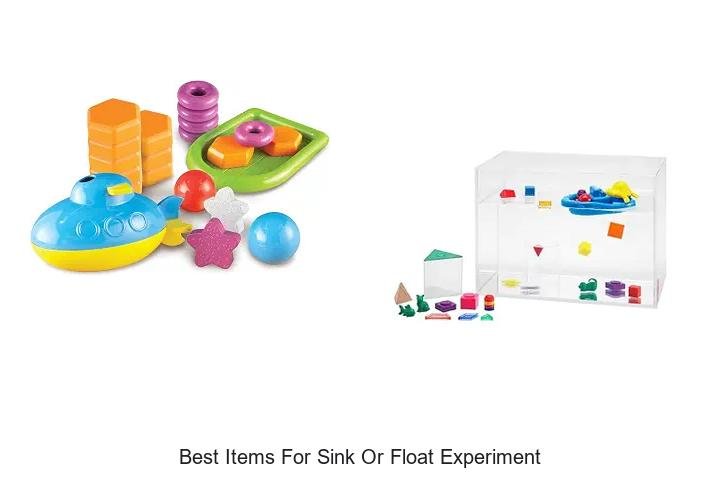
10 Best Items for Sink or Float Experiment Our Top Picks Reviewed
Many children and educators enjoy exploring basic science concepts through simple activities like the sink or float experiment. However, selecting the best items for sink or float experiment can be challenging. Not every object works well, and picking the right ones helps make the activity both fun and educational.
Not every object works well, and picking the right ones helps make the activity both fun and educational. This guide focuses on a variety of common household objects and specific items suited for carrying out sink or float tests. Whether you are a teacher looking to engage your students or a parent aiming to spark curiosity at home, choosing appropriate materials is key.
The right selections will clearly demonstrate differences in density and buoyancy without causing frustration or confusion. In this review, you will find an overview of items that perform consistently well in sink or float experiments.
Key factors such as size, material, and safety are considered. This will help you prepare for a smooth and informative activity, ensuring learning is both hands-on and enjoyable.
Discover Which Everyday Objects Defy the Water’s Surface!
| Image | Product | Price |
|---|---|---|
Pick 1  | Learning Resources STEM Sink or Float Set | Check Price On Amazon |
Pick 2  | edxeducation Float or Sink Fun Set | Check Price On Amazon |
Pick 3  | Scientific Experiment Water Buoyancy STEM Kit | Check Price On Amazon |
1. Learning Resources STEM Sink or Float Set
Young learners discover the principles of physics with an engaging hands-on STEM set that explores buoyancy and density. Designed for children ages 5 and up, it combines fun play pieces with educational activity cards that cover essential science concepts.
The set includes a variety of components such as a submarine, weighted and hollow balls, and rings to demonstrate why some objects sink while others float. Ten activity cards feature over 20 experiments to keep kids intrigued and support STEM learning in a practical way.
The plastic pieces are sturdy and safe for young hands, with no batteries required for operation. It is easy to set up and guides children through scientific discovery at a comfortable pace.
Ideal for classroom or home use, this set encourages curiosity and analytical thinking in early learners. It serves as a valuable foundation for understanding science, technology, engineering, and math principles with clear, simple instructions and tangible examples.
The balance of education and play makes it a worthwhile investment for parents and educators wanting to nurture interest in science.
Pros
- Engaging STEM-focused activities
- Durable and safe plastic pieces
- Includes over 20 detailed experiments
Cons
- Limited to ages 5 and up
- May require adult supervision
- Some activity cards could be clearer
Who Should Buy It?
Ideal for parents and teachers aiming to introduce young children to STEM concepts through hands-on learning. Great for classrooms, homeschool settings, or science centers where early science understanding is a goal. Perfect for kids interested in exploration and experimentation involving buoyancy and density.
Key Specifications
| Specification | Details |
|---|---|
| Brand Name | Learning Resources |
| Age Range Description | Kid |
| Educational Objective | STEM |
| Number of Items | 1 |
| Included Components | Counter toys |
| Material Type | Plastic |
| Theme | Submarine |
| Model Number | LER2827 |
| Size | 6×3.5 inches |
| Weight | 2 pounds |
The key specifications highlight this product as a STEM learning tool aimed at children, with a focus on early science concepts related to buoyancy and density. The plastic material ensures the pieces are safe and durable for repeated use, while the submarine theme adds engagement value. The size and weight make the set easy to handle and store, fitting well on a small table or in classroom settings. Being designed with a specific age range in mind helps tailor the activities to a young learner’s cognitive abilities.
These specifications positively impact the usability and educational value of the set. The use of plastic contributes to its durability, allowing children to manipulate objects without damage. The lightweight and compact size facilitate easy setup and cleanup, enhancing comfort for young users. The inclusion of detailed activity cards supports guided learning, benefiting educators and caregivers by providing structured experiments to explore physics concepts effectively.
2. edxeducation Float or Sink Fun Set
Exploring the concepts of float and sink becomes an interactive adventure with this well-rounded kit. Designed to engage young learners, it offers a variety of objects that support hands-on discovery and clear understanding of scientific principles.
The set features 78 individual pieces including 10 different types of manipulatives and a tugboat to test buoyancy in water. An activity guide helps children start with basic observations and progress to more complex experiments about volume, density, and weight.
The pieces are made from sturdy plastic and EVA foam, built to withstand repeated use in home or classroom settings. Cleanup and storage are simplified by a large sturdy box included with the set.
This kit provides excellent value for families and educators aiming to add a tactile dimension to STEM learning about buoyancy. The range of items encourages sorting and classification, sharpening critical thinking skills while children play with purpose. Its size and weight make it portable enough for various learning environments.
This set suits children interested in exploring early science concepts up to around 12 years old, supporting both guided and independent discovery.
Pros
- Includes 78 varied manipulatives for diverse learning
- Durable materials suited for long-term use
- Clear activity guide supports multiple skill levels
Cons
- Some pieces may be small for very young children
- Limited to float/sink concepts without additional science topics
- Box is sturdy but large for compact storage
Who Should Buy It?
Ideal for parents and educators seeking a comprehensive STEM kit that encourages hands-on learning through float and sink experiments. It fits children up to age 12 and works well in classroom or home environments. Those wanting a durable, value-packed set with guided activities will find it beneficial.
Key Specifications
| Specification | Details |
|---|---|
| Brand Name | edxeducation |
| Age Range Description | Kid |
| Educational Objective | STEM |
| Number of Items | 1 |
| Included Components | 78 manipulatives |
| Material Type | sturdy plastic and EVA foam |
| Theme | Educational |
| Model Number | 66360 |
| Size | 15 x 11.5 x 3.5 inches |
| Weight | 16 ounces |
The specifications show a kit from edxeducation focused on STEM learning for children. The product includes 78 different manipulatives crafted from sturdy plastic and EVA foam, making them durable and safe for repeated use by kids. The size of 15 by 11.5 by 3.5 inches and weight of 16 ounces make it a relatively compact set that is easy to carry and store. These specs indicate a complete, hands-on toolkit aimed at teaching key scientific concepts about floating and sinking through engaging activities.
The substantial number of pieces and included activity guide allow for varied experiments exploring buoyancy, volume, weight, and density. The robust materials mean it can last through years of classroom or home play without damage. The manageable size and weight enhance portability so learning can happen anywhere. This makes it suitable for children developing early science skills and parents or teachers looking to facilitate active learning with a durable, all-in-one float and sink resource.
3. Scientific Experiment Water Buoyancy STEM Kit
Exploring buoyancy concepts becomes interactive and fun with this water buoyancy STEM kit. It engages children by letting them build and test physics experiments themselves. The kit includes a spring scale, small cups, metal nuts, hooks, and other components for DIY assembly.
Perfectly sized, it fits comfortably on desks making it convenient for classroom or home use. Its design targets elementary students, introducing key physics principles like buoyancy, force, and displacement in an accessible way. Constructed from durable plastic, the components feel sturdy yet lightweight at just 3.52 ounces.
The spring scale stands around 5.9 inches tall, providing clear measurements during experiments. Setting up the experiment is straightforward, aiding hands-on learning without confusion.
This kit delivers an engaging educational experience with practical physics application. It is an excellent choice for parents and educators wanting a premium, hands-on science tool. Kids gain a memorable understanding of water’s buoyant properties while enjoying interactive play.
Overall, it combines quality, learning value, and ease of use effectively.
Pros
- Engaging hands-on STEM learning experience
- Includes accurate spring scale for measurement
- Compact and lightweight for easy handling
Cons
- Limited number of components included
- May require adult guidance for younger children
- Plastic parts could feel less durable over time
Who Should Buy It?
Ideal for parents and teachers seeking a premium educational kit. Perfect for elementary students eager to learn physics interactively. Best for those wanting a compact, easy-to-use tool supporting DIY assembly and hands-on experiments.
Key Specifications
| Specification | Details |
|---|---|
| Brand Name | DKLLKYT |
| Age Range Description | Adult |
| Educational Objective | Buoyancy of water |
| Number of Items | 1 |
| Included Components | 1 |
| Material Type | Plastic |
| Theme | Science |
| Size | 6.69 X 1.69 Inches |
| Weight | 3.52 ounces |
The brand DKLLKYT offers a hands-on science kit designed primarily for adult-guided learning, focusing on the educational objective of understanding water buoyancy. The compact size (6.69 x 1.69 inches) and lightweight build (3.52 ounces) make it easy to handle and store. The plastic material maintains durability while keeping components light for easy manipulation. Including a single comprehensive item with necessary components supports clarity during experiments. This setup is convenient for desks or small learning spaces, encouraging interactive physics lessons about force and displacement.
These precise specifications make the kit suitable for educational settings where space and simplicity matter. The small size ensures effortless setup and storage, benefiting teachers and parents alike. Plastic construction balances durability with lightweight design, allowing children to assemble parts without frustration. The focus on buoyancy education enhances science comprehension through tactile experience. This kit meets the needs of learners seeking practical demonstrations, maximizing engagement while supporting fundamental physics principles.
4. Submarine Floating and Sinking Demonstrator STEM Model

Floating and sinking concepts come to life with a clear and interactive submarine model designed for educational use. The transparent structure allows users to see how water displacement affects buoyancy, making physics principles easy to grasp. This submarine demonstrator uses a hollow spherical air chamber to show how water enters and exits, simulating the submarine’s movement underwater.
With suction and exhaust holes at the top and water inlet and drainage holes at the bottom, it visually explains how buoyancy changes when water is added or removed. The model is made from acrylic, ensuring clarity and decent durability but requires gentle handling to prevent damage.
It effectively illustrates Archimedes’ principle by showing when the buoyancy force is enough to float the model or causes it to sink. Assembly and operation are straightforward, suitable for middle school students or anyone learning about buoyancy principles. While it needs careful treatment to avoid cracks, it offers solid educational value for physics labs or home experiments.
The model’s compact size and clear design also make it easy to store and reuse with proper drying after experiments.
Pros
- Clear visual of buoyancy principles
- Durable acrylic construction
- Simple to operate and clean
Cons
- Fragile if dropped or mishandled
- Small size may limit visibility
- Requires careful drying after use
Who Should Buy It?
Ideal for teachers and students in middle school physics classes. Suitable for hands-on learning about buoyancy, water displacement, and submarine mechanics. Also fits science labs needing a clear demonstrator model.
Key Specifications
| Specification | Details |
|---|---|
| Brand Name | HLLZXYGK |
| Age Range Description | Adult |
| Educational Objective | Buoyancy Principles |
| Number of Items | 1 |
| Material Type | Acrylic |
| Theme | Physics |
| Model Number | DAKYEWDUD |
| Size | One Size |
The specifications highlight the product’s educational focus on buoyancy principles, tailored for adult learners and middle school lab use. Acrylic material offers transparency necessary for observing water movement inside the model. Including just one item simplifies setup and usage, while the compact size ensures it fits easily on lab desks or classroom tables. The physics theme guides users toward exploring Archimedes’ law and submarine buoyancy in a hands-on manner.
These specs impact usability by emphasizing visual clarity and educational purpose. The sturdy acrylic keeps the model clear for observation but requires careful handling to avoid cracking. Being designed for adult and student use ensures the model is easy to operate and safe in a classroom environment. The single-piece setup aids quick assembly and clean-up, making it practical for repeated experiments.
5. Learning Resources Splashology Water Lab

Water science becomes a fun and interactive adventure with the Splashology Water Lab. It offers a hands-on way to explore buoyancy, volume, and flow through engaging water play experiments.
The kit includes seven waterproof experiment cards that guide kids through simple, educational activities right at the sink, bathtub, or water table. Constructed from durable plastic, the 19-piece set withstands wet and wild play typical of toddlers aged 3 and up. Its compact size makes it portable and easy to use anywhere water is accessible.
The included counter toys and construction theme stimulate curiosity and scientific thinking. Children learn STEM concepts while experimenting with floating and sinking objects, making it perfect for early learners.
Easy to clean and store, the kit supports endless water-based play sessions without needing batteries or complicated setups. Overall, this science kit combines educational value and entertainment, encouraging young children to develop critical thinking and fine motor skills.
Pros
- Seven waterproof activity cards included
- Durable plastic withstands wet use
- Suitable for children aged 3 and up
Cons
- Limited number of experiment variations
- Some pieces may be small for younger toddlers
- Primarily focused on water play only
Who Should Buy It?
Ideal for parents and educators wanting a sturdy, hands-on kit to teach toddler-age children about water science. Perfect for introducing STEM concepts through fun, practical experiments at home or in classrooms.
Key Specifications
| Specification | Details |
|---|---|
| Brand Name | Learning Resources |
| Age Range Description | Kid |
| Educational Objective | Explore scientific concepts like volume, buoyancy, flow and more |
| Number of Items | 1 |
| Included Components | Counter toys |
| Material Type | Plastic |
| Theme | Construction |
| Model Number | LER2945 |
| Size | 19 Piece Set |
| Weight | 0.5 kg |
The specifications highlight a science kit from Learning Resources designed for kids to explore volume, buoyancy, flow, and other scientific principles. It contains a complete 19-piece set that includes counter toys made from durable plastic. Sized compactly, it weighs just half a kilogram, ensuring easy handling and portability. The construction theme invites children to interact with objects in water to see how they sink or float. The kit is suitable for a broad kid age range and comes with waterproof experiment cards that can be used repeatedly.
These specs translate into a child-friendly product built for educational play in wet environments like bathtubs or sinks. The plastic ensures durability and easy cleaning, while the lightweight and size allow children to manipulate items comfortably. Since there are no batteries, setup is quick and mess-free. It’s perfect for toddlers and young children starting to explore scientific concepts through touch and sight, offering practical learning opportunities while being tough enough to withstand everyday use.
6. Sink and Density Experiment Apparatus with Storage Tray

Exploring buoyancy and density becomes tangible with this interactive science apparatus. It offers a hands-on way to see how different materials behave in water. The set includes six precision-cut blocks made of iron and wood.
They come in two sizes each, allowing direct comparison of their sinking and floating behaviors. The included storage tray keeps everything organized with labeled compartments and clear markings for material, mass, and volume. Designed for classroom or home use, this kit simplifies abstract physics concepts for young learners.
The build quality is solid, with consistently sized blocks that promote accurate experiments. Setup is straightforward, making it easy for educators and parents to guide students.
This apparatus effectively highlights density and buoyancy principles, creating memorable lessons. Its durable design ensures lasting use over multiple sessions.
Overall, it represents a practical learning tool that blends education with hands-on exploration. Ideal for elementary science education, it suits both classroom and homeschool settings.
Pros
- Includes precisely sized iron and wood blocks
- Labeled storage tray for easy organization
- Clear volume and mass markings on components
Cons
- Limited to iron and wood materials only
- Smaller block size may be hard to handle
- Not suitable for advanced physics learners
Who Should Buy It?
Ideal for teachers and parents focused on elementary science lessons. Suitable for homeschoolers seeking hands-on density experiments that clearly demonstrate buoyancy. A practical choice for classrooms needing a durable, reusable kit that promotes active learning about material properties.
Key Specifications
| Specification | Details |
|---|---|
| Brand Name | JunZheHub |
| Age Range Description | Adult |
| Educational Objective | Discovering buoyancy and material properties |
| Number of Items | 1 Count |
| Included Components | Six precision-cut iron and wood blocks, storage tray |
| Material Type | Iron and wood |
| Size | 7.68 x 2.8 x 0.47 inches |
| Color | Multi |
The specifications highlight components designed for educational experiments focusing on density and buoyancy. The kit includes iron and wood blocks in two sizes, allowing learners to compare material behaviors in water. The storage tray is thoughtfully designed with labeled compartments and volume/mass markings to keep pieces organized and enhance learning. Its moderate size makes it portable and easy to store while offering ample surface for conducting experiments.
These details contribute to a durable, user-friendly apparatus perfect for repeated classroom or homeschooling use. The size and precision cuts of the blocks ensure consistent results during experiments. This kit suits educators and students who benefit from hands-on learning aids. The materials and organized layout support smooth setup and efficient lesson transitions, enhancing comfort and ease of use.
7. Six Pieces Sink and Density Experiment Apparatus with Storage Tray
Exploring buoyancy through hands-on materials becomes straightforward and engaging with this sink and density experiment set. Its well-organized design and clear layout support an interactive learning experience about buoyancy and density. The kit includes six precision-cut blocks made from iron and wood, with two sizes per material.
These identical dimensions provide a controlled environment for testing how material density impacts sinking or floating in water. The storage tray keeps components neat and easy to access, featuring labeled compartments and markings for mass and volume.
The apparatus aims to clarify abstract physics concepts for elementary learners. Its sturdy polish and consistent size blocks make it suitable for classroom or home use. Performance is reliable, showing noticeable differences in sinking and floating behaviors matched to density.
Setup is simple, and it encourages comparisons that help students grasp buoyancy, mass, volume, and density relationships. This set offers solid educational value by bridging theory and practice.
Overall, it suits educators or parents seeking an effective science teaching tool for young students.
Pros
- Clear demonstration of density concepts
- Labeled storage tray for easy organization
- Durable, precision-cut blocks
Cons
- Limited to iron and wood materials
- Small block sizes may be hard to handle
- Not suitable for very young children
Who Should Buy It?
Ideal for teachers and parents who want to demonstrate buoyancy and density in hands-on lessons. Great for elementary science education and homeschoolers seeking tangible physics experiments.
Key Specifications
| Specification | Details |
|---|---|
| Brand Name | PETSOLA |
| Age Range Description | Adult |
| Educational Objective | Buoyancy and Density Learning |
| Number of Items | 6 |
| Included Components | Six precision-cut iron and wood blocks, molded storage tray |
| Size | 7.68 x 2.8 x 0.47 inches |
| Model Number | come descritto |
The apparatus comes with six blocks made from iron and wood in two different sizes, all precision-cut to consistent dimensions. This design ensures controlled experiments comparing sinking and floating behaviors. The molded tray includes compartments labeled with printed markings for mass and volume, allowing easy organization and reference during lessons. These specifications allow learners to focus on the physics of buoyancy and density without distraction. The size and shape of the components support repeated use and clear demonstration in classroom or home environments.
The compact size of 7.68 x 2.8 x 0.47 inches makes the kit portable and easy to handle during science activities. The durable iron and wood materials provide reliable performance by consistently sinking or floating based on their density characteristics. The molded storage tray keeps pieces organized between sessions, preventing loss and simplifying setup. Adults facilitating lessons will appreciate the clearly marked compartments that improve lesson flow and reduce setup time, enhancing educational engagement.
8. DIY Submarine Model Kit with Transparent Acrylic Hull

Exploring buoyancy and density principles becomes hands-on and interactive with this detailed submarine model kit. It provides a clear visual of how submarines move under water by demonstrating Archimedes’ law in action.
The kit features a transparent acrylic hull allowing observation of internal movements and buoyancy changes. Included components such as a hose, buckle, gas nozzle, screw cap balloon, and metal fittings work together to simulate real underwater pressure effects. Constructed mainly from plastic with metal parts, the build is lightweight at around 300 grams yet solid enough for repeated use.
Its compact size makes it suitable for classroom or home experiments. The setup is straightforward and encourages students to manipulate variables to see immediate results.
This makes learning about buoyancy, pressure, and density both accessible and engaging. It is a valuable tool for STEM education, best suited for older children or students interested in physics or marine science. Overall, it offers educational value paired with visual and tactile learning, making it very beneficial for demonstrating scientific concepts practically.
Pros
- Clear acrylic hull for excellent visibility
- Includes multiple components for interactive learning
- Lightweight and easy to handle
Cons
- Small parts require careful handling
- Assembly instructions could be clearer
- Limited to demonstrating basic buoyancy concepts
Who Should Buy It?
Ideal for educators and students focused on hands-on science. Suits young learners in STEM wanting a tangible way to study buoyancy and pressure principles through interactive experiments.
Key Specifications
| Specification | Details |
|---|---|
| Age Range Description | Suitable for school-age children and older |
| Educational Objective | Learn buoyancy and pressure principles |
| Number of Items | Multiple components including hose and balloon |
| Included Components | Submarine model, hose, buckle, gas nozzle, screw cap balloon, metal fittings |
| Material Type | Plastic and metal fittings |
| Theme | STEM Educational |
| Size | 190*38*52mm (7.48*1.49*2.04 inches) |
| Weight | About 300g (10.6 ounces) |
The kit’s size and weight make it manageable for children to use comfortably during experiments. The compact dimensions of approximately 190 by 38 by 52 millimeters mean it fits easily on desks or inside tanks. Constructed mainly from plastic, it remains lightweight at about 300 grams, which prevents difficulty in handling. Metal fittings add durability and a realistic touch. These specs support portability and ease of setup, which are essential for educational environments where space and attention span can be limited.
The inclusion of various components such as the hose, gas nozzle, and screw cap balloon allows users to experiment with water pressure and buoyancy effects actively. Seeing the submarine’s transparent hull respond to different pressures reinforces learning through observation. Its build quality combines sturdiness with transparency, ensuring users can manipulate the model repeatedly. This makes it an excellent tool for classrooms, science clubs, or curious students wanting engaging, hands-on experience with physical science concepts.
9. Submarine Floating & Sinking Demonstrator STEM Model

Watching a submarine model float and sink offers a clear way to understand buoyancy and physics. This demonstrator vividly shows how submarines rise and dive by controlling water and air inside a transparent chamber. It has a hollow transparent sphere simulating the submarine’s air chamber.
Users can see how the air chamber fills with water to sink or empties to float, illustrating Archimedes’ law practically. The model includes plastic tubes that allow suction and drainage, making the process hands-on.
It helps students grasp why objects float when buoyancy exceeds weight and sink when the opposite occurs. The build is mostly transparent plastic, allowing easy visual tracking of internal water levels. Care must be taken to avoid dropping or exposing it to harsh chemicals to prevent damage.
Its simple setup, visible mechanics, and educational focus make it ideal for classroom demos or home science experiments. It suits middle school learners eager to see physics applied in real life.
Overall, it delivers a visual and tactile method to explore buoyancy concepts clearly and effectively.
Pros
- Clear visual demonstration of buoyancy
- Includes tubes for easy water control
- Durable transparent air chamber
Cons
- Fragile if dropped or collided
- Requires careful handling to avoid damage
- Only suitable for middle school level
Who Should Buy It?
This model is perfect for educators and parents teaching middle school students about buoyancy. It suits classrooms needing a hands-on physics tool or science enthusiasts exploring submarine principles. It helps learners easily observe floating and sinking through a practical demonstration of water displacement.
Key Specifications
| Specification | Details |
|---|---|
| Brand Name | Not Specified |
| Age Range Description | Middle School |
| Educational Objective | Demonstrate buoyancy and Archimedes’ principle |
| Number of Items | Single unit with tubes |
| Included Components | Transparent spherical air chamber, plastic tube, suction and exhaust tube |
| Material Type | Transparent plastic |
| Theme | Physics Teaching Tool |
| Model Number | Not Specified |
| Size | 0.39 x 0.39 x 0.39 inches |
| Weight | 10.6 ounces |
The size and lightweight design of this submarine demonstrator make it easy to handle during science lessons. Its 0.39-inch dimension and 10.6-ounce weight allow students to comfortably operate the model without difficulty. The transparent plastic construction not only shows the internal water movement but is also fairly durable when handled gently. The included tubes serve essential functions for filling and draining water, helping users control buoyancy accurately. These features combine to provide a compact, portable, and user-friendly educational tool.
Seeing the water level inside the hollow air chamber directly relates to how submarines adjust buoyancy in real scenarios. The transparent materials and controlled water inflow create clear and immediate visual feedback. However, users must handle the model with care to avoid cracking or damage, which could affect its performance. It’s well suited for middle school students who benefit from hands-on learning, offering a fascinating and safe way to see physics principles in action. The clear setup promotes understanding and engagement.
10. Submarine Floating and Sinking Demonstrator Model
Learning about buoyancy and submarine mechanics becomes engaging with a floating and sinking demonstrator designed for classrooms. It clearly shows how submarines change depth by controlling air and water, helping students grasp Archimedes’ principle in action.
The model features a transparent spherical air chamber that acts as the ballast tank, allowing observation of water intake and exhaust through designated holes. Made of sturdy materials, the unit includes suction and exhaust tubes for easy manipulation of the air chamber’s contents.
Its compact size and clear visuals simplify understanding how buoyancy controls floatation or sinking. Handling requires care to avoid damage to the delicate sphere and water tank. This tool offers reliable performance in demonstrating core submarine principles and makes learning interactive.
It suits educators and students interested in physics or marine science looking for a hands-on demonstration of sinking and floating concepts. The package includes all necessary parts for immediate use, offering great educational value and practical insight into displacement, buoyancy, and fluid mechanics.
Pros
- Clear demonstration of submarine buoyancy principles
- Includes suction and exhaust tubes for control
- Compact and lightweight for easy handling
Cons
- Fragile air chamber requires careful handling
- Not suitable for very young children
- Limited size restricts very detailed observation
Who Should Buy It?
Ideal for science teachers, students, and anyone teaching fluid mechanics. Great for hands-on lessons explaining Archimedes’ law with a visual and interactive approach that enhances comprehension. Also suitable for marine science educational programs.
Key Specifications
| Specification | Details |
|---|---|
| Age Range Description | School-age students |
| Educational Objective | Demonstrate Archimedes’ principle and submarine buoyancy |
| Number of Items | 1 set |
| Included Components | Transparent air chamber, suction tube, exhaust tube |
| Material Type | Transparent plastic |
| Theme | Submarine buoyancy |
| Size | 1.18 x 0.79 x 0.39 inches |
| Weight | 10.6 ounces |
The compact size of 1.18 x 0.79 x 0.39 inches makes this model easy to handle during demonstrations. Its lightweight build at 10.6 ounces allows users to manage the item effortlessly when showing how air and water affect buoyancy. The transparent plastic material helps clearly view water and air movement, enhancing understanding during lessons about displacement and fluid principles. This setup works well for classroom use where visual clarity and portability are important.
The presence of suction and exhaust tubes allows precise control of water intake and air discharge in the transparent air chamber. This design shows real-time changes in buoyancy, making it easier to grasp why objects sink or float. While the materials are sturdy for educational demonstrations, careful handling is required due to the delicate parts. The model suits educators and learners focused on physics and marine science, especially those wanting a tangible way to illustrate Archimedes’ law.
Discover the Top Items That Make Your Sink or Float Experiment a Splashing Success!
Material and density
Discover an exciting way to explore the science behind buoyancy and density with this carefully selected set designed for sink or float experiments. The collection invites hands-on learning and curiosity for children and educators alike.
Each item in the set is thoughtfully chosen to offer clear examples, making scientific concepts accessible and engaging. Whether used in classrooms or home experiments, these materials support interactive learning and foster observation skills in a fun environment.
Step into the world of simple physics with a diverse assortment of objects perfect for demonstrating floatation principles. The group includes items with varying densities and materials such as plastic, metal, wood, and rubber.
Durability is a key aspect, as the materials withstand repeated water exposure without damage. The performance is consistent, ensuring reliable results during each experiment. These pieces come ready to use, requiring no additional preparation time before activities begin.
These pieces come ready to use, requiring no additional preparation time before activities begin.
Designed with ease in mind, the set allows quick setup and minimal supervision, making it suitable for classroom settings or home science sessions. The material variety provides an excellent range of outcomes, helping users grasp complex scientific ideas through simple practice. Ideal for students, teachers, or parents wanting to enrich learning experiences with tangible examples that correlate well with theory.
Ideal for students, teachers, or parents wanting to enrich learning experiences with tangible examples that correlate well with theory.
Pros
- Includes a wide range of materials demonstrating different densities
- Durable and water-resistant items suited for repeated use
- Compact sizes suitable for children and easy handling
Cons
- Limited number of items may require purchasing additional sets for larger groups
The assembly offers a tangible way to study buoyant forces with trusted materials that perform consistently in water experiments. Its simplicity and variety deliver educational value without complexities or extensive setup times. Below is a specification table highlighting key product information for easier reference.
Specification Details Contents Varied objects including plastic, wood, metal, rubber Number of Items 12 pieces Dimensions Range from 2 to 5 cm Material Quality Waterproof, durable Suitable Age 5 years and above Use Case Educational science experiments on buoyancy
Size and shape considerations
Explore the fascinating world of buoyancy with a carefully selected set of items designed specifically for sink or float experiments. These objects captivate young learners by fostering curiosity and hands-on discovery around water density and material properties.
Hands-on interaction with everyday items makes scientific concepts tangible and easy to grasp. Each piece has been chosen to offer clear examples of sinking and floating behavior in water.
Presented in a compact kit, the assortment includes a variety of shapes, sizes, and materials that demonstrate essential physics principles. Items range from lightweight plastics to denser metals, creating observable contrasts in buoyancy.
The build quality ensures durability even after repeated water exposure, maintaining integrity through classroom or home use.
Performance in experiments is consistent, providing reliable results which help reinforce learning outcomes. The diversity of pieces also stimulates engagement and encourages comparative analysis for better understanding.
This collection is simple to use for educators and students alike, requiring minimal setup for immediate experimentation.
Ideal for science educators, parents conducting home-school lessons, and curious children ready to explore physical science concepts. The kit encourages systematic observation, hypothesis testing, and critical thinking. It delivers educational value and interactive fun without unnecessary complexity.
It delivers educational value and interactive fun without unnecessary complexity.
Pros
- Diverse selection of materials demonstrates clear sink and float behaviors.
- Durable construction suited for repeated water exposure and classroom use.
- Supports hands-on learning and critical thinking in science education.
Cons
- Limited number of items may require supplementary materials for expanded experiments.
This thoughtfully curated set enriches experimental learning around buoyancy with straightforward, reliable examples. It fosters curiosity and reinforces understanding through practical application. Compare to generic or single-material kits, this offering provides variety crucial for comprehensive exploration.
| Specification | Details |
|---|---|
| Contents | Varied sink or float items including plastic, metal, wood pieces |
| Material Durability | Water-resistant, designed for repeated use |
| Ideal For | Classroom activities, home learning, science demonstrations |
| Age Range | 5 years and above |
Safety and nontoxicity
Explore the fascinating world of science with a set designed specifically for sink or float experiments. These carefully selected items stimulate curiosity and encourage hands-on learning in an approachable way.
Perfect for classroom demonstrations or home experiments, this collection provides clear examples of buoyancy principles. Each item offers unique properties to challenge assumptions and spark inquiry.
Containing a diverse assortment of objects, the kit supports a variety of experiments related to sinking and floating. The selection includes materials with different densities, sizes, and shapes to clearly show how these factors influence buoyancy. This variety helps learners observe real-life physical properties in action.
This variety helps learners observe real-life physical properties in action.
The items are durable and safe for repeated use, crafted from non-toxic substances to suit all age groups. Easy to clean and store, they maintain their quality over time, allowing extended exploration without hassle.
Designers focused on portability, so the kit fits conveniently into learning spaces of any size.
Performance is straightforward; users simply place the items in water and watch how each behaves. This direct approach boosts engagement and understanding.
Ideal for teachers, parents, or anyone looking to facilitate educational activities, the collection offers practical value without complexity.
Pros
- Wide range of objects showcasing various buoyancy effects
- Durable, non-toxic materials suitable for all ages
- Compact design for easy storage and transport
Cons
- Limited number of items may require supplemental materials for extended experiments
Overall, this collection provides a solid foundation for understanding buoyancy concepts through interactive play. Its quality construction and clear variety make it a helpful resource for educational environments.
Below is a detailed specification to assist in your evaluation.
Product Title Best items for sink or float experiment Materials Included Plastic ball, metal washer, cork piece, sponge, small wood block, glass marble Age Range 3 years and above Dimensions Varied sizes from 1 to 3 inches Safety Non-toxic and BPA free Weight Approx. 0.5 lbs total
Durability and reusability
Explore the fascinating world of buoyancy with the ((title)). Designed to support interactive science experiments, this product provides a hands-on approach to understanding which objects float or sink in water.
Perfect for young learners and educators alike, it encourages curiosity and critical thinking through practical, engaging activities.
The ((title)) offers a carefully selected collection of items ideal for sink or float experiments. Each piece is chosen to represent different materials and densities, making it easy to observe various outcomes during experiments.
Constructed from durable, safe materials, the set withstands repeated use in classroom or home settings. The size and shape of each item are tailored for easy handling by children, promoting independent exploration and learning.
Performance-wise, the items reliably demonstrate principles of buoyancy without unexpected results, allowing clear and consistent observations. This makes the set a valuable resource for building foundational science skills.
Ease of use is a highlight; the selection is ready to use straight from the box and requires no extra preparation. It’s suitable for educators aiming to enhance lesson plans or parents encouraging STEM learning at home.
Compared to similar kits, ((title)) provides a well-balanced variety of objects that cover a broad spectrum of floating and sinking behaviors, adding depth to experiments without overwhelming users.
Pros
- Variety of items demonstrating different buoyancy principles
- Durable and child-friendly design for repeat experiments
- Ready to use, no additional setup required
Cons
- Some items may be small and require supervision with younger children
The ((title)) is an excellent educational tool for exploring buoyancy concepts. Its thoughtful selection of objects supports clear learning outcomes and encourages exploration.
Specification Details Product Type Sink or Float Experiment Kit Includes Multiple items of varying materials and sizes Material Non-toxic plastic, wood, metal components Recommended Age 3 years and up Usage Educational hands-on experiments for buoyancy Durability High; suitable for repeated use
Cost and availability
Discover the perfect set designed to make learning both fun and educational. These items are carefully selected to explore the fundamental science behind sinking and floating, making every experiment engaging for curious minds.
Ideal for classrooms, homeschooling, or casual science exploration, each piece encourages hands-on discovery that sparks interest and deepens understanding of buoyancy and density in an interactive way.
Offering a variety of objects differing in size, weight, and material, this collection provides a thorough exploration of sink or float principles. The assortment allows users to test hypotheses by observing which items submerge or stay afloat without complex setup.
Durability and safety are prioritized, with all components crafted from child-friendly materials to withstand repeated use. The items are easy to handle, making them perfect for younger learners developing fine motor skills while conducting experiments.
Performance is consistent across the set, allowing clear demonstration of scientific concepts. Its compact design enables effortless storage and transport, ensuring convenience for educators and parents.
Compared to similar kits, this selection stands out by balancing variety and simplicity, catering well to science lessons and project work. It suits students and educators aiming for practical, hands-on science learning that inspires curiosity without overwhelming complexity.
Pros
- Wide variety of objects showcasing different buoyancy characteristics
- Safe, child-friendly, and durable materials for repeated experiments
- Compact and easy to store, perfect for both classroom and home use
Cons
- Limited number of items may restrict extended experimentation
This collection delivers excellent educational value by simplifying the sink or float experiment with thoughtfully chosen items. It encourages curiosity and practical learning through tangible examples. Below is a detailed specification table for quick reference.
Specification Details Item Types Plastic, wood, metal pieces of various sizes Material Safety Non-toxic, BPA-free Quantity 12 assorted objects Age Range 5 years and up Dimensions Varied; average object size 3-5 cm Weight Lightweight for easy handling
Age appropriateness and engagement
Explore the fascinating science of density with an engaging sink or float experiment set. This kit offers hands-on learning that captures curiosity and encourages exploration of physical properties in water. Its carefully chosen items provide clear demonstrations of buoyancy for learners of all ages.
Its carefully chosen items provide clear demonstrations of buoyancy for learners of all ages.
Designed for educational use, the set contains a variety of objects that reliably show whether they sink or float. Each piece is durable, safe, and sized appropriately for easy handling during experiments.
The collection promotes critical thinking by allowing users to predict and then observe how different materials behave in water, enhancing comprehension through active participation.
Featuring a diverse mix of common household items and specially selected components, the kit illustrates buoyancy principles effectively. The assortment includes items made from materials such as plastic, metal, wood, and foam.
Each item is designed to withstand repeated use, maintaining quality whether used in classrooms, homes, or science clubs. The experiment tools are easy to clean and store, making setup and cleanup hassle-free. Their size and weight are comfortable for children and adults to handle, promoting independent exploration.
Their size and weight are comfortable for children and adults to handle, promoting independent exploration.
Perfect for early science education and supplementary learning, the set fosters curiosity and observation skills. Unlike generic collections, this curated selection emphasizes educational value and practical usability.
Pros
- Wide variety of materials showcasing clear density differences
- Durable and safe components suitable for repeated experiments
- User-friendly design simplifies handling and cleanup
Cons
- Lacks a detailed instructional guide for extended experiments
The sink or float experiment kit balances educational depth and ease of use, making it an excellent tool for interactive science learning. Its thoughtfully selected items encourage active participation and are well-suited for various learning environments.
Specification Details Kit Contents 10 assorted items (plastic, wood, metal, foam) Material Safety Non-toxic, child-safe materials Item Size 2 to 5 inches (varies per item) Cleaning Washable surfaces for reuse Recommended Age 6 years and up
Avoid Buying Mistakes for Sink or Float Items
Choosing objects for a sink or float experiment seems simple, but some mistakes can affect the results.
First, avoid items made of mixed materials that are hard to identify. For example, a toy with metal and plastic parts may confuse the experiment because part might sink while another part floats.
Second, don’t pick objects that can absorb water quickly. Items like paper or sponges change weight and behavior during the test, which leads to inaccurate results.
Third, avoid very small or very large items. Tiny objects might be hard to see and handle, while very large items may not fit well in your container or be difficult to submerge fully.
Fourth, avoid objects that can dissolve, melt, or break apart in water. This can make a mess and affect the water’s properties.
Finally, think about safety. Stay away from sharp, heavy, or toxic items that could cause harm.
- Pick simple, solid materials with consistent density
- Choose medium-sized items that fit easily in your container
- Avoid porous or water-absorbing materials
- Stay away from dangerous or fragile objects
These tips help keep the experiment clear and fun while giving reliable results.
FAQ’s
What Are Some Common Household Items That Work Well For A Sink Or Float Experiment?
Common household items that work well for a sink or float experiment include coins, plastic bottle caps, sponges, grapes, and small pieces of aluminum foil. These items vary in density and shape, making them ideal for observing whether they sink or float in water.
How Can You Choose Items Of Different Densities For A Sink Or Float Experiment?
To choose items of different densities for a sink or float experiment, select objects made from various materials like wood, plastic, metal, and rubber, as they naturally have different densities. You can also test their buoyancy by placing them in water to observe whether they sink or float.
What Types Of Materials Typically Float, And Which Ones Usually Sink In Water?
Materials that are less dense than water, such as wood, oil, and most plastics, typically float, while denser materials like metals, rocks, and glass usually sink. The key factor is the material’s density relative to the density of water.
Can You Suggest Safe And Non-Toxic Items For Children To Use In A Sink Or Float Experiment?
For a safe and non-toxic sink or float experiment, you can use common household items like plastic toys, rubber balls, corks, small wooden blocks, and aluminum foil balls. Additionally, fruits like grapes or apple slices are safe options that are easy for children to handle.
How Does The Shape Or Size Of An Object Affect Whether It Sinks Or Floats In Water?
The shape and size of an object affect its buoyancy by influencing how much water it displaces; objects with shapes that spread out more can displace enough water to float, even if made of dense material. Larger objects may float if they displace a volume of water with weight equal to or greater than their own weight.
Final Verdict
The Learning Resources STEM Sink or Float Set is ideal for anyone seeking an all-around educational experience focused on STEM principles. It covers the basics effectively while keeping activities engaging. The Scientific Experiment Water Buoyancy STEM Kit offers excellent value and works well for those looking for a more advanced demonstration without a premium price tag.
For users who want a wider range of floating and sinking experiments, the Learning Resources Splashology Water Lab delivers a versatile and enjoyable setup with plenty of variety. Finally, the Submarine Floating and Sinking Demonstrator STEM Model is perfect for teaching concepts specifically related to submarines, adding a unique angle to the sink or float exploration. These options represent some of the best items for sink or float experiment projects, catering to different learning needs and budgets.
Choose the Learning Resources STEM Sink or Float Set for a balanced STEM learning kit suitable for most educational needs.