
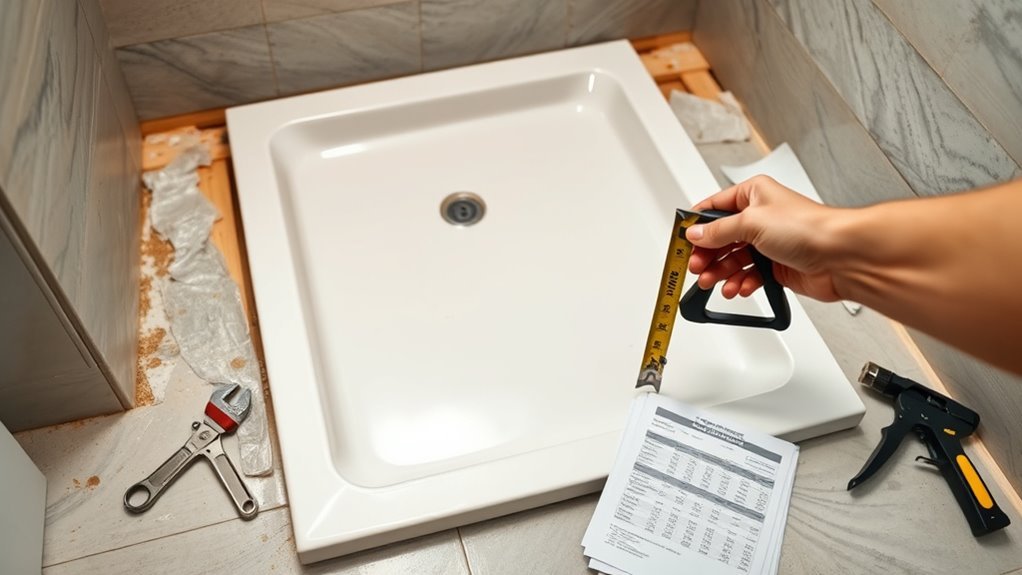
How Much to Replace a Shower Pan: 3 Key Costs
Replacing a shower pan typically costs you three key things: materials, labor, and hidden expenses. The type of shower pan you choose plays a big role in the price. For example, fiberglass pans are usually cheaper, while custom tile options can cost a lot more.
You’ll pay anywhere from $150 to $3,000 depending on the pan type. Labor usually runs about $350 to $570, but don’t forget that removal and plumbing work can add extra costs.
Sometimes, hidden issues like mold or repairs pop up during replacement. These problems can tack on an additional $600 to $1,600.
Planning ahead really helps keep these surprises to a minimum. Knowing these basics prepares you for what’s next in the process, so you’re not caught off guard.
Key Takeaways
- Shower pan replacement typically costs between $1,200 and $3,000, including materials and labor.
- Material choice impacts cost: fiberglass or acrylic pans range from $150 to $620, while custom tile pans exceed $2,000.
- Professional installation fees range from $350 to $570, with removal of old pans costing about $250.
- Additional expenses may include plumbing modifications ($45–$200/hour), waterproofing, permits ($30–$500), and disposal fees (~$250).
- Hidden issues like mold or structural repairs can add $600 to $1,600, so budgeting extra is essential.
Shower Pan Replacement Costs: What to Expect
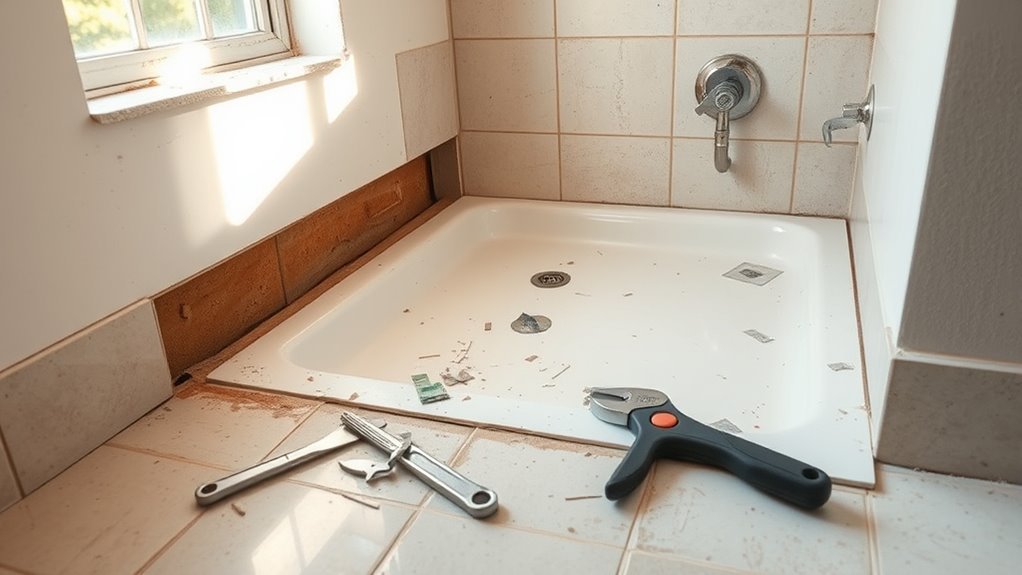
While the cost of replacing a shower pan varies, you can generally expect to spend between $1,200 and $3,000, depending on the materials and labor involved. Shower pan replacement costs include demolition, removal, waterproofing, and installation.
Replacing a shower pan typically costs between $1,200 and $3,000, covering materials and labor.
Materials play a big role here. Fiberglass or acrylic pans typically cost between $150 and $620, whereas custom tile or stone pans often exceed $2,000.
Labor covers demolition, disposal, and waterproofing, with additional expenses if water damage requires structural repairs. Hiring a professional installer guarantees proper sealing and durability, which helps prevent future water damage, but it can be pricier than a DIY approach.
If you have the skills and tools, DIY installation might save money. Just keep in mind it demands careful attention to waterproofing and installation details to avoid costly mistakes.
Installation and Labor Expenses for Shower Pan Replacement
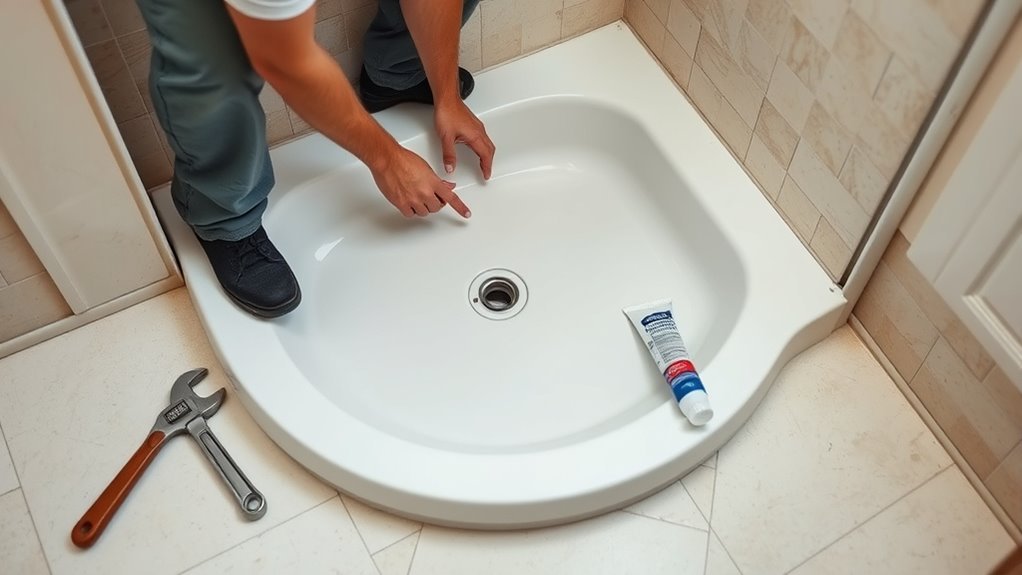
Understanding the costs involved in installation and labor is key to budgeting for your shower pan replacement. Shower pan installation by professionals typically ranges from $350 to $570, depending on project complexity.
Labor costs include removing the old pan, which adds about $250, and plumbing modifications that can run $45 to $200 per hour. You might also face added expenses for waterproofing and sealing to guarantee durability.
Choosing professional help assures expertise but increases replacement costs. Alternatively, a DIY installation can lower your final price to between $220 and $520, though it demands proper tools and skills.
Factoring in all these elements helps you anticipate the total labor and installation expenses accurately, safeguarding your project stays within budget without surprises.
Hidden and Additional Costs in Shower Pan Replacement
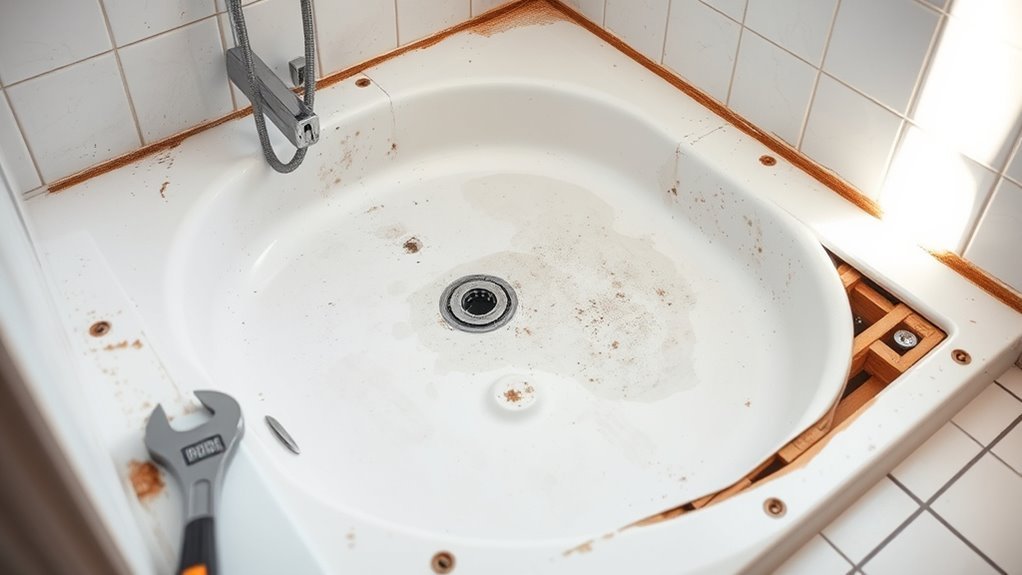
Because shower pan replacement often uncovers hidden issues, you should prepare for extra expenses beyond the initial installation. Hidden costs like plumbing modifications and structural repairs can add $600 to $1,600 to your project.
Unexpected issues such as mold damage or water-damaged subflooring may require additional expenses. Don’t forget permits, which can range from $30 to $500, and disposal fees for removing old materials, typically around $250.
You’ll also need to budget for waterproofing and sealing to guarantee long-term leak prevention and proper installation. These additional expenses are often overlooked but essential to avoid bigger problems later.
Planning for these costs upfront helps you manage your budget and ensures your shower pan replacement is thorough and lasting. It’s always better to be prepared than caught off guard!
Frequently Asked Questions
How Much Does a Plumber Charge to Replace a Shower Pan?
You’ll typically pay a plumber between $350 and $570 to replace a shower pan. Additional expenses for plumbing changes, disposal, or permits can increase the total cost, sometimes reaching over $2,500 depending on the job’s complexity.
How Much Would a Plumber Charge to Replace a Shower Tray?
You’d typically pay a plumber between $350 and $570 to replace a shower tray, but if your project needs plumbing changes or extra repairs, the cost can easily rise above $1,000.
Can You Replace a Shower Pan Without Replacing the Whole Shower?
You can replace a shower pan without swapping the whole shower—like changing a single tile in a mosaic. Just make sure the surrounding area’s solid, and check for hidden damage before you plunge into the repair.
What Is the Most Expensive Part of a Bathroom Remodel?
The most expensive part of a bathroom remodel is usually replacing the shower pan, especially if you choose custom materials. Labor, plumbing, and waterproofing can also add up, making it the biggest cost you’ll face.
Conclusion
Replacing your shower pan requires careful consideration of costs, from installation to hidden hassles. You’ll want to weigh labor fees, material marks, and unexpected expenses to prepare properly.
By planning proactively, you’ll prevent pricey pitfalls and guarantee a smooth, successful swap. Remember, smart shopping and strategic selections save you stress and spare your savings.
So, stay savvy, stay sensible, and step confidently into your shower’s stylish, sturdy new start. Being aware of how much to replace a shower pan and understanding the key costs involved helps you budget better and avoid surprises. When you keep an eye on labor, materials, and those sneaky hidden expenses, the whole process feels easier and more manageable. In the end, a well-planned replacement means a durable, attractive shower pan that enhances your bathroom without breaking the bank.