
Why Is It Called Pan’s Labyrinth?
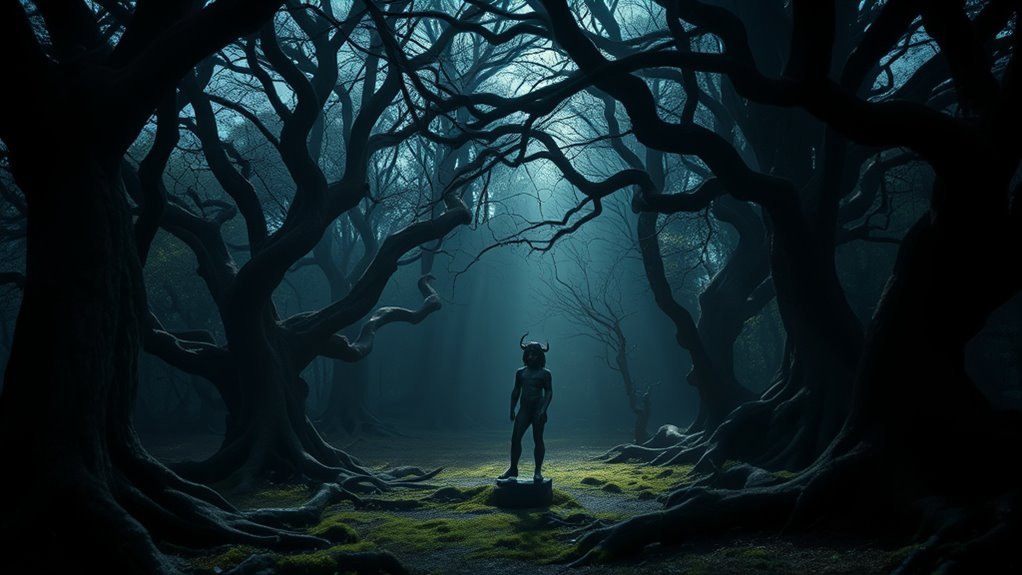
You’ll find *Pan’s Labyrinth* gets its name from the mythological god Pan, who symbolizes nature, mystery, and primal forces. The faun, inspired by Pan, guides you through a labyrinth that acts as a portal between reality and fantasy.
This maze represents your journey into hidden knowledge and the unknown.
The title captures the film’s deep mythic and symbolic themes, blending innocence with darkness. Keep exploring, and you’ll uncover how these myths shape the story’s heart.
Key Takeaways
- The title references Pan, the Greek god symbolizing nature, music, and the wild. It really highlights the film’s mythic themes.
- The faun character embodies Pan’s primal and magical qualities. He acts as a guide to hidden knowledge.
- The labyrinth is like a symbolic portal that bridges reality and fantasy. This reflects Pan’s role as a guide.
- The myth of Pan enriches the story by linking innocence with darker, mysterious forces.
- Overall, the title signals the film’s exploration of primal instincts, self-discovery, and moral growth through mythological symbolism.
Why Pan’s Mythology Shapes *Pan’s Labyrinth*’s Title
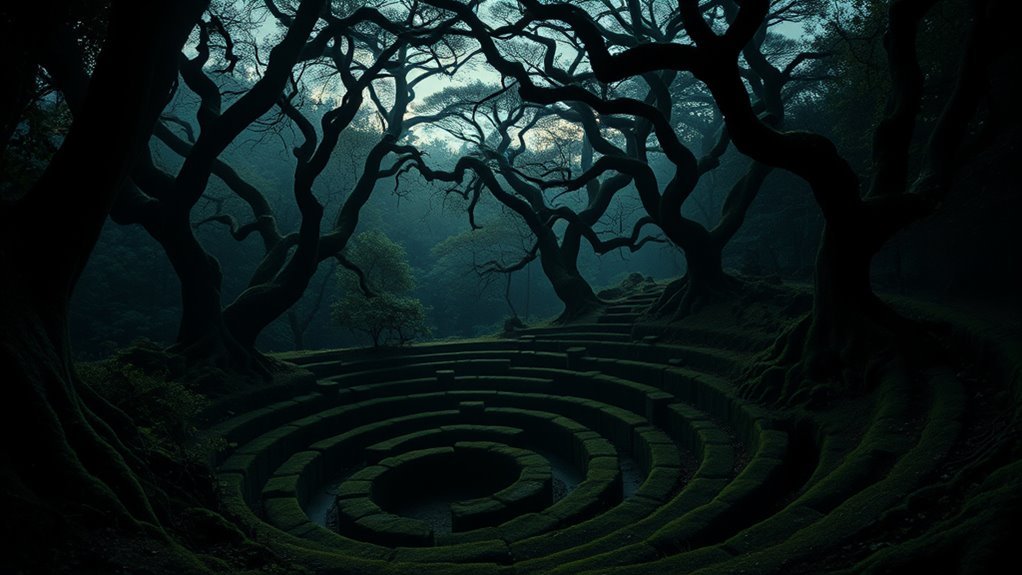
Although you might not immediately connect the film to Greek mythology, *Pan’s Labyrinth* draws its title from the god Pan, a symbol of nature, music, and the wild. Pan’s mythology deeply influences the story’s mythic themes, especially through the faun, a mythic creature inspired by Pan himself.
This faun embodies the connection between innocence and darker forces, highlighting the film’s mythological symbolism. The labyrinth acts as a portal, bridging reality and fantasy, much like Pan’s role as a guide to hidden knowledge.
Del Toro uses this mythology influence to enrich the narrative, intertwining the primal with the magical. By referencing Pan, the title signals the film’s exploration of temptation, nature, and the mysterious boundary between childhood and the unknown.
How the Labyrinth Reflects Ofelia’s Journey in *Pan’s Labyrinth*
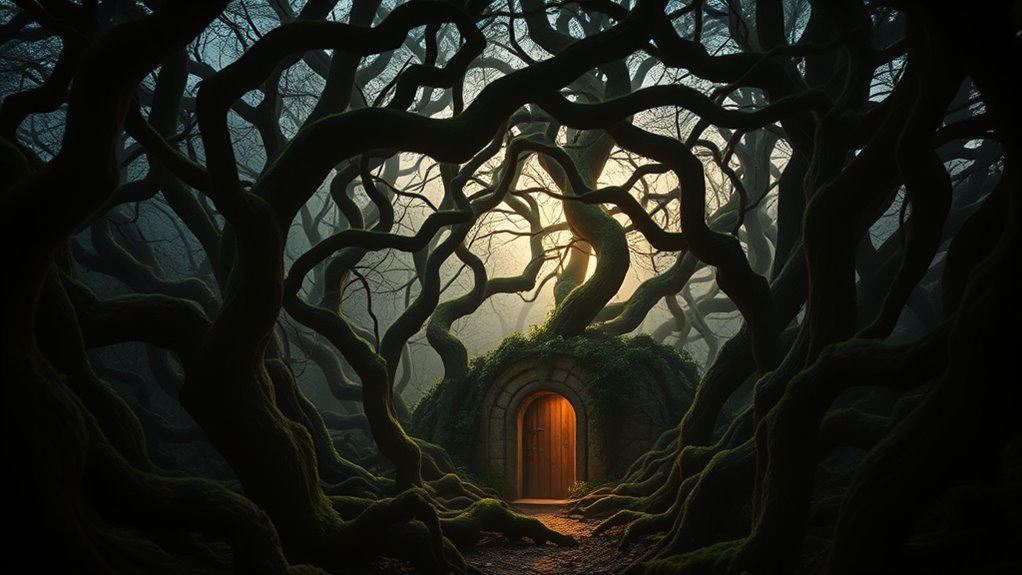
When you follow the labyrinth in *Pan’s Labyrinth*, you’re tracing Ofelia’s inner journey of self-discovery and moral growth. The labyrinth acts as a bridge between her harsh reality and the fantasy world she escapes to, symbolizing her internal journey.
Each twist and turn represents the challenges she must face, including magical tasks that test her bravery and moral sacrifices demanding her ethical strength. Through this symbolism, the labyrinth reveals her transformation from mere obedience to moral independence.
Ofelia’s journey isn’t just physical—it’s a deep exploration of self-discovery where she navigates complex emotions and difficult choices. The labyrinth perfectly mirrors this path, highlighting how her fantasy world reflects her evolving sense of justice and innocence amid adversity.
Frequently Asked Questions
Why Is Pan’s Labyrinth Called Pan’s Labyrinth?
You’ll find it’s called Pan’s Labyrinth because the faun, inspired by Pan, guides you through a mythical maze that symbolizes your journey between fantasy and reality, nature and innocence, blending ancient myths with your inner discovery.
What Is the Meaning of Pan’s Labyrinth?
You’ll find that over 90% of viewers see Pan’s Labyrinth as a journey through innocence and darkness. It means you’re steering a mystical maze where reality and myth blur, guiding your inner growth and moral choices.
Are Labyrinth and Pan’s Labyrinth the Same?
No, labyrinth and Pan’s Labyrinth aren’t the same. A labyrinth is a general maze, while Pan’s Labyrinth refers specifically to the film’s mystical maze tied to myth, symbolizing a journey through both physical and spiritual challenges.
Why Did the Girl in Pan’s Labyrinth Eat the Grapes?
You see, the girl ate the grapes because temptation got the best of her, even though she was warned not to. Her choice showed disobedience, leading to danger and consequences she couldn’t avoid in that moment.
Conclusion
You walk through *Pan’s Labyrinth* not just as a story but as a doorway where myth and reality dance together. Pan’s ancient magic weaves through Ofelia’s trials like a shadow, guiding you through twists and turns of her journey.
Just like a labyrinth, the film’s title invites you to get lost and find yourself. It reminds you that sometimes the path to understanding is as mysterious as the maze itself. The name *Pan’s Labyrinth* perfectly captures this blend of fantasy and reality, mystery and discovery.
In the end, the title isn’t just a name—it’s an invitation. It draws you into a world where myth intertwines with the real, much like the labyrinth that challenges Ofelia. So, why is it called *Pan’s Labyrinth*? Because it’s a journey through magic, mystery, and self-discovery, all wrapped in the tangled beauty of a labyrinth.