Where Does the Egg Come From in a Chicken?
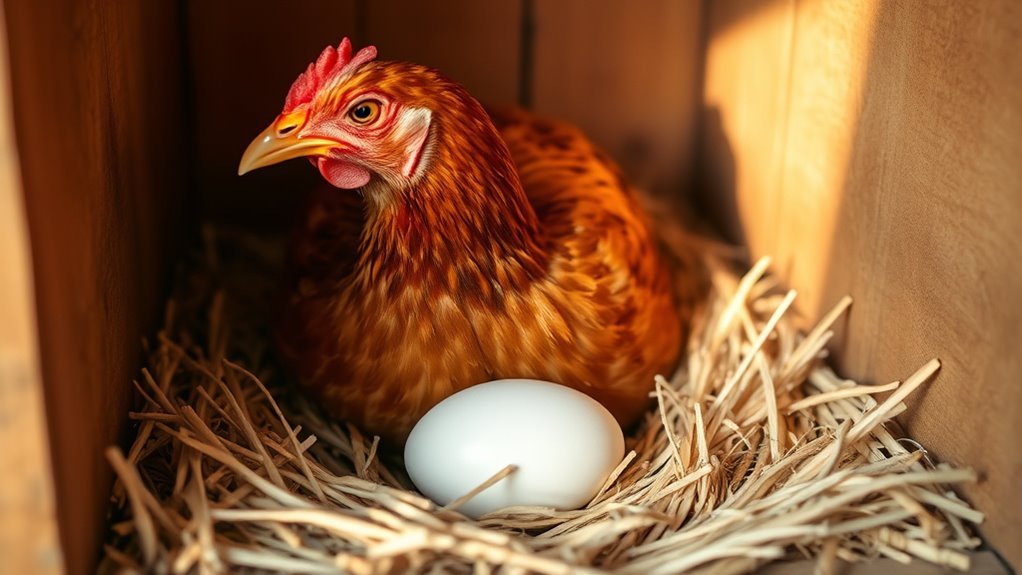
You get eggs from hens because their ovaries develop yolks that grow and mature over several days. The yolk is the yellow part you see in an egg, and it’s the starting point for making an egg. Once the yolk is mature, it’s released in a process called ovulation, which kicks off the whole egg formation.
After ovulation, the yolk begins its journey through the hen’s oviduct. As it travels, layers of egg white, membranes, and finally a hard shell form around the yolk. This layering process protects and nourishes the yolk inside.
Interestingly, hens typically go through this process roughly every day, which is why you get fresh eggs so often.
Keep exploring to understand how each part of the egg is carefully made and how nature puts it all together perfectly. It’s pretty amazing how a simple egg comes from such a detailed and natural process!
Key Takeaways
- The egg starts as a tiny yolk developing inside the hen’s ovary. Once it’s mature, the yolk is released from the ovary during ovulation.
- After that, the yolk enters the oviduct. Here, egg white and membranes get added around it.
- Next, the egg moves to the uterus where the shell forms and gets its color.
- Finally, the fully formed egg is laid about 24 to 26 hours after ovulation. It’s quite a process, isn’t it?
Yolk Development and Release in the Hen’s Ovary
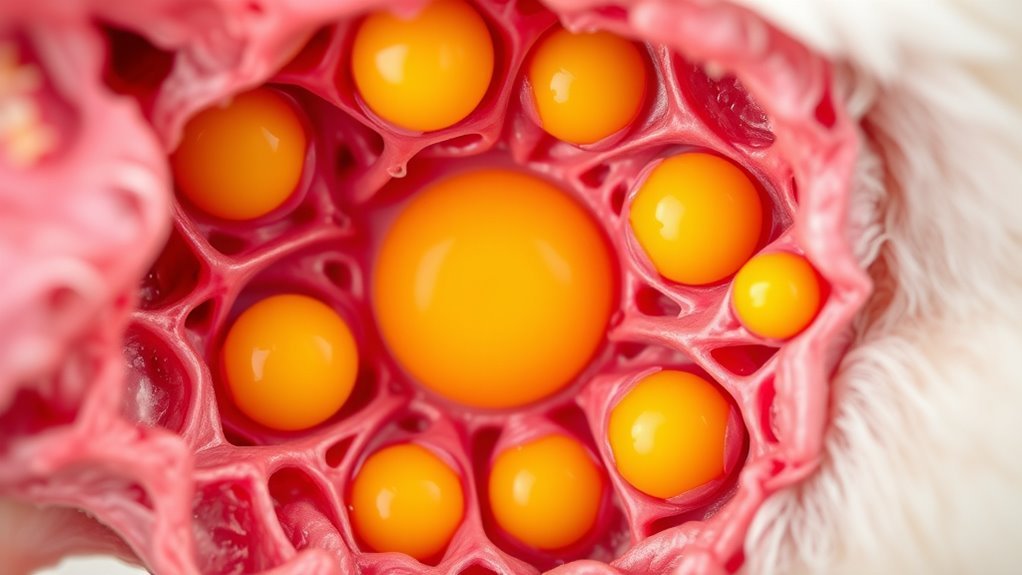
Although you might not see it, your hen’s ovary is a busy site where yolks start as tiny ova and grow by gathering nutrients and lipids over several days. This yolk development begins with a small ovum that steadily enlarges inside the ovary.
When the yolk is fully mature, hormonal signals trigger ovulation, prompting the yolk release from the hen’s ovary. This process takes about 30 minutes and happens roughly every 24 to 26 hours.
Once released, the yolk enters the oviduct, marking the first essential step in egg formation. If fertilization occurs, it happens around this stage before the yolk continues its journey.
Understanding this cycle highlights how the ovary and hormonal cues coordinate to guarantee continuous yolk production. It’s pretty fascinating how everything works together so smoothly, isn’t it?
Formation of Egg White, Membranes, and Shell in the Oviduct
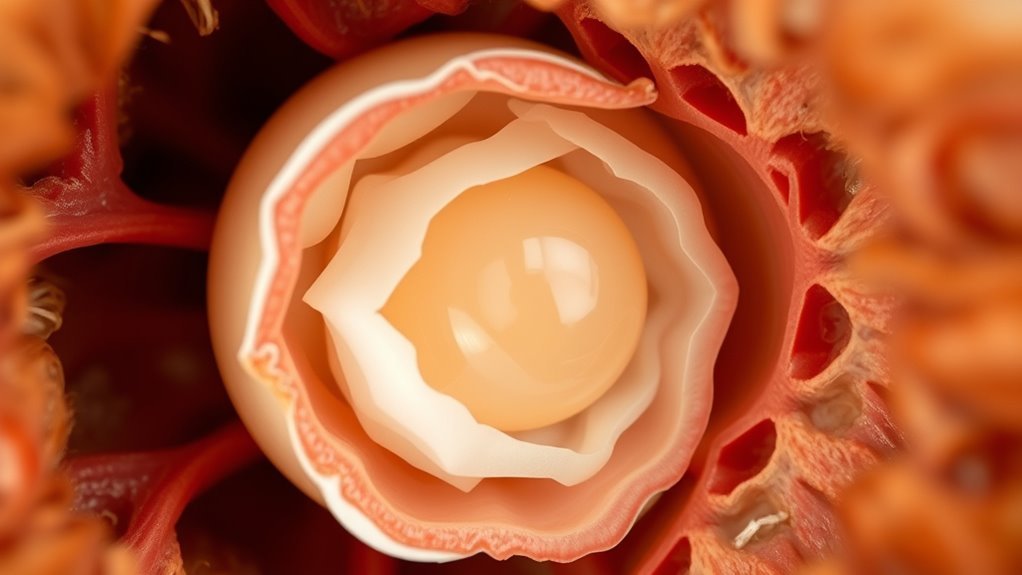
Once the yolk enters the oviduct, your hen’s body quickly starts adding layers of egg white in the magnum. This is where proteins coat the yolk to form the albumen.
About an hour later, the inner and outer membranes develop in the isthmus. These membranes surround the albumen and yolk.
Next, the egg moves to the uterus, also called the shell gland, where shell formation happens over roughly 20 hours. Here, calcium carbonate gets deposited to build the hard egg shell.
Depending on the breed, pigments might be added during the last hours of shell formation. This gives the egg its color.
Proper nutrition, especially calcium and vitamin D, really supports strong membranes and a durable egg shell. It all plays a part in this intricate egg formation process in the oviduct.
Frequently Asked Questions
How Do Chickens Actually Make Eggs?
You watch as a yolk moves through the oviduct, where layers of white and membranes form. Then, calcium builds the shell while you rest. Finally, a protective coating seals the egg before it’s laid.
Is the Chalaza Chicken Sperm?
No, the chalaza isn’t chicken sperm. It’s a protein structure that keeps the yolk centered inside the egg. Chicken sperm fertilizes the egg separately, long before the chalaza forms during egg white production.
When a Chicken Lays an Egg, Where Does It Come Out?
When a chicken lays an egg, it comes out through the cloaca, which expands to let the egg pass. You’ll notice the egg has a protective coating that helps keep bacteria out as it leaves.
Do Eggs Come From Chickens or Roosters?
Eggs come from hens, not roosters. You’ll find that hens lay eggs naturally, whether or not a rooster is around. Roosters only fertilize eggs; they don’t produce or lay them themselves.
Conclusion
Now that you know where the egg comes from, you can really appreciate the hen’s amazing process. Imagine a farmer named Sarah watching her hens lay eggs every day. She sees the yolk develop in the ovary, then move through the oviduct.
Along the way, it gets coated with egg white, membranes, and finally a shell. This natural sequence is pretty incredible. It reminds you just how precise nature is.
From simple cells inside the hen to the eggs we enjoy every day, it’s a fascinating journey. Understanding where the egg comes from helps us see how amazing hens really are. Nature’s process of egg formation is both complex and beautiful, showing that every egg is a small miracle created through a careful, natural cycle.