

What Part of a Chicken Do Eggs Come Out Of?
Eggs come out of a chicken’s cloaca, which is a single opening that serves several important functions. It handles not just egg-laying but also waste elimination and mating. This might sound a bit surprising, but it’s a clever setup.
When the egg is ready, the cloaca flips inside out. This creates a clean path so the egg doesn’t touch any waste.
This smart design keeps the egg safe and the hen healthy.
If you want to understand how this unique structure works and why it’s so important, there’s plenty more to explore. It’s fascinating how nature designed chickens to manage all these tasks through one opening!
Key Takeaways
- Eggs come out of the chicken’s cloaca, which is a single opening used for both reproductive and excretory functions.
- The egg actually forms inside the oviduct before it moves down to the cloaca to be laid.
- When the chicken is ready to lay, the cloaca flips inside out. This helps the egg come out without getting contaminated.
- The cloaca acts like a clean passage, so the egg doesn’t touch any waste as it exits.
- Once the egg is laid, the cloaca goes back to its normal position to handle waste elimination and other functions.
Where Do Chickens Lay Eggs From?
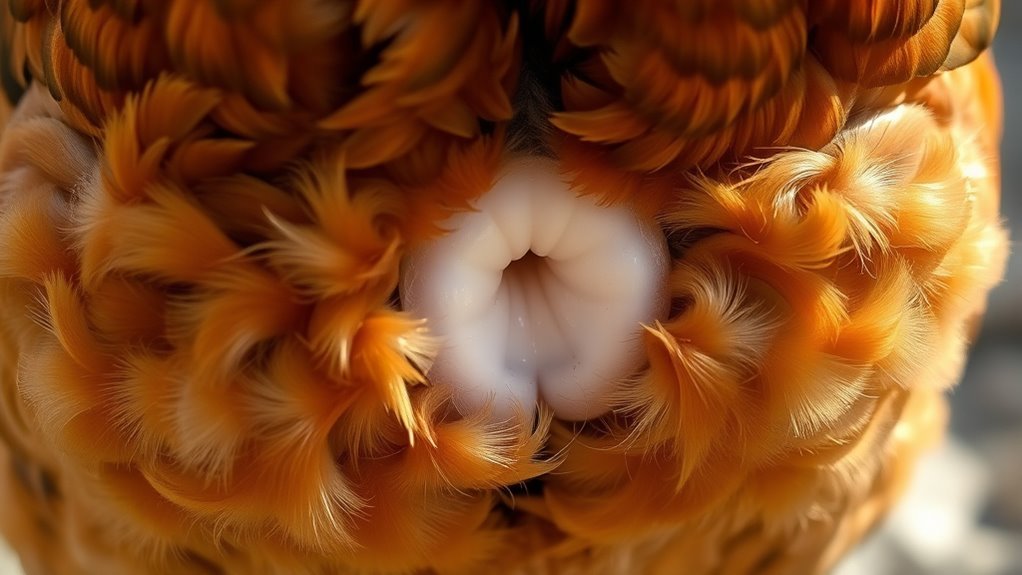
Although it might seem surprising, chickens lay eggs through a single opening called the cloaca. This reproductive opening serves multiple purposes, including egg-laying, excretion, and mating.
Inside your backyard chickens, the egg forms in the oviduct, where it gains its shell before heading toward the cloaca. When it’s time to lay an egg, the cloaca flips inside out, allowing the egg to pass through safely without any contact with waste.
So, despite sharing this opening for different functions, the egg doesn’t touch anything unpleasant during the process. Understanding this unique anatomy helps you appreciate how efficient and fascinating egg-laying really is in backyard chickens.
It’s pretty cool how nature combines several roles into one small but essential part of the bird’s body.
How the Cloaca Helps Chickens Lay Eggs and Poop
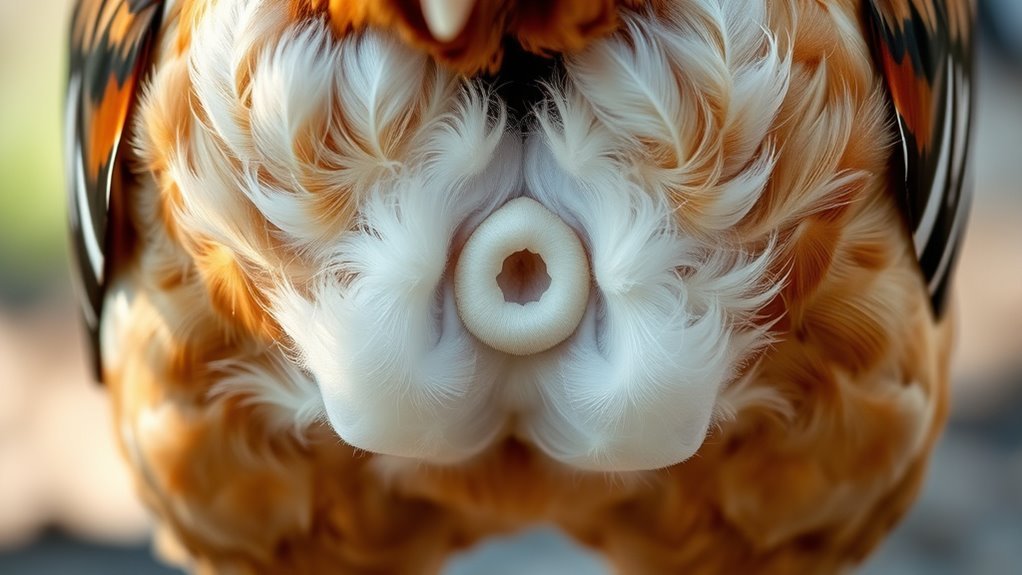
When a chicken lays an egg, the cloaca plays an essential role by flipping its lining inside out. This creates a clean passage for the egg to exit without touching waste.
This clever mechanism guarantees the egg passes safely from the oviduct into the cloaca, which is part of the chicken’s reproductive system. The cloaca actually serves a dual purpose in chicken anatomy.
It handles both egg-laying and waste elimination through the same opening. After the egg is laid, the cloaca returns to its normal state, allowing waste to exit separately.
This efficient design prevents contamination, keeping eggs clean and hens healthy. Understanding the cloaca’s function helps you appreciate how chickens manage two critical processes—reproduction and excretion—through one specialized opening.
Frequently Asked Questions
How Many Times Do Hens Lay Eggs in a Year?
You can expect hens to lay around 250 to 300 eggs per year. Factors like breed, age, and environment affect this, and hens usually slow down after a few years or during molting periods when they temporarily stop laying.
Is the Chalaza Chicken Sperm?
You might think the chalaza’s a secret messenger, but it’s not chicken sperm. It’s like the egg’s anchor ropes, twisting to hold the yolk steady, made of protein, keeping everything balanced inside your fresh eggs.
Why Do Chickens Scream When They Lay Eggs?
You’ll notice chickens scream when laying eggs because the process stretches their reproductive tract, causing discomfort. Their vocalizations signal vulnerability or relief, which is totally natural and not necessarily a sign they’re in distress.
Where Do Chickens Push Eggs Out?
You push eggs out through the cloaca, a single opening that handles eggs, waste, and mating. During laying, it flips inside out to keep the egg clean as it exits your body safely and hygienically.
Conclusion
You might picture eggs gently sliding from a soft nest, but they actually come from the chicken’s cloaca—a single opening used for both laying eggs and pooping. It’s a surprising contrast: one small part of the chicken handles two very different jobs with ease.
So next time you crack an egg, remember it’s more than breakfast—it’s nature’s clever design, blending two functions in one simple, efficient exit point. The cloaca is key to how chickens lay eggs, showing just how smart and efficient nature can be.
Understanding where eggs come from helps us appreciate chickens even more. This small but mighty part of the chicken’s body plays a big role in the egg-laying process. So, when you enjoy your eggs, you’re actually seeing nature’s amazing design at work, combining egg laying and waste elimination in one spot. Pretty cool, right?