Where Do Eggs Come From in Chickens?
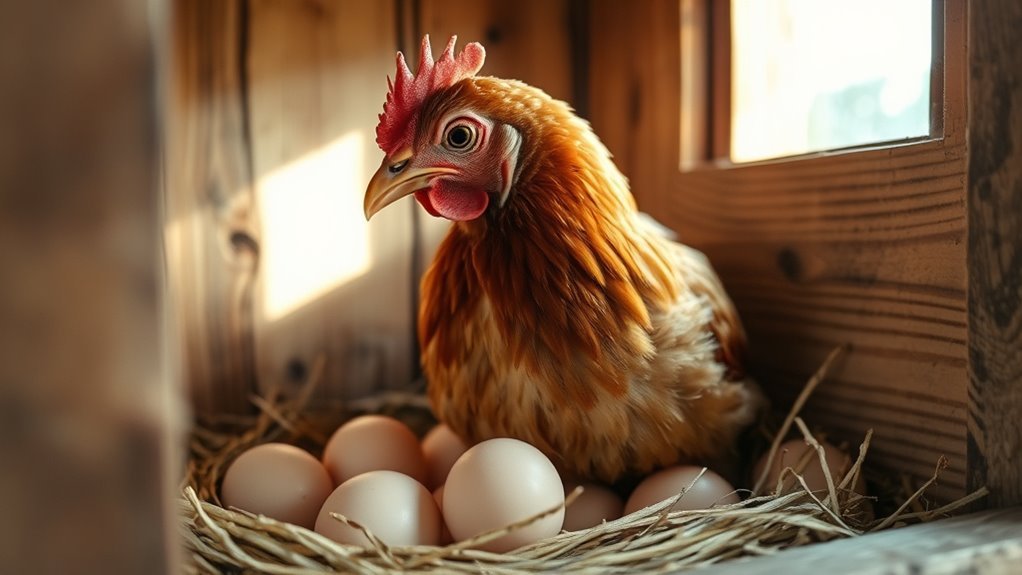
You get eggs from hens, where each egg forms inside her body over about 25 hours. It all starts with yolk development in the ovary that takes around two weeks. This yolk is the core of the egg, and it grows until it’s ready to move on.
Then, the yolk moves through her oviduct, where layers of egg white and membranes are added. It’s like building the egg step by step.
Finally, a hard shell forms around the egg before it exits through the cloaca.
It’s pretty amazing how nature works, right? Keep exploring, and you’ll discover even more fascinating details behind this natural process of where eggs come from in chickens.
Key Takeaways
- Eggs develop inside the hen’s ovary, starting with the yolk formation over about two weeks.
- The yolk is released into the oviduct during ovulation for further egg formation.
- Egg white is added in the magnum section of the oviduct, taking around three hours.
- Shell membranes and calcium carbonate shell form in the isthmus and shell gland respectively.
- Fully formed eggs exit the hen’s body through the cloaca during the laying process.
Egg Formation and Development Inside Hens
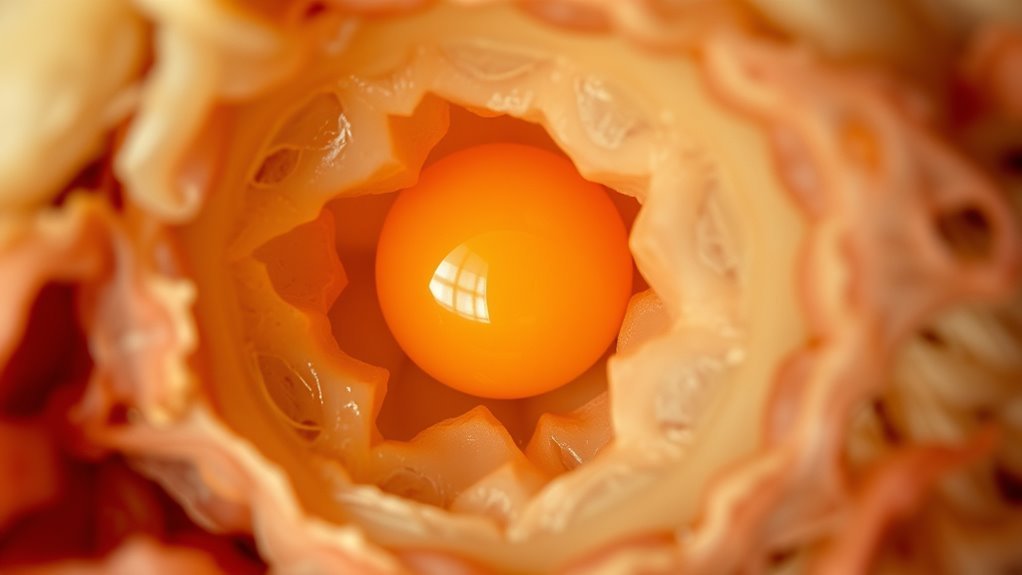
Although you might only see the finished egg, its formation inside a hen is a complex, timed process. It starts in the ovary, where egg yolks develop over about two weeks before ovulation releases one into the infundibulum, the funnel-shaped start of the oviduct.
From there, the egg white, or albumen, is added in the magnum over roughly three hours. Next, shell membranes form around the yolk and egg white in the isthmus, taking about 1.5 hours.
Finally, in the shell gland, the hen deposits calcium carbonate over 20 hours, completing the egg formation. This careful sequence guarantees the yolk, egg white, membranes, and sturdy shell come together in perfect timing during egg development inside the hen.
Egg Laying Process and How Eggs Exit the Hen
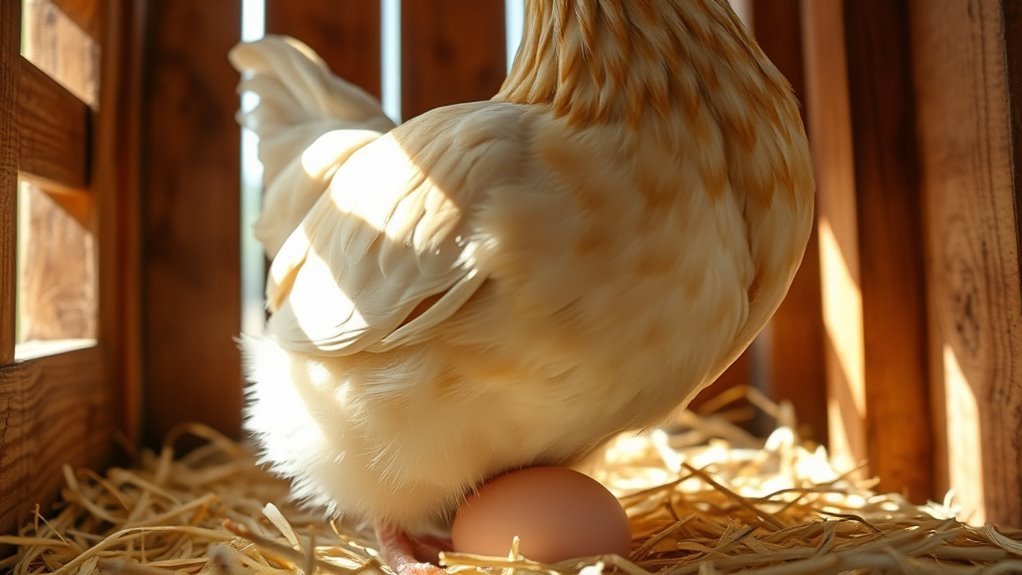
How does an egg actually leave the hen’s body once it’s fully formed? It all starts in the ovary, where the egg yolk, or ovum, develops. The ovum then travels through the oviduct, where layers of egg white and membranes form around it.
When it reaches the shell gland, the shell made of calcium carbonate is deposited, completing egg formation. This entire process takes about 25 hours.
Once the egg is fully formed, it moves to the cloaca, the chamber where the reproductive and excretory tracts meet. From there, the hen expels the egg during the egg exit process.
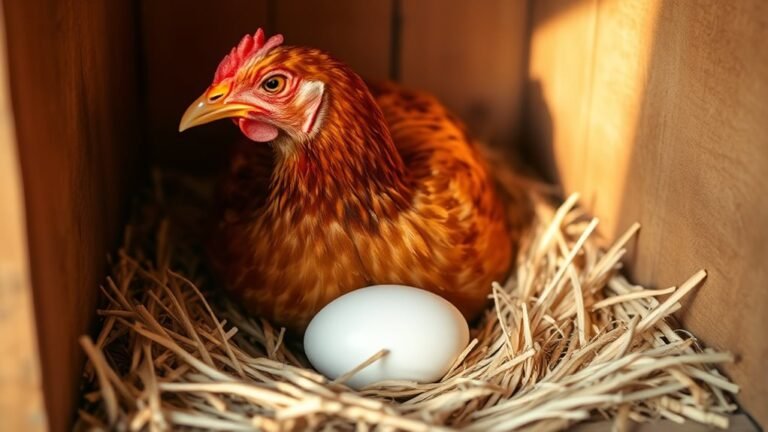
Hens typically lay eggs once a day. They repeat this cycle to lay eggs regularly and ensure the continuation of their species.
Frequently Asked Questions
Where Do Chickens Drop Eggs From?
Chickens drop eggs from their cloaca, a single opening near their tail. When you watch, you’ll see the cloaca briefly protrude as the egg passes through, then it lands where the hen’s nesting or standing.
How Do Chickens Actually Make Eggs?
You watch as a yolk is released, travels through the oviduct, gets coated with albumen, membranes, and a shell. This whole process takes about 25 hours before the chicken lays a complete egg.
Do the Eggs We Eat Come From Hens?
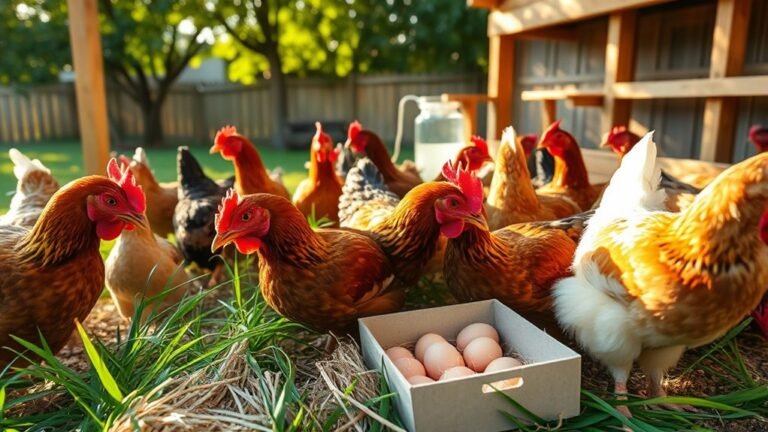
Yes, the eggs you eat come from hens. They lay eggs regularly, even without a rooster, and these eggs are usually unfertilized. You collect them from hens, and they don’t develop into chicks.
How Do Chickens Produce Eggs Without Males?
You don’t need a rooster for hens to lay eggs because their bodies produce eggs hormonally. The ovary releases yolks, and the oviduct adds whites and shells, creating eggs daily, even without fertilization by a male.
Conclusion
When you think about where eggs come from, imagine a tiny miracle unfolding inside the hen—a symbol of new beginnings and life’s gentle rhythm. Each egg isn’t just food; it’s a story of nature’s careful craftsmanship, starting deep within and ending with a delicate gift laid just for you.
Understanding this process connects you to the cycle of life and reminds you how something so simple holds so much meaning. Knowing where eggs come from in chickens helps us appreciate the natural wonder behind every shell, making each bite taste a little more special. It’s amazing to realize that what seems like an ordinary egg is actually part of a beautiful, natural rhythm. So next time you enjoy an egg, remember the incredible journey it took from inside the hen to your table.