Is It Okay to Eat Fertilized Chicken Eggs Safely?
Yes, you can safely eat fertilized chicken eggs as long as you store and handle them properly. Fertilized eggs are just like regular eggs in terms of safety and nutrition.
The key is keeping them fresh and preventing any embryo development or bacterial growth. Keep them refrigerated at or below 40°F (4°C) to stop embryo development and prevent bacteria. Use them within a few days, and avoid eggs with cracks.
Cooking eggs thoroughly until both yolk and white are firm is really important. Handling eggs gently and following these simple steps guarantees safety and freshness.
Keep going to find out how to handle and store fertilized eggs the right way. It’s easier than you think!
Key Takeaways
- Fertilized eggs are safe to eat when stored properly and cooked thoroughly. Just make sure to keep them in the fridge at the right temperature.
- Refrigeration at or below 40°F (4°C) prevents embryo development and keeps eggs fresh. So, always store your eggs cold to stop them from going bad.
- Cracks in eggs increase contamination risk; handle eggs gently to avoid damage. Be careful when you grab them so you don’t accidentally crack the shell.
- Thorough cooking kills harmful bacteria, making fertilized eggs safe to consume. So, cooking them well is key to staying safe.
- Use fertilized eggs within 3-4 days of refrigeration for optimal safety and freshness. That way, you’ll enjoy them at their best!
Can You Safely Eat Fertilized Chicken Eggs? What You Need to Know
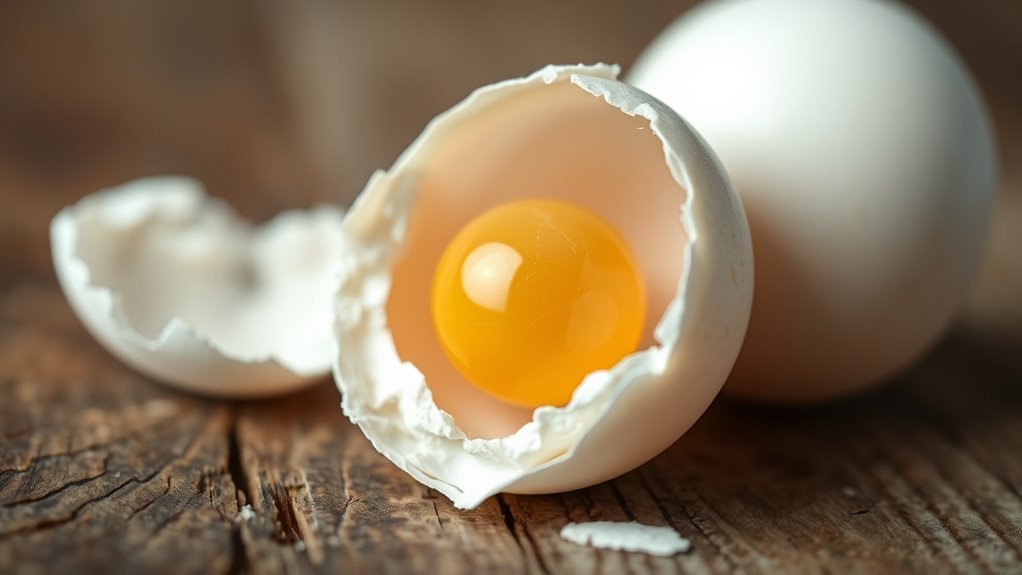
Although fertilized chicken eggs might raise questions, you can safely eat them as long as you store and handle them properly. Fertilized eggs are safe to eat because embryo development only begins under specific incubation conditions—warm temperatures that don’t occur during proper refrigeration.
When you refrigerate eggs promptly, you prevent chick development, ensuring they remain safe and fresh. There’s no difference in nutritional value between fertilized and unfertilized eggs when cooked thoroughly.
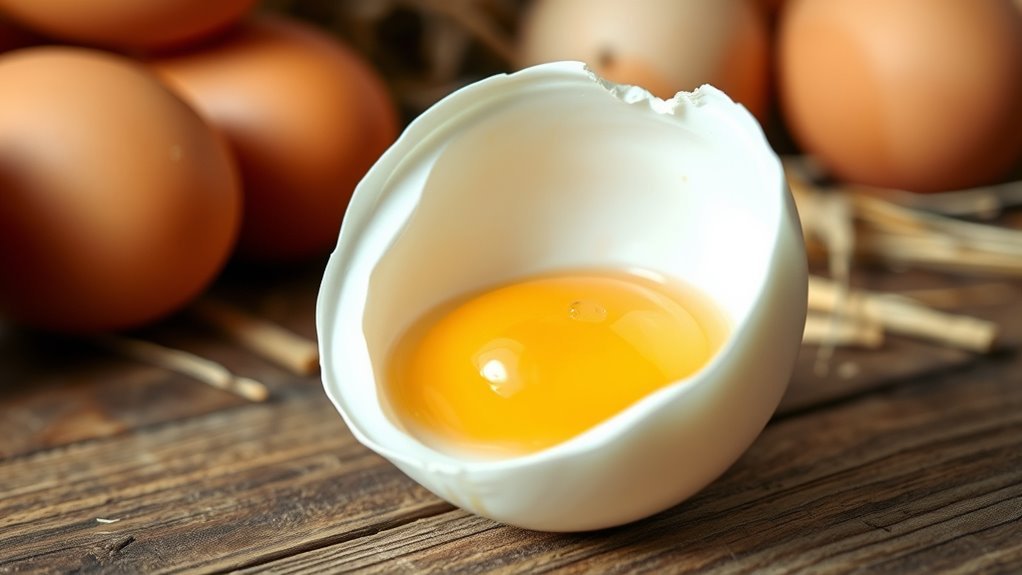
You might notice a blood spot sometimes, but it’s harmless and not an indicator of chick development. Since you can’t reliably tell if an egg is fertilized just by looking or touching, proper egg handling and refrigeration are key to keeping all eggs safe to eat, fertilized or not.
Tips for Safe Handling and Storage of Fertilized Eggs
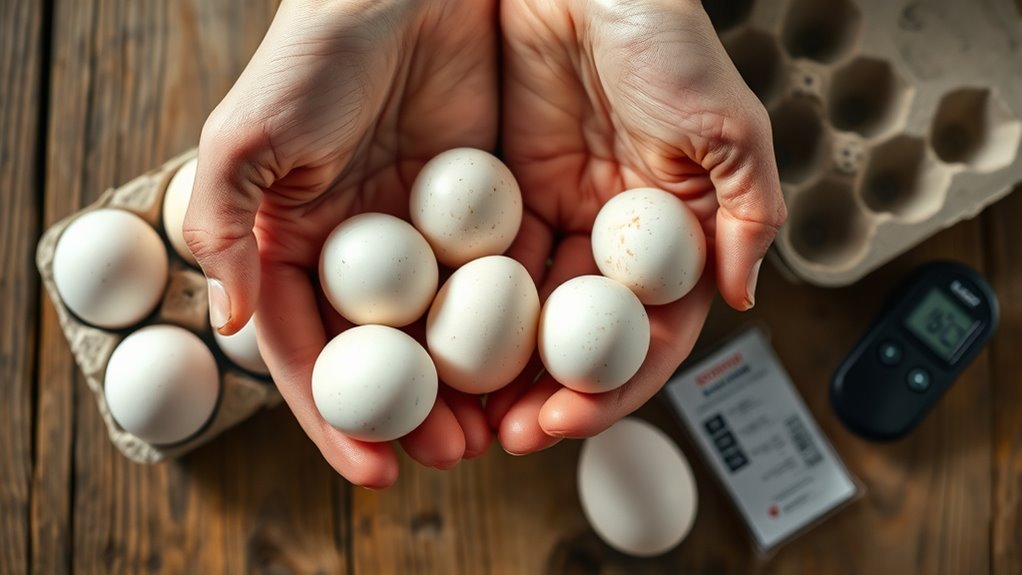
To keep fertilized eggs safe and fresh, you should always store them in the refrigerator at 40°F (4°C) or below. Proper refrigeration slows bacteria growth and prevents embryo development.
Handle fertilized eggs gently to avoid cracks. Cracks allow bacteria to enter and increase the risk of spoilage.
Handle fertilized eggs with care to prevent cracks, which can let bacteria in and cause spoilage.
Use eggs within 3-4 days of refrigeration to maintain freshness. It’s best not to wait too long.
Avoid eating raw eggs or undercooked fertilized eggs, especially if they’re not pasteurized. Bacteria can cause foodborne illnesses, so it’s better to be safe.
When cooking, make sure both the yolk and white are firm. This thorough cooking kills any harmful bacteria.
Following these safe handling and storage tips helps you enjoy fertilized eggs without risking contamination or spoilage. Always prioritize refrigeration, gentle handling, and thorough cooking for the best safety results.
Frequently Asked Questions
Can I Eat Eggs if I Have Coronary Artery Disease?
You can eat eggs if you have coronary artery disease, but keep it moderate—about 3-4 per week. Choose boiled or poached eggs, avoid added fats, and consult your doctor for personalized advice on managing cholesterol.
Why Do You Not Put Farm Fresh Eggs in the Refrigerator?
Think of the bloom as an invisible shield—when you refrigerate farm fresh eggs, you strip that protection away, making them vulnerable to bacteria. So, keeping them at room temperature preserves their natural defense and freshness longer.
How Do Farmers Know if a Chicken Egg Is Fertilized?
You can tell if a chicken egg is fertilized by checking the yolk for a tiny white spot called a blastoderm. Farmers also candle eggs after about a week to spot veins or dark spots inside.
Why Do People Eat Fertilized Chicken Eggs?
You might be surprised, but people eat fertilized chicken eggs for their richer flavor and cultural importance. You’ll find they’re cherished in traditions, seen as more natural, and help prevent waste when hens go broody or eggs are abundant.
Conclusion
You can safely eat fertilized chicken eggs just like regular ones, as long as you handle and store them properly. Did you know that fertilized eggs make up nearly 30% of all eggs produced on small farms?
Just keep them refrigerated, cook them thoroughly, and avoid cracks to reduce any risk. With these simple steps, you can enjoy fertilized eggs without worry and even appreciate the natural cycle behind your breakfast.
In conclusion, fertilized chicken eggs are perfectly safe to eat when stored and cooked correctly. Proper refrigeration and thorough cooking are key to minimizing any health risks. So, whether you’re buying from a small farm or your local market, you can enjoy fertilized eggs just like regular eggs. Embracing fertilized eggs not only adds variety to your meals but also connects you to the natural process of egg production. Remember, safe handling and cooking make fertilized eggs a wholesome and nutritious choice for your breakfast table.