Is It Ok to Eat a Frozen Egg?
You can eat a frozen egg safely if you thaw it properly in the refrigerator and make sure the shell is intact.
Thawing frozen eggs the right way is important to avoid any food safety issues. Avoid using hot water or microwaves to thaw because that can encourage bacteria growth, which you definitely want to steer clear of.
Always check for cracks or leaks before cooking, and discard any damaged eggs to stay safe. It’s better to be cautious here.
Be sure to fully cook thawed eggs and use them within a few days to keep everything fresh and safe.
Keep these tips in mind to handle frozen eggs with confidence and safety. Doing so will help you enjoy your eggs without worry!
Key Takeaways
- Frozen eggs with intact shells are generally safe to eat after proper thawing and cooking. Just make sure you handle them carefully.
- Discard any frozen eggs with cracked or damaged shells to avoid bacterial contamination. It’s better to be safe than sorry.
- Always thaw frozen eggs in the refrigerator or cold water. Never use hot water or the microwave, as that can ruin the egg or cause uneven thawing.
- Inspect thawed eggs carefully for leaks or unusual signs before use. If anything seems off, don’t risk it.
- Fully cook thawed eggs promptly to ensure safety and reduce bacterial risks. Cooking them well is key to enjoying them without worries.
How to Know If Your Frozen Egg Is Safe to Eat
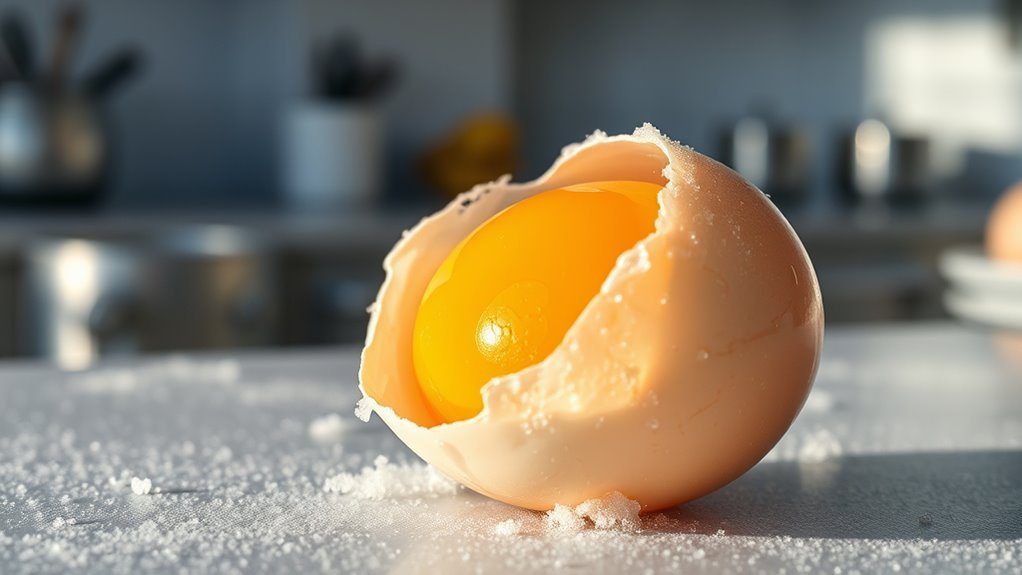
Although freezing can preserve eggs, you need to check their shells carefully before using them. Frozen eggs with intact shell integrity are generally safe to eat after thawing.
If you notice any cracks or damage to the shell, discard the egg immediately to avoid contamination risks. Cracks can allow bacteria to enter, compromising egg safety and quality.
When thawing, always do so in the refrigerator to maintain proper storage conditions and prevent bacterial growth. Also, consider the egg’s freshness before freezing, as freezing doesn’t improve egg quality.
After thawing, inspect eggs for leaks or unusual signs that suggest compromised safety. By following these steps, you can confidently determine if your frozen eggs are safe to eat and maintain good egg safety practices.
Easy Tips to Thaw and Cook Frozen Eggs Safely
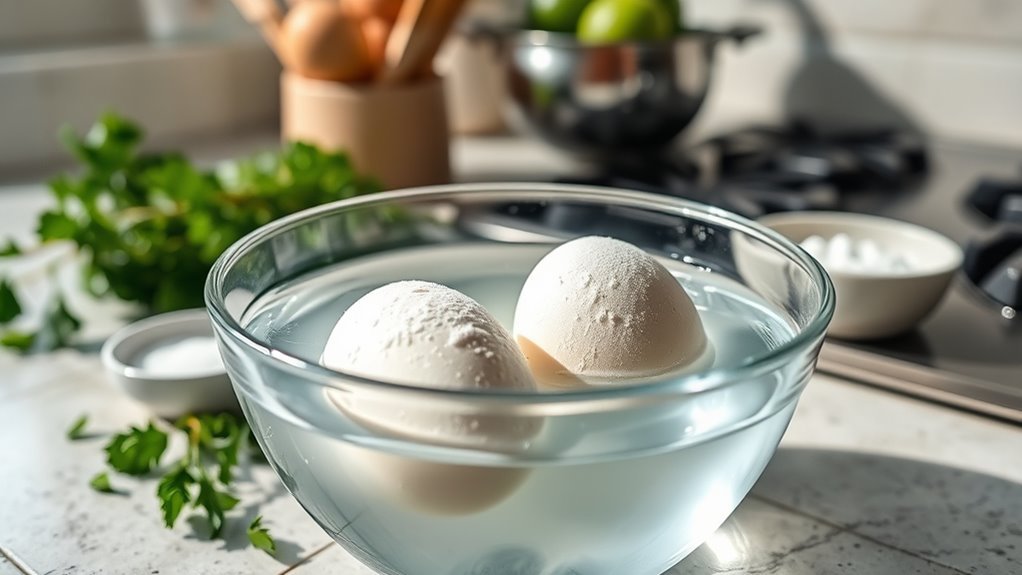
Once you’ve confirmed your frozen eggs are intact and safe to use, knowing how to thaw and cook them properly becomes the next step. When thawing eggs, avoid hot water or microwaves to maintain quality and safety.
Confirm eggs are intact before thawing, and avoid hot water or microwaves to preserve quality and safety.
Instead, thaw frozen eggs in the refrigerator overnight or submerge them in cold water for quicker defrosting. Always check for egg shell cracks after thawing; discard any damaged eggs to prevent contamination.
To guarantee safety, fully cook thawed eggs and use them promptly within a few days. Label your eggs when you freeze eggs to keep track of storage time.
- Thaw frozen eggs in the refrigerator overnight
- Use cold water submersion for faster thawing
- Inspect for egg shell cracks before cooking
- Fully cook eggs to reduce bacterial risks
- Use thawed eggs promptly to maintain quality and safety
Frequently Asked Questions
Is an Egg Ruined if It Freezes?
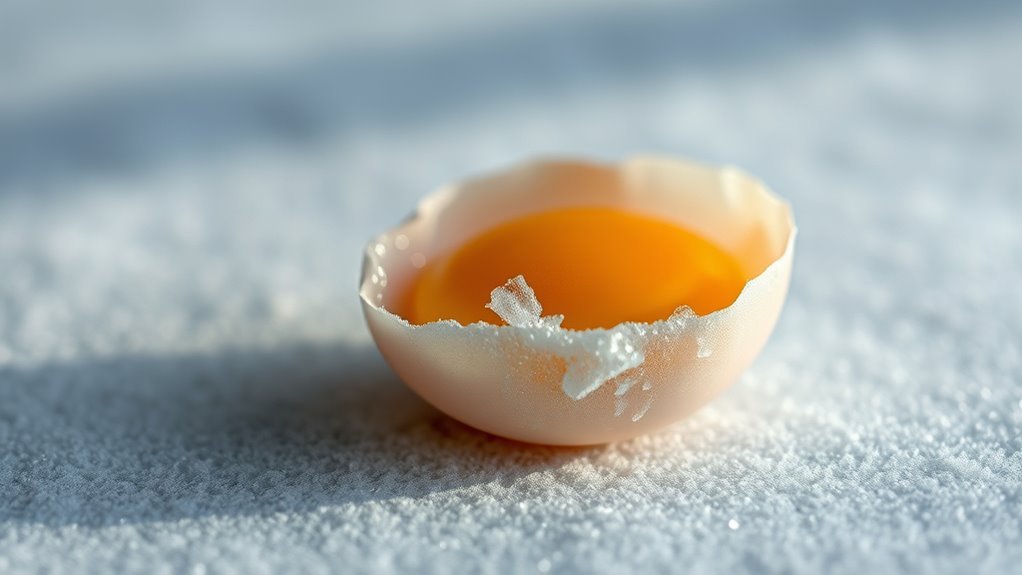
An egg isn’t necessarily ruined if it freezes, but the texture changes. If the shell cracks, it’s unsafe. Intact eggs freeze okay, but you’ll notice a firmer yolk and whites, affecting some recipes.
Can I Cook an Egg That Has Been Frozen?
Yes, you can cook an egg that’s been frozen, but thaw it properly first. Expect the yolk to be firmer and gel-like. Make sure to fully cook the egg to keep it safe and tasty.
Can PCOS Patients Freeze Eggs?
You might wonder if freezing eggs is an option with PCOS — the answer is yes. You can freeze multiple mature eggs, but you’ll want expert hormone guidance to make the process safe and effective for your future.
What to Do if Your Eggs Froze in the Fridge?
If your eggs froze in the fridge, check for cracks first. If shells are intact, thaw them in the fridge, use within a few days, and don’t refreeze. Discard any with damaged or cracked shells to stay safe.
Conclusion
So, you’re wondering if it’s okay to eat a frozen egg? Just like a knight wouldn’t charge into battle without armor, don’t rush eating it without proper thawing.
If your egg froze accidentally, thaw it slowly in the fridge and cook it thoroughly to avoid any risk. This careful approach helps keep things safe and tasty.
With these simple steps, you’ll enjoy your egg safely and deliciously—no need to worry about any icy surprises ruining your meal. Remember, eating a frozen egg is fine as long as you thaw and cook it properly. Taking these precautions ensures your egg is safe to eat and still delicious, so go ahead and enjoy your meal without worries!