

Are Eggs Bad for Dogs to Eat Safely?
You shouldn’t feed your dog raw eggs because they can carry harmful bacteria like Salmonella. This can cause vomiting, diarrhea, and other health issues that no pet owner wants to deal with.
Raw eggs also contain avidin, a protein that blocks biotin absorption. Over time, this could lead to nutritional deficiencies in your furry friend.
Cooked eggs are a much safer option—they’re easier to digest and still packed with nutrients.
By cooking eggs thoroughly and serving them plain, you give your dog a nutritious treat without the risks.
So, if you’re wondering how to feed eggs safely to your dog, stick with cooked eggs. It’s a simple way to add variety and health benefits to your dog’s diet.
Keep exploring to learn more!
Key Takeaways
- Raw eggs can carry harmful bacteria like Salmonella, which might cause your dog to vomit or have diarrhea. So, it’s risky to feed them raw eggs.
- Cooked eggs are a much safer choice. They cut down the chance of bacterial infections but still keep all the good nutrients your dog needs.
- When giving eggs to your dog, make sure they’re cooked plain and chopped into small pieces. This helps prevent choking and keeps your dog away from any harmful additives.
- It’s a good idea to introduce eggs slowly and watch how your dog reacts. This way, you can be sure they digest the eggs well and don’t have any bad reactions.
- Most vets usually don’t recommend feeding raw eggs. Besides the bacteria risk, raw eggs can affect your dog’s ability to absorb biotin, which is important for their health.
Are Raw Eggs Safe for Dogs? Risks You Should Know
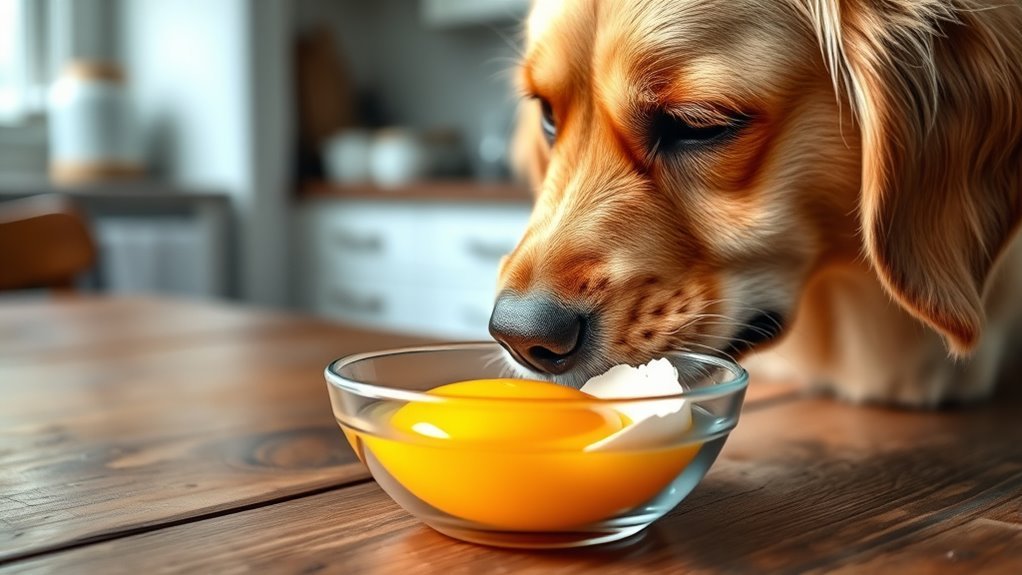
Although raw eggs may seem like a healthy treat, you should be cautious because they can carry harmful bacteria like Salmonella and E. coli that might make your dog sick. Even eggs that look clean can have bacterial contamination.
This can cause problems like vomiting, diarrhea, and bacterial shedding in your dog’s stool. Raw eggs also contain avidin, which hinders biotin absorption and could lead to a biotin deficiency if fed too much.
Veterinarians generally advise against feeding raw eggs because of these safety concerns. Cooked eggs, on the other hand, offer better digestibility and greatly reduce the risk of bacterial infection.
How to Safely Feed Cooked Eggs to Your Dog

When you want to add eggs to your dog’s diet, cooking them thoroughly is vital to eliminate harmful bacteria like Salmonella. Always serve plain cooked eggs, avoiding seasonings, oils, or butter to keep them safe for dogs.
To safely feed, cut the eggs into small, manageable pieces to prevent choking and aid digestion. Introduce cooked eggs gradually, starting with small portions to monitor reactions and ensure your dog tolerates them well.
Adjust portion sizes based on your dog’s size and activity level to avoid overfeeding. By following these steps—thorough cooking, serving plain, offering manageable pieces, and introducing gradually—you can safely feed cooked eggs to your dog, adding a nutritious treat without risking their health.
Frequently Asked Questions
What Is the Number One Most Toxic Food for Dogs?
The number one most toxic food for dogs is chocolate. You shouldn’t let your dog eat it because even small amounts can cause serious health problems or be deadly due to theobromine and caffeine content.
Can Dogs With Lymphoma Eat Eggs?
Yes, you can feed your dog with lymphoma eggs in moderation, but make sure they’re fully cooked. Always check with your vet first to avoid any health risks and support your dog’s nutrition safely during treatment.
Can I Eat Boiled Eggs With H Pylori?
Think of boiled eggs as a safe harbor—they’re fine to eat if you have H. pylori. They don’t feed the bacteria and might even soothe your stomach, but always follow your doctor’s advice closely.
What Fruit Do Dogs Love the Most?
Dogs love blueberries the most because they’re small, easy to eat, and packed with vitamins, fiber, and antioxidants. You’ll find your pup happily munching on these sweet, nutritious little treats anytime you offer them.
Conclusion
You shouldn’t feed your dog raw eggs because they can carry bacteria and cause biotin deficiency. Instead, you should cook eggs thoroughly to kill harmful germs and access nutrients.
Make sure to offer plain eggs without any seasoning to avoid upsetting your dog’s stomach. Always introduce eggs slowly and watch closely for any allergic reactions.
By being cautious, informed, and attentive, you’ll keep your dog safe and healthy while sharing this tasty treat. Remember, cooked eggs are a great source of protein and other nutrients for dogs when given properly. So, if you want to give your dog eggs, stick to cooked ones and watch how they respond. This way, you can enjoy feeding eggs to your dog without worrying about safety or health issues.