
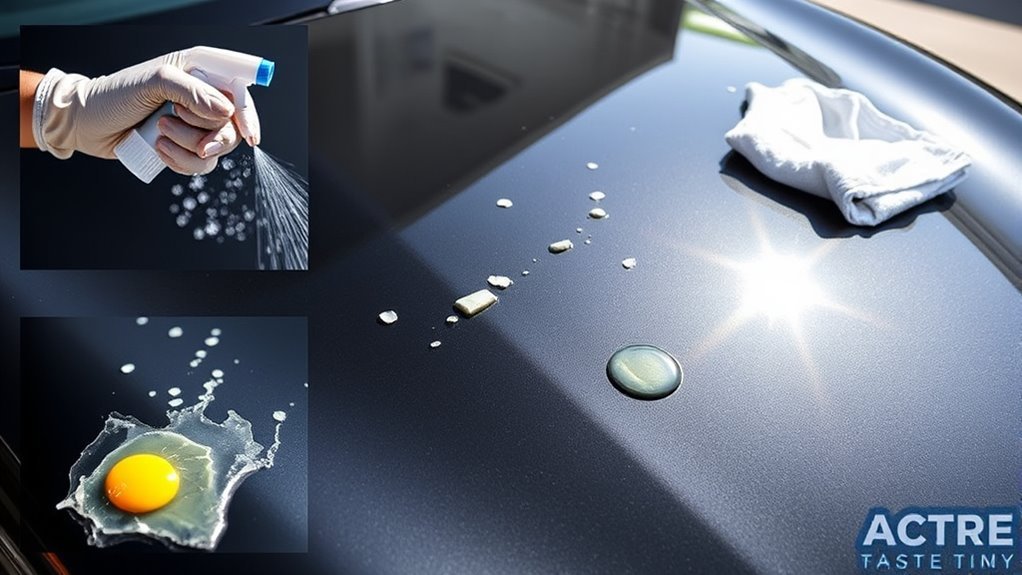
How to Get Egg Off Car in 3 Easy Steps
To get egg off your car in three easy steps, start by gently removing all eggshell pieces by hand or with a soft tool. This helps avoid scratches on your car’s surface.
Egg stains can be stubborn, but don’t worry—there’s a simple way to clean them up without damaging your paint.
Next, spray a vinegar and warm water mix on the egg residue. Let it sit for 5–10 minutes to soften the egg.
Then, wipe it away with a damp microfiber cloth. This method works wonders to break down the egg without harsh scrubbing.
Finally, apply wax or a sealant to protect and restore your car’s paint. This step helps keep your vehicle looking shiny and new.
Keep following for more tips on preventing future damage and maintaining a flawless finish.
Key Takeaways
- Gently remove large eggshell pieces by hand or with a soft tool to avoid scratching the car paint.
- Spray a mixture of equal parts white vinegar and warm water on the egg residue to soften it.
- Let the vinegar solution sit for 5 to 10 minutes to loosen dried egg residue effectively.
- Wipe the softened egg residue gently with a soaked microfiber cloth, reapplying vinegar if needed.
- After cleaning, apply a quality wax or sealant to protect and restore the car’s paint surface.
Carefully Remove Eggshells to Avoid Paint Scratches
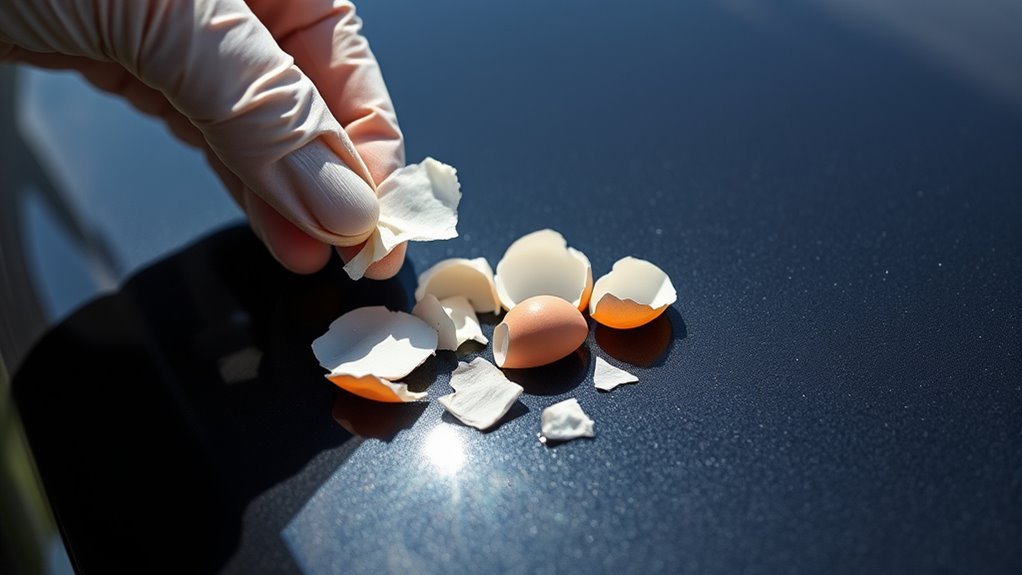
Before applying any cleaning solution, carefully remove large eggshell fragments by hand or with a soft tool to avoid scratching your car’s paint. You want to be gentle when you remove eggshells to prevent any damage.
Use a damp microfiber cloth to gently blot and lift smaller shell pieces without pressing hard. Avoid sharp or abrasive tools that can scratch or gouge the car paint.
Gently blot smaller eggshell pieces with a damp microfiber cloth, avoiding abrasive tools to protect your car’s paint.
Removing all loose eggshells first reduces the chance of scratching during cleaning. Take your time and work patiently, never prying or scraping shells against the surface.
This careful approach ensures you protect your car paint while effectively removing eggshell debris, setting the stage for safe, scratch-free cleaning afterward.
Soften and Clean Egg Residue Using Vinegar and Soap
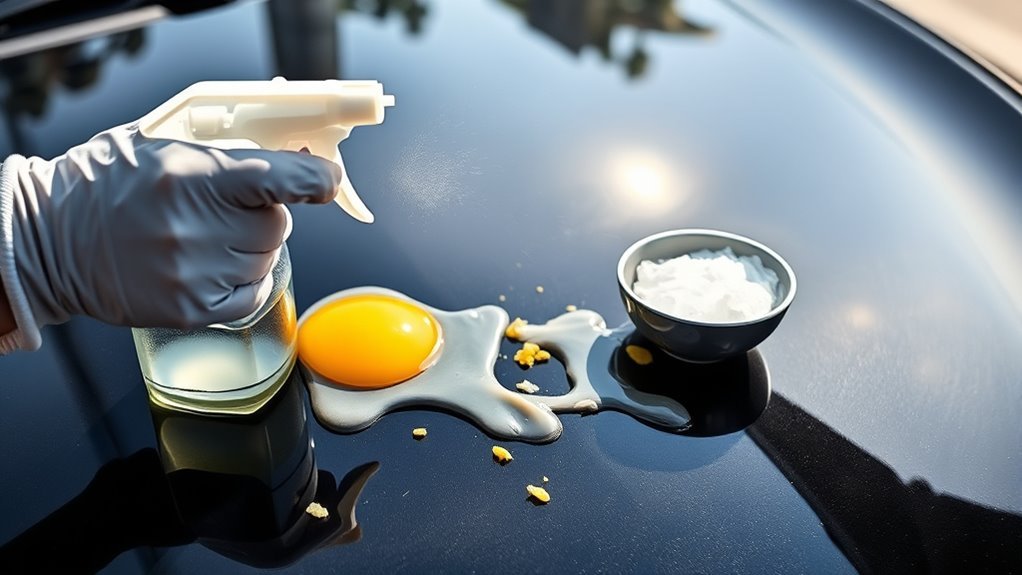
When dried egg residue clings to your car’s surface, mixing equal parts white vinegar and warm water creates a natural solution that helps break it down effectively. Pour this mixture into a spray bottle and generously spray the affected area.
Let it sit for 5 to 10 minutes to soften the stubborn egg residue. Next, soak a microfiber cloth in the vinegar solution and gently wipe the surface, loosening the dried egg without damaging your car’s paint.
You may need to reapply the vinegar solution if the residue doesn’t come off easily. Finally, use a clean, damp microfiber cloth to thoroughly clean the area, removing any leftover egg and vinegar.
This method softens and removes egg residue safely and efficiently. It’s a simple trick that really works!
Apply Wax or Sealant to Protect and Restore Your Car’s Paint
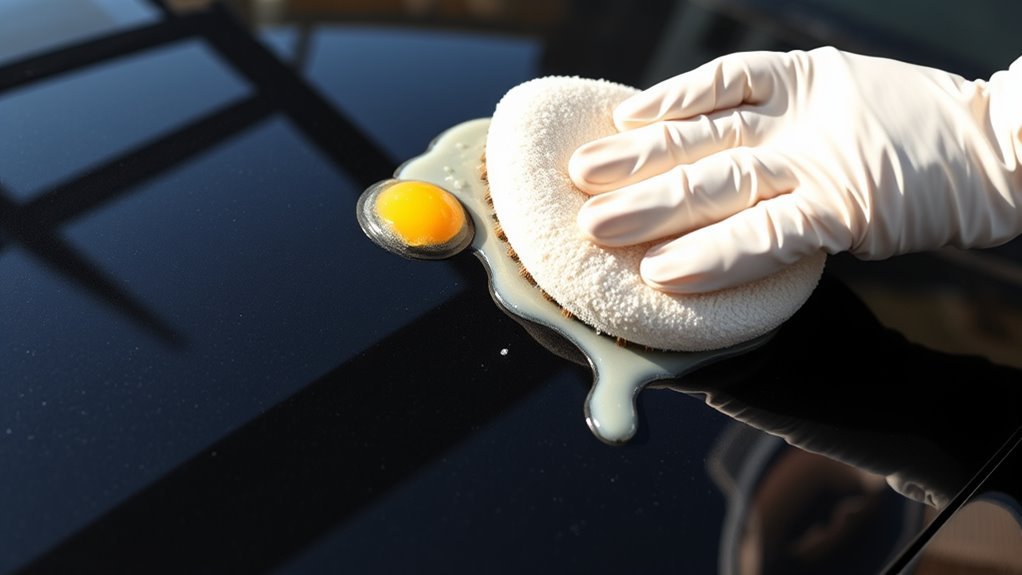
Although cleaning removes egg residue, applying a high-quality wax or sealant is essential to protect your car’s paint and restore its shine. Eggs contain acids that can damage the paint if left untreated, so waxing after cleaning helps fill in minor imperfections caused by eggs on a car.
Wax creates a protective barrier that repels dirt, contaminants, and future egg splatters, keeping your car looking fresh. Sealants, which generally last longer than wax, provide months of durable protection against environmental damage.
For the best results, apply wax or sealant to a clean, dry car surface using a soft applicator in circular motions. Regularly applying wax or sealant not only protects your paint but also makes future cleaning easier and more effective.
Frequently Asked Questions
What Is the Best Way to Get an Egg off Your Car?
You should gently remove shell pieces, spray warm soapy water or vinegar, let it sit, then wipe with a soft cloth. Rinse thoroughly and apply wax to protect your car’s paint from damage and stains afterward.
What Should I Do if My Car Gets Egged?
If your car gets egged, don’t panic like it’s a scene from a messy sitcom. Quickly rinse off the egg, gently remove shells, clean with soap, then protect your paint with wax to keep it shining like new.
Is Egg Hard to Get off a Car?
Yes, egg can be hard to get off your car, especially if it’s dried. You’ll need to act quickly and use gentle cleaning methods to avoid damaging the paint, since dried egg bonds strongly and can etch the surface.
Will Egging a Car Damage the Paint?
Egging your car can wreck the paint faster than a lightning strike! You’ll risk chemical etching, scratches, and weakened clear coats if you don’t act fast. Don’t let the damage stick around—clean it off quickly!
Conclusion
Now that you know how to get egg off your car in just three easy steps, you can protect your paint from lasting damage.
Did you know that leaving egg residue on your car for more than 24 hours increases the risk of permanent paint damage by 40%? So, act quickly!
Carefully remove shells, clean with vinegar and soap, then apply wax to keep your car looking fresh and shiny.
By following these simple steps to get egg off your car, you’re not only saving your paint but also maintaining your vehicle’s overall appearance. Quick action and proper cleaning can prevent costly repairs and keep your car’s surface smooth and protected. Remember, using vinegar and soap gently breaks down egg residue without harming the paint, and waxing seals in that clean finish. Your car will thank you for the extra care, staying fresh and shiny for miles to come!