
Clean Eggs Without Removing Bloom in 3 Simple Steps
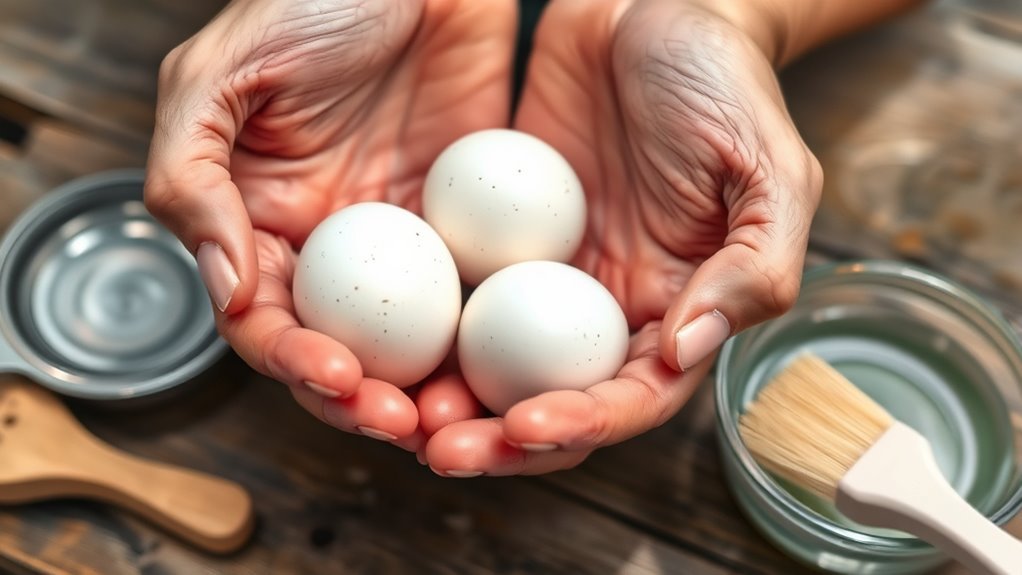
You can clean eggs without removing their protective bloom in three simple steps. The bloom is a natural coating that helps keep eggs fresh by sealing the shell’s pores. So, it’s important to clean eggs gently to preserve this protective layer and maintain egg freshness.
First, gently wipe dirt off with a dry cloth or soft brush to keep the bloom intact.
Next, if needed, rinse the egg with warm water slightly warmer than the egg itself. Avoid using soap or scrubbing, which can damage the bloom.
Finally, dry the eggs thoroughly and store them pointed end down in a ventilated fridge container. This method helps maintain egg safety and freshness.
Keep following along to uncover even more ways to keep your eggs fresh and safe!
Key Takeaways
- Use a dry cloth or soft brush to gently remove surface dirt without washing the egg.
- For stubborn dirt, lightly scrape with fine sandpaper or a soft-bristled brush.
- If rinsing, use warm water slightly warmer than the egg and avoid rubbing or using soap.
- Dry eggs thoroughly with a clean cloth or paper towel immediately after rinsing.
- Store cleaned eggs pointed end down in a ventilated container inside the refrigerator.
How to Gently Remove Dirt Without Washing Eggs to Preserve the Bloom
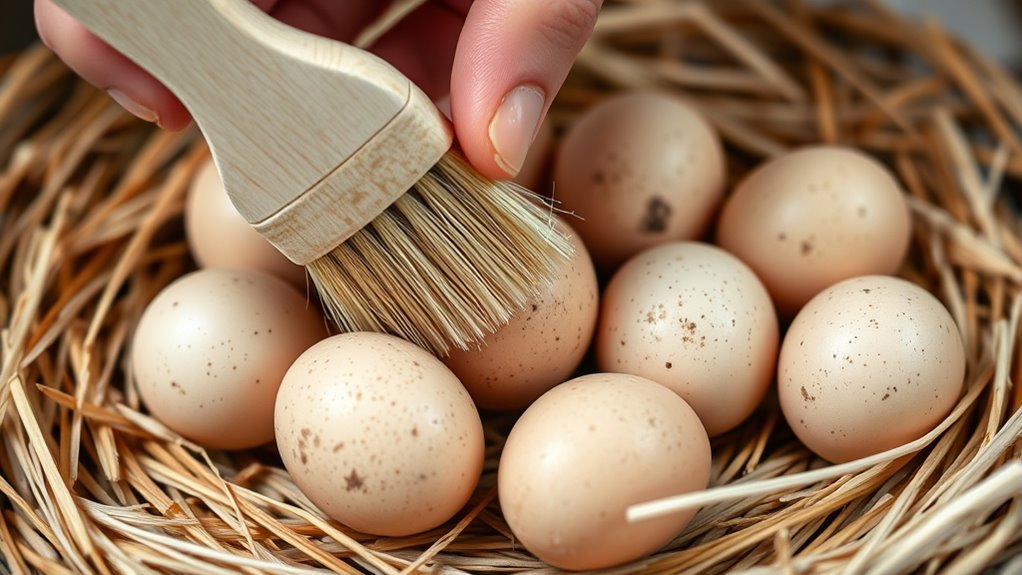
Although washing eggs can remove dirt, you should avoid it to maintain the protective bloom. Instead, use a dry cloth or soft brush to gently remove surface dirt without moisture. This gentle removal helps preserve the egg’s natural coating, which acts as a barrier to prevent bacteria from entering.
By maintaining this protective bloom, you keep your eggs fresher for longer. If dirt is stubborn, carefully scrape it off with fine sandpaper or a soft-bristled brush, taking care not to damage the shell.
Avoid soap or cleaning agents, as they can harm the bloom and reduce its effectiveness. Handling eggs gently ensures the bloom stays intact, helping you enjoy clean eggs while maximizing their natural freshness and safety.
When and How to Use Warm Water Safely Without Damaging the Bloom
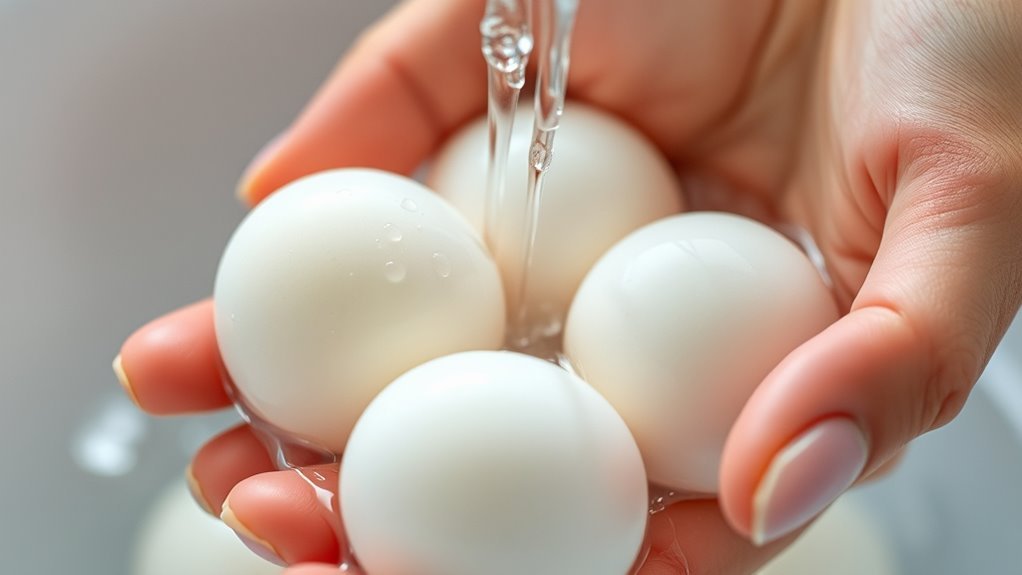
When you need to clean eggs that have stubborn dirt, using warm water slightly warmer than the egg itself helps loosen debris without harming the bloom. This gentle rinse prevents bacteria from entering because cold water can cause the eggshell pores to contract, drawing contaminants inside.
Always avoid soaps or detergents since they strip away the natural protective layer—the bloom—that guards freshness. When you clean eggs, rinse them gently without rubbing to protect this essential coating.
Avoid soaps and harsh scrubbing to preserve the egg’s natural protective bloom and maintain freshness.
After rinsing, dry thoroughly with a clean cloth or paper towel to prevent moisture from encouraging bacterial growth. Using warm water safely not only preserves the bloom but also supports food safety by reducing the risk of contamination.
This careful approach keeps your eggs clean and fresh without compromising their natural defense. It’s a simple step that makes a big difference!
How to Store Eggs to Preserve the Bloom and Freshness After Cleaning

Since preserving the bloom is essential for keeping eggs fresh, you should store cleaned eggs carefully in a well-ventilated container inside your refrigerator. Always place eggs with the pointed end down to protect the natural protective layer, which helps prevent bacteria from entering.
Avoid washing eggs with cold water or harsh scrubbing, as this strips the bloom and shortens shelf life. After gentle cleaning using warm water, refrigeration is the best way to maintain freshness.
Don’t store eggs at room temperature once cleaned, as this can degrade the bloom and freshness. Label your clean eggs with the cleaning date and use them within a few weeks to enjoy fresh eggs at their best while the protective layer remains intact.
This approach guarantees you preserve bloom and maximize freshness effectively.
Frequently Asked Questions
How to Clean Eggs Quickly?
You can quickly clean eggs by gently wiping them with a dry, soft cloth to remove dirt. For stubborn spots, quickly rinse with warm water, then dry immediately to keep them clean and safe.
Can You Use Dawn Dish Soap to Wash Fresh Eggs?
You shouldn’t use Dawn dish soap to wash fresh eggs—it’s like stripping away their natural armor. If you do, rinse thoroughly with warm water to avoid leaving harmful soap residue that can affect egg quality.
What Egg Cleaner Doesn T Remove the Bloom?
You’ll want to use a mild sanitizer solution, like a diluted vinegar or hydrogen peroxide mix, for cleaning eggs. These won’t remove the bloom if you soak gently without scrubbing, keeping the protective layer intact.
Do You Wash Fresh Eggs With Soap and Water or Just Water?
Don’t throw the baby out with the bathwater—you should wash fresh eggs with just warm water, not soap. Soap can strip the protective bloom, so stick to gentle rinsing and drying to keep them safe and fresh.
Conclusion
You might think cleaning eggs means scrubbing off the bloom, but by gently removing dirt without washing, you actually keep their natural protection intact.
It’s no coincidence that using warm water carefully preserves that bloom, ensuring your eggs stay fresh longer. Plus, storing them the right way after cleaning locks in freshness effortlessly.
So, follow these simple steps—you’ll protect your eggs and enjoy better taste every time, without any extra hassle. Keeping the bloom intact is key to maintaining freshness and preventing bacteria.
By cleaning eggs without removing the bloom, you make sure they stay safe to eat and last longer in your fridge. This simple method not only preserves the eggs’ natural barrier but also enhances their flavor.
Trust these easy steps to keep your eggs clean, fresh, and delicious every time!