Why Is the Beef Industry Important to the Economy?
You rely on the beef industry because it drives economic growth and supports over 16,000 jobs nationwide. This industry is a major player in the economy, providing steady employment and income for thousands of families.
It generates nearly $2 billion in labor income and boosts local economies, especially in states like Texas and Nebraska.
With exports worth more than $8 billion, the industry opens global markets and sustains rural communities through family-owned operations. These exports help keep the economy strong by bringing in revenue from around the world.
Plus, the impact of the beef industry reaches beyond just farming—it influences trade, land management, and many related sectors.
There’s much more to discover about how it shapes the economy. From supporting local businesses to influencing national policies, the beef industry plays a critical role that affects us all.
Key Takeaways
– The beef industry supports over 16,000 jobs and generates nearly $2 billion in labor income annually.
It’s a big deal for a lot of people who rely on these jobs to support their families.
– It drives significant economic growth in key states like Texas and Nebraska, sustaining local economies and rural communities.
These areas really count on the beef industry to keep things running smoothly.
– Beef exports account for 14% of production and contribute over $8 billion in trade value, boosting nationwide employment.
So, it’s not just about local impact; the beef industry plays a role in the global market, too.
– More than 900,000 family-owned operations provide economic stability and maintain rural livelihoods across the country.
These family farms help keep rural America thriving.
– The industry links federal land management with global markets, supporting ancillary sectors and rural economic sustainability.
That connection helps a lot of other businesses and communities stay strong.
How the Beef Industry Drives Economic Growth and Creates Jobs
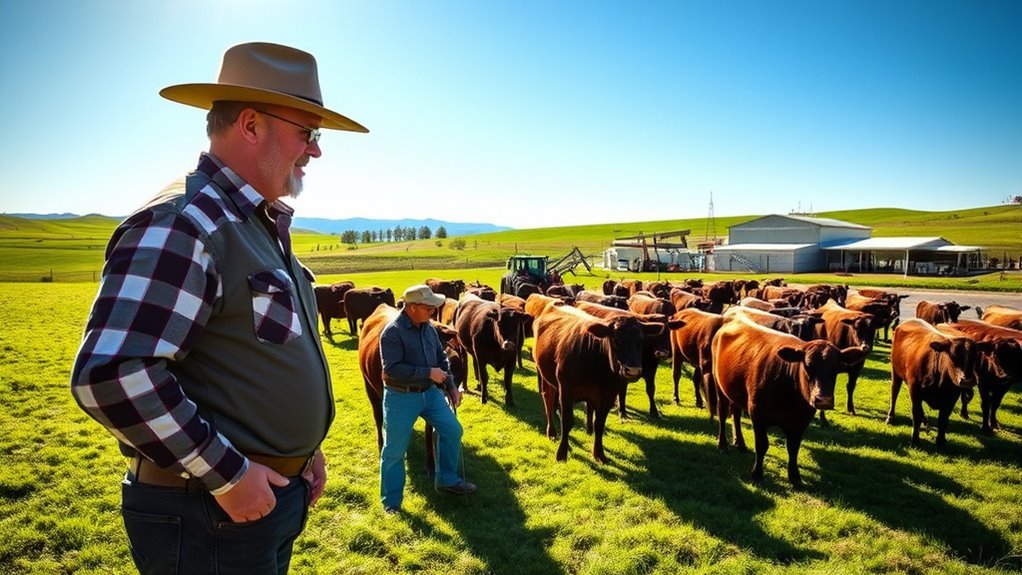
Because the beef industry plays a crucial role in the U.S. economy, it directly supports over 11,000 jobs and generates about $1.1 billion in annual output. When you consider cattle ranching and related sectors, labor income nears $2 billion, fueling regional economies.
The industry impact goes beyond just direct employment, with total output exceeding $1.6 billion and supporting more than 16,000 jobs. Beef production drives economic growth in major states like Texas and Nebraska, where local economies really thrive on this activity.
Plus, beef exports—which make up about 14% of total production—open new market opportunities. This further boosts employment and output nationwide.
Why the Beef Industry Matters for Rural Communities and Trade
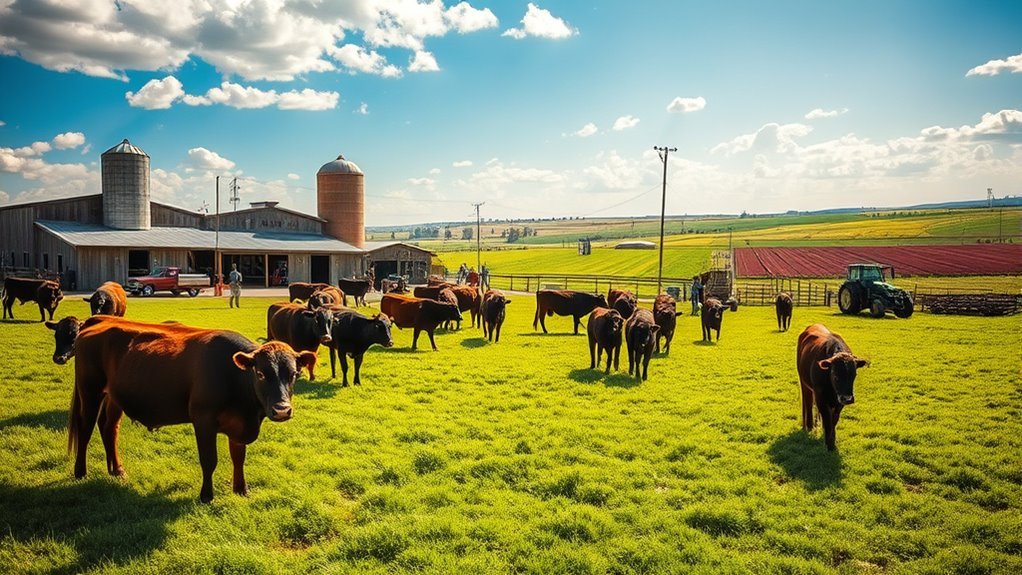
The beef industry doesn’t just fuel jobs and economic growth—it’s also a backbone for rural communities and international trade. You’ll find over 900,000 family-owned operations supporting rural employment and sustaining local economies.
In states like Nebraska and Texas, cattle production generates billions annually, providing economic impact that keeps rural communities thriving. The industry’s exports, valued at more than $8 billion, strengthen trade relationships and bring essential outside dollars into these regions.
Beef production relies heavily on land management, especially federal grazing lands, linking rural stewardship to global markets. Additionally, ancillary sectors like transportation, retail, and manufacturing depend on beef industry activities, creating a ripple effect that benefits rural America.
Frequently Asked Questions
How Does Beef Contribute to the Economy?
Beef fuels the economy by creating jobs, supporting ranchers, and generating billions in revenue. You benefit from its widespread impact, including export growth and regional boosts in major producing states like Texas and Nebraska.
Why Won’t Other Countries Buy US Beef?
You won’t see other countries buying U.S. beef because of strict import rules, health concerns, and trade tensions. Plus, they often prefer cheaper or local options, making U.S. beef less attractive internationally.
What State Kills the Most Cattle?
You might think states like Nebraska lead, but Texas kills the most cattle in the U.S. With over 13 million beef cattle and massive feedlot operations, Texas dominates beef production and slaughter volume every year.
What Is the Biggest Problem in the Beef Industry?
The biggest problem in the beef industry is managing unpredictable challenges like drought, diseases, and fluctuating input costs. You’ll struggle with price volatility and herd size cycles that make maintaining stable supply and profitability tough.
Conclusion
You can’t overlook how the beef industry fuels the economy like a well-oiled machine, creating jobs and boosting growth. It’s the backbone of many rural communities, keeping them alive and thriving.
Plus, it plays an essential role in trade, connecting markets near and far. So, when you think about economic strength, remember the beef industry’s powerful impact.
It’s more than just a business; it’s a lifeline for countless people and places. The beef industry supports local economies by providing employment opportunities and sustaining small towns.
Its contribution to trade also helps strengthen national and global markets. In short, the beef industry is a vital part of economic growth, rural development, and trade connectivity, making it an indispensable force behind our economy’s success.