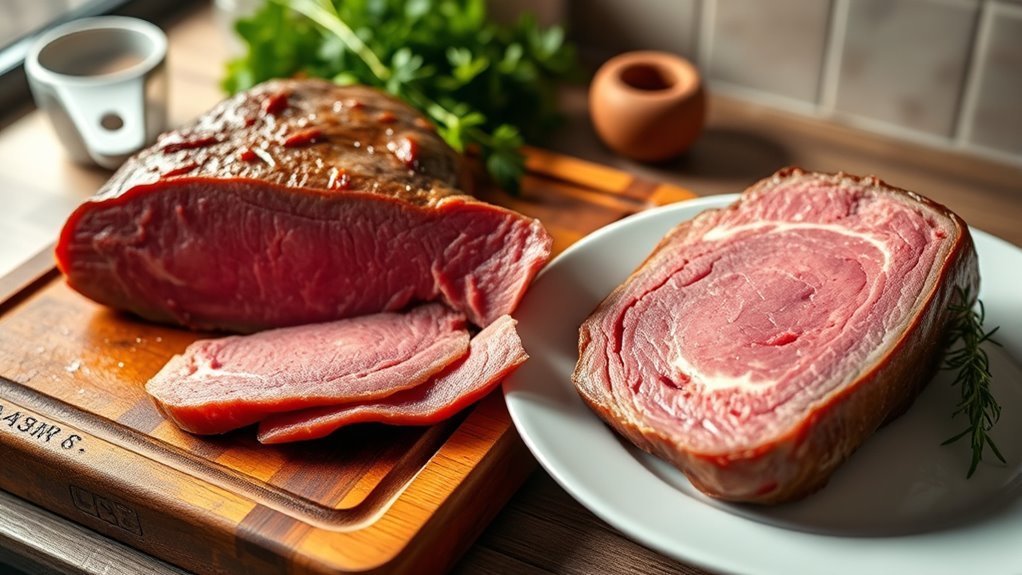
Why Does Corned Beef Shrink So Much When Cooked?
You’ll notice corned beef shrinks a lot when cooked because it’s injected with a water-rich brine that boosts its initial weight. This brining process helps keep the meat flavorful and moist before cooking.
But as you heat the corned beef, things start to change.
As heat breaks down the meat, both the water and brine escape, causing significant shrinkage. The higher the cooking temperature, the more moisture the meat loses.
This can make your corned beef tougher and smaller than expected.
To avoid this, using gentler, controlled cooking methods can help retain moisture and reduce shrinkage. Slow cooking or simmering at lower temperatures keeps the meat tender and juicy.
Keep exploring different techniques to find what makes your corned beef the best it can be!
Key Takeaways
- Corned beef contains injected brine that increases its initial water content and weight by up to 35%. This extra moisture makes the meat heavier before you even start cooking.
- When you cook it, water and brine escape from the meat, which causes it to shrink quite a bit. So, it’s not just the meat losing weight; it’s mostly water leaving.
- Cooking at higher temperatures speeds up this water loss and can make the meat tougher and smaller. That’s why cooking it too hot isn’t always the best idea.
- On the other hand, low-temperature, gentle cooking methods help keep more moisture inside. This means less shrinkage and a juicier piece of corned beef.
- Once you get how brine injection and water loss work, it becomes clear why cooked corned beef shrinks so much. It’s all about the water leaving the meat during cooking!
Why Injected Brine and Water Make Corned Beef Shrink
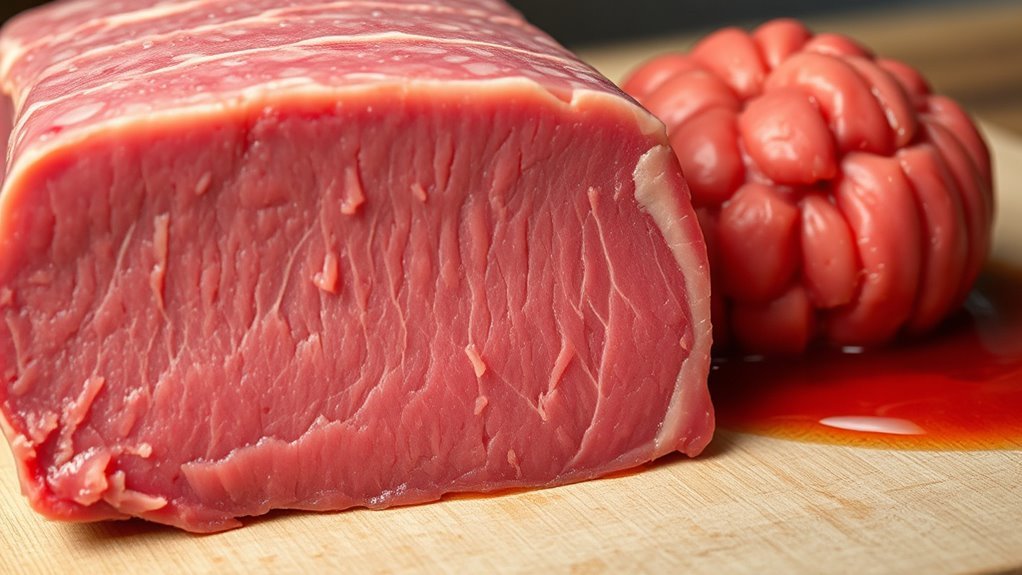
Although corned beef starts off heavy, much of that weight comes from a watery brine injected into the meat. This injected brine, often infused with pickling spices, boosts the water content, increasing the initial weight considerably—sometimes up to 35%.
When you cook corned beef, the brine solution escapes as water loss, leading to noticeable meat shrinkage. The more water content added through the injected brine, the greater the shrinkage you’ll see during the cooking process.
This means the meat’s final size reduces because it loses not only water but some of the brine solution as well. Understanding this explains why corned beef shrinks so much—it’s all about the injected brine and the water content it brings along.
How Cooking Methods and Temperatures Impact and Reduce Shrinkage
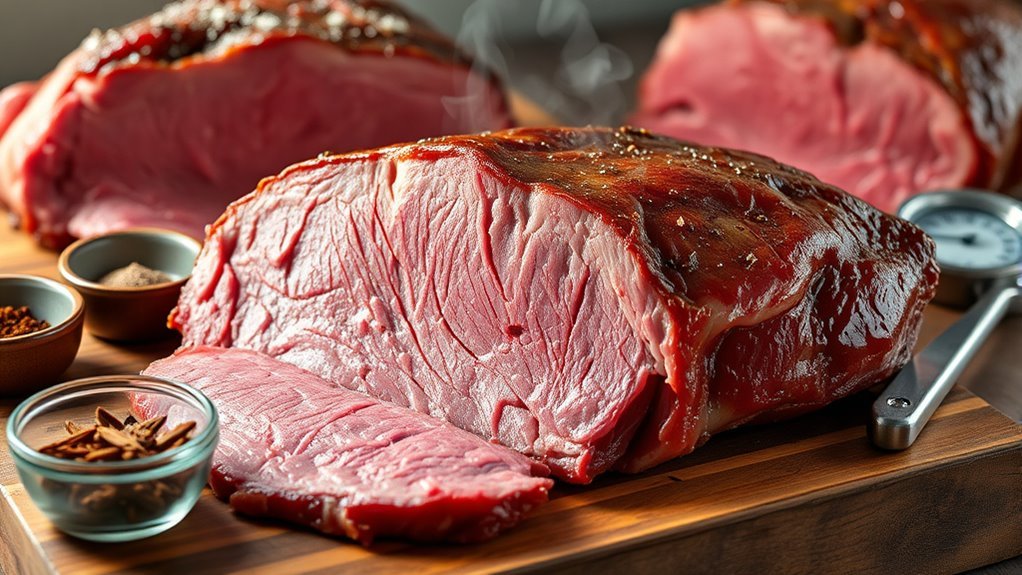
Knowing that injected brine increases water content helps explain why cooking methods and temperatures play such a big role in how much your corned beef shrinks. Higher temperatures cause more water loss, which leads to greater shrinkage and tougher meat.
Injected brine adds water, so cooking temperature greatly affects shrinkage and tenderness in corned beef.
To reduce this, focus on moisture retention through controlled cooking.
- Use low-temperature cooking methods like sous vide at around 140°F for up to 48 hours. This minimizes water loss and promotes collagen breakdown. The result? Tender corned beef with less shrinkage.
- Cook longer at gentle temperatures to allow collagen to break down without evaporating moisture excessively.
- Substitute water with broth or stock during cooking. This helps to further enhance moisture retention.
Frequently Asked Questions
How to Cook Corned Beef Without It Shrinking?
You can cook corned beef without shrinking by using low temperatures like sous vide at 140°F, slow roasting, or simmering gently. Also, rinse it beforehand and cook in flavorful liquids to keep it moist and tender.
What Are the Common Mistakes in Cooking Corned Beef?
Did you know over 60% of home cooks overcook corned beef? You’re likely making mistakes like cooking at too high a temperature, not rinsing the meat, adding veggies all at once, or slicing it while too hot.
How Much Does Corned Beef Shrink When You Cook It?
When you cook corned beef, it typically shrinks about 25% to 40%. So, a 3-pound piece can shrink down to around 1.8 to 2.25 pounds, depending on how you cook it and its brining.
What Happens if You Don’t Rinse Corned Beef Before Cooking?
If you don’t rinse corned beef before cooking, you’ll end up with a much saltier, less tender meat. The excess brine stays on the surface, making the flavor overpowering and affecting the texture during cooking.
Conclusion
When you cook corned beef, the injected brine and water cause it to shrink because the heat forces excess moisture out. You might be surprised to learn corned beef can lose up to 30% of its weight during cooking!
By choosing gentler cooking methods and controlling the temperature, you can reduce shrinkage and keep your meat juicy. So next time, slow and steady is your best bet for tender, flavorful corned beef without losing too much size.
In short, the main reason corned beef shrinks so much when cooked is moisture loss from the injected brine and natural water content. Using low and slow cooking techniques helps retain that moisture, resulting in a juicy, tender corned beef that’s full of flavor. So, if you want to enjoy your corned beef without the typical shrinkage, remember to cook it gently and keep the temperature controlled. This way, you’ll get the best texture and taste every time.