What Are Fish Eggs Called in Sushi?
In sushi, fish eggs are called tobiko, masago, and ikura, and each brings its own unique flavors and textures to the table. These tiny bursts add a whole new dimension to your sushi experience.
Tobiko comes from flying fish and offers a crunchy, mildly salty pop with a bright orange color. It’s pretty fun to eat because of that texture.
Masago, on the other hand, comes from capelin. These eggs are smaller and softer, usually pale yellow but often dyed to add a splash of color.
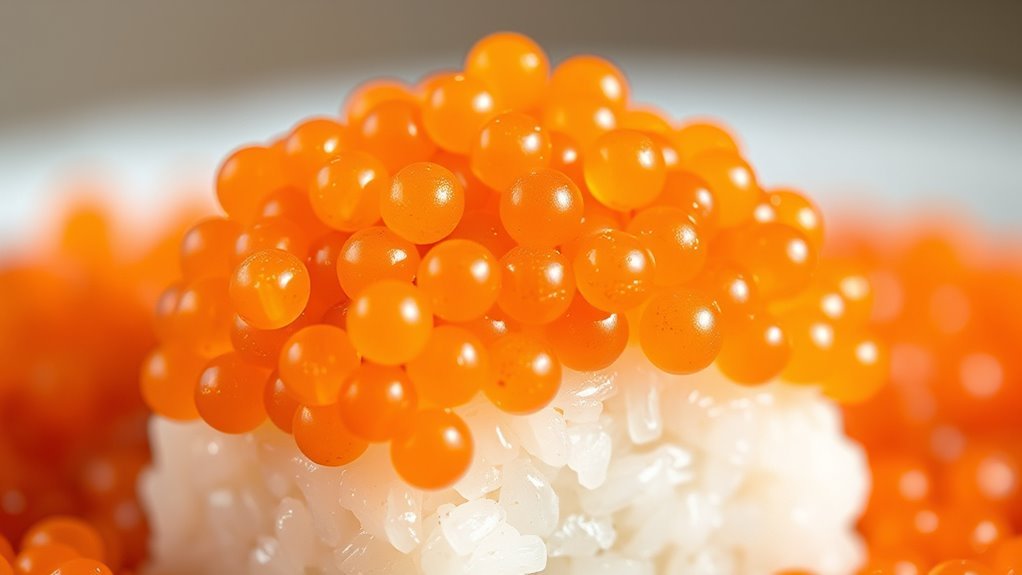
Then there’s ikura, which are larger, shiny salmon eggs. They have a juicy burst and a rich, savory taste that many sushi lovers enjoy.
Getting to know these differences can really elevate your sushi game. Once you start noticing the flavors and textures, you’ll appreciate each bite even more!
Key Takeaways
- Fish eggs used in sushi are commonly called roe. The names change depending on the fish species.
- Tobiko is flying fish roe. It’s medium-sized, bright orange, and crunchy.
- Ikura refers to large, shiny salmon roe. People love it for its juicy and salty flavor.
- Masago is small, pale capelin roe. It’s softer and often dyed to add color.
- Caviar, which is black sturgeon roe, is a fancy sushi topping. It has a distinct taste and appearance.
Which Fish Eggs Do You Find in Sushi?

While exploring sushi, you’ll often encounter a variety of fish eggs that add unique flavors and textures. The most common fish eggs you’ll find are tobiko, or flying fish roe, known for their crunchy texture and vibrant orange color.
Ikura, or salmon roe, offers larger, juicy eggs with a rich, salty taste. Capelin eggs, called masago, are smaller and paler than tobiko, often used as an affordable substitute.
You might also come across caviar, the luxurious black roe from sturgeon, featured in high-end sushi. These different types of roe—tobiko, ikura, masago, and caviar—each bring distinct tastes and appearances, enriching your sushi experience with variety and depth.
How Can You Tell Tobiko, Masago, and Ikura Apart?
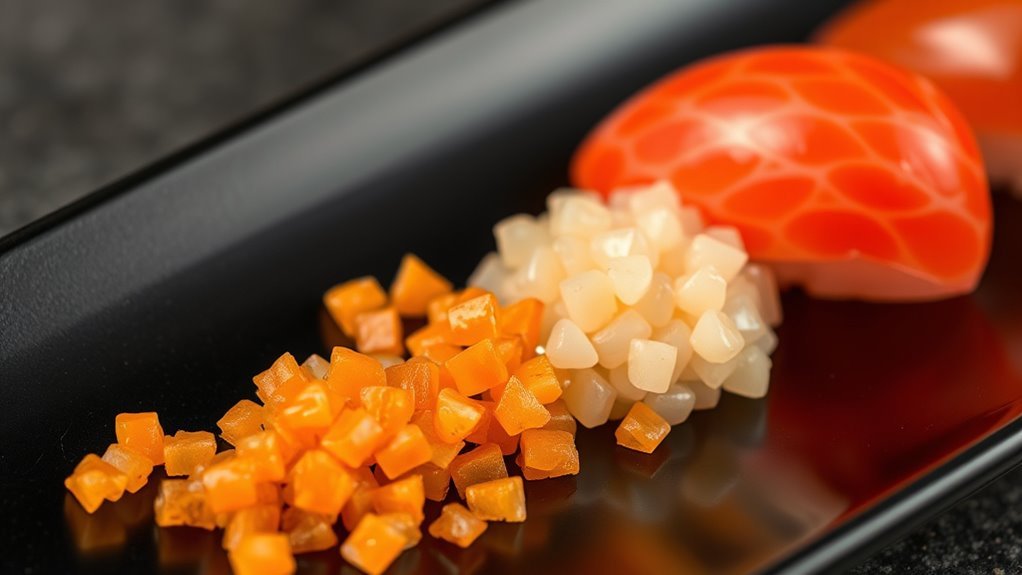
Identifying tobiko, masago, and ikura in sushi can be easier once you know what to look for. Tobiko features medium-sized, bright orange fish roe from flying fish. It’s known for its crunchy texture and mildly salty, smoky flavor.
Masago is much smaller and paler yellow. It comes from capelin and feels softer, often dyed to enhance its color.
Ikura stands out with large, shiny, pearl-shaped salmon eggs. They range from deep orange to red and have a soft, bubbly texture.
The visual differences in egg size, color, and texture help you distinguish these sushi eggs. Tobiko’s crunch contrasts with ikura’s soft pop, while masago’s tiny, delicate grains offer a milder taste.
Knowing these sushi ingredients lets you easily tell tobiko, masago, and ikura apart. It’s pretty simple once you get the hang of it!
Frequently Asked Questions
Are Caviar and Tobiko the Same?
No, caviar and tobiko aren’t the same. You’ll notice caviar’s larger, softer eggs come from sturgeon, while tobiko’s smaller, crunchy eggs come from flying fish, each offering distinct textures, flavors, and culinary uses.
What Are Raw Fish Eggs Called?
Raw fish eggs are called roe in sushi. You’ll find varieties like ikura (salmon roe), tobiko (flying fish roe), and masago (capelin roe). They add texture and umami flavor, enhancing your sushi experience beautifully.
What Is Japanese Fish Roe Called?
You’ll find Japanese fish roe called ikura, tobiko, masago, or kazunoko—and each one tastes like a tiny explosion of ocean magic. Don’t be surprised if you get hooked instantly; they’re sushi’s little jewels!
Is Tobiko Fish Sperm?
No, tobiko isn’t fish sperm; it’s fish eggs, specifically flying fish roe. When you eat tobiko, you’re enjoying fertilized eggs, not sperm, which is a different reproductive fluid from male fish.
Conclusion
When you delve into sushi, you’ll often find fish eggs called tobiko, masago, and ikura. Each has its own unique size, color, and flavor, making your sushi experience exciting.
Did you know tobiko eggs are about 0.5 mm in size, much smaller than ikura’s 5-7 mm? Now that you can tell them apart, you’ll enjoy sushi even more, spotting these tiny treasures and savoring their distinct tastes every time you order.
Fish eggs in sushi, also known as roe, add a burst of texture and flavor that enhances every bite. Whether it’s the crunchy pop of tobiko, the subtle taste of masago, or the rich, juicy ikura, understanding what these fish eggs are called helps you appreciate sushi on a whole new level. So next time you see those colorful fish eggs, you’ll know exactly what you’re enjoying and why they’re such a beloved part of sushi culture.