How Can You Tell If Your Hen Is Egg Bound?
You can tell your hen is egg bound if she spends long hours in the nest box straining without laying. She might also show swelling or redness around her vent or make unusual distressed sounds. These are common signs that something isn’t right with her egg-laying process.
Watch closely for other clues like tail bobbing, lethargy, and abnormal sitting postures. Sometimes, you might even gently feel inside her vent to detect if an egg is stuck inside.
Catching these signs early is super important because it helps prevent serious complications.
If you think your hen might be egg bound, don’t wait. Keep exploring simple checks and easy actions you can take to help her feel better and get that egg moving safely.
Key Takeaways
- Hen spends long hours in the nest box without laying and shows persistent nesting behavior.
- She exhibits straining during movement, defecation, or repeated attempts to pass an egg.
- Physical signs include swollen or prolapsed vent, tail bobbing, and fluffed feathers.
- Gentle palpation inside the vent may reveal a firm, round object indicating a stuck egg.
- Abnormal sitting posture, vocal distress, and lethargy signal internal discomfort from egg binding.
If you notice these signs, it’s important to act quickly to help your hen. Egg binding can be serious, so keeping an eye on her behavior is key.
How to Tell If Your Hen Is Egg Bound: Key Symptoms to Watch For
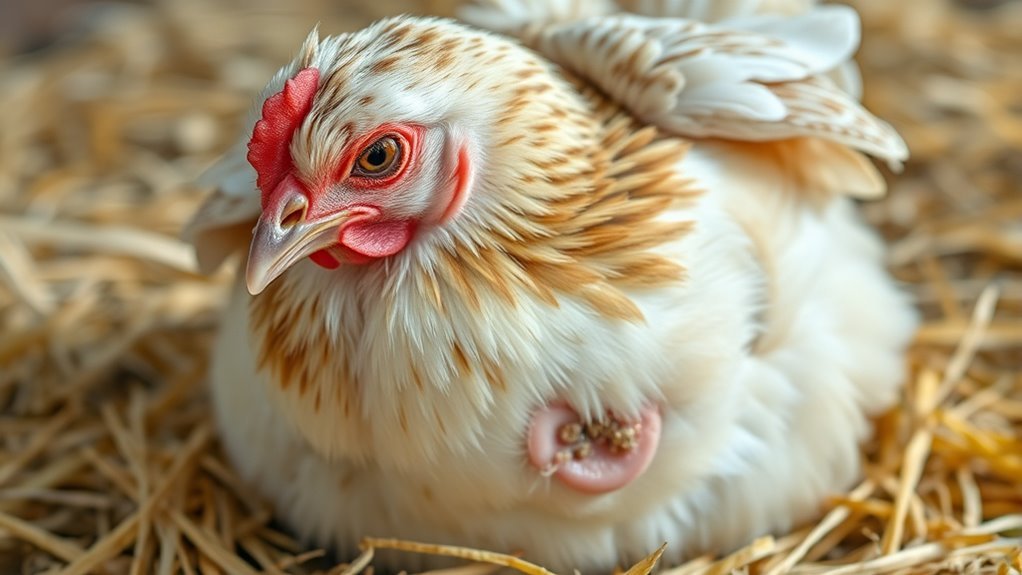
If your hen spends long hours in the nest box without laying an egg, she might be egg bound. You’ll notice her nesting behavior continues, but she struggles with egg passing, showing clear laying difficulty.
Watch for behavioral signs like lethargy, reluctance to move, and vocal distress. She may strain frequently, indicating discomfort and the possibility of vent swelling.
Look for lethargy, reluctance to move, vocal distress, and frequent straining indicating discomfort and possible vent swelling.
Check for a swollen vent or even vent prolapse, which signals a serious issue. Tail bobbing, fluffed feathers, and abnormal sitting posture also point to discomfort.
These symptoms together strongly suggest your hen is egg bound and having trouble passing her egg. Recognizing these key signs early helps you take prompt action to support your hen’s health and comfort.
Simple Physical Checks to Confirm Egg Binding in Your Hen

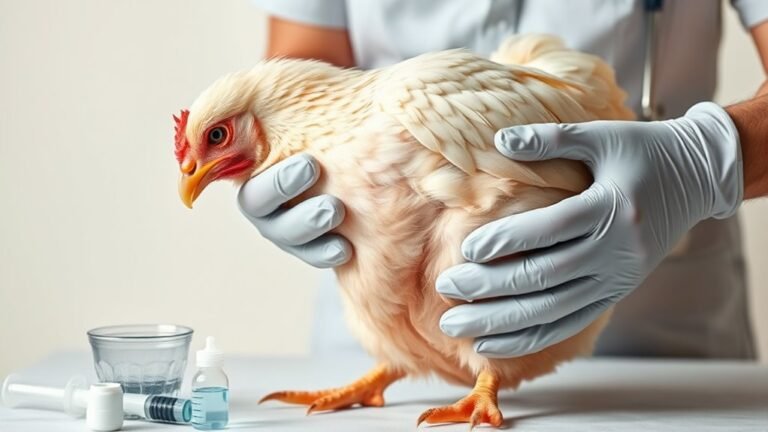
Although spotting behavioral signs is important, performing simple physical checks can confirm whether your hen is truly egg bound. Start by gently feeling inside the hen’s vent, about 1-2 inches into the cloaca. Use careful palpation to detect a firm, round object.
Check for swelling or tissue inflammation around the vent and abdomen, as these external signs often indicate egg binding. If your hen is straining or sitting without laying, this can suggest an internal blockage.
Use gentle pressure during the physical check to distinguish an actual egg from other abnormalities. Monitoring for these signs helps you confirm egg binding quickly, ensuring timely care and preventing complications linked to blockage or swelling in the reproductive tract.
Frequently Asked Questions
How to Help an Egg-Bound Hen?
You’ll want to gently lubricate her vent, soak her lower body in warm water, and carefully try to ease the egg out. Give calcium supplements to help muscle contractions, but don’t force it—call a vet if needed.
Can a Chicken Recover From Egg-Bound?
Yes, your hen can recover from being egg-bound if you act quickly. Provide calcium, gentle care, and a stress-free environment. Prompt treatment within 24-48 hours greatly improves her chances of a full recovery.
What Can Be Mistaken for Egg-Bound Chicken?
You might mistake lash eggs, soft-shelled eggs, tumors, prolapsed oviducts, or broodiness for egg binding. Each shows similar signs but requires different care, so check symptoms carefully before treating your hen.
How Long Can a Hen Survive Being Egg-Bound?
Your hen can survive about 24 hours being egg-bound, but chances drop sharply after 36 to 48 hours. You’ve got to act fast and get her veterinary help to save her life.
Conclusion
If your hen feels like she’s carrying a heavy secret, don’t ignore the signs. Egg binding can tighten its grip like a stubborn knot. But with your watchful eyes and gentle hands, you can unravel it.
By spotting the symptoms early and acting quickly, you’ll help her breathe easier and cluck happily again. Remember, your care is the key to opening her comfort and keeping her healthy and strong.
Egg binding in hens is serious, but catching it early makes all the difference. Keep an eye out for symptoms like lethargy, straining, or a swollen abdomen. Acting fast with kindness and knowledge can relieve your hen’s discomfort. Your attentive care is essential in preventing complications and ensuring she stays healthy. So, trust your instincts and be ready to help; your hen depends on you to keep her safe and well.