5 Signs to Tell If Water Glassing Eggs Are Bad
You can tell if water-glassed eggs are bad by checking for a few key signs. First, look at the water—if it’s cloudy or discolored, that usually means bacterial growth is happening.
Also, if the eggs start floating to the top, it’s a sign that gas has built up inside, which means spoilage.
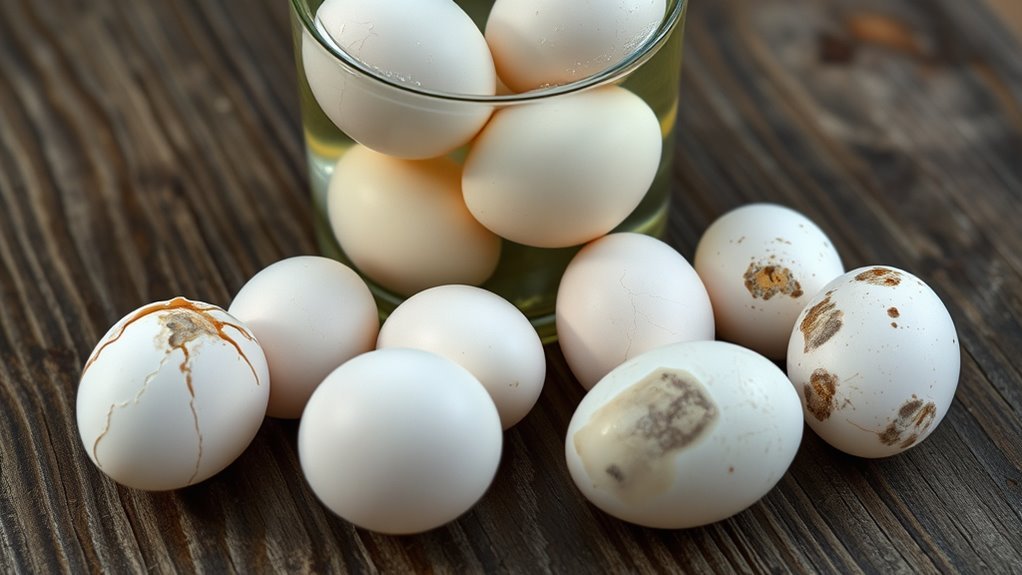
Check the eggshells closely too. Cracks, leaks, or slimy shells can let bacteria sneak in and ruin the eggs.
Keep an eye out for visible mold as well, which might show up as green, black, or white patches on the eggs or in the water.
And don’t forget your nose! Any foul, rotten, or sulfur-like odors are a dead giveaway that the eggs have gone bad.
If you spot any of these signs, it’s definitely best to toss the eggs out.
Keep reading if you want to learn how to spot each sign in detail!
Key Takeaways
- Cloudy or discolored water indicates bacterial growth and means the eggs should be discarded.
- Eggs floating to the surface are likely spoiled and unsafe to eat.
- Presence of mold, slime, or sticky coating on shells signals contamination.
- Cracked, broken, or leaking shells suggest internal spoilage and bacterial invasion.
- Foul or off smells like rotten eggs or ammonia indicate the eggs are bad and must be discarded.
How To Inspect Water-Glassed Eggs For Spoilage
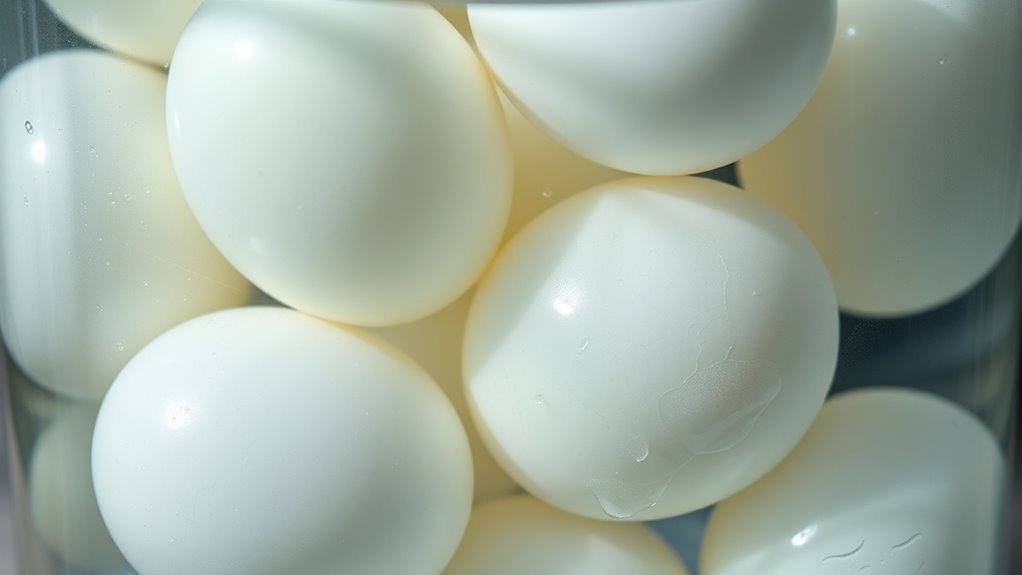
Before using your water-glassed eggs, you should carefully inspect them for signs of spoilage. Start by looking at the water solution around the eggs; if it’s cloudy or has an off smell, that’s a red flag.
Always check the water solution for cloudiness or off smells before using water-glassed eggs.
Next, try to float eggs in a bowl of clean water. Eggs that float to the top are likely bad and should be discarded, as this indicates spoilage.
Also, check the eggs visually for any mold, sliminess, or discoloration on the shell. Removing any cracked or broken eggs is essential because they can introduce bacteria that spoil the entire batch.
Taking these steps helps guarantee your water-glassed eggs stay fresh and safe to eat. It’s worth the little effort to avoid any unpleasant surprises!
Spotting Cracks And Leaks In Water-Glassed Eggs
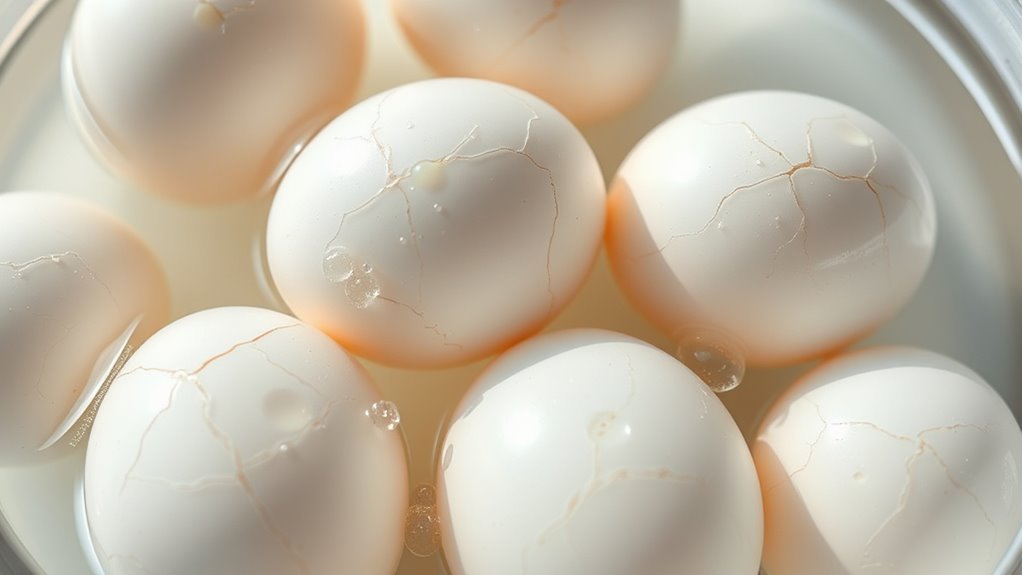
Although water glassing preserves eggs well, you need to watch for cracks and leaks that can let bacteria in and spoil them. Cracks allow contaminants to enter, raising the risk of spoilage and foodborne illness.
If you notice moisture or leaks around the shell, discard the egg immediately. Sometimes cracks form after submersion, signaling increased internal pressure and potential spoilage.
Regularly check eggs, especially after handling or moving them. It’s better to be safe than sorry when it comes to keeping your eggs fresh.
| Sign | What It Means |
|---|---|
| Visible cracks | Possible bacterial entry point |
| Moisture/leaks | Compromised shell; discard egg |
| New cracks post-submersion | Internal pressure build-up; spoilage |
| Lime solution seepage | Risk of mold or foul odors |
Stay vigilant to prevent spoilage and keep water-glassed eggs safe. Keep an eye on them, and you’ll enjoy fresh eggs for longer!
How To Identify Mold And Slime On Water-Glassed Eggs
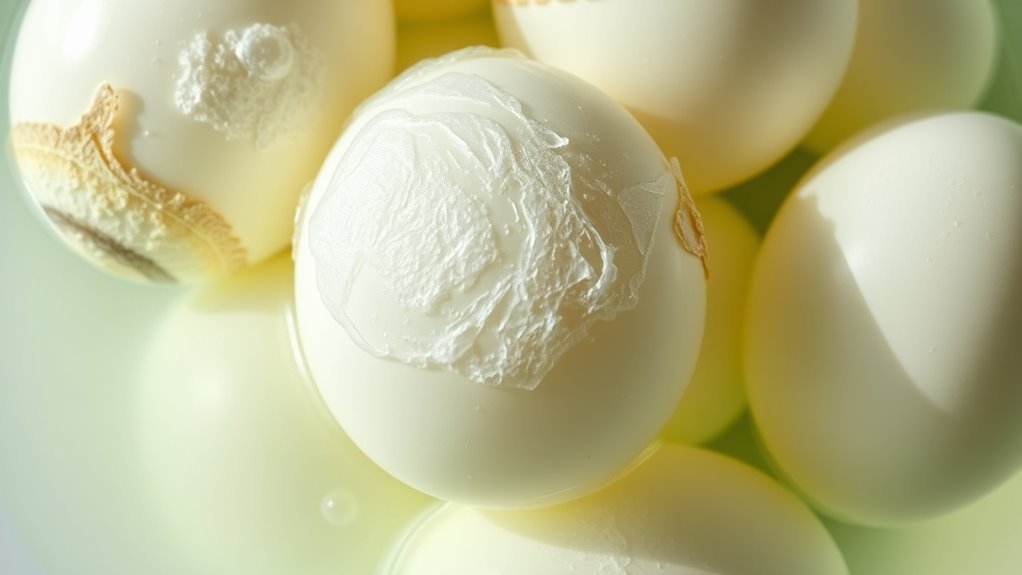
Once you spot cracks or leaks on water-glassed eggs, the next step is to check for mold and slime, as these signs point to bacterial or fungal growth.
Mold on water-glassed eggs usually appears as fuzzy or slimy patches in colors like green, black, or white on the shell’s surface. You might also notice a sticky coating or slime, often accompanied by an unpleasant odor.
These visible signs indicate that harmful microbes have invaded the egg, making it unsafe to eat. Mold and slime often develop when the shell is damaged, allowing contamination inside.
What Cloudy Or Discolored Water Means For Egg Freshness
If you notice cloudy or discolored water in your egg storage jar, it’s a clear warning sign that something’s wrong. Cloudy water often means bacterial growth. Meanwhile, discolored water—like yellow or green—signals contamination or egg spoilage.
Floating eggs in such water usually show gas buildup inside. That confirms the eggs are no longer fresh. Here’s a quick guide to what you might see:
| Water Appearance | Egg Condition | What It Means |
|---|---|---|
| Clear | Eggs sink | Fresh and safe |
| Cloudy | Eggs sink or float | Possible bacterial growth |
| Yellow tint | Eggs float | Contamination present |
| Green tint | Eggs float | Egg spoilage |
| Murky with gas | Floating eggs | Eggs gone bad |
Avoid using eggs if you spot cloudy water or discoloration. It’s best to prevent any health risks.
Recognizing Foul Smells In Water-Glassed Eggs And What To Do
When you crack open water-glassed eggs, a foul smell like rotten eggs or sulfur signals spoilage. It means you should discard them immediately.
A strong ammonia-like or sour odor indicates bacterial growth, making the eggs unsafe to eat. Even if the eggs look fine, that off-putting smell is a clear sign they’re spoiled. Don’t risk your health by consuming water-glassed eggs that emit any unpleasant odors.
A strong ammonia or sour smell signals bacterial growth—discard eggs immediately to avoid health risks.
Keep these points in mind:
- A foul smell always means spoilage.
- Sulfur or rotten egg odors suggest bacterial toxins.
- Normal eggs don’t produce bad smells.
- Dispose of any eggs with sour or ammonia-like scents promptly.
Trust your nose—if the eggs smell bad, throw them out.
Frequently Asked Questions
How to Tell if Water Glassed Eggs Are Still Good?
You’ll know water glassed eggs are good if they stay submerged, have firm shells, and don’t smell foul when cracked. Discard any that float, have cracks, or emit unpleasant odors to stay safe.
How to Tell if Eggs Are Bad With a Glass of Water?
Don’t let bad eggs float to the top like ships lost at sea. If your egg sinks and lies flat, it’s good. If it floats, smells off, or looks cloudy, toss it—don’t take chances with safety.
Why Is Water Glassing Eggs Unsafe?
Water glassing eggs can be unsafe because bacteria like Clostridium botulinum might grow in the lime solution. If eggs crack or float, harmful toxins can develop, risking serious food poisoning whenever you eat them.
How Long Will Water Glassed Eggs Last?
Think of water-glassed eggs as hidden treasures that can last six months to over a year. Keep them cool and dark, and you’ll reveal their freshness, preserving your bounty patiently until you’re ready to enjoy them.
Conclusion
When you’re checking your water-glassed eggs, trust your senses like a detective on the trail. Cracks, slime, or cloudy water are red flags waving in the wind, warning you to stay cautious.
If a foul smell sneaks out, it’s time to let those eggs go. Treat your eggs like hidden treasures—handle with care and know when to say goodbye.
By paying attention to these signs, you can keep your water-glassed eggs fresh and safe to eat. Remember, cracks and slime mean trouble, while cloudy water or bad odors are clear indicators your eggs are bad.
Keeping an eye on these warning signs helps ensure every bite of your preserved eggs is delicious and worry-free. So, when in doubt, trust your senses and don’t risk eating spoiled eggs. Your safety and enjoyment are worth it!