
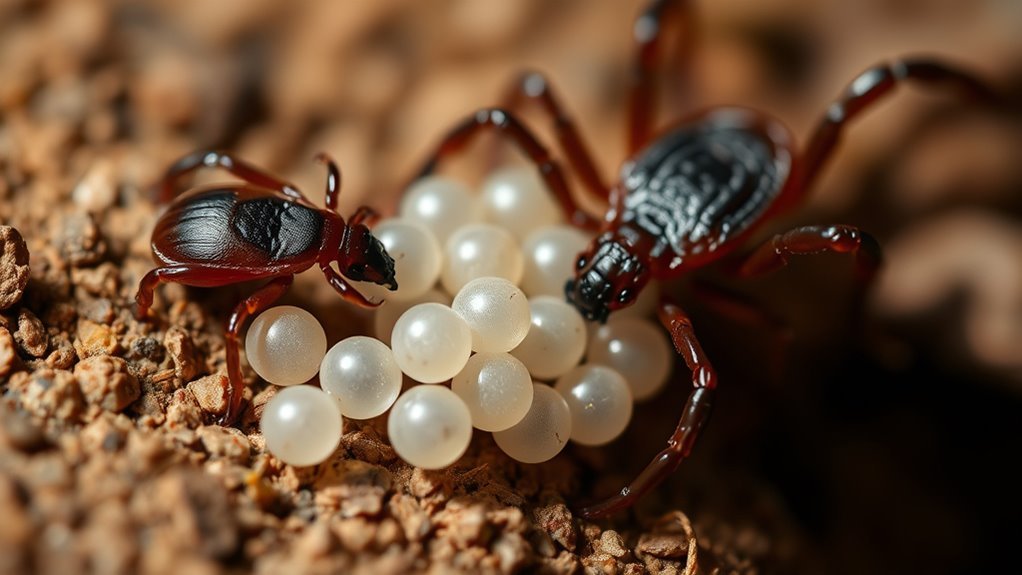
How Many Eggs Does a Tick Lay?
A female tick can lay anywhere from 2,000 to over 6,000 eggs, depending on the species. This variation in egg-laying is important to understand when dealing with tick populations and preventing infestations.
For example, deer ticks lay up to 2,000 eggs, while wood ticks can produce between 4,000 and 6,500 eggs.
These high egg counts mean tick populations can grow quickly, which increases the risk of infestations.
Knowing how many eggs a tick can lay helps you manage and prevent ticks more effectively.
Keep exploring to find out how these egg numbers impact control strategies and infestations. It’s all about staying one step ahead of these tiny pests!
Key Takeaways
- Female ticks can lay thousands of eggs at once, and the exact number really depends on the species.
- For example, deer ticks lay up to 2,000 eggs during their egg-laying cycle.
- Wood ticks are a bit more prolific, producing between 4,000 and 6,500 eggs each cycle.
- Lone Star ticks usually lay somewhere around 3,000 to 5,000 eggs.
- They like to lay their eggs in sheltered, humid spots because these conditions are key for the eggs to survive and hatch.
How Many Eggs Do Different Tick Species Lay?

While the number of eggs varies by species, female ticks can lay thousands of eggs at once. For example, a deer tick, a common tick species, can lay up to 2,000 eggs during its egg laying phase.
Female ticks can lay thousands of eggs at once, with deer ticks producing up to 2,000 eggs per cycle.
In contrast, wood ticks typically have a higher egg count, ranging from 4,000 to 6,500. Lone Star ticks lay between 3,000 and 5,000 eggs. This species variation markedly impacts their reproductive capacity and the overall tick reproduction process.
Understanding how many eggs different tick species lay helps you grasp their life cycle better. After a female tick lays eggs in sheltered, humid spots, tick eggs hatch, continuing the cycle.
This variation in egg count highlights the diverse reproductive strategies among tick species. It’s pretty fascinating how nature equips each species differently to thrive and multiply.
How Tick Egg Counts Influence Infestations and Prevention

Because some tick species lay thousands of eggs at once, their potential to cause infestations grows quickly if you don’t take action. High egg production, especially in species like the wood tick, markedly increases the reproductive capacity and accelerates the growth of tick populations.
This surge leads to widespread outdoor infestations, raising your risk of disease transmission. Understanding egg counts helps you implement effective prevention strategies, such as environmental control and habitat modification.
Frequently Asked Questions
Can Tick Eggs Hatch in Your House?
Yes, tick eggs can hatch in your house if they’re brought inside on pets or clothing. You should keep your home clean, control humidity, and manage pets to prevent tick eggs from hatching and causing infestations.
How Can You Tell if a Tick Has Laid Eggs?
You can tell a tick has laid eggs if you see a swollen, detached female nearby or find a small cluster of tiny, translucent eggs. The egg mass usually looks like a tiny, oval-shaped, reddish-brown cluster.
What Is the Biggest Enemy of Ticks?
The biggest enemy of ticks is their natural predators like certain birds, ants, and beetles. You can rely on guinea fowl, fire ants, and ground beetles to hunt ticks and their eggs, helping control their population effectively.
What Month Do Ticks Lay Eggs?
Ticks lay eggs mostly between May and July. You’ll notice females laying eggs after feeding and mating, usually in late spring or early summer when temperatures and humidity create ideal conditions for their eggs to develop and hatch.
Conclusion
Now that you know how many eggs different tick species lay, you can better understand the risks of infestations. This knowledge helps you see just how quickly ticks can multiply and spread.
You can take steps to protect yourself, your pets, and your home. Staying vigilant and acting quickly are key to preventing ticks from becoming a big problem.
By knowing their egg counts, you empower yourself to break the cycle of tick reproduction. This reduces the threat and keeps your environment safe and tick-free. Remember, understanding tick egg laying habits is essential for effective tick control and prevention. Staying informed helps you protect your family and pets from tick-borne diseases and keeps your living spaces comfortable and secure.