How Does Egg Form Inside a Chicken
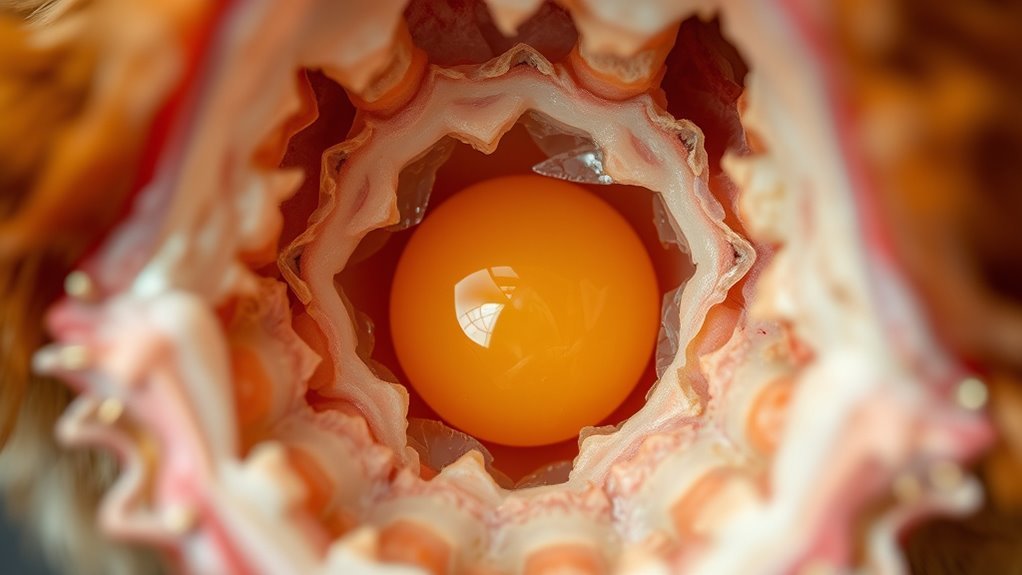
When a mature ovum is released from the hen’s ovary, it begins its journey through the oviduct, where the egg starts to form. This process is quite fascinating and shows how nature carefully builds something as common as an egg.
As the ovum moves along, proteins begin to form the egg white in one section. Then, membranes are added in another part of the oviduct. It’s like a step-by-step assembly line inside the hen!
Next, a calcium carbonate shell is slowly built over about 20 hours. This shell is what makes the egg strong and protects everything inside.
Sometimes, pigments are added last to give the shell its color.
Each stage is essential for creating a strong, complete egg. There’s so much more to explore about how eggs develop inside chickens—it’s truly an amazing natural process!
Key Takeaways
- The hen’s ovary produces and matures thousands of ova. Each one develops inside nutrient-rich follicles.
- When an ovum is mature, it’s released from the ovary and enters the oviduct to kick off egg formation.
- In the magnum section of the oviduct, proteins start forming the egg white around the ovum.
- Next, the isthmus adds protective membranes. Then, the shell gland deposits the hard calcium carbonate shell.
- Sometimes, pigments get added to color the shell. After that, the fully formed egg is ready to be laid.
How the Ovary Starts Egg Formation
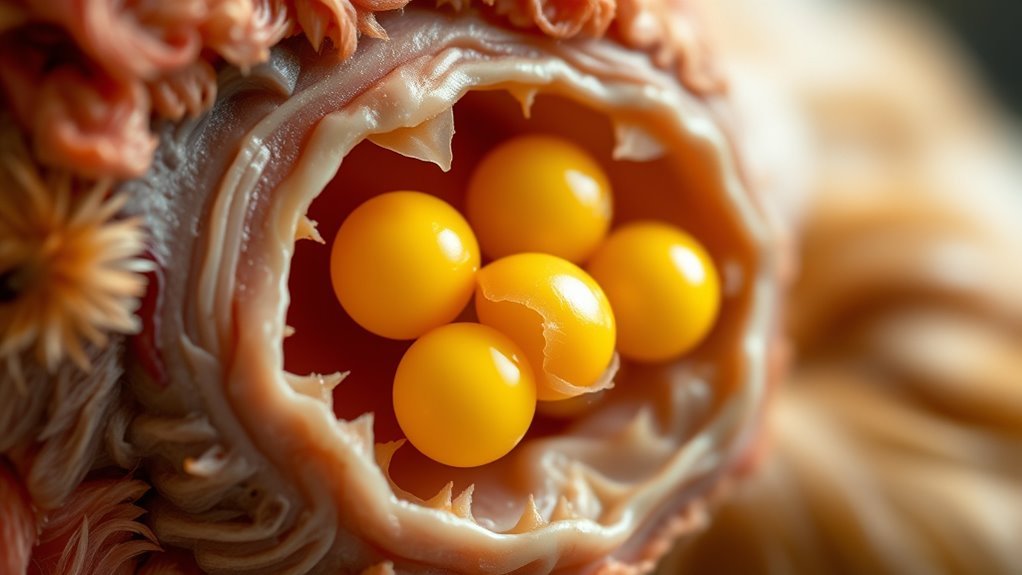
Although you might not see it, the hen’s ovary plays an essential role in egg formation by producing and maturing thousands of tiny ova. Located near the spine, the ovary looks like a cluster of grapes, each “grape” representing an ovum at various stages of follicular growth.
Inside the ovary, each oocyte develops within a follicle—a thin sac that supplies blood and nutrients vital for maturation. This follicle supports ovary development by nurturing the ovum until it’s ready.
As the ova mature, the ovary carefully regulates their growth before releasing a fully developed ovum into the reproductive tract. Understanding how the ovary initiates egg formation reveals the intricate process that prepares an oocyte for its journey, setting the stage for the next steps in building a complete egg.
How the Oviduct Builds the Egg
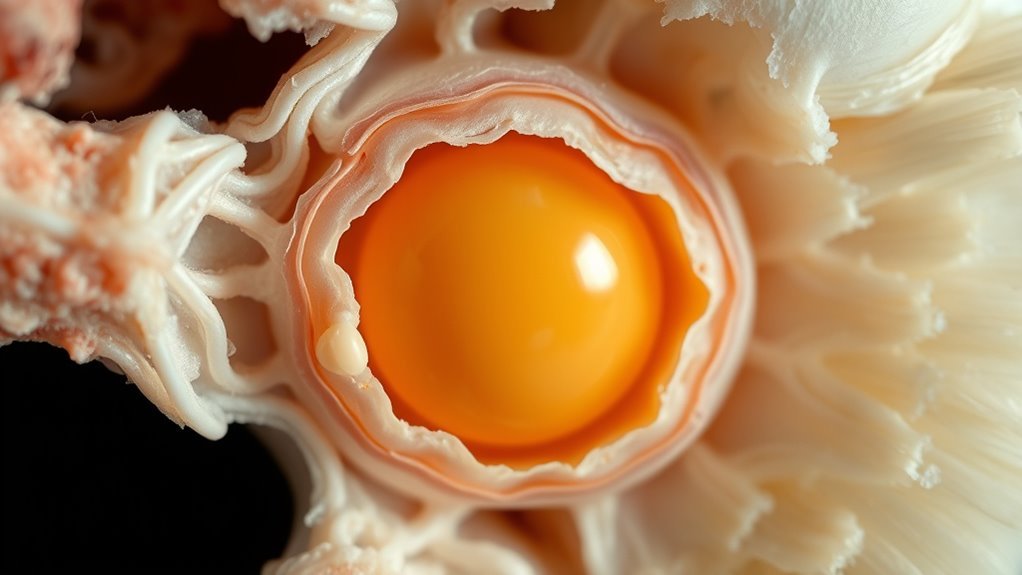
Once the ovary releases a mature ovum, it travels into the oviduct, where the egg begins to take shape. The oviduct has five sections, each adding distinct layers during the egg formation process.
The ovary releases a mature ovum that travels through the oviduct, where it begins forming distinct egg layers.
First, in the magnum, proteins form the egg white around the yolk. Next, the isthmus adds protective membranes that shield the egg’s contents.
Finally, the egg reaches the shell gland, where the calcium carbonate shell forms over about 20 hours. This shell provides strength and protection.
During the last hours in the shell gland, pigments may be deposited to color the egg shell. Each layer is essential, supporting the egg-laying process and ensuring the egg’s safety and viability until it’s laid.
Frequently Asked Questions
How Long Does It Take for an Egg to Form Inside of a Chicken?
It takes about 24 to 26 hours for an egg to form inside a chicken. You’ll see the yolk develop for 10 days, then the white and shell form quickly before the egg is laid.
How Do Farmers Know if a Chicken Egg Is Fertilized?
Think of candling like shining a flashlight through a foggy window; you’ll spot tiny blood vessels inside fertilized eggs. Farmers use this bright light test to tell if an egg has the potential to hatch into a chick.
How Does a Chicken Produce an Egg Without a Rooster?
You don’t need a rooster because hens produce eggs through their natural cycle. Their ovary releases a yolk regularly, and the egg forms with albumen and shell, even without fertilization from a rooster.
How Can You Tell a Chicken Is About to Lay an Egg?
You’ll know your chicken’s about to lay when she’s restless, vocal, squats with wings spread, and her vent looks enlarged and shiny. She might sit more, pressing her abdomen into the nesting area, showing slight swelling too.
Conclusion
Now that you know how the ovary starts the egg’s journey and how the oviduct builds it bit by bit, you can appreciate the amazing art of egg assembly. From follicle formation to the final fragile finish, each step showcases nature’s seamless synergy.
So next time you crack a carton, remember the remarkable rhythm and relentless routine that creates every perfect, protein-packed package inside a chicken! The process of egg formation inside a chicken is truly incredible, combining biology and precision in a natural masterpiece. Understanding this journey helps us value the care and complexity behind each egg we enjoy.