10 Best 3d Material for Heat Sink Our Top Picks Reviewed
Managing heat effectively is a key challenge when designing electronic devices and systems. Too much heat can reduce performance and even damage sensitive components. Choosing the right material for a heat sink plays a significant role in keeping temperatures under control.
Choosing the right material for a heat sink plays a significant role in keeping temperatures under control. This review focuses on the best 3d material for heat sink applications. Whether you are working on a DIY project, a prototype, or a professional build, selecting a material that offers strong thermal conductivity and ease of fabrication matters.
The material discussed here supports efficient heat dissipation while fitting diverse design requirements. You will learn about the characteristics that make this 3D material stand out, its suitability for different types of heat sinks, and how it compares to other options. This guide aims to provide clear insights to help you make an informed choice for your project’s cooling needs.
Unlocking Peak Performance: Top Choices for Efficient Thermal Management
| Image | Product | Price |
|---|---|---|
Pick 1  | Graphene Thermal Pad CPU GPU Cooling Sheet | Check Price On Amazon |
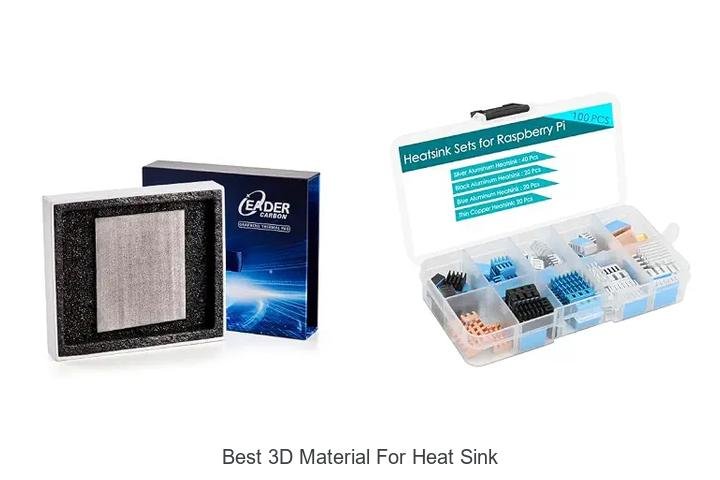
Pick 2  | 100 Pcs Aluminum and Copper Heatsink Kit with Adhesive Tape | Check Price On Amazon |
Pick 3  | Super Lube Silicone Heat Sink Compound 3 oz | Check Price On Amazon |
1. Graphene Thermal Pad CPU GPU Cooling Sheet
Pushing heat transfer boundaries, this thermal pad offers exceptional cooling for demanding systems. Its ultra-high graphene conductivity makes it suitable for powerful CPUs and GPUs facing heavy thermal loads. The pad features industrial-grade graphene with a thermal conductivity of 100 W/mK, far surpassing typical graphene pads.
Sized at 75x72x0.2mm, it’s designed to cover large heat spreaders like AMD EPYC processors fully. The reinforced vertical graphene structure enhances flexibility and durability, allowing the pad to conform perfectly to microscopic surface irregularities. Because it’s electrically conductive, careful handling is needed during installation to avoid short circuits.
Unlike thermal pastes, it maintains stable performance without the risk of the “pump-out effect,” making it excellent for continuous heavy use. It leaves no residue and is reusable, offering lasting value.
Overall, it suits technically skilled users who require maximum cooling efficiency in high-performance computing scenarios without the mess or frequent reapplications associated with traditional thermal compounds.
Pros
- Extremely high thermal conductivity of 100 W/mK
- Large coverage area for big heat spreaders
- Reusable and residue-free material
Cons
- Electrically conductive, requires careful installation
- Thin profile may be delicate to handle
- Recommended mainly for technical users
Who Should Buy It?
Ideal for users running high-TDP CPUs like AMD EPYC or extreme overclocking setups. Suits technically experienced individuals needing stable, high-performance thermal management without messy pastes.
Key Specifications
| Specification | Details |
|---|---|
| Brand | leadercarbon |
| Material Type | Graphene |
| Thermal Conductivity (W/m-K) | 100 |
| Dimensions | 75x72x0.2 mm (2.95″x2.83″x0.01″) |
| Weight | 1.15 ounces |
| Compatibility | AMD EPYC |
| Package Quantity | 1 |
| Electrical Conductivity | Yes (electrically conductive) |
| Special Features | Reinforced vertical graphene structure, reusable, residue-free |
The high thermal conductivity rating of 100 W/mK means this pad efficiently transfers heat away from critical components, improving cooling performance. With sizable dimensions tailored to large CPU and GPU heat spreaders like AMD EPYC, it ensures full coverage and effective heat dissipation. Its thin 0.2mm profile helps maintain close contact between the chip and the cooler, which reduces thermal resistance. The pad’s light weight and reusable nature add to its convenience during installation and future maintenance.
Being electrically conductive requires precision installing to avoid shorting sensitive circuits around the chip. Its reinforced vertical graphene design offers durability and flexibility, conforming to microscopic surface imperfections, which improves contact and heat flow. This makes it particularly useful for users with heavy workloads or overclocking needs, as it maintains consistent thermal bridging without the degradation seen in thermal pastes. The residue-free feature further simplifies cleaning and reapplication, enhancing long-term durability and ease of use.
2. 100 Pcs Aluminum and Copper Heatsink Kit with Adhesive Tape
Offering an extensive variety in one kit, this heatsink bundle provides excellent cooling solutions for many small electronics. Combining aluminum and copper, it supports effective heat dissipation for a broad range of devices, especially Raspberry Pi models. The set contains 100 pieces of heatsinks in multiple sizes and colors, allowing users to choose the most fitting option for each application.
Each heatsink comes with 3M 8810 thermal conductive adhesive tape which ensures secure attachment and good heat transfer. Compatible with Raspberry Pi 4B, 3B+, 3B, 2B, and others like Beaglebone, the kit covers popular small computer boards. Its lightweight and panel mount design make installation simple and flexible for different setups.
The thermal tape backing also guarantees lasting performance and stable cooling. This collection delivers great value for tech users who often work on different cooling projects. It suits those needing multifunctional heatsink options without buying separate single units.
Pros
- Includes 100 diverse heatsinks
- High-performance thermal adhesive tape
- Compatible with many Raspberry Pi models
Cons
- Limited size detail for individual pieces
- May be overwhelming for single-use buyers
- No dedicated mounting hardware included
Who Should Buy It?
Ideal for hobbyists, developers, and tinkerers who frequently assemble or upgrade small boards. It suits users needing flexible cooling parts without searching for different sizes separately. Also good for DIY projects involving Raspberry Pi or similar devices requiring reliable heat dissipation.
Key Specifications
| Specification | Details |
|---|---|
| Brand | MazerPi |
| Material Type | Aluminum, Copper |
| Dimensions | Multi-size |
| Weight | 0.14 kg |
| Compatibility | Raspberry Pi 4B, 3B+, 3B, 2B, Beaglebone |
| Mounting Type | Panel Mount |
| Package Quantity | 100 Pcs |
| Electrical Conductivity | Yes (Copper parts) |
| Special Features | 3M 8810 Thermal Conductive Adhesive Tape |
The kit features aluminum and copper heatsinks that come in multiple sizes to fit various components. Aluminum provides lightweight cooling and ease of use, while copper adds exceptional thermal and electrical conductivity. The panel mount type means the heatsinks attach directly to flat surfaces, optimal for small PCBs. Weighing only 0.14 kg, the kit is easy to handle and store. Compatibility with Raspberry Pi versions and Beaglebone allows use across popular single-board computers. Including 100 pieces ensures plenty of options and replacements for repeated projects or multiple devices.
Thermal conductivity from copper parts boosts heat transfer efficiency, preventing overheating in electronic components. The 3M 8810 thermal adhesive tape backing allows for secure, long-lasting attachment without extra tools. This setup makes installation straightforward, saving time and effort. Users focusing on Raspberry Pi cooling or similar applications receive reliable performance and durability. The variety in size and material benefits those needing customizable solutions to keep their devices running smoothly without degradation in thermal management.
3. Super Lube Silicone Heat Sink Compound 3 oz
Known for its stable and long-lasting performance, the Super Lube Silicone Heat Sink Compound offers reliable heat transfer for various electrical devices. Its high dielectric strength ensures excellent electrical insulation, making it suitable for sensitive components.
This premium silicone paste delivers efficient heat dissipation, maintaining flexibility and preventing hardening or drying over time. The compound is easy to apply smoothly, filling surface imperfections and simplifying future disassembly.
It is ideal for CPUs, LEDs, and power diodes in industrial and mechanical settings. The 3-ounce tube provides enough paste for multiple applications, combining value with top-tier quality and effective thermal management.
Pros
- High dielectric strength protects electronics
- Remains flexible without hardening or drying
- Easy and mess-free application
Cons
- Limited thermal conductivity data available
- Tube packaging can be less precise
- May require careful removal to avoid residue
Who Should Buy It?
Suitable for professionals and hobbyists handling electrical devices needing reliable heat transfer and insulation. Ideal for use with CPUs, LEDs, and power diodes where long-term stability and easy maintenance are important.
Key Specifications
| Specification | Details |
|---|---|
| Brand | Super Lube |
| Material Type | Silicone |
| Dimensions | Tube packaging, 3 oz (3 fluid ounces) |
| Weight | 9.07 g |
| Compatibility | Metal |
| Package Quantity | 1 |
| Electrical Conductivity | High dielectric strength, low bleed paste |
| Special Features | Non-curing, flexible, resists hardening, easy removal |
| Upper Temperature Rating | 500 °F |
| Flash Point | 599 °F |
The compound is silicone-based and comes in a 3-ounce tube, which is convenient for multiple applications. Its high dielectric strength means it offers reliable electrical insulation, protecting components while transferring heat. The paste’s resistance to hardening or drying extends its lifespan and makes it suitable for use in high-temperature environments up to 500 °F. Compatibility with metal surfaces ensures it adheres well, filling tiny gaps to maximize surface contact and heat dissipation.
These specifications translate into durable, effective thermal management with minimal maintenance. The high-temperature rating and non-curing formula keep the compound flexible, preventing cracking or drying out. This helps maintain efficient heat transfer and electrical insulation over time. Users working with sensitive or industrial electrical parts will benefit most, as they require a thermal paste that stays stable and easy to remove during component servicing or upgrades.
4. StarTech 20g CPU Thermal Paste

Efficient heat transfer is essential for maintaining CPU performance and longevity. This thermal paste excels at bridging gaps between the CPU and heatsink to prevent overheating.
The ceramic-based formula provides reliable conductivity while being electrically non-conductive for safe application around sensitive components. Its silicone-infused composition fills microscopic surface imperfections to avoid air pockets that could impede heat flow. The paste is easy to apply thanks to its smooth texture and convenient 20g tube packaging.
Compatible with desktop CPUs, it offers a thermal conductivity rating of over 1.066 W/m-K, promoting steady cooling performance. This product suits users seeking a dependable thermal interface material to enhance their PC’s cooling system effectively.
Overall, it balances quality, safety, and usability, making it a solid choice for general thermal paste needs.
Pros
- Electrically non-conductive for safety
- Smooth application with convenient tube
- Effective surface imperfection filling
Cons
- Thermal conductivity not highest available
- Limited to desktop compatibility
- No detailed mounting instructions included
Who Should Buy It?
Ideal for desktop PC builders looking for a safe and reliable thermal paste. Suitable for users who want a hassle-free application and solid heat transfer without specialized requirements.
Key Specifications
| Specification | Details |
|---|---|
| Brand | StarTech.com |
| Material Type | Silicone |
| Thermal Conductivity (W/m-K) | More than 1.066 |
| Dimensions | 0.7″L x 2.8″W x 0.7″H |
| Weight | 0.02 kg |
| Compatibility | Desktop |
| Package Quantity | 1 |
| Electrical Conductivity | Non-conductive |
| Special Features | Contains silicone; ceramic-based |
The silicone and ceramic-based composition ensures the paste maintains a stable interface between the CPU and heatsink. Thermal conductivity over 1.066 W/m-K means heat moves efficiently to the cooling unit. The paste fills tiny surface gaps, preventing air pockets that would otherwise reduce effectiveness. Non-conductivity enhances safety, minimizing the risk of short circuits. The dimensions and weight make it compact and easy to handle for desktop computer applications, fitting a wide variety of heatsinks without adding bulk.
High thermal conductivity helps keep temperatures lower under load, protecting the CPU from overheating. The electrically non-conductive nature makes installation safer around electronics, beneficial for those who may be less experienced. This product offers smooth application due to its formula, speeding up setup times. Its compatibility with desktop CPUs targets general PC users, ensuring durable and reliable cooling performance. Overall, performance and user-friendly attributes make it a practical choice for steady and effective thermal management.
5. Large Aluminum Heat Sink 69x69x36mm 27 Fin Radiator

Effective heat dissipation is vital for maintaining electronic device performance and longevity. Aluminum heatsinks are a reliable choice because of their balance between weight, durability, and thermal management. This large aluminum heat sink measures 69x69x36mm and features 27 anodized fins to dramatically increase surface area.
The passive cooling design uses no external power, making it silent and maintenance-free. The 4.6mm thick base ensures effective heat absorption from components like GPUs, ICs, and amplifiers. Its sturdy anodized aluminum build enhances durability and corrosion resistance.
Easy to mount on panels, it fits various power electronics and computers. This heatsink lowers overheating risks, protecting hardware from failure. Great for users needing a robust cooling solution for moderate to high-power electronics, it offers excellent build quality and dependable performance in a compact size.
For anyone managing heat in sensitive electronic circuits, this radiator stands out as a trustworthy option.
Pros
- High surface area with 27 fins
- Durable anodized aluminum construction
- Passive cooling with no noise
Cons
- Relatively heavy at 6 ounces
- Fin spacing limits cooling air flow
- Mounting type may not suit all setups
Who Should Buy It?
Suitable for those handling medium to high-power electronic devices such as GPUs or amplifiers. Ideal for professionals or hobbyists who want passive cooling to reduce overheating without adding noise or complex setups.
Key Specifications
| Specification | Details |
|---|---|
| Brand | Awxlumv |
| Material Type | Aluminum |
| Dimensions | 2.71″L x 2.71″W x 1.41″H (69x69x36mm) |
| Weight | 6 ounces |
| Compatibility | Cooling for PC GPU, IC Module, Led PCB, Chargers, Amplifiers |
| Mounting Type | Panel Mount |
| Package Quantity | 1 PCS Large Aluminum Heatsink |
The large dimensions and 27 fins of this heatsink increase the exposed surface area, allowing more efficient heat dispersion. The base thickness of 4.6mm provides a sturdy platform that absorbs heat quickly from attached components. Constructed from durable anodized aluminum, it resists corrosion and maintains performance over time. The 1.41-inch height accommodates larger power modules, while the fin spacing of approximately 2mm balances airflow with fin density for passive cooling applications.
These specifications translate into steady, silent heat dissipation without requiring fans or power. The panel mount design simplifies installation in electronics projects or computer builds. The aluminum’s thermal conductivity ensures rapid heat transfer away from critical hardware, reducing the risk of overheating. Users with power transistors, GPUs, or amplifiers will especially benefit, as this heatsink promotes component reliability and longer operating life in demanding thermal environments.
6. 4Pcs Black Aluminum Heat Sink Radiator Cooler 80x40x11mm

Efficient cooling is essential for maintaining device performance and longevity. Aluminum heat sinks offer an effective solution by dissipating heat quickly and evenly. The 4Pcs Black Aluminum Heat Sink Radiator Cooler measures 80x40x11mm, tailored for various electronics needing passive cooling.
These heat sinks feature black anodized aluminum construction, which enhances heat dissipation while maintaining a lightweight design. Each unit includes pre-applied thermal conductive adhesive tape, simplifying installation on components such as 3D printer stepper motors, LED drivers, or thermoelectric devices.
The coolers’ wide surface area improves airflow contact, helping keep components cool during extended use. Their chassis mount design makes them adaptable for different applications. The package contains four heat sinks, suitable for small- to medium-sized devices.
Durability and ease of installation make these coolers practical for makers and repairers. They offer solid value for those seeking consistent cooling without complex mounting hardware. Ideal users include 3D printer hobbyists, small electronics makers, and anyone needing passive cooling solutions for compact components.
Pros
- Pre-applied thermal adhesive tape included
- Lightweight yet durable aluminum construction
- Suitable for various electronics cooling needs
Cons
- Limited to passive cooling only
- May not fit larger components
- Thermal conductivity value not specified
Who Should Buy It?
This set suits DIYers, 3D printer users, and small electronics enthusiasts. Anyone needing easy-to-install, reliable heatsinks for stepper motors or regulators will benefit. It’s great for passive cooling in compact setups requiring moderate heat dissipation.
Key Specifications
| Specification | Details |
|---|---|
| Brand | Gokano |
| Material Type | Aluminum |
| Dimensions | 80 x 40 x 11mm (3.1 x 1.5 x 0.42 inches) |
| Weight | 4.97 ounces per heat sink |
| Compatibility | 3D printer motors, thermoelectric Peltier devices, LEDs, and other electronics |
| Mounting Type | Chassis Mount |
| Package Quantity | 4 pieces |
| Special Features | Pre-applied thermal conductive adhesive tape |
The Gokano heat sinks are made of aluminum, known for its efficient heat conduction ability and light weight. Their size of 80 x 40 x 11 mm fits well on smaller components like stepper motors or compact regulators. The pre-applied thermal tape provides a simple installation process with no extra adhesive required. These specifications allow users to mount the heat sinks easily on common electronic parts, promoting consistent thermal regulation in devices like 3D printers or LED drivers.
Aluminum’s high thermal conductivity facilitates rapid heat transfer from components to the surrounding air. The modest size fits neatly on many parts, but larger devices may require bigger or additional heat sinks. The chassis mount style ensures stability during operation. Together, these features deliver effective passive cooling with minimal setup. Users with mid-range heat dissipation needs or limited space will find this combination beneficial for maintaining device temperature and performance.
7. 3D Printer 30pcs Heatsink Kit with Thermal Adhesive Tape

Effective cooling is vital for maintaining stepper motor driver performance. This heatsink kit offers a compact solution with thirty small aluminum units, each pre-applied with thermal adhesive tape. The included 3M 8810 tape ensures firm attachment and good thermal contact, reducing the risk of overheating.
Designed specifically for popular stepper motor drivers like TMC2130 and A4988, these heatsinks fit neatly onto modules, helping extend component life. The aluminum construction offers solid thermal conductivity and light weight, making them practical for use in tight 3D printer assemblies.
Installation is quick and clean, with no soldering or extra adhesives needed. The kit’s quantity also suits builders needing multiple replacements or upgrades.
Overall, it combines convenience, reliability, and efficiency, especially tailored for 3D printer mini kits requiring steady cooling of stepper drivers under moderate loads.
Pros
- Includes 30 heatsinks with adhesive tape
- Compatible with various stepper motor drivers
- Lightweight aluminum material enhances heat dissipation
Cons
- Thermal conductivity rating not specified
- Heatsinks are small, limited to specific modules
- No stepper motor driver included
Who Should Buy It?
Ideal for 3D printer users needing effective stepper driver cooling. Also good for hobbyists upgrading or maintaining multiple stepper modules.
Key Specifications
| Specification | Details |
|---|---|
| Brand | Easycargo |
| Material Type | Aluminum |
| Dimensions | 0.35″L x 0.35″W x 0.47″H (9mm x 9mm x 12mm) |
| Weight | 0.04 oz / 1 gram per piece |
| Compatibility | Stepper driver modules: TMC2130, TMC2100, A4988, DRV8825, TMC2208 |
| Mounting Type | Panel Mount |
| Package Quantity | 30 pieces |
| Special Features | Pre-applied 3M 8810 thermal conductive adhesive tape |
The aluminum heatsinks measure 9mm by 9mm by 12mm, making them small enough to fit on compact stepper motor driver modules. Each weighs just 1 gram, adding minimal bulk to hardware setups. Compatibility with popular stepper drivers like TMC2130 and A4988 means they are suitable for many 3D printer control boards. The aluminum material ensures decent heat transfer from hot components to the heatsinks, which cool passively. The pre-applied thermal tape simplifies installation, so users do not need extra tools or messy adhesives.
These specifications translate to reliable cooling performance for stepper drivers running typical load conditions. The small size allows installation without interfering with other electronics. The aluminum heatsinks help maintain component temperature and prevent heat-related failures. The panel mount style with self-adhesive backing facilitates quick upgrades or replacements. This product is well suited for 3D printer users who want straightforward, efficient thermal management without complex setup or hardware modifications.
8. 3D Printer Black Heatsink Kit

Efficient heat dissipation is vital for maintaining electronic component performance. The 3D Printer Black Heatsink Kit offers aluminum alloy construction that effectively manages heat for various small electronic parts. This kit includes 50 black anodized aluminum heatsinks, sized to fit common stepper motor drivers and other chips.
Each heatsink comes with pre-applied thermal conductive adhesive tape, allowing easy installation without additional materials. Its compact dimensions suit tight spaces in 3D printers and similar devices, supporting stable operation. The aluminum material ensures reliable cooling performance during extended use.
This bundle suits those looking for a cost-effective solution to reduce heat buildup in compact electronics. The adhesive backing simplifies mounting and provides a firm bond, minimizing installation effort. Overall, the kit balances size, quantity, and thermal efficiency, making it valuable for users working with compatible stepper drivers or MOSFET circuits.
Pros
- Includes 50 heatsinks for extensive coverage
- Pre-applied thermal adhesive for quick mounting
- Compact size fits small electronics well
Cons
- Thermal conductivity value not specified
- Adhesive strength may vary by surface
- Limited to specific compatible driver modules
Who Should Buy It?
Ideal buyers are hobbyists and professionals working with stepper motor drivers and small IC chips. This kit suits those needing an easy, adhesive-mounted solution to improve passive cooling in compact electronic devices like 3D printers or custom circuits.
Key Specifications
| Specification | Details |
|---|---|
| Brand | Unxuey |
| Material Type | Aluminum Alloy |
| Dimensions | 0.35″L x 0.35″W x 0.47″H (9mm x 9mm x 12mm) |
| Weight | 6.4 ounces |
| Compatibility | A4988, DRV8825, TMC2208, TMC2130, TMC2100 Stepper Motor Drivers |
| Mounting Type | Thermal Conductive Adhesive Tape |
| Package Quantity | 50 pieces |
| Special Features | Black Anodized, Pre-applied Thermal Tape |
The Unxuey heatsink kit features small aluminum alloy components sized at 9mm by 9mm by 12mm. These dimensions accommodate most common stepper motor driver modules. Each piece weighs just a fraction of an ounce, preventing added bulk in electronic setups. The black anodized finish helps resist corrosion and adds durability. The included 50 pieces provide multiple replacements or simultaneous cooling for many chips. Pre-applied thermal tape enables straightforward installation on flat chip surfaces without additional adhesives. This setup suits makers working on 3D printers or DIY electronics requiring efficient passive cooling in tight spaces.
Aluminum alloy heatsinks conduct heat away from chips quickly, promoting stable device operation. Mounting with adhesive tape reduces the time and complexity compared to mechanical methods. The modest size keeps the form factor compact while improving thermal management. Users working with specific stepper driver models will find compatibility assured by the kit design. Durability comes from anodization, which guards against physical wear and oxidation over time. This kit benefits anyone needing reliable, compact cooling solutions where soldering or clamps are impractical.
9. 10g Silicone Thermal Conductive Adhesive Glue

Rapid heat dissipation is critical for high-stress electronic components, and thermal glue provides a reliable solution. This silicone-based adhesive combines strong thermal conductivity with electrical safety to bond heatsinks securely to chips. The 10g Silicone Thermal Conductive Adhesive Glue excels at transferring heat effectively while maintaining a permanent, high-temperature-resistant bond.
Its non-electrically conductive and non-corrosive formula protects delicate PCBs from damage. The medium viscosity paste applies smoothly and cures in just 8 minutes, simplifying installation. It works well with metals, plastics, and ceramics, making it a versatile choice for GPU VRM, VRAM, IC chips, and more.
This glue is particularly suited for DIY repairs or upgrades involving MOSFET transistors or Peltier coolers. Overall, it offers a balance of performance, durability, and safety for users seeking a clean, efficient thermal interface that outperforms messy pastes. Easycargo’s thermal adhesive is a dependable option for those who need stable heat management and long-term hardware protection.
Pros
- High thermal conductivity for efficient heat transfer
- Non-electrically conductive, ensuring PCB safety
- Strong, permanent adhesion even at elevated temperatures
Cons
- Limited volume of only 10 ml
- Medium viscosity may require careful application
- Full cure time of 8 minutes might slow quick fixes
Who Should Buy It?
Ideal for DIYers and professionals needing secure heatsink bonding. Perfect for electronics repair, 3D printer maintenance, and those handling MOSFET or Peltier modules. It suits users requiring a safe, durable thermal interface that protects delicate components while ensuring efficient heat dissipation.
Key Specifications
| Specification | Details |
|---|---|
| Brand | Easycargo |
| Material Type | Silicone |
| Weight | 13 g |
| Package Quantity | 1 |
| Electrical Conductivity | Non-Conductive |
| Special Features | Strong Adhesion, Thermally Conductive |
| Compatibility | Ceramic, Metal, Plastic |
| Mounting Type | Adhesive |
| Full Cure Time | 8 minutes |
| Viscosity Level | Medium |
| Water Resistance Level | Water Resistant |
| Tensile Strength | 2 megapascals |
The key specifications reflect both the glue’s physical and thermal properties, which matter a lot during application. Being silicone-based, the adhesive offers flexibility and temperature resilience, essential for electronic parts. Its medium viscosity allows controlled application without dripping but needs some care. The full cure time of 8 minutes balances speed with bonding strength. Being electrically non-conductive and water resistant protects circuit boards from shorts or moisture damage. Compatibility with ceramics, metals, and plastics broadens its usage across varied components and devices, from PCBs to high-power LEDs.
These specs contribute to steady performance and reliability over time. The strong adhesion and tensile strength of 2 megapascals mean the bond withstands mechanical stress during operation. Thermal conductivity aids in effective heat flow, preventing component overheating and maintaining device stability. The water resistance extends lifespan even in humid conditions. Users who value a stable, secure bond that enhances thermal transfer without risking electrical issues will benefit most. It suits maintenance, repair, or upgrades requiring precise, safe application on sensitive electronics.
10. MEETOOT Thermal Conductive Silicone Pads 100x100x1mm 2pcs

Highly effective at transferring heat while maintaining electrical insulation, the MEETOOT Thermal Conductive Silicone Pads excel in managing device temperatures. Their soft, flexible nature makes installation simple and adaptable to various applications. These silicone pads measure 100mm by 100mm with a thickness of 1mm, crafted from thermally conductive silicone rubber.
They offer excellent thermal conductivity and fill gaps efficiently between heat sources and sinks without causing damage. Designed to operate reliably within a wide temperature range (-40°C to 200°C), they provide durability and safety with flame retardant and anti-static features. The pads can be easily trimmed to fit specific needs and are widely compatible with electronics like graphics cards, power supplies, keyboards, and motors.
Their sturdy build ensures they withstand wear, corrosion, and pressure during prolonged use. Ideal for tasks requiring stable heat dissipation and gap filling, these pads serve both hobbyists and professionals who want a dependable thermal interface material.
Their combination of performance and ease of use delivers strong value for anyone managing heat in electrical products.
Pros
- Excellent thermal conductivity and electrical insulation
- Soft, easy to cut and install
- Resists extreme temperatures and wear
Cons
- Only two pads included in the pack
- Thermal conductivity value not specified
- May not fit very small or irregular shapes perfectly
Who Should Buy It?
Ideal for engineers, technicians, and DIYers who need reliable heat transfer and insulation. Perfect for those working with electronics, motors, or power equipment requiring gap filling and temperature control. Suitable for flexible installation and maintenance tasks.
Key Specifications
| Specification | Details |
|---|---|
| Brand | MEETOOT |
| Material Type | Thermally conductive silicone rubber |
| Dimensions | 100 x 100 x 1 mm |
| Weight | 1.76 ounces |
| Package Quantity | 2 pieces |
| Electrical Conductivity | Non-conductive |
| Special Features | Flame-retardant, anti-static, pressure-resistant |
The specifications indicate a silicone rubber pad measuring 100mm square and 1mm thick, suitable for fitting between heat sources and sinks. The non-electrically conductive material ensures safety when used around circuits. Weighing just 1.76 ounces, it is lightweight and manageable. The package contains two pads, allowing some flexibility to cut or replace as needed. These dimensions and physical properties make it compatible with many standard electronics and provide reliable thermal transfer without electrical interference.
These specs contribute to a thermally efficient, safe, and adaptable product. The silicone rubber’s flame-retardant and anti-static properties add durability and reduce risks in demanding conditions. Its flexibility means easy installation and gap filling, allowing for better heat dissipation. The moderate thickness balances thermal transfer with insulation. This makes the pads particularly useful for technicians or hobbyists working with sensitive electronic devices who require consistent cooling and electrical isolation.
Ultimate Guide to Choosing the Best 3D Material for Heat Sinks That Maximize Cooling Efficiency
Thermal conductivity
When evaluating materials for effective heat dissipation, the ability to conduct heat quickly plays a key role in performance. Metals generally outperform composites in this area, with materials like aluminum and copper widely favored due to their high conductivity, which translates into faster and more efficient heat transfer away from sensitive components. Composites, while often lighter and sometimes more cost-effective, typically have lower conductivity and thus may not transfer heat as efficiently.
Choosing a material with strong heat conduction properties can significantly improve the overall cooling capabilities of a device, preventing overheating and enhancing durability. The balance between conductivity and other factors such as weight, manufacturing ease, and corrosion resistance often guides the final material selection, but when heat dissipation is the priority, metals remain a reliable choice that meets the demands of most applications requiring rapid thermal management.
Material durability and stability
When choosing the best 3d material for heat sink, paying close attention to material durability and stability will greatly influence the effectiveness and longevity of the component. Materials that exhibit strong resistance to thermal cycling and expansion can withstand the repeated heating and cooling cycles without warping or cracking, which is essential for maintaining consistent heat dissipation over time.
Selecting a material renowned for long-term performance under operating conditions guarantees that the heat sink remains reliable and efficient, reducing maintenance needs and ensuring steady performance even in demanding applications.
Manufacturing and compatibility
When choosing the best 3d material for heat sink projects, understanding how different materials behave during the manufacturing process makes a substantial difference in the quality of the final product. Some materials print smoothly with standard 3d printers, while others require more specialized settings or equipment to achieve desired results without defects.
Postprocessing needs vary depending on the material and printing method chosen, where certain materials might demand more extensive surface finishing or thermal treatments to enhance their heat dissipation capabilities. These extra steps can influence both the performance and aesthetics of the heat sink, so factoring in finishing requirements can save effort down the line.
Taking all these aspects into account helps produce efficient heat sinks that perform reliably while balancing ease of printing and finishing challenges.
Cost and availability
The price of 3D printing materials suitable for heat sinks can vary widely depending on the type and quality of the filament or resin chosen. Common options like aluminum-infused PLA may be slightly more expensive than standard PLA but offer better thermal properties, making them a cost-effective choice for functional parts.
More specialized materials such as copper or graphite composites tend to command higher prices due to their superior heat conductivity and limited availability. When sourcing these materials, some suppliers may experience supply chain delays or stock fluctuations, especially for niche filaments, which can affect delivery times and pricing. Balancing the material expense against the specific application’s thermal requirements and durability often leads to smarter investment, as selecting an overly costly filament might not yield proportional performance benefits.
For practical use cases, considering materials that blend thermal efficiency with ease of printing and availability can help optimize both printing costs and overall project success.
Environmental and safety factors
When selecting the best 3d material for heat sink, understanding environmental and safety factors plays a key role in making a responsible choice. Many materials used in 3d printing release fumes during the printing process that may be harmful if inhaled regularly, so it’s wise to check for material toxicity and handle them with appropriate precautions, such as working in well-ventilated areas or using protective gear.
Beyond the printing stage, considering the environmental impact of the material helps minimize waste and pollution; opting for materials that are recyclable or biodegradable can significantly reduce ecological footprint. Additionally, making sure that the material complies with relevant industry standards and regulations guarantees not only safety but also performance reliability, which is particularly important for components like heat sinks that require efficient thermal management. By balancing these factors with thermal conductivity and mechanical characteristics, one can confidently choose a material that supports both functional requirements and environmental responsibility.
Applicationspecific considerations
Choosing the right material for creating a heat sink through 3D printing involves paying attention to factors such as the size and shape that can be effectively produced, since 3D printers have certain limitations depending on the technology and printer model you use. Consider how complex or intricate the design needs to be and whether the printer can reliably handle those dimensions.
Heat sinks often deal with significant thermal loads and power dissipation, so selecting a material that offers high thermal conductivity is crucial for maintaining efficient cooling performance. Metals like aluminum or copper are well-known for their ability to transfer heat efficiently but may require specialized 3D printing processes, while some composite materials can balance printability and thermal properties. The way the heat sink integrates with electronic components also shapes the choice; the material should provide mechanical stability and compatibility, especially if it needs to conform closely to sensitive electronics or fit within tight assembly constraints.
Balancing these aspects will guide you toward a material that not only performs well under operating conditions but also suits the physical and functional demands of the project.
Safe Handling and Use of 3D-Printed Heat Sinks
3D-printed heat sinks help manage heat in electronics by absorbing and dispersing warmth. Using them safely protects both your device and yourself.
When handling a 3D-printed heat sink, always wear gloves if it has just been in use. The material can stay hot for a while after the device is turned off. Avoid touching it directly to prevent burns.
Make sure the heat sink fits snugly onto your component. Loose connections may reduce cooling efficiency and cause overheating.
Some 3D printing materials can release small particles or fumes during printing or use. Work in a well-ventilated area, especially if you print your own heat sinks. Follow any safety instructions for the material you choose.
Regularly check the heat sink for cracks or wear. Damaged parts can affect cooling and may lead to device failures.
Here are simple tips for smart use:
- Allow the heat sink to cool down before touching.
- Keep the contact surfaces clean for better heat transfer.
- Use thermal paste or pads between the heat sink and the component for improved connection.
- Store the heat sink in a dry place to avoid moisture damage.
- Replace the heat sink if it shows signs of damage or reduced performance.
Following these steps helps maintain safety and keeps your electronics running smoothly with 3D-printed heat sinks.
FAQ’s
What Are The Most Effective Printing Materials For Manufacturing Heat Sinks?
The most effective printing materials for manufacturing heat sinks are thermally conductive metals such as aluminum and copper, due to their excellent heat dissipation properties. Additionally, advanced metal powders used in additive manufacturing enable precise and efficient heat sink production.
How Does The Thermal Conductivity Of Printed Materials Impact Heat Sink Performance?
The thermal conductivity of printed materials directly affects a heat sink’s ability to transfer heat away from components; higher conductivity materials enable more efficient heat dissipation. Conversely, lower conductivity reduces performance by limiting heat flow, potentially leading to overheating.
Which Printing Materials Offer The Best Balance Between Cost And Thermal Efficiency For Heat Sinks?
Aluminum is the most commonly used printing material for heat sinks due to its excellent balance of low cost, good thermal conductivity, and lightweight properties. Copper offers superior thermal efficiency but is more expensive and heavier, making aluminum the preferred choice for cost-effective thermal management.
Can Metal-Based Printing Materials Outperform Traditional Materials Used In Heat Sinks?
Yes, metal-based printing materials can outperform traditional materials in heat sinks by offering enhanced thermal conductivity and the ability to create complex, optimized geometries that improve heat dissipation. Additionally, additive manufacturing allows for lightweight designs that maintain strength and thermal performance.
What Are The Advantages And Limitations Of Using Polymer-Based Materials For Heat Sinks?
Polymer-based materials for heat sinks offer advantages such as lightweight, corrosion resistance, and cost-effectiveness. However, their limitations include lower thermal conductivity compared to metals, which can reduce overall heat dissipation efficiency.
Final Verdict
The Graphene Thermal Pad CPU GPU Cooling Sheet is the best choice for those needing high thermal conductivity for demanding applications. Its material properties make it suitable for users looking to improve heat dissipation effectively. For those on a budget, the 100 Pcs Aluminum and Copper Heatsink Kit offers a solid balance between performance and cost, making it a practical pick for general heat sinking needs.
The Super Lube Silicone Heat Sink Compound is ideal for buyers seeking a premium silicone paste that provides durable and consistent thermal transfer. Meanwhile, the 3D Printer Black Heatsink Kit is tailored specifically for 3D printer cooling, delivering reliable performance for maintaining printer components at safe temperatures. Considering these options offers a clear overview of the best 3d material for heat sink purposes across different use cases and preferences.
Choose the product that aligns with your specific heat sink requirements, whether it’s high conductivity, affordability, premium quality, or 3D printer compatibility.