

10 Best Heat Sink Design Ranked and Compared for Efficiency
Managing heat effectively is a key challenge for anyone working with electronics or machinery. Without proper cooling, components can overheat, leading to reduced performance and shorter lifespan. That’s where the best heat sink design can make a significant difference.
A well-designed heat sink helps dissipate heat efficiently, protecting sensitive parts from damage. This review focuses on products that offer reliable thermal management for devices ranging from computers to industrial equipment.
Whether you are upgrading your PC or maintaining complex hardware, finding the right heat sink is essential. In the following review, we will explore several heat sink designs, highlighting their build quality, cooling performance, and ease of installation. By the end, you’ll have a clearer understanding of which options might suit your needs best and what features to prioritize when choosing a heat sink.
Unlocking Optimal Cooling: Key Principles for Superior Thermal Management
| Image | Product | Price |
|---|---|---|
Pick 1  | Design and Analysis of Heat Sinks | Check Price On Amazon |
Pick 2  | SSD Heat Sink Cooler 2280 NVMe 5 Pack | Check Price On Amazon |
Pick 3  | Aluminum Heat Sink 150x93x15 mm with Thermal Adhesive Tape | Check Price On Amazon |
1. Design and Analysis of Heat Sinks
Effective heat dissipation is vital in maintaining the performance of microelectronic systems. Design and Analysis of Heat Sinks provides detailed insights into designing large, versatile cooling solutions. The book offers an extensive overview of heat sink fundamentals, exploring various materials and configurations to meet diverse cooling demands.
It covers analytical and practical approaches, enhancing the user’s ability to design efficient heat sinks. The quality of information and thorough analysis supports engineers and designers committed to improving thermal management.
Its detailed approach suits professionals working on complex and large-scale cooling applications. Overall, the book delivers valuable knowledge for understanding and applying heat sink design principles, balancing theory with applicable guidance.
Pros
- Comprehensive coverage of heat sink design principles
- Focus on large, versatile cooling solutions
- Clear explanations with practical application examples
Cons
- File size relatively large for an eBook
- No enhanced typesetting for easier reading
- Limited to English language only
Who Should Buy It?
Ideal for engineers and designers managing thermal issues in large systems. Useful for students seeking detailed theoretical and practical heat sink knowledge. Best suited for those focusing on microelectronic and electronic system cooling.
Key Specifications
| Specification | Details |
|---|---|
| Title | Design and Analysis of Heat Sinks |
| Compatibility | Microelectronic and electronic systems |
| Thermal Tape Included | No |
| Special Features | Comprehensive analysis methods, practical design guidance |
The specifications refer primarily to the book itself, including its electronic format and content focus. With 424 pages, it offers extensive coverage on heat sink design and analysis. Being a digital publication without enhanced reading features, users experience a straightforward eBook format. The focus on microelectronic and electronic systems highlights its targeted scope for thermal management applications in these fields.
These specs impact performance by providing in-depth theoretical and practical knowledge for designing effective cooling solutions. The lack of enhanced typesetting may reduce reading comfort for some. However, the comprehensive content benefits engineers and students who require detailed material on heat sink functionality, improving setup and maintenance of large-scale cooling designs.
2. SSD Heat Sink Cooler 2280 NVMe 5 Pack
Cooling your M.2 2280 SSDs is straightforward with this five-pack of aluminum fin-type heat sinks. Designed for both single-sided and double-sided NVMe M.2 SSDs, it offers efficient heat dissipation to keep your drives running smoothly. The set includes thermal silicone pads that improve heat transfer and are simple to clean, protecting your SSD from performance drops due to overheating.
Each heat sink is balanced in size and weight for easy installation. The tool-free design uses silicone elastic bands to secure the heatsink, making setup quick and hassle-free.
Also included are the necessary screw kits and a small screwdriver for additional mounting options. With five heat sinks in one kit, this option is ideal for users who want to cool multiple drives or keep spares handy. Overall, the pack combines solid build quality with functional design, providing reliable thermal management without complicated installation or bulky components.
It suits desktop PC and workstation users who need reliable cooling without adding much weight or height to their SSDs. The value of having multiple heat sinks makes it practical for system builders or tech maintainers handling several NVMe SSDs.
Pros
- Includes five heat sinks and full mounting kit
- Tool-free installation with elastic bands
- High-performance thermal silicone pads included
Cons
- Limited to 2280 size SSDs
- Does not include active cooling options
- Elastic bands may loosen over time
Who Should Buy It?
Ideal for desktop and workstation users managing multiple NVMe SSDs. Also good for system builders who want an easy-to-install, value-packed cooling solution without bulky components. Suitable for those looking to prevent thermal throttling with minimal fuss.
Key Specifications
| Specification | Details |
|---|---|
| Title | 5 Pack SSD Heat Sink Cooler for 2280 SSD, nvme Heatsink with Thermal Silicone Pad for for Desktop PC/Workstation (5 Pack Black) |
| Material | Aluminum |
| Dimensions (L x W x H) | 2.83″L x 0.91″W x 0.4″H |
| Compatibility | M.2 2280 SSD, Single-sided and Double-sided NVMe M.2 SSD |
| Included Components | 5 Pack SSD Heatsink, 5 Thermal Silicone Pads, 10 Silicone Rubber Bands, 1 Cross-head Screwdriver, 5 Pack M.2 Screw Kit |
| Weight | 2.3 ounces |
| Mounting Type | Panel Mount |
| Thermal Tape Included | Yes |
| Special Features | Tool-free installation with silicone elastic bands, High thermal conductivity silicone pads |
The aluminum construction of these heat sinks allows for lightweight durability and effective heat dissipation. Their dimensions fit the standard 2280 size, the most common for NVMe SSDs, providing a universal fit for desktops and workstations. Each package includes multiple heat sinks, thermal silicone pads for improved heat transfer, elastic bands for securing, and screw accessories to accommodate different mounting needs. This combination ensures compatibility and ease of use across many system builds without requiring additional parts or specialized tools.
These specifications contribute directly to reliable thermal management by maintaining lower SSD temperatures, thereby preventing throttling and extending drive lifespan. The panel mounting type and tool-free elastic bands enable quick installation or replacement without the need for technical skills. The included thermal silicone pads enhance contact between the heat sink and SSD surface for better efficiency. Users with multiple NVMe SSDs or those upgrading their systems will appreciate this hassle-free yet efficient cooling solution, which supports consistent performance during heavy workloads.
3. Aluminum Heat Sink 150x93x15 mm with Thermal Adhesive Tape
Effective heat dissipation is vital for protecting sensitive electronic components. A large aluminum heat sink with precision fins meets this need efficiently. Crafted from sturdy aluminum, the heat sink measures 150x93x15 mm, providing ample surface area to disperse heat quickly.
It features 294 finely spaced fins, which dramatically boost heat transfer by increasing airflow contact. This product includes a pre-applied thermal conductive adhesive tape, simplifying installation and ensuring good contact with components. The anodized black finish contributes to durability and aesthetic appeal.
The heat sink is versatile, suitable for GPUs, motherboards, power transistors, and more, making it a practical choice for upgrading or maintaining electronics. Its passive cooling design lowers overheating risks to protect hardware. Easy to mount and solidly constructed, it offers long-lasting performance.
This heat sink is ideal for users requiring reliable, efficient thermal management for demanding PC builds or electronic devices.
Pros
- Large surface area with 294 fins
- Pre-applied thermal conductive adhesive tape
- Durable anodized aluminum construction
Cons
- Fixed size limits use to compatible components
- No active cooling included
- Relatively heavy for small electronics
Who Should Buy It?
This heat sink suits users maintaining or improving GPU and PC cooling, especially for high-performance graphics cards like RTX 3090. It fits power amplifiers, voltage regulators, and motherboards needing reliable passive cooling. Those seeking straightforward installation and robust heat dissipation will appreciate it.
Key Specifications
| Specification | Details |
|---|---|
| Title | Large Aluminum Heat Sink 150x93x15 mm/ 5.9×3.66×0.59inch + Thermal Conductive Adhesive Tape |
| Material | Aluminum |
| Dimensions (L x W x H) | 150 x 93 x 15 mm (5.9 x 3.66 x 0.59 inches) |
| Compatibility | PC Computers GPU HDD; Graphics Card RTX 3090 3080 ti; Power Transistors, FETs, ICs, Power Amplifiers, Docking Station, Voltage Regulators |
| Included Components | 1 x Anodized Aluminum Heatsink + Adhesive tape |
| Weight | 300 g |
| Mounting Type | Panel Mount |
| Fin Count | 294 |
| Thermal Tape Included | Yes |
| Special Features | Pre-applied thermal conductive adhesive tape, Anodized black finish, Passive cooling |
The heat sink’s dimensions at 150 x 93 x 15 mm suit a variety of electronic devices, particularly larger PC components like GPUs or power amplifiers. Aluminum as the material offers excellent thermal conductivity and keeps weight lower than other metals. Its 294 fins significantly increase the surface area, helping to dissipate heat more efficiently. The included thermal conductive adhesive tape provides a secure, easy installation method without extra mounting hardware. These features make it practical for users needing effective cooling support without requiring active fans or pumps.
The large number of fins and firm aluminum build enhance the product’s ability to maintain lower temperatures during heavy use, protecting sensitive chips from overheating. The passive cooling system operates silently, ideal for noise-sensitive setups. The anodized coating improves resistance to oxidation and wear, extending its service life. Panel mounting allows for straightforward assembly on compatible devices. Users who need consistent, reliable heat dispersion without complex setups will find this heat sink meets those demands well.
4. Aluminum Rectangular Heat Sink for Circuit Boards

Effective cooling is vital for maintaining circuit board performance and longevity. This aluminum rectangular heat sink offers a strong solution with its large surface area and advanced fin design.
It excels at drawing heat from components like routers, LEDs, and circuit boards, preventing overheating and system failures. The heat sink’s generous dimensions of 7.09 by 4.53 inches permit broad compatibility with various high-power devices.
Made from premium aluminum alloy, it boasts excellent thermal conductivity and corrosion resistance, contributing to durable performance. Its passive cooling design means no additional power or noise, making installation straightforward and maintenance-free.
Users will appreciate the reliable operation that helps extend the life of critical electronics. This product fits well for those seeking to protect sensitive modules such as transistors or IC boards and balances performance with quality construction for lasting use.
Pros
- Large surface area improves heat dissipation
- Durable aluminum alloy resists corrosion
- Passive design requires no additional power
Cons
- No thermal tape included
- Surface mount only, limits installation options
- May not fit very small devices
Who Should Buy It?
Ideal for anyone needing efficient heat management on circuit boards or LED systems. Perfect for DIY electronics builders or professionals working with power modules, routers, and amplifiers seeking to prevent overheating in compact setups.
Key Specifications
| Specification | Details |
|---|---|
| Title | Large Heatsink, 7.09 X 4.53 X 0.71 Inch Aluminum Rectangular Heat Sink Circuit Board Cooling for Router High Power LED Light |
| Material | Aluminum |
| Dimensions (L x W x H) | 7.09″ x 4.53″ x 0.71″ |
| Compatibility | Circuit Board, LED, Router |
| Included Components | 1*Heat Sink |
| Weight | 13.2 ounces |
| Mounting Type | Surface Mount |
The specifications highlight a sizable aluminum heat sink measuring just over 7 by 4.5 inches, specifically designed for circuit board cooling. Its compact height of 0.71 inches makes it suitable for setups where space is limited. The use of aluminum enhances thermal conductivity, ensuring heat dissipates efficiently. The product weighs 13.2 ounces, providing a sturdy build without undue weight. Compatibility with LED lights, routers, and a variety of circuit boards enhances its versatility, making it useful in multiple applications involving power or signal management devices.
By focusing on passive surface mounting, the heat sink offers straightforward installation without need for additional components. The advanced fin design expands heat dissipation surface area to keep electronics cooler under load, improving performance stability. The aluminum alloy’s corrosion resistance increases durability in different environments, and its weight balances strength with ease of handling. This makes the heat sink especially beneficial for users aiming to protect sensitive electronic elements in compact setups while avoiding increased system noise or complexity.
5. Heatsink Kit for Raspberry Pi Models A B+ 4 5 (100 PCS)

Massive packs of heatsinks can be a dream for those needing consistent cooling solutions. This diverse 100-piece kit includes various sizes designed to fit multiple Raspberry Pi models and similar electronics.
It offers a solid thermal management option with aluminum and copper heatsinks, ideal for users with extensive projects or multiple devices. Each heatsink comes with a high-performance thermal adhesive for easy installation and long-lasting attachment. The kit features 80 aluminum and 20 copper heatsinks, meeting different cooling needs across a range of components.
Compatible with Raspberry Pi models A, B+, 4, 5, and others, it fits inside most cases without issue. Assembly is straightforward, with the adhesive enabling quick setup without additional tools.
With a variety of sizes, it provides flexibility and reliable heat dissipation for DIY electronics, laptops, and other components requiring cooling. Its bulk quantity caters well to hobbyists and developers needing multiple heatsinks at once without separate sourcing. If cooling multiple devices in parallel or replacing various heatsinks frequently is needed, this kit is an excellent resource.
Pros
- Large variety of sizes included
- Includes copper and aluminum options
- Strong thermal adhesive included
Cons
- Adhesive may leave residue upon removal
- No detailed fin count specified
- Limited thickness variation in heatsinks
Who Should Buy It?
Ideal for Raspberry Pi users handling several devices or projects. Suitable for developers needing multiple heatsinks at once. Fits users seeking ready-to-use thermal solutions without buying individual pieces.
Key Specifications
| Specification | Details |
|---|---|
| Title | 100 PCS (8 Different Sizes) Heatsink Kit for Raspberry Pi A B+ 4/5 |
| Material | Copper and Aluminum |
| Dimensions (L x W x H) | 0.55″ x 0.55″ x 0.27″ |
| Compatibility | Raspberry Pi, Single-board Computers, Electronic Components |
| Included Components | 80 aluminum heatsinks, 20 copper heatsinks, conductive adhesive tape |
| Weight | 0.14 kg |
| Mounting Type | Panel Mount |
| Thermal Tape Included | Yes |
| Special Features | High viscosity, durable thermal adhesive |
The kit’s main specifications include 100 heatsinks in total, featuring 8 different sizes suited for Raspberry Pi models and similar devices. The mix of copper and aluminum materials caters to varied thermal conductivity needs, with copper offering higher efficiency. The compact 0.55″ square size and low height make them fit into most cases easily without interference. Included adhesive tape ensures quick attachment, providing a simple setup process. The light weight of 0.14 kg makes it easy to handle and ship.
Having an assortment of heatsink sizes supports diverse component cooling needs, improving versatility for multiple projects. The copper heatsinks help with rapid heat dispersion, while aluminum is reliable for standard use. Panel mounting aids direct contact with components for enhanced cooling. Thermal tape durability provides lasting performance, beneficial for users reusing or moving components. This kit is best for those needing many heatsinks, such as developers and hobbyists with numerous Raspberry Pi boards or electronics setups.
6. Aluminum Heatsink Kit with Thermal Adhesive Tape

Efficient cooling solutions are vital for maintaining the performance of electronic devices. This aluminum heatsink kit offers a solid choice for effective heat dissipation on compact electronics such as SSDs and gaming consoles.
The kit includes two black rectangular aluminum heatsinks measuring 100mm by 60mm by 10mm. It features 16 fins to increase surface area and promote better heat transfer, supported by a thermal conductivity rating of 1.32 W/m-K. High-quality double-sided adhesive tape comes pre-applied, making installation straightforward and secure.
Its lightweight aluminum build provides durability without adding bulk. The heatsinks are compatible with various devices including smartphones, routers, hard drives, and LED panels. The design targets small electronics needing reliable heat dissipation to maintain operational stability.
With its ease of use, good build quality, and broad compatibility, this kit is a practical upgrade for enhancing cooling performance in compact, heat-sensitive gadgets. It suits users looking for a solid, no-fuss thermal management solution without complex mounting requirements.
Pros
- Includes two heatsinks for multiple devices
- Double-sided thermal tape ensures easy installation
- 16 fins improve heat dissipation efficiency
Cons
- Thermal conductivity could be higher
- Limited to small electronics cooling
- No screws or mounting hardware included
Who Should Buy It?
Ideal for users needing effective cooling on SSDs, routers, and gaming electronics. Great for hobbyists or professionals upgrading small device thermal management.
Key Specifications
| Specification | Details |
|---|---|
| Title | 2Pcs Aluminum Heatsink Kit 100x60x10mm + Thermal Conductive Adhesive Tape |
| Material | Aluminum |
| Dimensions (L x W x H) | 3.93″ x 2.36″ x 0.39″ |
| Compatibility | IC, CPU, GPU, Game Consoles, Amplifiers, SSD, WiFi Module, Smartphones, Routers, Hard Drives, LED Panel Device |
| Included Components | 2 x Heat sinks 100x60x10mm |
| Weight | 64.3 g |
| Mounting Type | PCB Mount |
| Fin Count | 16 |
| Thermal Tape Included | Yes |
The aluminum construction serves as a durable yet lightweight material that efficiently conducts heat away from sensitive components. Its dimensions of approximately 4 by 2.4 inches and a height of 0.39 inches allow it to fit in tight spaces commonly found in small electronics. The 16 fins on each heatsink significantly increase the surface area exposed to air, which improves the rate of heat dissipation. The included high-quality thermal adhesive tape simplifies installation by allowing firm attachment directly onto device surfaces without additional hardware.
These specifications ensure solid thermal performance suitable for maintaining optimal operating temperatures in devices like SSDs and smartphones. Users benefit from reduced overheating risks, potentially extending device lifespan and reliability. The slim profile and adhesive mounting type provide hassle-free setup, especially for compact electronics where airflow and space are limited. Overall, this kit delivers practical heat management suitable for hobbyists and technicians addressing device cooling challenges.
7. SABRENT M.2 NVMe PS5 Heatsink
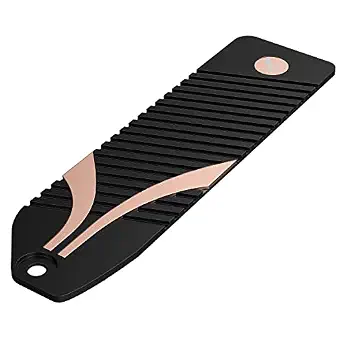
Cooling your PS5 SSD just got simpler and more efficient with the SABRENT M.2 NVMe PS5 Heatsink. This heatsink is precisely engineered to fit into the PS5’s SSD expansion slot, offering an easy installation experience. It uses a CNC aluminum build that improves heat dissipation while replacing the original PS5 cover, allowing the console’s native fan to enhance airflow directly.
The design features Sabrent’s unique “Sandwich Design,” which applies an even pressure on the SSD. This method improves heat transfer compared to clamps or adhesive-only methods.
The lightweight aluminum construction feels solid but doesn’t weigh down the SSD. Installation is straightforward thanks to included screws, thermal tape, and a detailed guide.
The larger surface area also supports better cooling performance, helping maintain optimal SSD temperature during long gaming sessions. It’s an ideal choice for PS5 users wanting to upgrade their console storage with improved thermal management. Overall, this heatsink blends quality material, smart design, and user convenience at a well-thought-out level.
Pros
- Custom fit for PS5 SSD slot
- Lightweight yet sturdy aluminum body
- Includes thermal tape and screws
Cons
- Only compatible with PS5 SSD slot
- Limited to single unit per purchase
- No active cooling included
Who Should Buy It?
Gamers adding or upgrading SSD storage on their PS5 will benefit most. Those seeking easier installation and better passive cooling will appreciate its design. It suits anyone wanting a reliable, solid aluminum heatsink that replaces the PS5 cover for enhanced airflow.
Key Specifications
| Specification | Details |
|---|---|
| Title | SABRENT M.2 NVMe PS5 Heatsink (SB-PSHS) |
| Material | CNC’d Aluminum |
| Dimensions (L x W x H) | 5.12″ x 1.18″ x 0.39″ |
| Compatibility | PS5 console SSD slot |
| Included Components | Heatsink, screws, thermal tape, installation guide |
| Weight | 0.08 kg |
| Mounting Type | Chassis Mount |
| Thermal Tape Included | Yes |
| Special Features | Sandwich Design for even pressure, replaces PS5 cover |
The heatsink is made from CNC’d aluminum, a material known for its excellent heat dissipation and lightweight properties. Its precise dimensions ensure a snug fit into the PS5’s SSD slot without adding bulk or interfering with other components. The included thermal tape and screws simplify installation by providing everything needed for a secure mounting. This combination helps maintain stable SSD temperatures by promoting efficient heat transfer away from the drive.
This compact, chassis-mounted heatsink benefits from replacing the native PS5 cover, allowing the console’s fan to blow directly over it. The Sandwich Design feature applies uniform pressure over the SSD, improving thermal contact and reducing hotspots. This setup enhances performance and durability by preventing thermal throttling during extended gaming sessions. Users upgrading PS5 storage will find the installation straightforward and the passive cooling effective for keeping their SSDs cool and stable.
8. 30 PCS Raspberry Pi 4 Heatsink Kit

Effective heat regulation is vital for Raspberry Pi devices to perform well under load. This 30 PCS Raspberry Pi 4 Heatsink Kit provides a versatile solution with multiple heatsink options.
The kit includes aluminum and copper heatsinks with thermal conductive adhesive tape, ensuring good heat dissipation and secure attachment. It fits Raspberry Pi models A, B, B+, 2, 3, 4, and 5, making it adaptable for a wide range of users.
The build quality is solid, with lightweight materials that do not add bulk to the device. Applying the adhesive tape is straightforward, letting users install it without hassle. The mix of aluminum and copper allows for efficient heat transfer and durability.
This kit suits users who want to improve cooling for their Raspberry Pi or similar single-board computers. It’s excellent for DIY projects and preventing overheating during extended use.
The variety and quantity of heatsinks make it economical for multiple setups or replacements. Performance is consistent, providing noticeable temperature control improvements that help maintain system stability and longevity.
Pros
- Includes 24 aluminum and 6 copper heatsinks
- Thermal adhesive tape ensures easy installation
- Compatible with multiple Raspberry Pi models
Cons
- No detailed dimensions provided
- Fin count per heatsink not specified
- Adhesive strength may vary over time
Who Should Buy It?
Ideal for Raspberry Pi users needing extra cooling across models. Great for hobbyists and developers managing device heat during high processing tasks. Also suitable for similar boards like Beaglebone requiring custom heat dissipation solutions.
Key Specifications
| Specification | Details |
|---|---|
| Title | 30 PCS Raspberry Pi 4 Heatsink Kit for Raspberry Pi B B+ 2/3/4/5 |
| Material | Aluminum and Copper |
| Compatibility | Raspberry Pi models A, B, B+, 2, 3, 4, 5 |
| Included Components | 24 pcs aluminum heatsink, 6 pcs copper heatsink, thermal conductive adhesive tape |
| Weight | 0.04 kg |
| Mounting Type | Panel Mount |
| Thermal Tape Included | Yes |
The heatsinks are constructed from aluminum and copper, two materials known for their effective heat conductivity. Aluminum is lightweight and provides fast heat dissipation, helping maintain safe temperature levels. Copper offers superior thermal conductivity compared to aluminum, so having some copper heatsinks allows for more targeted cooling in critical areas. The inclusion of thermal adhesive tape simplifies installation and ensures the heatsinks stay securely attached to the components, aiding in consistent heat transfer over time. These elements combine to provide reliable cooling for Raspberry Pi models spanning several generations.
These specifications translate into dependable temperature control that helps prevent throttling during intensive tasks or prolonged use. The lightweight design does not interfere with fitting most Raspberry Pi cases, maintaining device portability. Users benefit from both the durability of copper heatsinks and the broad compatibility with various Raspberry Pi boards. The kit’s panel mount approach and included thermal tape facilitate easy setup without extra parts. It suits those who want to improve their device’s lifespan or enhance performance under load by lowering operating temperatures.
9. Thermal Design Heat Sinks and Heat Exchangers

Thermal Design Heat Sinks and Heat Exchangers offers an extensive and detailed look into thermal management technologies. Its thorough coverage makes it a vital resource for anyone interested in thermal design theory.
The book includes a wide range of topics, such as heat sinks, thermoelectrics, heat pipes, compact heat exchangers, and solar cells, presented in a clear and systematic manner. With 928 pages, it delves into theoretical foundations and practical applications. The second edition brings updated content reflecting recent advancements.
The print is reasonably sized and weighs just over four pounds, making it a robust reference for study and professional use. Readers will find rich technical explanations supported by solid data.
Its content caters mostly to engineers, designers, and students strongly focused on thermal projects. While not a physical heat sink product, it provides critical knowledge to aid design and decision-making in thermal systems.
Those seeking a comprehensive, detailed resource for mastering heat transfer and cooling methods will appreciate every aspect of this publication.
Pros
- Comprehensive coverage of thermal design theory
- Updated second edition with recent advancements
- Detailed technical explanations and data
Cons
- Heavy and bulky for casual reading
- Very technical, not suitable for beginners
- Print dimensions are small for large format
Who Should Buy It?
This book is ideal for engineers, researchers, or students working on thermal management. Those studying heat transfer or designing cooling systems will benefit from its detailed explanations and data. It suits users needing a strong theoretical foundation rather than quick practical guides.
Key Specifications
| Specification | Details |
|---|---|
| Title | Thermal Design: Heat Sinks, Thermoelectrics, Heat Pipes, Compact Heat Exchangers, and Solar Cells |
| Material | Printed book on paper |
| Dimensions (L x W x H) | 0.39 x 0.39 x 0.39 inches |
| Weight | 4.04 pounds |
| Publisher | Wiley |
| Publication date | June 1, 2022 |
| Edition | 2nd |
| Language | English |
| Print length | 928 pages |
| ISBN-10 | 1119685974 |
| ISBN-13 | 978-1119685975 |
The specifications describe a highly detailed and sizable printed reference. With 928 pages, it covers broad thermal design topics, suitable for extensive study sessions. The physical size is unusual, very compact in dimensions, yet heavy due to dense content and quality paper. The book’s second edition status signals updated and refined material aligned with recent research. English language and reputable Wiley publishing ensure clarity and authority in the field.
These specs impact usability mainly for dedicated readers who require thorough understanding. The book’s comprehensive length and weight may feel cumbersome but reflect high information density, benefiting engineers and academics. Its compact format might challenge those seeking larger text or visuals but aids portability for professional use. Primarily, it supports users focused on research quality, rigorous thermal design, and advanced academic pursuits.
10. Heat Sink Design Manual by Optimization for CPUs and Electronics

Heat Sink Design Manual offers a focused guide for thermal optimization in electronic devices. It covers essential topics like thermal resistance and material selection with clear, practical advice.
The manual guides readers through fin geometry analysis and cooling performance improvements, tailored especially for CPUs, GPUs, and other high-power components. At 142 pages, it is concise yet informative, making it accessible for beginners and professionals.
The book features straightforward language suitable for a varied audience, including students and engineers. Its compact size and lightweight build make it easy to carry and consult during projects. Readers will gain a structured understanding of heat sink design, enabling better decisions in electronic cooling solutions.
The content balances technical detail with user-friendly explanations, making it a valuable resource for those seeking to improve cooling efficiency and reliability.
Pros
- Clear explanations of thermal principles
- Concise and easy-to-read format
- Suitable for various skill levels
Cons
- Limited to 142 pages
- No physical heat sink components included
- Focuses primarily on theory
Who Should Buy It?
This manual suits students, engineers, and hobbyists working with thermal management. It helps readers improve cooling design skills without being overwhelming. Ideal for those focusing on CPUs, GPUs, and power electronics seeking practical design guidelines.
Key Specifications
| Specification | Details |
|---|---|
| Title | Heat Sink Design Manual: Optimization for CPUs, GPUs, and High-Power Electronics devices |
| Material | Paper (Printed Book) |
| Dimensions (L x W x H) | 6.24 x 0.51 x 9.24 inches |
| Compatibility | CPU, GPU, and high-power electronics cooling design |
| Weight | 9.6 ounces |
| Mounting Type | Not applicable |
| Thermal Tape Included | No |
| Fin Count | Not applicable |
| Included Components | Printed manual |
The manual’s compact size and lightweight format make it easy to carry and reference during design projects. At roughly nine inches tall, the book provides a convenient physical form without requiring much storage space. Its printed paper material offers a familiar reading experience. Compatibility refers to its targeted application for CPUs, GPUs, and electronic devices that need thermal management. The lack of physical mounting features or thermal tape highlights its role as a reference guide rather than a physical cooling component.
Specifications like the material being a printed book affect user experience by focusing on study and learning rather than hands-on installation. The practical length of 142 pages allows thorough but manageable coverage of design topics for various skill levels. Users benefit from clear explanations that aid understanding and application in real projects. This guide suits those seeking durability in knowledge rather than hardware reliability, providing helpful insights into optimizing heat sink geometry and material choices.
Unlock Ultimate Cooling Power: Your Guide to the Best Heat Sink Design Choices
Material and thermal conductivity
Effective thermal management greatly depends on how well a heat sink interfaces with other components and its ability to accommodate future upgrades or modifications. Ensuring that the heat sink supports multiple connection types can streamline integration with various hardware, reducing compatibility issues and installation time. Additionally, having options for adding extra modules or expanding surface area allows the system to adapt to increased cooling demands without needing a full replacement.
Additionally, having options for adding extra modules or expanding surface area allows the system to adapt to increased cooling demands without needing a full replacement. These features not only improve overall system flexibility but also extend the lifespan of the cooling solution, making it a smarter investment in the long run.
Design and shape
Efficient airflow and surface contact play crucial roles in thermal management solutions. The fin type and spacing significantly influence how well heat dissipates; densely packed fins increase surface area but may restrict airflow, while widely spaced fins promote better ventilation at the cost of reduced contact area. Additionally, maximizing the surface area allows more heat to escape, which directly affects cooling performance.
Balancing these aspects ensures that the thermal component integrates seamlessly and effectively manages heat within the constraints of the specific electronic setup.
Compatibility and mounting options
Ensuring the cooling solution matches a variety of processors and components is crucial to maximize its versatility and future-proof your setup. Different CPUs often require specific mounting systems, so it’s important to verify that the device supports the range of sockets relevant to your hardware. Alongside compatibility, the mounting mechanism plays a key role in how simple and secure the installation process will be, with user-friendly designs reducing the risk of damage during setup.
Additionally, physical dimensions and clearance should be carefully evaluated to avoid conflicts with other parts within the case, such as RAM modules or graphic cards. Insufficient space can lead to overheating issues or force costly upgrades to accommodate oversized components.
| Aspect | Key Considerations | Benefits |
|---|---|---|
| Processor Compatibility | Supported CPU socket types | Widens usability across multiple builds |
| Mounting System | Ease of installation and firmness | Reduces installation time and risk of error |
| Physical Size | Height, width, and clearance limitations | Prevents interference with other components |
Cooling performance
Effective thermal management relies heavily on how well a heat sink integrates with the rest of the system and its ability to support additional components or cooling mechanisms. Heat sinks equipped with versatile interface options can easily accommodate fans, sensors, or other cooling accessories, allowing for tailored solutions that enhance heat dissipation.
Furthermore, designs that offer room for future upgrades ensure that the system remains adaptable to increased thermal loads without requiring complete replacement. This flexibility directly affects how efficiently the heat sink can maintain optimal temperatures and protect sensitive components.
Trade-offs between passive and active cooling play a crucial role. Passive units typically rely on larger surface areas and natural airflow, offering silent operation and zero power consumption but sometimes falling short in high-performance scenarios.
Ensuring the heat sink supports such enhancements can significantly improve overall system stability.
| Performance Metric | Definition | Impact on System |
|---|---|---|
| Thermal Resistance (°C/W) | Measure of how well the heat sink dissipates heat | Lower values lead to better cooling efficiency and lower temperatures |
| TDP Rating (Watts) | Maximum thermal design power the heat sink can handle | A higher rating means the heat sink can support more powerful or multiple components |
Ultimately, a heat sink’s ability to maintain system temperatures within safe limits depends not only on its intrinsic thermal properties but also on how well it can accommodate accessories and upgrades. This ensures reliable performance and longevity under varying workloads.
Noise levels and airflow
Efficient airflow management plays a crucial role in enhancing a cooling system’s performance and maintaining a quiet environment. Proper ventilation ensures that hot air is effectively expelled, preventing thermal buildup that can degrade component lifespan.
Fan integration adds another layer of cooling efficiency, especially in designs where passive dissipation alone isn’t enough. Adjustable fan speeds allow users to balance between optimal cooling and minimizing noise levels, creating a more comfortable and distraction-free workspace. Understanding how air moves through the device and ensuring it aligns with the surrounding setup can significantly impact both temperature regulation and sound output.
Durability and build quality
Ensuring that a heat sink can easily integrate with various system components and allow room for future upgrades is crucial for maximizing its effectiveness and lifespan. This flexibility often determines how well the cooling solution adapts to different motherboard layouts, cooling setups, and additional hardware installations. A design that supports multiple interfaces and has modular capabilities enables smoother installation processes and reduces the risk of compatibility issues down the line.
A design that supports multiple interfaces and has modular capabilities enables smoother installation processes and reduces the risk of compatibility issues down the line. Moreover, having options to expand the cooling capacity or enhance performance without needing to replace the entire unit offers significant cost savings and convenience. These factors combined ensure that the cooling system remains relevant and efficient as technology evolves, providing better value over time.
How Heat Sinks Keep Devices Cool
Heat sinks help stop electronic parts from getting too hot. They keep devices working well and prevent damage.
Here’s how they work in simple steps:
- The electronic part produces heat while working.
- The heat moves from the part to the heat sink.
- The heat sink’s metal absorbs the heat.
- The heat sink spreads the heat over a larger area.
- Air flows over the heat sink and carries the heat away.
Most heat sinks are made from materials like aluminum or copper because these metals move heat quickly. The fins on a heat sink increase the surface area, helping air remove heat faster.
Good airflow around the heat sink speeds up cooling. Sometimes, a fan is used to push air over the fins to help take heat away faster.
By moving heat away from sensitive parts, heat sinks help electronics last longer and work safely.
FAQ’s
What Are The Key Factors To Consider In The Best Heat Sink Design?
The best heat sink design should prioritize maximizing surface area for efficient heat dissipation and ensuring good thermal conductivity between the heat source and the sink. Additionally, factors like airflow, material selection, and size constraints are crucial for optimal performance.
How Does The Material Choice Affect The Performance Of A Heat Sink?
The material choice affects a heat sink’s performance by determining its thermal conductivity, where materials like copper and aluminum provide efficient heat transfer. Additionally, the material’s weight and corrosion resistance influence the heat sink’s durability and suitability for specific applications.
What Are The Different Types Of Heat Sink Designs Commonly Used In Electronics?
Common heat sink designs in electronics include pin fin, straight fin, and folded fin types, each optimized for specific airflow and thermal dissipation conditions. Additionally, heat sinks can be passive or active, with active designs incorporating fans for enhanced cooling performance.
How Does The Fin Arrangement Impact Heat Dissipation Efficiency In Heat Sinks?
The fin arrangement affects heat dissipation efficiency by influencing airflow and surface area exposure; well-spaced, properly oriented fins enhance airflow and maximize contact with air, improving heat transfer. Conversely, tightly packed or poorly aligned fins can restrict airflow, reducing cooling performance.
What Role Does Airflow Play In Optimizing Heat Sink Performance?
Airflow enhances heat sink performance by increasing the rate of heat dissipation from the surface, allowing heat to be transferred more efficiently to the surrounding air. Proper airflow prevents heat buildup, maintaining lower temperatures and improving overall cooling effectiveness.
Final Verdict
The Aluminum Heat Sink 150x93x15 mm with Thermal Adhesive Tape works well for those seeking an all-around solution that balances size and cooling capability. It is a solid choice for a best heat sink design guide. For buyers focused on SSD cooling who want an economical option, the SSD Heat Sink Cooler 2280 NVMe 5 Pack offers good value and multiple units for various drives.
When it comes to large-scale or specialized cooling projects, the Design and Analysis of Heat Sinks stands out as a premium option due to its versatile applications and thorough design considerations. Raspberry Pi users will benefit from the Heatsink Kit for Raspberry Pi Models A B+ 4 5 (100 PCS), which provides a comprehensive mass kit tailored for those single-board computers. Each product suits different needs depending on the scale and purpose of your cooling requirements.
Choose the Aluminum Heat Sink 150x93x15 mm with Thermal Adhesive Tape for a reliable and versatile heat sink solution.