10 Best Substitutes for Eggs in Cake Mix
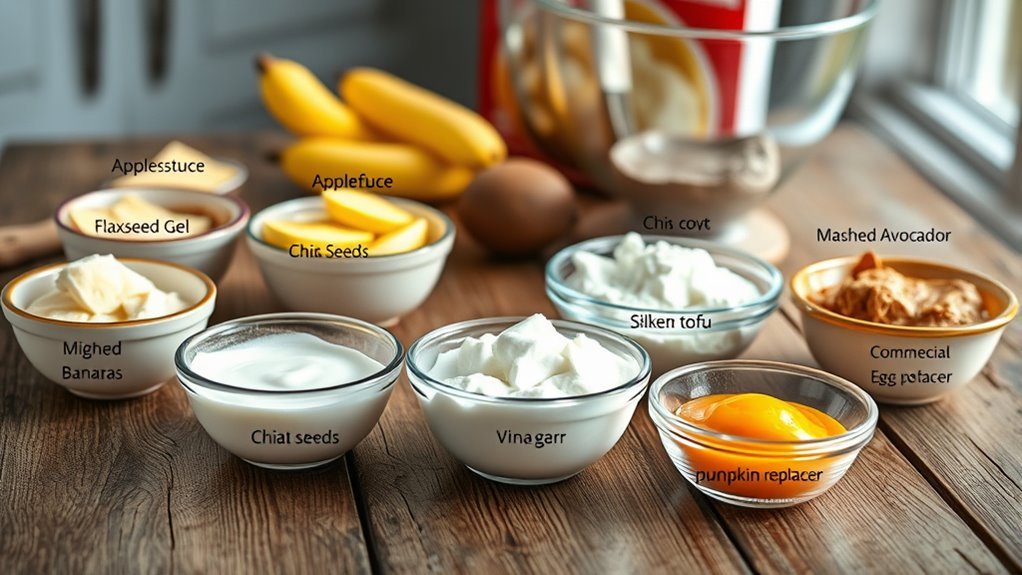
You can easily replace eggs in cake mixes using natural substitutes like flaxseed or chia seeds mixed with water for binding, or silken tofu for added moisture and density.
Aquafaba whips up like egg whites, giving your cake lightness and rise.
Fruit purees, nut butters, avocado, and baking powder-oil blends also work well depending on your flavor and texture goals.
Mixing these options wisely guarantees a moist, fluffy cake every time.
Curious about the best combinations? Let’s explore how these egg substitutes can transform your baking and keep your cakes delicious without eggs!
Key Takeaways
- Flaxseed or chia seeds mixed with water create a gel that binds ingredients. But keep in mind, you might need extra leavening to get those cakes nice and fluffy.
- Aquafaba whips into a foam, kind of like egg whites. It’s perfect for binding and leavening, especially if you want light, airy cakes.
- Silken tofu adds moisture and density. It’s great for making rich, dense cakes and muffins without changing the flavor.
- Fruit purees like mashed bananas or applesauce bring moisture and tenderness. Plus, they can boost the flavor if they fit well with your recipe.
- Nut butters and mashed avocado add moisture and richness. They work best in dense, flavorful baked goods like brownies.
Why You Need Egg Substitutes in Cake Mix
Although eggs play an essential role in traditional cake mixes, you’ll often need substitutes to accommodate allergies, vegan diets, or other dietary restrictions. When you’re baking, eggs provide vital binding properties and leavening that help cakes rise and maintain texture.
If you skip them without a proper replacement, your cake can turn out dense or crumbly. That’s where egg substitutes come in—they mimic these functions to guarantee your cake mix performs well.
In vegan baking or when dealing with allergies, using the right egg replacer is key to successful recipe adaptation. Many commercial cake mixes now include egg-free options or recommend specific substitutes, making it easier for you to achieve consistent, delicious results without compromising dietary needs.
How to Choose the Right Egg Substitute for Your Cake
When selecting an egg substitute for your cake, you should first identify what role the egg plays in your recipe—whether it’s binding, leavening, or adding moisture. This way, you can pick the option that best replicates that function.
For binding, flax or chia seeds work well. Meanwhile, mashed banana or applesauce are great for adding moisture.
If leavening is key, choose an egg replacer with baking powder or combine baking soda and vinegar for a better rise. Vegan options like aquafaba offer a neutral flavor, which is ideal when taste matters.
Remember to make recipe adjustments since each egg substitute varies in quantity and effect. For example, 3 tablespoons of aquafaba equals one egg.
Matching the substitute to your cake’s needs guarantees you get the right texture and structure without compromising flavor or performance.
Flaxseed & Chia Seeds Egg Substitutes: Natural Binders
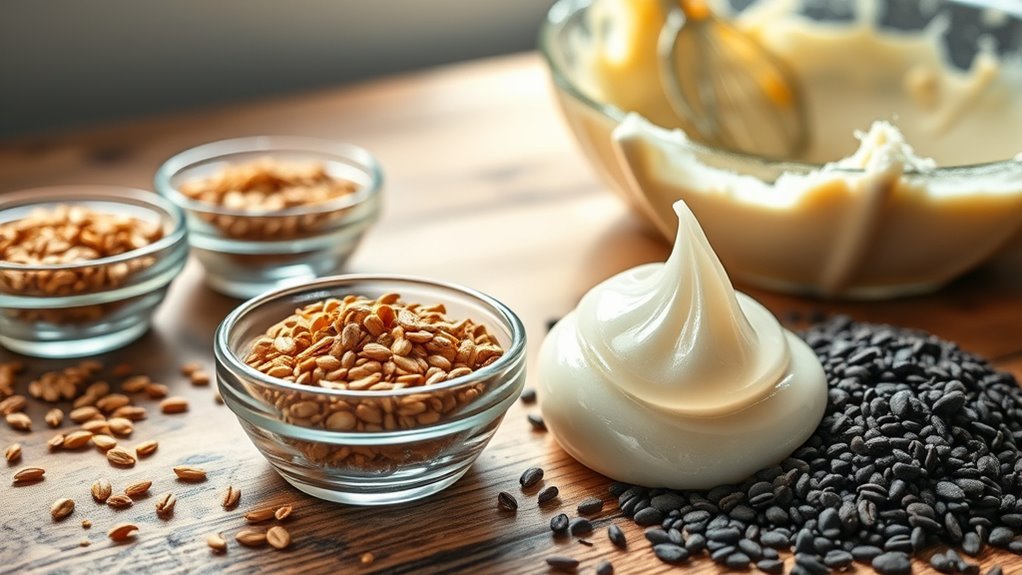
Flaxseed and chia seeds stand out as natural binders that mimic the texture of eggs in your cake mix. When combined with water, they form a gel-like consistency, making them an effective plant-based egg replacement.
Flaxseed and chia seeds create a gel-like texture, perfectly mimicking eggs in vegan baking.
Perfect for vegan baking, these egg substitutes add nutrition and structure to your recipes.
Here’s how to use flaxseed and chia seeds as an egg substitute:
- Mix 1 tablespoon of ground flaxseed or chia seeds with 3 tablespoons of water.
- Let the mixture sit for 10-15 minutes until it thickens into a gel.
- Use this natural binder in dense baked goods like muffins or brownies.
While flaxseed and chia seeds provide excellent binding, remember they don’t offer leavening. So, if your recipe calls for it, add extra leavening agents to get that rise you want.
Silken Tofu Egg Substitute: Moisture and Density
When you use silken tofu as an egg substitute, you add moisture and density that create a soft, smooth texture perfect for dense cakes and muffins. Its neutral flavor means you won’t have to worry about altering the taste of your baked goods.
Just blend it well to guarantee it helps with structure and binding without any graininess. This way, your treats come out moist and perfectly textured every time.
Texture And Moisture
Although silken tofu doesn’t provide much leavening, you can use about 1/4 cup of blended tofu to replace one egg and add moisture and density to your cake batter. This egg substitute enhances the texture and moisture of baked goods, creating a smooth, dense crumb perfect for recipes like pumpkin pie or muffins.
When using silken tofu in your batter, remember:
- Proper blending is key to avoid lumps and ensure even moisture distribution.
- The high water content in tofu boosts moisture, resulting in tender, moist cakes.
- Expect a denser final product with slight crumbliness, ideal when richness is preferred over fluffiness.
Silken tofu is best when you want moisture and density without much rise from leavening agents.
Flavor Impact Considerations
How does silken tofu affect the flavor of your cake? When you use silken tofu as an egg substitute, its moisture adds a dense texture, which can subtly influence the flavor impact of your cake mix.
While silken tofu generally provides a neutral flavor, its moisture content might alter the overall taste balance. Sometimes it can even overpower delicate flavors. To keep the flavor impact minimal, blend the silken tofu thoroughly before mixing it in.
Since tofu’s density can make your cake less airy and more crumbly, you’ll want to adjust your leavening agents accordingly. This helps maintain a lighter crumb.
Aquafaba Egg Substitute: The Vegan Whipping Wonder
You can whip aquafaba into a fluffy, meringue-like texture that works perfectly for light cakes. It binds ingredients together while adding volume, making it a reliable egg substitute.
Since it has a neutral flavor, you can use it in all kinds of vegan recipes without changing the taste. It’s pretty amazing how something so simple can do so much, right?
Whipping and Binding
When you need a vegan egg substitute that whips up just like egg whites, aquafaba is your go-to ingredient. This liquid from canned chickpeas acts as a powerful whipping agent, creating a stable foam that traps air and gives your cake a light texture.
It also excels at binding ingredients together while adding moisture, ensuring a tender crumb. Here’s why aquafaba stands out:
- Whipping: Aquafaba whips into a meringue-like foam, perfect for recipes needing egg whites.
- Binding: It holds your batter together, replacing eggs’ structural role.
- Moisture: Aquafaba keeps cakes moist, preventing dryness in vegan baking.
Use 3 tablespoons of aquafaba per egg to get the best results in your cake mix.
Versatile Vegan Option
Although many egg substitutes exist, aquafaba stands out as a versatile vegan option that effortlessly mimics the whipping and binding properties of eggs in cake mixes. This viscous liquid from canned chickpeas whips into a foam similar to egg whites, making it a popular egg substitute in baking.
You can use about 3 tablespoons of aquafaba to replace one egg, adding moisture, binding, and leavening to your cake recipes. Its flavor-neutral nature means it blends well with various ingredients without altering taste.
When whipped, aquafaba creates a light, airy texture perfect for fluffy cakes and desserts. Just keep in mind that different brands may vary in concentration, but aquafaba remains a reliable vegan whipping wonder for allergy-friendly and plant-based baking.
Seltzer Water & Soda: Lightness and Lift in Cakes
Since seltzer water and soda add both moisture and carbonation, they make excellent egg substitutes in cake mixes that need lightness and lift. The carbonation creates bubbles that give your cake a nice rise and a tender crumb. This helps you achieve that perfect cake lift without eggs.
Plus, seltzer water’s neutral flavor won’t interfere with your recipe. That makes it ideal for egg-free cakes where texture matters more than taste changes.
Here’s why seltzer water works well as an egg substitute in baking:
- Adds moisture for a moist texture without heaviness
- Carbonation helps create a light, airy crumb
- Easy to find and allergen-free, perfect for egg-free cakes
Use about 1 ½ cans of seltzer water for best results in your cake mix.
Fruit Purees & Mashed Bananas: Moisture and Flavor Boosters
If you want to add moisture and a subtle sweetness to your cake mix, fruit purees and mashed bananas make excellent egg substitutes. Using about ¼ cup of mashed bananas per egg adds moisture and a mild banana flavor, perfect for muffins and dense baked goods.
Fruit purees like applesauce offer moisture and tenderness without overpowering flavor, making them ideal for cakes and brownies. Both options enhance the texture while reducing the need for extra fats or oils, helping you create healthier treats.
Keep in mind, these egg substitutes work best when a hint of fruit flavor complements your recipe. So, if you’re aiming for moist, flavorful baked goods with a natural fruit boost, fruit purees and mashed bananas are a smart choice for your cake mix.
Baking Powder & Oil: Easy Moisture and Leavening Mix
Fruit purees add moisture and flavor to your cake mix, but sometimes you need a substitute that also helps your batter rise. Combining baking powder with oil creates an easy egg substitute that provides both moisture and leavening.
Fruit purees add moisture and flavor, but baking powder and oil boost rise and texture as an easy egg substitute.
Here’s why this egg replacer works well:
- Baking powder produces carbon dioxide bubbles, which lighten the batter and improve fluffiness.
- Oil adds essential fats and moisture, preventing dryness in your cake mix.
- The simple mix of 1 teaspoon baking powder, 1.5 tablespoons oil, and 1.5 tablespoons water boosts texture and rise.
This quick egg substitute suits pancakes, rolls, and cakes alike. Just adjust quantities based on your recipe to guarantee perfect moisture and leavening balance every time.
Nut Butters & Avocado: Richness and Healthy Fats in Baking
When you want to add richness and healthy fats to your baked goods without eggs, nut butters and avocado make excellent substitutes. Nut butters like peanut or almond butter provide about 3 tablespoons to replace one egg, lending moisture and a creamy texture.
Mashed avocado, using 1/4 cup per egg, adds healthy monounsaturated fats and moisture, perfect for dense baked goods like brownies. Both nut butters and avocado contribute a nutty or buttery flavor that really enhances your treats.
These egg replacers are ideal for vegan baking, offering plant-based fats without compromising richness. Just keep in mind, using nut butters or avocado can make your cakes a bit denser and slightly change the texture compared to traditional eggs. But honestly, they deliver moisture and flavor that many bakers really appreciate.
Combining Egg Substitutes for Best Texture and Rise
Although individual egg substitutes each have their strengths, combining them can substantially improve your cake’s texture and rise. When baking vegan cakes, combining replacements helps you balance moisture retention, leavening agents, and texture enhancement for the best results.
Here are three effective combos to try:
- Mix 3 tbsp aquafaba with 1 tbsp ground flaxseed and 3 tbsp water for improved baking rise and a better crumb.
- Use a commercial egg replacer like Bob’s Red Mill plus 1 tbsp applesauce to boost moisture retention and structural integrity.
- Add baking soda to flax or chia egg mixtures to activate leavening agents, creating lighter, puffier cakes.
Just remember to adjust liquid and dry ingredients accordingly to maintain batter consistency while maximizing texture and volume. It’s all about finding that perfect balance!
Frequently Asked Questions
What Can I Substitute for Eggs in a Boxed Cake?
You can substitute eggs with flax eggs, applesauce, aquafaba, or commercial egg replacers in boxed cake mix. Each option changes texture and rise, so pick one based on your taste and dietary needs for best results.
What Can I Do With Cake Mix if I Don’t Have Eggs?
If you don’t have eggs, you can use applesauce, mashed banana, or a flaxseed mixture instead. Aquafaba works well too. These options help bind and moisten your cake mix, so you won’t miss eggs!
Can I Leave Eggs Out of Box Cake Mix?
Yes, you can leave eggs out of box cake mix, but expect a denser texture. Try adding flaxseed or applesauce as replacements, and boost leavening with baking powder to help your cake rise better without eggs.
What to Use Instead of Eggs in Cake?
Did you know 40% of people bake vegan or egg-free cakes? You can swap eggs with flaxseed gel, aquafaba, mashed banana, or commercial replacers. These options keep your cake moist, fluffy, and perfectly risen every time.
Conclusion
When it comes to baking without eggs, you’ve got plenty of fantastic options to keep your cakes moist and delicious. Whether you choose flaxseed, silken tofu, or a fruit puree, remember that every substitute brings its own magic.
Don’t be afraid to experiment and combine them for the perfect texture and rise. After all, “variety is the spice of life,” and your egg-free cakes can be just as delightful and satisfying!
Using egg substitutes in cake mix is a great way to cater to dietary needs or simply try something new. Each alternative, like applesauce or mashed bananas, adds a unique flavor and moisture to your cakes. So go ahead and bake with confidence—egg-free cakes can be just as fluffy, tasty, and enjoyable as the traditional ones!